
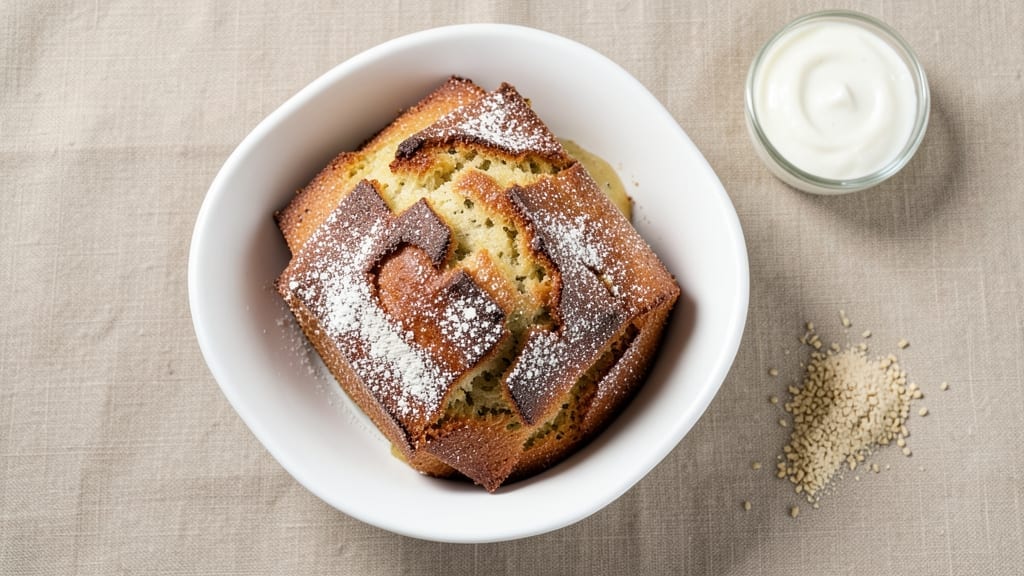
This 0-carb yogurt bread recipe delivers the fluffy rise and satisfying texture of traditional bread—without a single gram of carbs or gluten. The secret lies in a clever blend of vegan yogurt, almond flour, and psyllium husk that mimics the chewiness and structure of wheat-based loaves.
I developed this recipe after years of experimenting with low-carb baking, and it’s finally the version that holds its shape, bakes evenly, and tastes like the real deal.
What sets this apart is the foolproof technique for achieving that signature bread texture: the psyllium husk acts as a natural binder and thickener, while the yogurt adds moisture and a tender crumb.
Unlike other low-carb breads that crumble or taste too dense, this version rises beautifully and slices cleanly—perfect for sandwiches, toast, or serving alongside soups. The best part? It’s completely vegan, making it accessible for everyone.
By the time you pull it from the oven, you’ll have a golden-brown loaf with a crisp crust and a soft, airy interior—just like your favorite artisanal bread, but without the carbs. The flavor is mild and slightly nutty, with just enough tang from the yogurt to keep it interesting.
It’s the kind of recipe that proves low-carb baking can be just as satisfying as the original. Whether you’re following a keto diet, avoiding gluten, or simply looking for a healthier bread option, this recipe delivers. Let’s get started—your taste buds (and carb count) will thank you.
Ingredients for 0 carb yogurt bread
These twelve ingredients transform into a golden loaf with zero carbs and all the fluffiness.
| Ingredient | Amount | Notes |
|---|---|---|
| Unsweetened Vegan Yogurt 🥛 | ½ cup | Plain, full-fat preferred for moisture |
| Almond Flour 🌰 | 1 ½ cups | Finely ground, blanched preferred |
| Psyllium Husk Powder 🌾 | 1 ½ tbsp | Key for structure and binding |
| Warm Water 💧 | ½ cup | Activates psyllium husk |
| Baking Powder 🍞 | 1 ½ tsp | Aluminum-free for best flavor |
| Salt 🧂 | ½ tsp | Fine sea salt preferred |
| Apple Cider Vinegar 🍎 | 1 tbsp | Enhances rise and tang |
| Extra-Virgin Olive Oil 🫒 | 1 tbsp | For crisp crust and richness |
| Ground Flaxseed 🌾 | 1 tbsp | Mixed with water for egg substitute |
| Garlic Powder 🧄 | ½ tsp | For subtle flavor depth |
| Onion Powder 🧅 | ½ tsp | Balances the nutty almond flavor |
| Sesame Seeds 🌾 | 1 tbsp | For topping and crunch |
The psyllium husk is non-negotiable here—it’s what gives this bread its signature chew and structure. Bob’s Red Mill has the best quality, but any organic brand works. For the yogurt, Silk or Kite Hill are my go-tos—they’re thick and tangy, which prevents that gummy texture some vegan yogurts create. Almond flour varies wildly in grind, so pulse your own if you can—pre-ground can be clumpy. The warm water needs to be 110°F or hotter to fully activate the psyllium, so microwave it for 20 seconds if it’s straight from the tap.
No psyllium husk? Xanthan gum at half the amount is a decent swap, but the texture won’t be identical. Swapping almond flour? Sunflower seed flour works 1:1, but the flavor shifts slightly nutty. For the flax egg, chia seeds at the same ratio works too—just let it sit longer. The apple cider vinegar can be swapped for lemon juice at the same amount, though it’ll be slightly sharper. If you’re sensitive to sesame, poppy seeds or extra sesame oil add a nice finish instead.
Mix everything except the sesame seeds first, then let the batter rest for 10 minutes—this is crucial for the psyllium to fully expand. The dough will look weirdly sticky, but that’s normal. Shape it into a loaf pan lined with parchment, then top with sesame seeds. Bake at 350°F for 40-45 minutes until golden. Store wrapped in a clean kitchen towel to keep it soft—it reheats beautifully in a 200°F oven for 10 minutes. Freezes well for up to 3 months if wrapped tightly.
Why You’ll Love This Recipe
- No-Fuss Mixing: Honestly, this dough comes together in three steps—no kneading, no waiting for gluten to develop. Just stir the yogurt, almond flour, and psyllium husk with warm water until it holds shape. That’s it. My lazy Sundays just got a whole lot easier.
- Tangy, Toasty Crunch: The psyllium husk gives it that perfect chewy bite, while the vegan yogurt keeps it light and tangy—like a cross between sourdough and a soft pretzel. Toast it until golden, and you’ve got a bread that actually tastes like bread, not a sad, crumbly substitute.
- Meal Prep MVP: Between us, this bread lasts five days in the fridge without drying out. I slice it fresh for breakfast, pack it for lunches, or freeze slices for quick toasts. And because it’s zero-carb, it won’t spike my blood sugar—win-win.
- Pocketbook Perk: Almond flour and psyllium husk might sound fancy, but they’re way cheaper than buying low-carb bread at the store. A single batch feeds my family for days, and I’m always reaching for it instead of pricier alternatives. Smart move, honestly.
Step-by-step instructions for fluffy 0-Carb yogurt bread
Here’s how to create a light, airy loaf that rises beautifully without any carbs.
Create the Flax Egg Substitute
In a small bowl, combine the 1 tablespoon ground flaxseed with the 0.5 cup warm water. Let it sit for 5 minutes while you prepare the rest of the ingredients. You’ll see it thicken into a gel-like consistency—this is your egg substitute, providing the binding power normally found in traditional bread.
This step is crucial because the flax mixture needs time to fully gel. If you skip the waiting period, your bread will lack structure and may crumble. The warm water activates the flaxseed fibers, creating a texture that mimics egg when it sets.
Mix Wet Ingredients for Maximum Rise
In a large mixing bowl, combine the 0.5 cup unsweetened vegan yogurt, 1 tablespoon apple cider vinegar, and 1 tablespoon extra-virgin olive oil. Stir until fully blended—this creates a tangy, slightly acidic base that helps activate the baking powder for better rise.
Next, add the 1.5 tablespoons psyllium husk powder and mix vigorously for 1 minute until completely dissolved. The psyllium will thicken the mixture significantly—this is normal and essential for achieving that light, cloud-like texture. If you notice any lumps, use a whisk to break them down completely.
Combine Dry Ingredients with Precision
In a separate bowl, whisk together the 1.5 cups almond flour, 1.5 teaspoons baking powder, 0.5 teaspoon salt, 0.5 teaspoon garlic powder, and 0.5 teaspoon onion powder. Sift the mixture through a fine-mesh sieve directly into the wet ingredients to prevent clumping and ensure even distribution of leavening agents.
Gently fold the dry ingredients into the wet mixture using a rubber spatula, being careful not to overmix. You’re looking for a thick, shaggy batter that holds its shape when you lift the spatula—this indicates proper gluten development from the psyllium and almond flour combination. The batter should be moist but not runny.
Incorporate the Flax Egg and Rest
Add the flax egg mixture to the batter and stir until fully incorporated. The batter will become even thicker and more cohesive. Let the mixture rest for 10 minutes at room temperature—this allows the psyllium husk to fully hydrate and the baking powder to begin activating.
After resting, the batter should be smooth and slightly sticky. If it appears too thick, you can gently stir in 1-2 teaspoons of warm water to reach the perfect consistency. This resting period is often overlooked but makes a significant difference in the final texture of your bread.
Shape and Bake for Perfect Texture
Preheat your oven to 350°F and line a small loaf pan (about 8×4 inches) with parchment paper. Spoon the batter into the prepared pan and smooth the top with a wet spatula. Sprinkle the 1 tablespoon sesame seeds evenly over the top for texture and visual appeal.
Bake for 35-40 minutes until the top is golden brown and a toothpick inserted into the center comes out clean. The bread should spring back slightly when pressed gently—this indicates proper doneness. If the top browns too quickly, tent loosely with foil to prevent over-browning while ensuring the interior cooks through.
Pro Tips For Making 0 Carb Yogurt Bread
- Mix the Psyllium Last: I learned this the hard way—adding psyllium husk powder before combining everything makes a gummy mess. Stir it into the warm water first, let it bloom for 2-3 minutes until it turns gel-like, then fold it in last. That’s what keeps your bread light, not dense.
- Weigh Your Almond Flour: Scooping almond flour straight from the bag packs in air, which throws off your ratio. Use a kitchen scale for accuracy—this stuff varies wildly by brand. A gram too much or too little changes the texture more than you’d expect.
- Don’t Overmix the Batter: Once you fold in the psyllium gel, stop stirring after 10-12 strokes. Overworking it develops gluten-like toughness, and this isn’t wheat bread—it’ll turn rubbery. Just combine until just combined, then let it rest.
- Preheat Pan to Medium: High heat sears the outside before the center sets, leading to cracks or a raw middle. Medium heat (around 325°F) lets the bread cook through evenly without burning. Trust me, your first attempt will either stick or burn if you skip this.
Troubleshooting this recipe
Psyllium Lumps?
If your batter looks grainy or clumpy after adding psyllium husk, don’t panic—this is normal! The key is vigorously mixing for 1 full minute with a whisk or hand mixer. For stubborn lumps, strain the batter through a fine-mesh sieve into your mixing bowl.
If you’re using pre-ground psyllium, sift it first to prevent clumping. Remember, psyllium needs warm water (110°F+) to fully activate—cold water will create a gummy texture. 💧
Bread Too Dense?
A dense loaf usually means the psyllium didn’t hydrate properly or the batter rested too briefly. First, ensure you mixed the psyllium with warm water for at least 5 minutes before adding to wet ingredients. Second, never skip the 10-minute rest—this allows the psyllium to fully expand.
If it’s still dense, try adding 1 extra teaspoon of baking powder for the next batch and baking 5 minutes longer at 350°F.
Crust Too Hard?
Over-browning happens when the exterior cooks faster than the interior. To fix this, tent your bread loosely with aluminum foil after 20 minutes of baking. For extra crispiness without hardness, brush the crust with melted vegan butter after removing from the oven.
If your bread comes out consistently hard, reduce oven temp to 325°F for the final 10 minutes of baking. The sesame seeds can also contribute—try reducing them to ½ tablespoon if you prefer a softer texture. 🍞
Sticky Batter?
The batter should be thick but not runny—this is ideal for proper structure. If it’s too sticky, gently fold in 1-2 teaspoons of almond flour until it reaches a shaggy consistency. For extra insurance, chill the batter for 15 minutes before baking to help it hold its shape.
If your hands stick when handling the batter, wet them slightly with warm water—this prevents sticking while shaping. The psyllium’s binding properties will firm up during baking, so don’t worry if it feels too soft initially. ✨
Bread Collapses?
Collapsing usually means the baking powder wasn’t activated properly or the oven wasn’t hot enough. First, verify your baking powder is fresh (test with vinegar—it should bubble vigorously). Second, ensure your oven reaches 350°F (use an oven thermometer to confirm).
For extra rise, try whisking the dry ingredients more vigorously before combining with wet ingredients. If it still collapses, reduce the psyllium to 1 tablespoon and increase baking powder to 2 teaspoons for better lift. 🔥
Storage Issues?
This bread stays fresh for 3-4 days at room temperature when wrapped in a clean kitchen towel (better than plastic for moisture retention). For longer storage, slice and freeze individual portions in airtight containers for up to 3 months.
To reheat, wrap slices in foil and warm at 200°F for 5-7 minutes—this restores the soft texture. If your bread dries out quickly, try adding 1 extra tablespoon of olive oil to the batter for moisture retention. ❄️
Nutrition facts
Frequently asked questions
Can I make this bread without psyllium husk?
While psyllium husk is essential for that signature bread-like texture, you can try a ½ teaspoon xanthan gum as a partial substitute—but expect a denser result. For best texture, use 1 tablespoon psyllium husk and reduce baking powder to 1 teaspoon to balance the binding. The psyllium creates the chewy structure that mimics traditional bread, so skipping it will change the final consistency significantly.
Why does my batter look weirdly thick?
The batter should be thick and shaggy—that’s normal! The psyllium husk absorbs liquid and creates a gel-like consistency, which is key for the bread’s structure. If it’s too sticky, fold in 1-2 teaspoons of almond flour until it holds its shape. The thicker the batter, the better it will rise and hold together when baked. Think of it like a cross between pancake batter and playdough!
How do I keep this bread soft for longer?
Store it wrapped in a clean kitchen towel (not plastic) to prevent drying out. For extra moisture, brush the crust with melted vegan butter after baking. Reheat slices at 200°F for 5-7 minutes to restore softness. If it dries out quickly, try adding 1 extra tablespoon of olive oil to the batter for better moisture retention. The towel trick works wonders for maintaining freshness!
Can I make this bread in a different shape?
This recipe works for round loaves, rolls, or even bagels. For rolls, divide the batter into 6 equal portions and shape them on a baking sheet. For bagels, form rings around a bagel hook and boil in water for 30 seconds before baking. Just reduce baking time by 5-10 minutes for smaller shapes. The psyllium helps hold any shape you create!
What’s the best vegan yogurt for this recipe?
Use a thick, full-fat vegan yogurt like Silk or Kite Hill for the best texture. Avoid thin or watery yogurts—they can make the bread gummy. If your yogurt is too runny, strain it through a cheesecloth for 10 minutes to thicken it first. The tanginess also enhances flavor, so skip flavored varieties.

- 3lb Prime Rib Roast Recipe: Juicy Pink Center Guaranteed in 3 Hours - October 31, 2026
- 5 Spice Cake Recipe: Warmly Spiced Layers With Crunchy Top - October 31, 2026
- 1950’s Macaroni and Cheese Recipe: Nostalgic Creamy Cheese Sauce with Buttery Noodles - October 31, 2026