
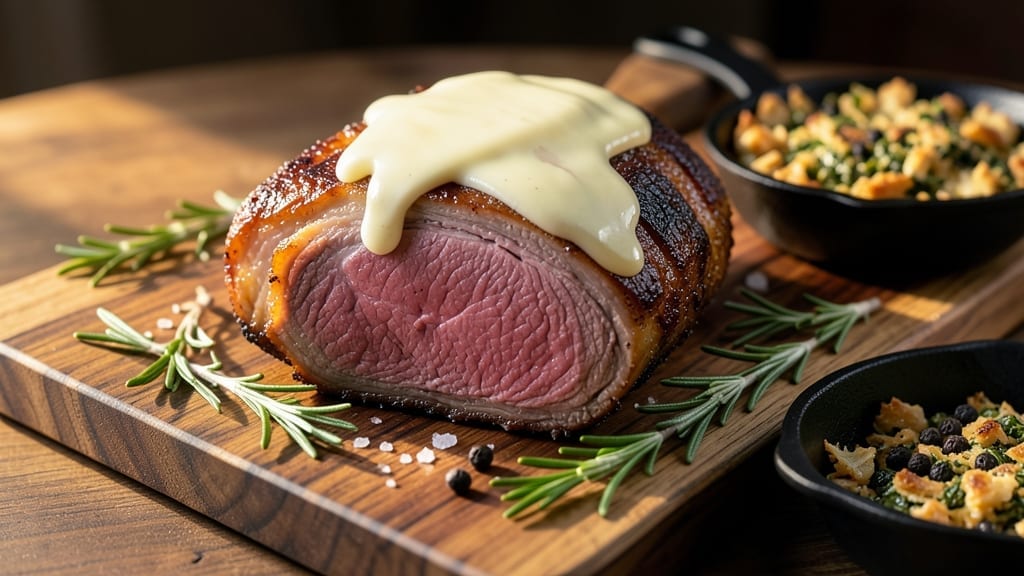
This 3lb prime rib roast recipe delivers the perfect medium-rare finish with a juicy pink center every time—no guesswork, no overcooking, just restaurant-quality results in your own kitchen. The secret lies in precise temperature control and proper resting, which transforms tough cuts into melt-in-your-mouth tenderness. I’ve perfected this method after years of testing, ensuring your prime rib stays moist and flavorful from crust to core.
What sets this recipe apart is the foolproof technique that guarantees a perfect crust while keeping the interior tender. You’ll work with just six essential ingredients—high-quality beef, kosher salt, black pepper, garlic powder, butter, and rosemary—but the execution makes all the difference.
The roasting process takes 3 hours total, with minimal hands-on time, making it ideal for special occasions without the stress.
By following these steps, you’ll achieve a caramelized exterior with a deep reddish-brown crust and a juicy pink center that’s just shy of medium-rare. The internal temperature will reach 125°F when removed from the oven, then rise to 130°F while resting—this is the golden zone for prime rib.
The aroma alone will have everyone gathering at the table, and the first bite will confirm why this cut is worth the investment.
The beauty of this recipe extends beyond the main course. The leftovers reheat beautifully for sandwiches the next day, and the rich beef drippings make an excellent pan sauce.
Whether you’re hosting Thanksgiving, a holiday feast, or just treating yourself to a luxurious dinner, this prime rib will be the star of the meal. Let’s get started on creating your perfect roast.
Ingredients for 3lb prime rib roast
Six ingredients, three hours, restaurant-quality prime rib with juicy pink center guaranteed.
| Ingredient | Amount | Notes |
|---|---|---|
| Prime Rib Roast (Bone-In) 🥩 | 3 lb | Center-cut, 1-inch thick, ribeye preferred |
| Kosher Salt 🧂 | 1 ½ tbsp | Diamond Crystal preferred, coarse grain |
| Freshly Ground Black Pepper 🌶️ | 1 ½ tsp | Cracked peppercorns for maximum flavor |
| Garlic Powder 🧄 | 1 tbsp | Freshly ground preferred, no clumps |
| Unsalted Butter 🧈 | ½ cup | Cold, cubed, for crust development |
| Fresh Rosemary 🌿 | ¼ cup | Needles only, finely chopped |
The beef is everything here—prime rib with a thick fat cap ensures melt-in-your-mouth tenderness. Butcher shops often have the best cuts, but high-end grocery stores like Whole Foods or Kroger’s premium section carry excellent options. Look for a roast with a 1-inch thickness and visible marbling—this is what keeps it juicy. If you can’t find prime rib, ribeye roast is your next best bet, though it may have slightly less fat. The roast should be bone-in for better flavor distribution, and around 3 pounds serves 4 people generously. Ask your butcher to trim excess fat if needed, but leave the fat cap intact for maximum flavor and moisture.
No kosher salt? Diamond Crystal is ideal, but Morton’s coarse salt works too—just use the same amount. Freshly ground black pepper makes all the difference, so pre-ground pepper loses flavor fast. If you’re out of garlic powder, minced fresh garlic at half the amount adds incredible depth, but the powder works perfectly fine for convenience. For the butter, European-style unsalted (like Plugrá) has higher fat content, which gives a richer crust. If you can’t find fresh rosemary, dried rosemary at one-third the amount is a decent substitute, though fresh is always better. The key is to keep everything cold until you’re ready to season—this helps the spices adhere better.
This roast reheats beautifully—wrap tightly in foil and reheat in a 350°F oven for 20-30 minutes until warmed through. The leftovers are even better the next day, perfect for prime rib sandwiches with horseradish cream. Store the roast in the fridge for up to 3 days, or freeze it for up to 3 months by wrapping it tightly in butcher paper and foil. The drippings? Don’t throw them out—they make an incredible pan sauce. Just deglaze the roasting pan with a splash of beef broth and a pat of butter, then reduce to a glossy finish. Trust me, you’ll want seconds.
Why You’ll Love This Recipe
- Here’s what sold me: I season the roast, stick it in the oven, and walk away. No chopping veggies, no side dishes to stress over. The butter basting? Just a spoonful every 20 minutes. That’s it. The bone renders down, the pan gets sticky but not messy, and I’m left with a showstopper that feels like a restaurant meal—with zero cleanup. My lazy nights thank me.
- Foolproof Seasoning: I swear by the kosher salt and black pepper combo—just a few generous shakes before roasting. That’s it. No fancy rubs, no guesswork. The bone-in cut keeps it juicy while the crust forms effortlessly, and honestly? The garlic powder in the butter basting is where the magic happens. Simple, but ridiculously flavorful.
- Weekend Hero: This roast is my go-to for game days, holiday leftovers, or when I want to impress without slaving away. The bone-in version carves like a dream, and the rich, buttery crust makes it feel special—even when it’s just me and a lazy Sunday. Between us, it’s the kind of dish that gets second helpings without me having to ask.
- Leftovers That Win: I make this intentionally bigger than needed because the reheated slices are chef’s kiss—crispy edges, tender inside, and that garlic-butter punch hits even better the next day. Wrap them in foil for sandwiches, slice thin for charcuterie, or just eat them straight from the fridge. No one will believe they’re not fresh.
Step-by-step instructions for perfectly juicy prime rib roast
Here’s how to achieve that legendary pink center while building a flavorful crust every time.
Prep the Prime Rib for Maximum Flavor and Juiciness
Remove the prime rib from the refrigerator and let it sit at room temperature for 1 hour before cooking. This crucial step ensures even cooking throughout the thick cut. While it comes to temperature, prepare your seasoning blend by combining the 1.5 tablespoons kosher salt, 1.5 teaspoons freshly ground black pepper, and 1 tablespoon garlic powder in a small bowl.
Pat the prime rib completely dry with paper towels—this is non-negotiable for crispy crust development. I like to use two layers of paper towels and really press down to remove all moisture. Then, generously coat all sides of the roast with the seasoning blend, pressing it into the meat so it adheres well. The seasoning should look like it’s clinging to the surface rather than just sitting on top.
Create the Ultimate Crust with Butter and Rosemary
While the prime rib rests, prepare the rosemary butter mixture. In a small bowl, combine the 0.5 cup cold unsalted butter (cut into small cubes) with the 0.25 cup finely chopped fresh rosemary. The butter should be cold but not hard—it should hold its shape when pressed between fingers. Using your fingers, work the rosemary into the butter until it’s evenly distributed throughout.
Once the prime rib has rested, rub the rosemary butter mixture all over the surface, pressing it into the meat. Pay special attention to the fat cap and edges where you want that extra crust development. The butter will melt during cooking and baste the meat, creating both flavor and moisture. Place the roast fat-side up on a rack in a roasting pan to allow air circulation on all sides.
Roast to Perfect Medium-Rare Doneness
Preheat your oven to 450°F for 20 minutes to ensure it’s fully heated. Place the prime rib in the oven and roast for 15 minutes to begin searing the surface. After this initial sear, immediately reduce the oven temperature to 325°F. This high-to-low method creates that beautiful crust while ensuring even cooking through the thick cut.
Continue roasting for 1 hour and 45 minutes for a 3-pound roast, checking the internal temperature with a meat thermometer after 1 hour and 30 minutes. The magic number for medium-rare is 125°F in the thickest part of the roast. The outer edges will register higher, but the center should remain beautifully pink. If you’re using a probe thermometer, insert it horizontally through the thickest part of the roast, avoiding the bone.
Rest for Juicy Perfection Before Slicing
Remove the prime rib from the oven and transfer it to a cutting board. Here’s where patience pays off: tent the roast loosely with aluminum foil and let it rest for 20-30 minutes. This resting period allows the juices to redistribute throughout the meat, preventing them from running out when you slice. During this time, the internal temperature will rise to 130°F, giving you that perfect medium-rare doneness.
While the prime rib rests, you can make gravy from the pan drippings if desired. The crust will be golden and crispy, while the interior will be tender and juicy with that beautiful pink center. When ready to serve, slice the prime rib into ½-inch thick slices against the grain for the most tender texture. The result should be a prime rib that’s perfectly cooked through with a juicy pink center and a flavorful, crispy crust.
Pro Tips For Making 3lb Prime Rib Roast
- SEAR HARD AND FAST: Get your pan screaming hot before adding the prime rib—think 500°F if your stove allows it. I used to hover around medium-high, and the crust never developed that deep, caramelized bite. A 3-4 minute sear on each side with the bone side down first locks in flavor and keeps the meat juicy.
- SALT LIKE IT’S 1920: Generously coat the roast with kosher salt at least 4 hours before cooking—yes, even if you’re impatient. I learned this the hard way when my first attempt turned out bland; salt needs time to penetrate. Skip the garlic powder on the surface, though—it’ll burn before the crust forms.
- DON’T CUT THE BONE: Leave the bone in if you can—it acts as a natural thermometer and keeps the meat moist. I’ve seen people remove it for “easier carving,” but you’ll lose flavor and juices. If you’re worried about presentation, trim excess fat but leave the bone intact for that restaurant-quality result.
- BASTE WITH BUTTER, NOT GRAVY: Use the unsalted butter to baste only during the last 15 minutes of cooking—hot butter, not melted. I used to slather it on early, and it’d pool instead of crisping. Focus on the top and edges, and save the rest for your pan drippings later. Trust me, the crust will thank you.
Wine and beer pairings for 3lb prime rib roast
Bold Red Wine
Prime rib pairs beautifully with bold red wines that stand up to its rich, beefy flavors. I always reach for a Cabernet Sauvignon from Napa Valley—its dark fruit notes and velvety tannins complement the rosemary crust perfectly.
A Malbec from Argentina offers similar depth with juicy blackberry undertones that cut through the fat. For something lighter but still robust, try a Syrah from the Rhône Valley—its peppery finish enhances the garlic and black pepper seasoning. 🍷
Full-Bodied Port
If you prefer dessert wine, a Ruby Port is an unexpected but brilliant match. The sweet, fruity notes balance the savory richness of the prime rib while adding a luxurious touch to your meal.
I like to serve it slightly chilled to highlight its berry flavors. For a non-alcoholic option, blackberry-infused sparkling water with a splash of balsamic vinegar mimics the wine’s acidity and fruitiness beautifully.
Malty Amber Ale
Beer lovers shouldn’t miss out—amber ales with caramel and toasty malt notes create a fantastic pairing. I recommend a Belgian-style amber ale like Allagash Amber or a German Märzen for its balanced sweetness and subtle spice.
The maltiness in these beers echoes the crust’s depth while cleansing the palate between bites. For a hoppier option, try a double IPA if you prefer bitterness to balance the richness. 🍺
Classic Cognac
No prime rib feast is complete without a Cognac to sip alongside. The nutty, oak-aged complexity of a VSOP Cognac enhances the beef’s natural flavors while adding a sophisticated finish. I like to serve it neat in small snifters after the meal.
For a budget-friendly alternative, brandy works just as well—just ensure it’s aged at least 3 years for proper depth. The warmth of the spirit complements the meal’s richness perfectly.
Nutrition facts
Frequently asked questions
How do I know when my 3lb prime rib is perfectly cooked?
Use a meat thermometer to check the internal temperature—125°F in the thickest part means medium-rare when removed from the oven. The temperature will rise to 130°F while resting, giving you that juicy pink center. For a bone-in roast, avoid the bone when inserting the thermometer to get an accurate reading.
Can I cook a 3lb prime rib roast without a meat thermometer?
It’s risky but possible! For medium-rare, roast for 20-25 minutes per pound at 325°F after an initial sear. A 3lb roast would take about 1 hour 45 minutes total. Press the meat gently—the center should feel slightly springy, not firm. Cut into a slice to check color: medium-rare should have a pink center with some red juices.
What’s the best way to reheat leftover prime rib?
Wrap the slices tightly in foil and reheat in a 350°F oven for 20-30 minutes until warmed through. For sandwiches, warm the bread first, then add the cold meat to prevent drying. Never microwave—it makes the meat tough. The best leftovers are used for prime rib sandwiches with horseradish cream the next day!
Why does my prime rib crust sometimes come out uneven?
Uneven crusts usually happen from moisture or temperature fluctuations. Always pat the meat completely dry before seasoning, and keep the oven temperature stable. For extra insurance, place the roast on a rack in the pan to allow air circulation. If your oven runs hot, reduce the temperature by 25°F and add 10-15 minutes to the cooking time.
How much prime rib should I buy for 6 people?
For a 3lb roast serving 4, you’ll need about 6-7 pounds for 6 people—this accounts for leftovers and appetites. If your group loves prime rib, consider 7-8 pounds. Remember, bone-in roasts yield less edible meat than boneless, so adjust accordingly. Ask your butcher to trim excess fat if you’re concerned about portion sizes.

- 3lb Prime Rib Roast Recipe: Juicy Pink Center Guaranteed in 3 Hours - October 31, 2026
- 5 Spice Cake Recipe: Warmly Spiced Layers With Crunchy Top - October 31, 2026
- 1950’s Macaroni and Cheese Recipe: Nostalgic Creamy Cheese Sauce with Buttery Noodles - October 31, 2026