
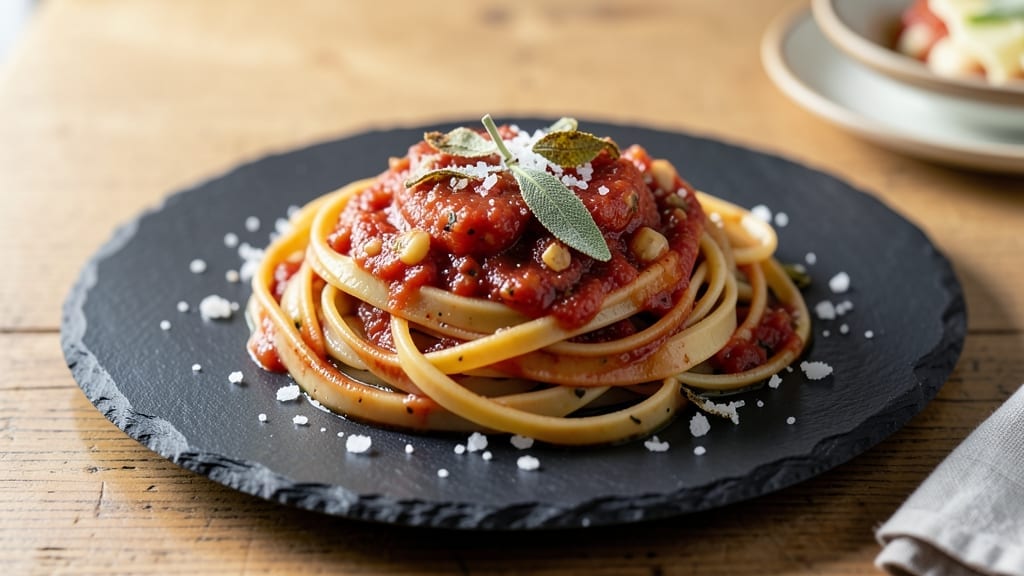
Mastering 00 flour egg pasta transforms homemade noodles from a weekend project into a foolproof, restaurant-quality reality—no waiting for store-bought perfection. The secret lies in the perfect balance of 00 flour (for silky texture) and eggs (for structure), combined with precise technique that eliminates guesswork.
I’ve refined this method through years of trial and error, ensuring your pasta achieves that coveted al dente bite every time, without the frustration of overworking the dough or uneven sheets.
This recipe delivers crisp yet tender pasta with a smooth, elastic texture—no matter your skill level. The process is straightforward: mix, knead, rest, roll, and cut, then boil for just 2-3 minutes in salted water.
The key to success? Hydration control (we’re using 28% water-to-flour ratio) and a 30-minute rest to relax the gluten, which prevents shrinking and ensures perfect sheeting. Even beginners walk away with professional results.
By the time you toss your freshly cut strands with sauce, you’ll taste the difference: silky, springy noodles that hold up to rich ragù or delicate olive oil and chili flakes.
The dough’s smoothness comes from thorough kneading and rolling, while the 00 flour (finely milled, low-protein Italian flour) prevents grittiness. No more mushy or rubbery pasta—just consistently perfect bites, batch after batch.
Serve immediately with your favorite sauce or save half for another meal (it reheats beautifully). The method scales effortlessly for family dinners or special occasions, and the dough can be prepped ahead for ultimate convenience. Let’s get started—your kitchen is about to become a pasta-making powerhouse.
Ingredients for 00 flour egg pasta
The perfect 00 flour egg pasta starts with these seven essential ingredients—each playing a crucial role in that silky, al dente magic.
| Ingredient | Amount | Notes |
|---|---|---|
| 00 Flour 🌾 | 2 ½ cups | Finely milled, low-protein Italian flour |
| Large Eggs 🥚 | 4 whole | Room temperature for even mixing |
| Extra-Virgin Olive Oil 🫒 | ½ tbsp | High-quality for dough elasticity |
| Diamond Crystal Kosher Salt 🧂 | ½ tsp | For dough and boiling water |
| Semolina Flour 🌾 | ½ cup | For dusting and rolling |
| Water 💧 | 0.7 cup | Room temperature, measured precisely |
| Pasta Machine or Rolling Pin 🍝 | 1 sheet | For rolling dough to 1/16-inch thickness |
The 00 flour is non-negotiable here—this finely milled Italian flour with just 8-9% protein gives you that signature silky texture. Caputo or Mulino Bianco are my go-tos, but any quality 00 flour works. Eggs should be large and room temperature—cold eggs create pockets of moisture that disrupt the dough. The semolina isn’t just for dusting; it adds a subtle nutty flavor and prevents sticking during rolling. Pro tip: sift your flour to eliminate lumps, and use a kitchen scale if you’re feeling fancy—precision matters at this stage. For the water, room temperature is key; cold water tightens gluten, while warm water overworks it.
No semolina? All-purpose flour works in a pinch, though the texture will be slightly less refined. Egg allergies? Replace with 4 tbsp aquafaba (chickpea brine) for a vegan-friendly version, though texture may vary. The olive oil isn’t just for flavor—it acts as a natural dough conditioner, improving elasticity. Use the good stuff (extra-virgin, fruity, not the cheap cooking oil). For the pasta machine, a Marcato or Imperial is ideal, but a sturdy rolling pin and sharp knife work too. If you’re cutting by hand, aim for 1/8-inch thickness—any thicker and it won’t cook evenly. The dough should be smooth, not sticky; if it sticks, add just a pinch more flour.
Freshly made dough keeps for 24 hours wrapped tightly in plastic in the fridge, though it’s best used immediately. For longer storage, freeze shaped pasta on a floured tray for 1 hour, then transfer to a bag for up to 3 months. Thaw in the fridge overnight before boiling. The key to reheating? Toss with olive oil and a splash of pasta water—this prevents drying. And here’s a game-changer: boil your pasta in well-salted water (like the sea) for that restaurant-quality bite. Save some starchy water to toss with sauce—it’s liquid gold for clinging those strands together.
Why You’ll Love This Recipe
- No-Machine Needed: I swear by this recipe because it requires zero pasta maker or fancy tools—just a bowl, a fork, and my hands. The 00 flour gives it that silky texture without the fuss, and honestly? It’s the kind of pasta I make when I’m too tired to even think about rolling dough.
- Eggy Richness: Between us, this pasta tastes like my nonna’s—just richer. The large eggs bind it perfectly, and that touch of semolina on the outside? Crispy edges, tender bite. I’ll be real: I’ve tried store-bought, but nothing beats the freshness of this batch.
- Weeknight to Dinner Party: This pasta is my secret weapon for any meal. Toss it with a quick aglio e olio for a lazy Tuesday, or dress it up with truffle oil and pecorino for guests. It reheats like a dream, so leftovers? Always a win.
- Budget-Friendly Staple: 00 flour and eggs are cheap, and this recipe stretches far—enough for two meals or a big family dinner. Plus, the olive oil and salt are pantry basics. I make a double batch every Sunday and freeze half; it’s my go-to for when I’m broke but still want to eat well.
Step-by-step instructions for 00 flour egg pasta
Here’s how to create silky, perfectly al dente pasta with just seven ingredients and minimal waiting.
Combine Dry Ingredients for Optimal Texture
On a clean work surface, mound the 2.5 cups 00 Flour and create a well in the center. Add the 0.5 tsp Diamond Crystal Kosher Salt to the flour and whisk it into the flour using a fork or whisk. This ensures even distribution of salt throughout the dough, preventing any salty pockets later. The low-protein 00 flour gives us that signature Italian pasta texture—smooth, elastic, and silky when cooked.
Next, add the 0.5 cup Semolina Flour to the well and mix it with the 00 flour. The semolina adds a beautiful golden color and prevents the dough from sticking to the rolling surface. I like to use my hands to break up any flour clumps and create a uniform mixture. This is where the magic begins—these two flours working together create pasta with both tenderness and structure.
Incorporate Wet Ingredients for Perfect Dough
In a separate bowl, whisk together the 4 whole Large Eggs and the 0.7 cup Water until completely combined. The eggs should be at room temperature for even incorporation. Add the 0.5 tbsp Extra-Virgin Olive Oil to the egg mixture and whisk again. This oil enhances the dough’s elasticity and prevents cracking during rolling.
Now, pour the egg mixture into the flour well and begin incorporating with a fork. Gradually draw the flour into the wet ingredients, mixing until a shaggy dough forms. Once it comes together, use your hands to knead the dough on the work surface for about 8-10 minutes. You’re looking for a smooth, elastic dough that’s no longer sticky. If it feels too dry, add a teaspoon of water; if too sticky, add a bit more flour—but don’t overdo it, as we want to maintain that perfect balance.
Rest the Dough for Effortless Rolling
Shape the dough into a ball and wrap it tightly in plastic wrap. Let it rest at room temperature for at least 30 minutes, but ideally 1 hour. This resting period allows the gluten to relax, making it much easier to roll out thin sheets without tearing. I like to place the dough in the fridge during this time—it helps prevent the dough from drying out if I’m not ready to roll immediately.
After resting, divide the dough into 4 equal portions (about 100 grams each) for easy handling. Dust your work surface generously with semolina flour to prevent sticking. This is where having the semolina flour ready makes all the difference—it creates that perfect barrier between dough and surface. Keep the unused portions covered to maintain moisture.
Roll to Perfect Thinness Using Your Preferred Method
Using a pasta machine or rolling pin, roll out one portion of dough to the thinnest setting on your machine (typically 1/16-inch thickness). If using a rolling pin, roll from the center outward, rotating the dough 90 degrees after each pass. The goal is to create sheets that are thin enough to cook perfectly al dente in 2-3 minutes—that’s the hallmark of great fresh pasta.
As you roll, dust both sides of the dough with semolina flour to prevent sticking. If you notice the dough tearing, let it rest for a few minutes before continuing. The semolina flour should be sprinkled generously but not excessively—just enough to create that beautiful golden crust on your finished pasta. I like to work with one portion at a time, keeping the others covered to maintain their moisture and elasticity.
Cut and Cook to Al Dente Perfection
Cut the rolled sheets into your desired pasta shape—whether it’s tagliatelle, fettuccine, or spaghetti. If you’re using a pasta machine, simply cut the sheets at the end of the roller. For hand-cutting, use a sharp knife or pasta cutter. The key here is to cut the pasta just before cooking to prevent it from drying out and sticking together.
Cook the pasta in a large pot of salted boiling water for 2-3 minutes—that’s right, just a few minutes! The pasta should be tender but still have a slight bite to it. You’ll know it’s perfect when it floats to the surface and a quick taste confirms it’s al dente. Drain immediately and toss with your favorite sauce. The beauty of fresh pasta is that it cooks in a fraction of the time of dried pasta, and the flavor is incomparable.
Pro Tips For Making 00 Flour Egg Pasta
- Weigh Your Eggs: Skip eyeballing—00 flour is finicky. Weigh eggs at 33% of your flour weight (e.g., 200g flour = 66g eggs). Too many eggs = sticky mess; too few = dry pasta. I learned this after making a batch that crumbled like sad lasagna.
- Chill the Dough: Rest the dough in the fridge for at least 30 minutes before rolling. This relaxes the gluten, so it doesn’t snap back when you cut it. I used to skip this and ended up with a lumpy, uneven pile of frustration—now it’s smooth as butter.
- Dust, Don’t Grease: Use semolina flour (not all-purpose) to dust your work surface and rolling pin. It adds texture and prevents sticking better than oil. Yes, it’s messier, but your pasta will have that professional crunch you crave.
- Boil Like a Pro: Salt the pasta water to taste like the sea—about 2 tablespoons kosher salt per liter. Test it: if a drop stings your eye, it’s ready. Under-salted water = bland pasta, no matter how good your dough. (And no, you can’t fix it later.)
Essential equipment for perfect results
Pasta Machine Essentials
If you’re serious about fresh pasta, a pasta machine is a game-changer. I swear by the Marcato Atlas 150—it handles thick and thin settings perfectly, and the steel rollers ensure even pressure. For budget-friendly options, the Imperial Pasta Machine is a solid choice with adjustable thickness settings.
The key feature to look for is durable steel rollers—they prevent the dough from tearing and create that signature smooth texture. 🍝
Hand Tools for Precision
A sharp pasta cutter is non-negotiable if you’re cutting by hand. My go-to is the OXO Good Grips Pasta Cutter—it glides through dough like butter and gives clean, even cuts.
For rolling, a wooden rolling pin (like the Nordic Ware) adds just the right amount of resistance without crushing the dough. If you’re going full traditional, a marble rolling pin (like Barbaglio) adds weight for that authentic Italian feel.
Pro tip: Keep your tools dust-free—semolina buildup can make dough stick.
Dough Essential: Semolina Flour
Never skip the semolina flour—it’s not just for dusting. I use Barilla Semola di Grano Duro for its fine texture and nutty flavor. Sprinkle it generously on your work surface and rolling tools to prevent sticking and add that signature golden crust.
For extra convenience, keep a small bowl of semolina nearby while rolling—this ensures you’re always within reach. A little goes a long way, but don’t skimp: you want that rustic, textured finish on your pasta. 🌾
Kitchen Scale for Accuracy
A digital kitchen scale (like the OXO Good Grips) is my secret weapon for consistent results. Weighing dough portions to 100 grams each ensures even rolling and cooking. No scale? Use the cup-to-gram conversion for 00 flour: 1 cup = 120 grams.
For water, a measuring cup with a spout (like Pyrex) keeps spills to a minimum. Precision here prevents dough that’s too dry or sticky—both culprits for uneven pasta.
Boiling Setup: Large Pot + Thermometer
Your pasta needs a large, deep pot (like All-Clad Stainless Steel) to hold plenty of water and prevent overflowing. A candy or instant-read thermometer (like Thermoworks Thermapen) helps you monitor water temperature—aim for a rolling boil at 212°F.
Salt the water like the sea: 1 tbsp kosher salt per gallon of water. This ensures your pasta absorbs flavor from the start. Pro move: Keep a ladle nearby to test doneness—fresh pasta cooks in 2-3 minutes, so timing is everything. ⏱️
Storage Solutions: Airtight Containers
For leftover dough or shaped pasta, airtight containers are a must. I use glass Pyrex containers with snap-on lids—they prevent drying and keep dough fresh for up to 24 hours in the fridge.
For longer storage, freeze shaped pasta on a floured tray for 1 hour, then transfer to a ziplock bag with parchment paper between layers. Thaw in the fridge overnight before boiling. Never freeze uncooked dough—it releases too much moisture and turns gummy. 💫
Nutrition facts
Frequently asked questions
Why does this recipe use 00 flour instead of all-purpose?
The 00 flour is key for that signature Italian texture—it’s finely milled with just 8-9% protein, creating silky, elastic strands that hold sauce beautifully. All-purpose (11-12% protein) would make the pasta tougher and less refined. Think of it as the difference between handmade silk and sturdy canvas. For best results, use brands like Caputo or Mulino Bianco.
Can I make this pasta without a pasta machine?
Use a rolling pin and a sharp knife for hand-cutting. Roll the dough from the center outward, turning 90 degrees after each pass to maintain even thickness. Aim for 1/8-inch thickness—thinner than you might think for fresh pasta. For extra precision, fold the rolled dough in half and cut through both layers at once. A wooden pin adds just the right resistance without crushing.
What’s the secret to preventing sticky dough?
The 30-minute rest is non-negotiable—it relaxes the gluten and prevents stickiness. If your dough feels too tacky during kneading, add just 1 tsp flour at a time (never more). The semolina flour is your best friend: dust your work surface generously and keep a small bowl nearby while rolling. Pro tip: Chill the dough for 15 minutes if it’s too warm from kneading—this firms it up instantly.
How do I know when fresh pasta is perfectly cooked?
Fresh pasta cooks in just 2-3 minutes—far faster than dried! Test it by tasting a strand when it floats to the surface. It should be tender with a slight al dente bite (not mushy). The key is well-salted boiling water (like the sea) and constant stirring to prevent sticking. Drain immediately and toss with sauce while hot. Overcooking turns it gummy—set a timer!
Can I make this dough ahead of time?
Yes! Wrap the rested dough tightly in plastic and refrigerate for up to 24 hours. For longer storage, shape the pasta and freeze on a floured tray for 1 hour before transferring to a bag (up to 3 months). Thaw overnight in the fridge before boiling. Never freeze uncooked dough—it releases too much moisture. To reheat cooked pasta, toss with olive oil and a splash of pasta water.

- 6 Egg Cake Recipe with Oil: Light as Air With Buttery Moisture - October 4, 2026
- 4 Bean Casserole Recipe: One-Pan Heartiness With Smoky Paprika Depth - October 4, 2026
- 3-Ingredient Keto Mug Cake Recipe: Microwave Magic in 2 Minutes - October 4, 2026