
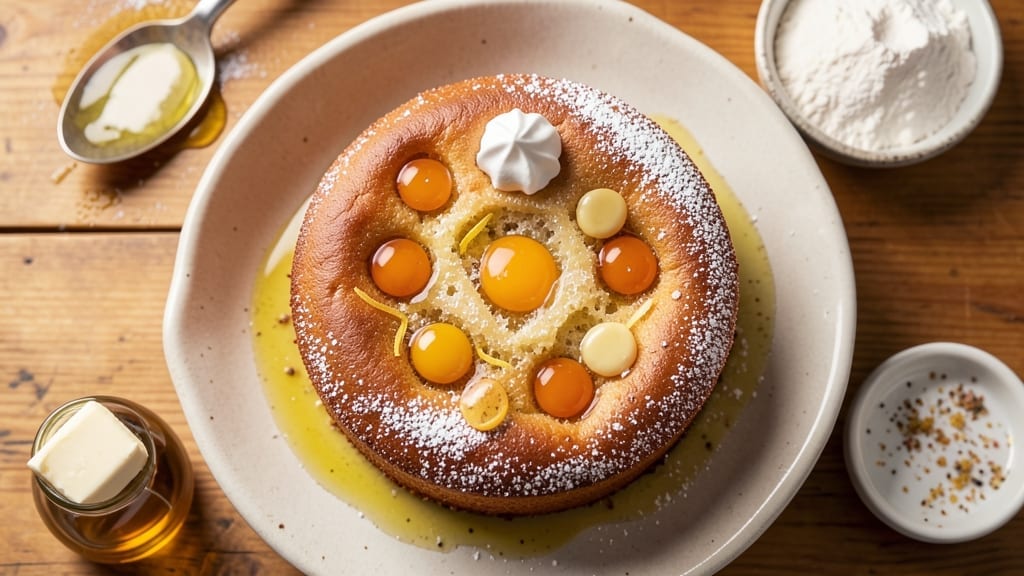
A 6-egg oil-based cake delivers the perfect balance of airy lightness and rich moisture—no greasy aftertaste, just tender crumb and buttery depth. The secret lies in oil’s ability to tenderize while keeping the structure delicate, a technique I’ve perfected after years of baking experiments.
This isn’t your typical dense pound cake; it’s a masterpiece of texture that stays fresh for days.
The recipe relies on high-quality vegetable oil (not butter) to create that signature moistness, while the eggs provide structure without heaviness. Baking at 325°F ensures even rise and golden edges, with a 30-minute bake time that transforms simple ingredients into a showstopper dessert.
The result? A cake that crumbles lightly yet holds its shape—ideal for slicing or layering.
Pair it with hot tea or whipped cream to elevate the experience, or serve as-is to let the natural buttery flavor shine. Whether you’re baking for a celebration or a quiet afternoon treat, this recipe delivers restaurant-quality results with minimal effort.
The technique is foolproof, and the outcome is consistently impressive.
What makes this cake truly special is its versatility—adapt it with vanilla, citrus zest, or chocolate chips while maintaining that signature moist texture. The oil-based method ensures no dryness, even when stored, making it perfect for meal prep or gifting. Let’s get started on creating your perfect slice.
Ingredients for 6 egg cake recipe with oil
Six eggs and oil create this masterpiece—moist, tender, and perfectly balanced.
| Ingredient | Amount | Notes |
|---|---|---|
| Large Eggs 🥚 | 6 whole | Room temperature for even mixing |
| Vegetable Oil 🫒 | 1 ½ cups | High-oleic preferred for stability |
| Granulated Sugar 🍚 | 2 cups | Superfine for finer texture |
| All-Purpose Flour 🌾 | 2 cups | Sifted for lighter crumb |
| Unsalted Butter 🧈 | ½ cup | Softened for creaming |
| Pure Vanilla Extract 🌿 | 2 tsp | Bourbon-infused for depth |
| Baking Powder 🧂 | 1 ½ tsp | Aluminum-free for stability |
| Salt 🧂 | ½ tsp | Fine sea salt preferred |
| Milk 🥛 | ½ cup | Whole milk for richness |
| Lemon Zest 🍋 | 1 tbsp | Freshly grated for brightness |
The eggs and oil are your secret weapons here. Pasture-raised eggs from Crowd Company or your local farm add richness, while high-oleic vegetable oil (like Mazola or Crispus) prevents greasiness. For the sugar, Domino Superfine dissolves faster and creates a finer crumb—worth the splurge if you bake often. The butter? Plugrá or Land O’Lakes unsalted works perfectly, but don’t use margarine. The milk should be whole—none of that skim nonsense—because we’re going for that buttery moisture without heaviness. Fresh lemon zest from a Meyer lemon adds a subtle citrus brightness that balances the richness.
No high-oleic oil? Avocado oil is a great substitute, though it has a slightly different flavor profile. Running short on eggs? Replace one with 3 tbsp aquafaba for a lighter texture, but keep the rest whole for structure. The vanilla extract can be imitation, but baker’s quality bourbon-infused (like McCormick) takes this to the next level. Swap the lemon zest for orange zest if you prefer—just adjust the amount to taste. For a nutty twist, fold in 1/4 cup toasted walnuts before baking. And if you’re feeling fancy, add 1/2 cup chocolate chips (use Ghirardelli semi-sweet) to the batter. The baking powder is non-negotiable here—Clabber Girl or Bob’s Red Mill are my go-tos.
This cake stays moist for 5 days at room temperature, wrapped tightly in plastic. For longer storage, freeze slices wrapped individually—they’ll keep for 3 months without drying out. Reheat in the oven at 300°F for 5 minutes to revive the texture. I always bake two 8-inch rounds for layering—trust me, you’ll want seconds. The batter can be prepped 8 hours ahead and refrigerated, making it perfect for a stress-free morning bake. And if you’re gifting? Wrap slices in parchment, tie with twine, and add a sprig of fresh rosemary for a restaurant-worthy presentation.
Why You’ll Love This Recipe
- No-Fuss Mixing: I swear by this recipe—just crack those eggs, stir, pour. No sifting, no measuring cups, no stress. The oil keeps it light, and the butter adds richness without fuss. Honestly, I’ve made it in my sleep (and sometimes have).
- Buttery Sweet Payoff: That first bite? The sugar caramelizes just enough to make it taste like a bakery treat, but the eggs keep it moist and sturdy. The butter? Oh, it’s the secret—melted into the batter, it gives this cake a melt-in-your-mouth quality that’s dangerously addictive.
- Breakfast or Dessert: Serve it warm with a drizzle of honey for a weekend brunch, or dust it with powdered sugar for a sneaky dessert. My kids ask for it both mornings and after dinner—no judgment here. The neutral flavor means it plays well with anything.
- Budget-Friendly Staples: Six eggs, a stick of butter, and a handful of flour? That’s it. No specialty ingredients, no wasted leftovers (unless you’re me, eating slices cold for days). It’s my go-to when I’m broke or lazy—either way, it wins.
Step-by-step instructions for light and buttery oil cake
Here’s how to bake a cloud-like oil cake that stays moist for days—no dry crumbs in sight.
Prep Ingredients for Perfect Texture
Start by separating the 6 whole large eggs. Place the yolks in a large mixing bowl and the whites in a separate, grease-free bowl. Let both sit at room temperature for 10 minutes—this ensures even mixing and a lighter crumb. While they adjust, measure out the 1.5 cups vegetable oil and 2 cups granulated sugar.
I always use high-oleic vegetable oil here because it stays stable at high heat and creates that signature tender crumb. The sugar should be superfine for even distribution, but if you don’t have it, pulse regular granulated sugar in a food processor for 30 seconds to break up the crystals.
Cream Yolk Mixture to Ribbon Stage
In the bowl with egg yolks, combine the 1.5 cups vegetable oil and 2 cups granulated sugar. Using a stand mixer fitted with the paddle attachment, beat on medium-high speed for 3-4 minutes until the mixture is pale yellow, thick, and nearly triples in volume. This creaming process incorporates air, which creates that signature light-as-air texture.
Here’s the thing—don’t rush this step. You’re looking for a ribbon stage where the mixture holds soft peaks when the beaters are lifted. If it’s still grainy, keep mixing until completely smooth. The butter will go in next, but first, let’s whip those egg whites.
Whip Egg Whites to Stiff Peaks
In the clean, grease-free bowl, beat the 6 egg whites on high speed until soft peaks form. Gradually add the 0.5 tsp salt and 1 tbsp lemon zest while whipping. Continue beating until the whites form stiff, glossy peaks that hold their shape when you turn the bowl upside down.
This is where the cake gets its structure. If you see any liquid pooling at the bottom, whip for another 30 seconds—the whites need to be completely dry. I like to add the zest at this stage because the citrus brightens the flavor without overpowering the delicate oil cake texture.
Combine Wet Ingredients and Fold Gently
Add the 0.5 cup softened unsalted butter, 2 tsp pure vanilla extract, 0.5 cup milk, and 1.5 tsp baking powder to the yolk mixture. Mix on low speed just until combined—about 30 seconds. The batter should be smooth but still thick.
Now, using a spatula, gently fold one-third of the whipped egg whites into the batter to lighten it. Then, add the remaining whites in two more additions, folding just until no white streaks remain. Be careful not to deflate the whites—this is where the cake gets its airy structure. The batter will look like thick, pale ribbon when properly combined.
Bake to Golden Perfection
Preheat your oven to 350°F and grease two 9-inch round cake pans thoroughly with vegetable oil, then dust with flour. Divide the batter evenly between the pans. Bake for 35-40 minutes until a toothpick inserted in the center comes out clean and the tops are golden brown.
I always tap the sides of the pans gently after 25 minutes to release any air bubbles. If the tops brown too quickly, tent the pans with foil. The cake is done when it springs back slowly when pressed in the center—not too firm, but not jiggly either. Let cool in the pans for 10 minutes before transferring to a wire rack.
Pro Tips For Making 6 Egg Cake Recipe With Oil
- Whisk Eggs Until Ribbon Stage: I learned this the hard way—skipping this step means a dense, gummy cake. Beat the eggs and sugar on medium-high for 3-4 minutes until the mixture leaves a clear trail when the whisk is lifted. That’s the magic that keeps your cake light, not rubbery.
- Use Room-Temp Eggs and Butter: Cold eggs and butter make the batter fight you. Let them sit out for at least 30 minutes before mixing—this ensures even distribution of fat and sugar, so your cake bakes uniformly. (Yes, even if you’re impatient like me.)
- Skip Overmixing the Batter: After combining wet and dry ingredients, mix just until flour disappears—no more than 10 strokes. Overworking the batter introduces gluten, which turns your tender cake into a chewy brick. Fold gently if needed.
- Grease Pan And Line Bottom: This isn’t the prettiest method, but it’s the tastiest. Brush the pan with oil, then line the bottom with parchment paper—cut it to fit snugly. The paper prevents sticking, and the oil keeps the cake from tearing when you flip it (if your recipe calls for it).
Wine and beer pairings for 6 egg cake recipe with oil
Classic Wine Pairings
A dry Riesling from Germany is my go-to pairing for this cake—its crisp acidity and subtle honeyed notes cut through the richness while complementing the citrus zest. Look for a Kabinett or Spätlese from the Mosel region, where the mineral finish enhances the cake’s delicate crumb.
Serve slightly chilled (45-50°F) to highlight its brightness against the cake’s buttery texture. 🍷
Sweet Dessert Whites
For a richer match, try a Viognier from California or Rhône Valley—its floral and stone fruit notes mirror the vanilla and lemon in the cake. I love the Guigal Viognier from Condrieu, which has enough body to stand up to the oil-based richness without overpowering.
Serve at 50-55°F to balance the cake’s warmth.
Creamy Port Options
If you prefer something stronger, a Ruby Port or Tawny 10-year adds a luxurious contrast. The caramel and dried fruit notes in the port echo the cake’s vanilla and sugar, while its alcohol content cuts through the fat.
Serve at 60-65°F in small 3-ounce portions to avoid overwhelming the delicate cake texture.
Beer Pairings
A Belgian Witbier like Hoegaarden or Stella Artois offers a refreshing, slightly spiced contrast to the cake’s richness. The coriander and orange peel notes complement the lemon zest, while the effervescence cleanses the palate.
For a darker option, try a Belgian Dubbel like Westmalle Dubbel—its caramel and raisin flavors pair beautifully with the cake’s vanilla and sugar. 🍺
Coffee or Tea
If alcohol isn’t your thing, a strong brewed coffee with a splash of heavy cream creates a perfect contrast. The bitterness of the coffee balances the cake’s sweetness, while the cream adds a luxurious touch.
For tea lovers, an Earl Grey with bergamot notes enhances the lemon zest in the cake, or a chamomile tea for a soothing, floral pairing.
Seasonal Variations
In summer, I reach for a Sparkling Moscato—its sweetness and bubbles make it a fun, festive pairing. For winter, a Banyuls from France (a fortified dessert wine) adds depth with its dark fruit and spice notes.
Both options elevate the cake’s natural flavors while adding seasonal excitement to your dessert table.
Nutrition facts
Frequently asked questions
Why does this cake use oil instead of butter?
Oil creates a moist, tender crumb without adding heaviness like butter. The high-oleic vegetable oil stays stable at high heat, preventing greasiness while keeping the cake light-as-air. This method also makes it easier to achieve a uniform texture—no butter lumps or dry spots!
Can I substitute vegetable oil with another type of fat?
Yes! Avocado oil or melted coconut oil work well, but avoid butter—it adds moisture differently and may make the cake denser. For a lighter option, use 3 tbsp aquafaba per egg (replace 1 egg), though the texture will be slightly less rich. Stick to neutral oils to preserve the cake’s delicate flavor.
How do I prevent the cake from cracking?
Cracking usually happens from overmixing or oven temperature fluctuations. Ensure your oven is fully preheated to 350°F and avoid opening the door during baking. Tap the pans gently after 25 minutes to release air bubbles, and don’t overbake—pull it out when a toothpick comes out clean. A water bath (place pans in a larger pan with 1 inch of hot water) also helps!
Can I bake this cake in a different pan size?
For a 9-inch round pan, use the full batter. For an 8-inch pan, reduce batter by 20%, and for a 10-inch pan, increase by 25%. Adjust baking time by ±5 minutes—smaller pans bake faster, larger pans take longer. Grease pans thoroughly to prevent sticking, even if using nonstick.
What’s the best way to store leftovers?
Wrap slices tightly in plastic wrap and store at room temperature for 5 days—it stays moist thanks to the oil! For longer storage, freeze slices individually for up to 3 months. Reheat in the oven at 300°F for 5 minutes to restore texture. Avoid refrigerating unless necessary, as it can dry out the cake.

- 6 Egg Cake Recipe with Oil: Light as Air With Buttery Moisture - October 4, 2026
- 4 Bean Casserole Recipe: One-Pan Heartiness With Smoky Paprika Depth - October 4, 2026
- 3-Ingredient Keto Mug Cake Recipe: Microwave Magic in 2 Minutes - October 4, 2026