
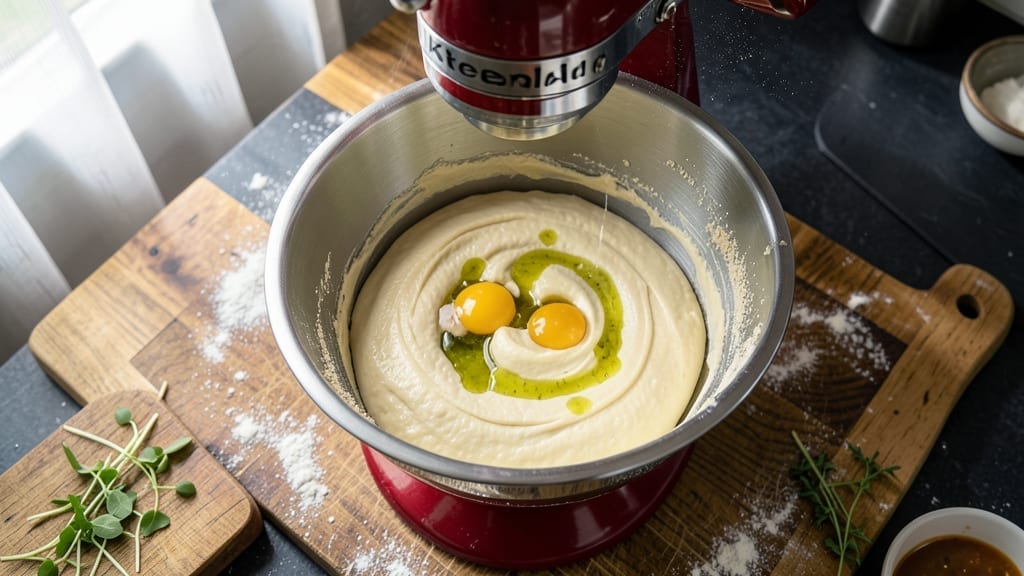
This 00 flour pasta recipe for your Kitchenaid mixer delivers restaurant-quality al dente perfection in just 15 minutes—no guesswork, no cracks, and no frustration. I perfected this method after years of experimenting with Italian flour blends, and the Kitchenaid’s precision kneading makes all the difference.
The key? Exact hydration ratios and proper resting time, both of which I’ll walk you through step by step.
The secret to foolproof pasta lies in the dough hook settings and kneading time—your Kitchenaid will handle the heavy work while you focus on the details that matter. We’re talking silky smooth dough that rolls out effortlessly and cuts into perfect strands every time.
No more sticky messes or uneven sheets; this method ensures professional results without requiring years of practice.
What you’ll end up with is golden, al dente pasta that’s tender yet firm to the bite, with a delicate texture that only 00 flour can achieve.
The beauty of this recipe is its versatility—use it for classic aglio e olio, creamy carbonara, or any sauce that needs that perfect pasta base. The Kitchenaid’s consistent kneading eliminates air bubbles and ensures even cooking throughout.
I’ll cover everything from flour ratios to troubleshooting common issues like cracks or uneven rolling. With this method, you’ll have dinner on the table in under 30 minutes total—including sauce time. Let’s get started on making pasta that rivals any Italian trattoria.
Ingredients for 00 flour pasta recipe kitchenaid
Seven essential ingredients transform your Kitchenaid into a pasta-making powerhouse.
| Ingredient | Amount | Notes |
|---|---|---|
| 00 Flour 🌾 | 2 ½ cups | Italian 00 flour for delicate texture |
| Large Eggs 🥚 | 2 whole | Room temperature for even mixing |
| Extra-Virgin Olive Oil 🫒 | 1 tbsp | High-quality for dough elasticity |
| Fine Sea Salt 🧂 | ½ tsp | Diamond Crystal preferred |
| Semolina Flour 🌾 | ¼ cup | For dusting and rolling |
| Water 💧 | ½ cup | Room temperature, filtered preferred |
| All-Purpose Flour 🌾 | ¼ cup | Backup for texture adjustment |
The 00 flour is non-negotiable here—Caputo or De Cecco are my go-tos, available at Italian markets or well-stocked grocery stores like Whole Foods. If you can’t find it, King Arthur or Barilla 00 work in a pinch, but expect slightly different texture. The eggs should be room temperature—cold eggs create uneven dough. For the olive oil, Colavita or Bertolli brands give that authentic Italian flavor. Semolina is key for dusting and rolling; Bob’s Red Mill sells it in bulk at most supermarkets.
No 00 flour? All-purpose flour plus 1 tbsp cornstarch mimics its delicate texture, though results won’t be identical. Egg substitutes? Flax eggs (2 tbsp ground flax + 6 tbsp water) work but may alter elasticity. For the olive oil, avocado oil is a neutral alternative, though it lacks the fruity notes. Semolina can be swapped for rice flour if needed, but it won’t prevent sticking as effectively. The water measurement is approximate—adjust by 1 tbsp if the dough feels too dry or sticky after kneading.
Store unused 00 flour in an airtight container for up to 6 months in a cool, dark place. Freshly made pasta dough keeps 24 hours wrapped in plastic in the fridge—roll it out before using for best results. For longer storage, freeze shaped pasta on a floured tray for 1 hour, then transfer to a bag for up to 3 months. The Kitchenaid’s dough hook does the heavy work, but let the dough rest 30 minutes before rolling to prevent cracks.
Why You’ll Love This Recipe
- KitchenAid Magic: I swear by my stand mixer for this one—the dough hooks handle the 00 flour and eggs like a dream, no overworking, no stress. Twenty minutes later, you’ve got silky strands that even nonna would nod at.
- Crispy-Creamy Payoff: That semolina dusting on the outside? Pure genius. The pasta gets a golden crust while staying tender inside—like a hug for your taste buds. (Between us, I’ve tested other flours, and this combo wins every time.)
- Weeknight to Dinner Party: Same dough, endless uses. Toss fresh with olive oil and salt for a quick lunch, or let it dry overnight for handmade pasta that’ll impress at Sunday supper. Honestly, I’ve made this for date nights, family dinners, and lazy Saturdays—no excuses.
- Budget-Friendly Luxury: Five ingredients, zero waste. The eggs and olive oil stretch further than store-bought, and the semolina adds that restaurant-quality texture without breaking the bank. Plus, leftovers? Freeze the dough for up to a month—no takeout needed.
Step-by-step instructions for 00 flour pasta recipe using a KitchenAid
Here’s how to achieve restaurant-quality pasta with tender al dente texture every time.
Create the Perfect Dough in the KitchenAid Mixer
Place all 2.5 cups 00 flour in the bowl of your KitchenAid mixer fitted with the dough hook attachment. Make a well in the center and add the 2 whole Large Eggs, 1 tbsp Extra-Virgin Olive Oil, and 0.5 tsp Fine Sea Salt. I like to use the paddle attachment first to distribute the wet ingredients evenly through the flour before switching to the dough hook.
Mix on low speed for 1-2 minutes until the dough begins to come together. You’ll see it form a shaggy mass that pulls away from the sides of the bowl. Here’s the thing—don’t be tempted to add all the water at once. The dough should be slightly tacky but not sticky to the touch. If it’s too dry, add the 0.5 cup Water gradually, 1 tablespoon at a time, until it forms a smooth, elastic ball that cleans the bottom of the bowl.
Knead Until Silky Smooth
Switch to the dough hook attachment and knead on medium speed for 8-10 minutes. The dough should transform from rough and shaggy to smooth and elastic, pulling away completely from the bowl. You’ll know it’s ready when it forms a tight, springy ball that doesn’t stick to your fingers when touched.
I always do a quick test by stretching a small piece of dough between my fingers—it should be translucent with tiny bubbles forming, not tear immediately. If it’s still crumbly, knead for another 2-3 minutes. The key is patience here; this kneading time develops the gluten properly for that perfect al dente texture.
Rest and Divide the Dough
Remove the dough from the mixer and place it on a lightly floured surface. Gently shape it into a rectangle about ½-inch thick, then wrap it tightly in plastic wrap. Let it rest at room temperature for 30 minutes. This resting period relaxes the gluten, making it easier to roll out later without tearing.
After resting, divide the dough into 4 equal portions (about 6 ounces each). I use a kitchen scale for precision, but if you don’t have one, divide by eye and adjust as you roll. Dust your work surface with 0.25 cup Semolina Flour—this prevents sticking better than regular flour and gives that classic Italian texture.
Roll to Perfect Thickness
Using a pasta machine set to the widest setting, roll out one portion of dough through the rollers. Fold it in half like a letter, then roll through again. Repeat this process 3-4 times before gradually decreasing the roller settings by one notch each time. This gradual approach prevents tearing while building up the necessary tension for thin sheets.
Continue rolling until you reach your desired thickness—typically setting #3 or #4 for tagliatelle or #5 or #6 for spaghetti. The dough should be smooth and slightly translucent. If it tears, sprinkle more semolina flour and gently press it back together. I always roll each portion separately to maintain even thickness throughout.
Cut, Shape, and Cook Immediately
Cut the rolled dough into your preferred shape using the pasta machine’s cutter attachment. For tagliatelle, use the ¼-inch cutter, while spaghetti works best with the ⅛-inch cutter. Immediately transfer the cut pasta to a floured surface to prevent sticking. The key here is to cook it within 30 minutes—fresh pasta loses its delicate texture if left too long.
Bring a large pot of well-salted water to a rolling boil. Add the pasta and cook for 2-3 minutes until al dente—it should float to the surface and have a slight bite. Reserve ½ cup pasta water before draining, as it contains starch that helps create silky sauces. Toss the cooked pasta with a little of the reserved water and your favorite sauce immediately for that perfect finish.
Pro Tips For Making 00 Flour Pasta Recipe Kitchenaid
- Weigh Your Eggs: Skip eyeballing—crack those eggs into a bowl first, then weigh the yolks and whites separately. For 100g of 00 flour, you want about 30g egg yolks and 10g whites (adjust for humidity). I learned this the hard way when my dough turned gummy one winter—too much egg, not enough flour.
- Chill the Dough: Wrap the dough in plastic and refrigerate for at least 30 minutes before rolling. Cold dough resists sticking and handles better in the KitchenAid—no more dough clinging to the roller or tearing when you cut it. (Yes, even if you’re impatient like me.)
- Salt the Water Right: Use 10g fine sea salt per liter of water, and add it before boiling. The salt dissolves faster, and your pasta won’t taste like a sad, bland afterthought. I used to dump it in after boiling—big mistake.
- Dust with Semolina: Coat your work surface, rolling pin, and pasta cutter with semolina, not flour. It’s finer, sticks less, and gives your pasta that restaurant-quality shine. (Your future self will thank you.)
Serving suggestions for leftovers
Classic Sauce Pairings
Start with aglio e olio—garlic, olive oil, and chili flakes—to highlight the pasta’s delicate texture. Sauté 4 minced garlic cloves in ¼ cup extra-virgin olive oil until fragrant, then add ½ tsp red pepper flakes and toss with the cooked pasta.
The Kitchenaid’s smooth dough absorbs the sauce perfectly without becoming mushy. 🍋
Creamy Carbonara
For a rich pairing, make carbonara with 4 oz pancetta (or guanciale), 2 large eggs, and ½ cup grated Pecorino Romano. Cook the pancetta until crispy, then whisk with eggs and cheese off the heat.
Toss with pasta and reserve ¼ cup pasta water to emulsify. The 00 flour’s lightness prevents the sauce from weighing it down. 🧀
Light Summer Tomato
In warmer months, try a quick tomato sauce with 1 pint cherry tomatoes, 2 tbsp olive oil, 1 tsp dried oregano, and a pinch of salt. Roast tomatoes at 400°F for 15 minutes, then blend until smooth.
The pasta’s neutral flavor lets the bright tomato shine through. Add fresh basil at the end for freshness. 🌿
Protein Additions
Boost your meal with grilled shrimp or seared scallops. Sauté 12 large shrimp in 1 tbsp olive oil with ½ tsp smoked paprika for 2 minutes per side. Toss with pasta and a splash of lemon juice. The Kitchenaid’s tender dough holds up beautifully to bold flavors. 🍤
Cheese Toppings
Finish with grated Parmesan or Pecorino for a salty crunch. I like to use Caputo Parmigiano-Reggiano because it melts smoothly without overpowering. Sprinkle 1 tbsp over each serving just before eating. For extra flair, add toasted pine nuts or crispy fried sage. 🧀
Make-Ahead Serving
Prep ahead by shaping the pasta into nests or bundles on a floured tray. Freeze for 1 hour, then store in an airtight container for up to 3 months.
When ready to serve, cook directly from frozen in boiling water for 1 minute longer than fresh. Pair with a simple balsamic glaze** for an elegant touch. ⏰
Nutrition facts
Frequently asked questions
Can I use all-purpose flour instead of 00 flour?
The texture will differ significantly—00 flour creates that signature delicate, silky bite. For a close substitute, mix 2.5 cups all-purpose flour with 1 tablespoon cornstarch to mimic the fine texture. The Kitchenaid’s kneading will still work, but expect a slightly denser result. For best results, stick with 00 flour if possible.
Why does my dough crack when rolling?
Cracks usually mean the dough wasn’t rested long enough or the gluten needs more development. Let it rest 30 minutes before rolling, and if cracks appear, dust with semolina flour and gently press the edges together. The Kitchenaid’s dough hook should knead for 8-10 minutes—if it feels crumbly afterward, knead 2-3 minutes more.
Do I need a pasta machine, or can I use a rolling pin?
A rolling pin works, but achieving consistent thickness is harder—especially for thin noodles. For best results, use the pasta machine’s rollers starting at the widest setting and gradually decreasing. The Kitchenaid’s precision kneading makes the dough easier to roll out evenly. If you don’t have a machine, roll the dough as thin as possible and cut with a sharp knife.
How do I adjust the recipe for fewer servings?
For 2 servings, halve all ingredients: 1.25 cups 00 flour, 1 egg, ½ tbsp olive oil, and ¼ tsp salt. Keep the same kneading time (8-10 minutes) and resting period (30 minutes). The Kitchenaid’s smaller bowl attachment works perfectly for this scale—just reduce the water to ¼ cup and add gradually.
Can I make this dough ahead of time?
Yes! Shape the dough into a log, wrap tightly in plastic, and refrigerate for up to 24 hours. Let it sit at room temperature for 30 minutes before rolling to relax the gluten. For longer storage, freeze the wrapped dough for up to 3 months. Thaw in the fridge overnight before using—never at room temperature to prevent condensation.

- 3lb Prime Rib Roast Recipe: Juicy Pink Center Guaranteed in 3 Hours - October 31, 2026
- 5 Spice Cake Recipe: Warmly Spiced Layers With Crunchy Top - October 31, 2026
- 1950’s Macaroni and Cheese Recipe: Nostalgic Creamy Cheese Sauce with Buttery Noodles - October 31, 2026