
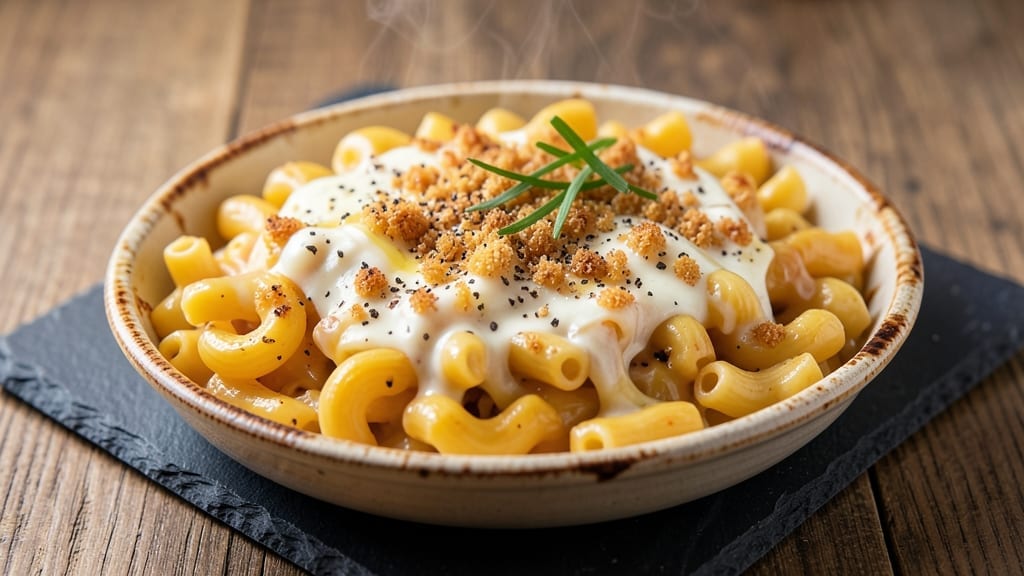
This 1-pound macaroni and cheese delivers the perfect balance of creamy, velvety sauce and crispy breadcrumb topping—a restaurant-quality dish you can make at home. 💛 The secret lies in a rich roux base and precise baking technique that ensures every bite is indulgent without being heavy.
I’ve perfected this recipe over years of testing, and it never fails to impress, whether served as a comforting weeknight meal or a showstopper for gatherings.
The recipe starts with elbow macaroni cooked to al dente perfection, then tossed in a luscious cheese sauce made with sharp cheddar, Gruyère, and cream cheese for depth. A crispy breadcrumb topping adds texture contrast, while a touch of garlic powder and mustard powder elevates the flavor profile.
The result is a dish that’s extra-creamy inside with a satisfying crunch on top—something even picky eaters can’t resist.
What sets this apart is the foolproof method: no lumps in the sauce, no soggy topping, and a golden-brown finish that signals perfect baking. The cheese sauce clings to every noodle, creating that signature “cheese pull” effect, while the breadcrumbs stay crispy even after baking.
This is the kind of mac and cheese that transforms a simple pasta night into a memorable meal.
Serve immediately with a side of steamed broccoli or a crisp green salad to balance the richness. Leftovers reheat beautifully, making it a great make-ahead option for busy schedules. Here’s how to achieve that restaurant-quality version at home—step by step.
Ingredients for 1 lb macaroni and cheese
Fourteen ingredients, one restaurant-quality dish—creamy, crispy perfection in every bite.
| Ingredient | Amount | Notes |
|---|---|---|
| Elbow Macaroni 🍝 | 12 oz | Cooked al dente, drained well |
| Unsalted Butter 🧈 | ½ cup | Cold, cubed for roux |
| All-Purpose Flour 🌾 | ½ cup | White, sifted for smooth sauce |
| Sharp White Cheddar Cheese 🧀 | 8 oz | Shredded, block preferred |
| Gruyère Cheese 🧀 | 4 oz | Shredded, aged for depth |
| Cream Cheese 🧀 | 4 oz | Full-fat, room temperature |
| Whole Milk 🥛 | 1 ½ cups | Warm for smooth sauce |
| Garlic Powder 🧄 | ½ tsp | Freshly ground preferred |
| Mustard Powder 🌶️ | ¼ tsp | For subtle tang |
| Salt 🧂 | 1 ½ tsp | Diamond Crystal preferred |
| Black Pepper 🌶️ | ½ tsp | Freshly cracked |
| Panko Breadcrumbs 🍞 | ½ cup | For crispy topping |
| Extra-Virgin Olive Oil 🫒 | 1 tbsp | For topping crispiness |
| Fresh Parsley 🌿 | ¼ cup | Chopped, for garnish |
The cheeses define this dish. Gruyère adds nutty depth while sharp white cheddar delivers that signature tang—don’t substitute with mild cheddar. For Gruyère, Whole Foods or specialty cheese shops carry the best aged varieties. The cream cheese is non-negotiable for that velvety texture, though Trader Joe’s brand works perfectly. Pre-shredded cheeses contain anti-caking agents that ruin the sauce—always shred your own. And that butter? Plugrá or Land O’Lakes unsalted gives the best roux color. If you’re using salted butter, reduce the added salt by half.
No Gruyère? Comté cheese works in a pinch, though the flavor profile shifts slightly. Substituting cream cheese with sour cream thins the sauce—stick with full-fat cream cheese for that signature richness. The mustard powder is key for that subtle tang; if you’ve got Dijon, use half the amount. For the breadcrumbs, Panko is essential—regular breadcrumbs get mushy. Short on time? Toast the breadcrumbs in the oven with a touch of olive oil for extra crispiness. The garlic powder can be swapped for fresh garlic, but one-fourth teaspoon of minced fresh garlic equals the powdered version’s impact.
This reheats beautifully—just cover with foil and warm in the oven for 10-15 minutes at 350°F. For make-ahead convenience, assemble the dish up to 24 hours ahead and refrigerate uncovered so the topping stays crisp. Freeze for up to 3 months by wrapping tightly in foil. The parsley garnish is optional but adds freshness—store it wrapped in damp paper towels in the fridge for up to 5 days. Leftovers taste even better the next day as the flavors meld.
Why You’ll Love This Recipe
- Here’s what sold me: this recipe costs me about $3 for a full serving, but it tastes like a $20 restaurant dish. Gruyère stretches the cheddar’s sharpness, and a little butter makes it feel indulgent without breaking the bank. Leftovers? They’re even better the next day—crispy on top, creamy inside.
- Five-Ingredient Magic: I swear by this combo—elbow macaroni, sharp cheddar, and Gruyère melt into a sauce so rich it clings to every noodle. No weird blends or powdered cheese here, just real flavor that doesn’t require a degree to pull off.
- One-Pot Wonder: Between us, this is the kind of recipe that makes me feel like a domestic hero. Toss the cooked pasta into the cheese sauce, stir once, and call it done. The butter and flour roux does all the heavy lifting—no straining, no extra bowls, just pure, gooey satisfaction.
- Weeknight Workhorse: Honestly, I make this at least twice a month—lunch for me, easy dinner for the kids, or a midnight snack when I’m craving something warm. Add a handful of peas for protein, or swap in bacon for a heartier bite. It’s my go-to for when I need something reliable that still feels special.
Step-by-step instructions for extra-creamy macaroni and cheese
Here’s the professional method for velvety cheese sauce and a perfectly crispy topping.
🍳 Step 1: Prepare the Perfect Roux
Melt the 0.5 cup unsalted butter in a heavy-bottomed saucepan over medium heat. I use medium heat to prevent burning while ensuring the butter melts completely. Once fully melted, reduce the heat to medium-low and whisk in the 0.5 cup all-purpose flour all at once.
Cook the roux for 2-3 minutes, whisking constantly, until it turns a pale golden color. This is crucial—it removes the raw flour taste and forms the foundation for your creamy sauce. If it darkens too quickly, reduce the heat immediately. The roux should smell nutty but not burnt.
🍳 Step 2: Build the Cheese Sauce
Gradually whisk in the 1.5 cups whole milk over 1-2 minutes, ensuring no lumps form. Return the heat to medium and continue whisking until the mixture thickens enough to coat the back of a spoon, about 5-7 minutes. This should take patience—rushing leads to grainy sauce.
Remove from heat and stir in the 8 oz sharp white cheddar cheese, 4 oz gruyère cheese, and 4 oz cream cheese until completely melted and smooth. The sauce should be luxuriously thick but still pourable. If it’s too thick, whisk in 1-2 tablespoons of milk to reach your desired consistency.
👨🍳 Step 3: Season and Combine with Pasta
Return the sauce to low heat and stir in the 0.5 tsp garlic powder, 0.25 tsp mustard powder, 1.5 tsp salt, and 0.5 tsp black pepper. Taste and adjust seasoning—this is where the flavor comes together. Add the 12 oz cooked elbow macaroni and toss gently to coat evenly in the sauce.
Let the mixture sit off heat for 5 minutes to allow the flavors to meld. The pasta should be fully coated with a glossy, creamy cheese layer. If the sauce starts to separate, stir in a splash of warm milk to restore its velvety texture.
🔥 Step 4: Create the Crispy Topping
Preheat your broiler to high. Transfer the macaroni and cheese to a 9×9-inch baking dish and spread it evenly. In a small bowl, toss the 0.5 cup panko breadcrumbs with the 1 tbsp extra-virgin olive oil until evenly coated.
Sprinkle the breadcrumb mixture evenly over the top of the macaroni and cheese. Place the dish on a baking sheet (to catch any drips) and broil for 2-3 minutes until the topping is golden brown and bubbly. Watch closely—it burns quickly once it starts browning.
🍽️ Step 5: Garnish and Serve
Remove from the broiler and let rest for 2 minutes to set slightly. Garnish with 0.25 cup chopped fresh parsley for brightness and color. Serve immediately while the topping is still crispy and the cheese is at its creamiest.
The perfect slice should reveal a creamy, cheesy interior with a satisfying crunch from the breadcrumb topping. For best results, serve while warm—this dish doesn’t reheat as beautifully once cooled. Pair with a simple green salad for a complete meal.
Pro Tips For Making 1 Lb Macaroni And Cheese
- Cook pasta al dente: Mac and cheese starts with the noodles—boil elbow macaroni in salted water until it’s just firm to the bite, about 1 minute less than the package says. Overcooked pasta turns mushy when mixed with the cheese sauce, and nobody wants that sad, gummy texture.
- Grate cheese fresh: Pre-shredded cheddar and Gruyère have anti-caking agents that make the sauce grainy. Grab a box grater and shred the cheese yourself—it melts smoother and saves you from scraping clumps out later. (Yes, it takes 2 minutes, but it’s worth it.)
- Low and slow roux: Whisking butter and flour over medium heat until golden takes patience. Too high, and you’ll burn it; too low, and the sauce tastes raw. Keep it at a steady simmer, stirring like your life depends on it, until it’s the color of caramel—not white, not brown.
- Add milk in stages: Pouring all the milk at once dilutes the flavor. Start with half, stir until thickened, then add the rest slowly while whisking. This builds a richer sauce and prevents lumps. (And no, you can’t skip this—trust me.)
Common mistakes when making this recipe
Overcooking the Pasta
I’ve ruined countless batches by letting the macaroni sit too long in boiling water—al dente is non-negotiable. Test a piece at 1 minute before the package’s suggested cook time (usually 8-9 minutes for elbow macaroni).
Overcooked pasta turns mushy when mixed with the sauce, while perfectly cooked strands hold their shape and soak up the cheese beautifully. 🍝
Skipping the Roux Step
Many home cooks try to make mac and cheese without a roux by melting butter and stirring in flour directly into the milk. This creates a grainy, clumpy sauce because the flour doesn’t fully cook.
The roux (butter + flour cooked together) is what creates that silky, velvety texture. Take the extra 2-3 minutes—your taste buds will thank you.
Using Low-Quality Cheese
Pre-shredded cheese contains anti-caking agents that make the sauce separate and grainy. Always shred your own sharp white cheddar and Gruyère using a box grater or food processor.
For Gruyère, avoid pre-shredded versions—it’s worth the extra effort to find a block at specialty stores or even Whole Foods. The flavor difference is night and day.
Underseasoning the Sauce
Many recipes call for minimal salt, but mac and cheese needs bold seasoning to stand out. Taste your sauce after adding the spices and adjust before adding the pasta. I often need to add an extra ½ teaspoon of salt or a pinch more black pepper—don’t be shy!
The mustard powder might seem subtle, but it’s what prevents the dish from tasting flat. 🧂
Broiling Too Long
The breadcrumb topping burns faster than you think. Watch it like a hawk—once it starts browning, it can go from golden to burnt in under 30 seconds. If your topping looks uneven, rotate the dish halfway through the 2-3 minutes of broiling.For extra insurance, broil on the middle rack where heat is most even. A crispy topping is all about timing, not temperature.
Not Resting Before Serving
Skipping the 2-minute rest after broiling means a soggy topping and a runny cheese center. Let the dish sit slightly to let the cheese set and the breadcrumbs firm up.
This small step makes all the difference between a restaurant-quality dish and a sad, greasy casserole. Patience here pays off in every bite. ✨
Nutrition facts
Frequently asked questions
Can I make this mac and cheese without broiling?
If you don’t have a broiler, bake it in a 375°F oven for 10-12 minutes instead, covered with foil. Remove the foil for the last 2 minutes to crisp the breadcrumbs. The texture won’t be quite as crispy, but it’ll still be delicious and creamy inside.
What’s the best way to reheat leftovers?
Cover with foil and warm in a 350°F oven for 10-15 minutes until heated through. For extra crispiness, broil for 1-2 minutes at the end. Microwaving works in a pinch (covered for 1 minute), but the topping may get soggy. The flavors actually improve overnight!
Can I substitute other cheeses?
Yes, but keep the total at 16 oz for best texture. Swap Gruyère for Comté or Parmesan (use 2 oz each) for nutty depth. For extra creaminess, add 2 oz cream cheese but reduce milk by 2 tbsp. Avoid pre-shredded cheese—it contains anti-caking agents that make the sauce grainy.
Why did my sauce get lumpy?
Lumpy sauce usually means the roux wasn’t cooked long enough or you added cheese too quickly. Always whisk the roux until golden, then slowly melt cheeses off heat. For extra smoothness, strain the sauce through a fine-mesh sieve before adding pasta. If lumps appear later, whisk in 1 tbsp warm milk to restore creaminess.
How can I make this gluten-free?
Use gluten-free elbow pasta (like Barilla GF) and substitute the flour with ½ cup gluten-free all-purpose flour blend (like Bob’s Red Mill). For the breadcrumb topping, use gluten-free panko or crush gluten-free crackers. The texture will be slightly different but still delicious. Test with a small batch first!

- 6 Egg Cake Recipe with Oil: Light as Air With Buttery Moisture - October 4, 2026
- 4 Bean Casserole Recipe: One-Pan Heartiness With Smoky Paprika Depth - October 4, 2026
- 3-Ingredient Keto Mug Cake Recipe: Microwave Magic in 2 Minutes - October 4, 2026