
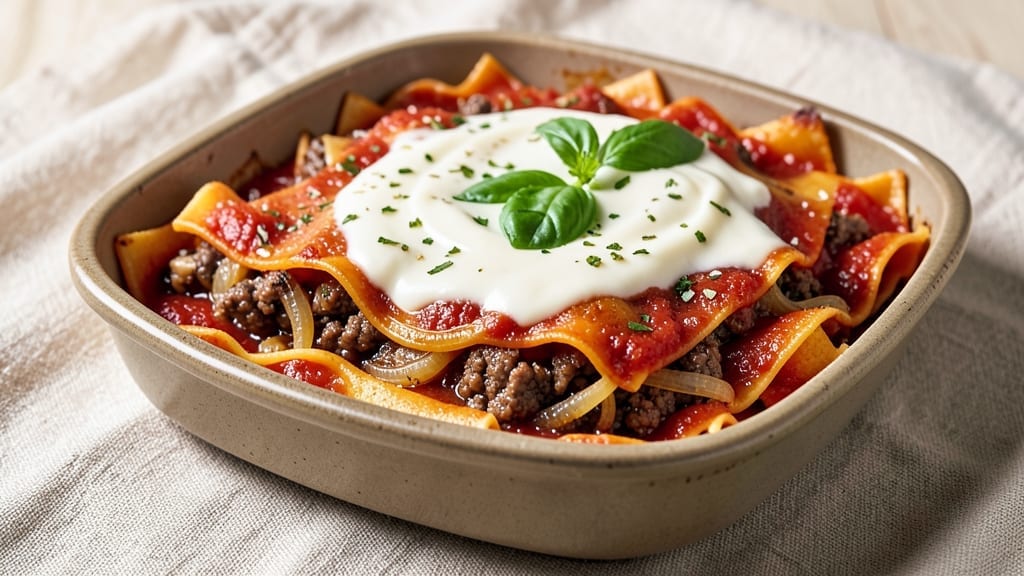
A 1-pot lasagna recipe solves the age-old problem of soggy noodles and messy baking sheets—no-boil layers that stay perfectly stacked and tender after baking. The secret lies in using uncooked lasagna noodles and a slow-bake method that transforms them into al dente perfection without the hassle of pre-boiling.
I’ve perfected this technique over years of trial and error, ensuring every layer stays intact while the cheese melts into a golden, bubbling blanket.
What makes this recipe truly revolutionary is the foolproof layering technique that eliminates the need for multiple dishes. You’ll work directly in a deep baking dish, combining rich meat sauce, creamy béchamel, and melted cheese in a single pot.
The slow baking process allows the noodles to cook through while maintaining their structure, resulting in lasagna that’s easier to assemble and cleaner to serve than traditional recipes.
By the time you pull this lasagna from the oven, you’ll have a restaurant-quality dish with perfectly tender noodles, a rich meat sauce infused with herbs, and a velvety cheese layer that’s crisp on top but creamy inside.
The aroma alone will have everyone gathering at the table, and the first bite delivers that satisfying combination of textures and flavors we all love in lasagna.
The best part? This recipe scales effortlessly—whether you’re feeding a family of four or hosting a dinner party for ten. The same principles apply, and the single-pot method means less cleanup and more time enjoying your creation.
Let’s get started on this game-changing lasagna that redefines home cooking convenience without sacrificing quality.
Ingredients for 1 pot lasagna
No-boil noodles, rich meat sauce, and foolproof layers—everything you need for lasagna that stays perfectly stacked.
| Ingredient | Amount | Notes |
|---|---|---|
| Uncooked Lasagna Noodles 🍝 | 12 pieces | No-boil, oven-ready variety |
| Ground Beef 🥩 | 1 ½ lb | 80% lean, finely ground |
| Yellow Onions 🧅 | 1 whole | Medium size, diced small |
| Garlic Cloves 🧄 | 4 cloves | Fresh, minced fine |
| Tomato Sauce 🍅 | 2 cups | Canned, crushed tomatoes preferred |
| Heavy Cream 🥛 | 1 cup | Full-fat for richness |
| Unsalted Butter 🧈 | ½ cup | Cold, cubed for béchamel |
| All-Purpose Flour 🌾 | ½ cup | For creamy sauce base |
| Parmesan Cheese 🧀 | 1 ½ cups | Freshly grated from block |
| Mozzarella Cheese 🧀 | 2 cups | Fresh, shredded (low-moisture) |
| Dried Basil 🌿 | 1 tbsp | Or 0.25 cup fresh basil |
| Dried Oregano 🍃 | 1 tsp | Italian blend preferred |
| Salt 🧂 | 1 ½ tsp | Diamond Crystal kosher |
| Black Pepper 🌶️ | 1 tsp | Freshly ground preferred |
| Olive Oil 🫒 | 2 tbsp | For greasing baking dish |
The ground beef is where flavor starts. 80% lean gives you that perfect meaty taste without too much fat. I always grab the store brand—it’s cheaper and works just as well as name brands. For the onions, yellow ones caramelize better than red or white. If you’re using pre-ground beef, pat it dry first—it browns better and won’t make your sauce greasy. The no-boil noodles are a game-changer; they absorb sauce without getting mushy. Grab a family-size box—you’ll need all 12 sheets for that perfect layered effect.
No fresh basil? Dried works fine—just use one-third the amount. The tomato sauce can be any brand, but San Marzano makes a noticeable difference in flavor. Running low on mozzarella? Provolone or fontina melt beautifully too. For the béchamel, cold butter is key—it creates those little flour-butter bits that make the sauce silky. If you’re not a fan of heavy cream, half-and-half works in a pinch, though the texture won’t be quite as rich. The Parmesan? Grate it yourself—pre-grated gets clumpy and ruins the texture.
This lasagna tastes even better the next day—honestly, leftovers are the best part. Store it covered in the fridge for 4-5 days, or freeze portions for 3 months. I always make a double batch because it reheats perfectly in the oven at 350°F for about 20 minutes. For serving, let it rest 10 minutes before cutting—keeps everything from sliding everywhere. The noodles stay perfectly al dente because of that slow bake, so no soggy bottoms here.
Why You’ll Love This Recipe
- One-Pan Magic: I swear by this—no boiling noodles, no messy layers. Just brown the beef with onions and garlic, toss in the dry noodles and sauce, and let it all bake together. The noodles soften perfectly without pre-cooking, and cleanup? One pot, one spatula.
- Meaty Depth: That ground beef gets crispy in spots while staying juicy, and the onions caramelize right in the sauce. Honestly, the garlic cloves roasted into the tomato base? It’s the kind of flavor that makes you pause mid-bite.
- Leftovers That Win: This recipe doubles easily, and the second night is even better. The noodles hold up, the sauce thickens just right, and reheating it? Microwave or oven, it’s still hearty and satisfying.
- Budget-Friendly Feast: Ground beef stretches far with onions and garlic, and uncooked noodles cut costs. I’ve fed six people for under $15, and everyone leaves happy—no one skips seconds. (Yes, even on a Tuesday night.)
Step-by-step instructions for one-pot lasagna
Here’s how to build layers that stay stacked and delicious without boiling noodles first.
Brown the Ground Beef and Sauté Aromatics
Heat the 2 tablespoons olive oil in a large Dutch oven over medium-high heat. Add the 1.5 lb ground beef, breaking it up with a wooden spoon as it cooks. Let it brown undisturbed for 4-5 minutes until the meat loses its raw color and pulls away from the pan.
Push the beef to one side and add the 1 whole yellow onions and 4 cloves garlic cloves to the empty space in the pan. Sauté for 3-4 minutes until the onions turn translucent and the garlic releases its aroma. Stir everything together, then add the 2 cups tomato sauce, 1 tablespoon dried basil, 1 teaspoon dried oregano, 1.5 teaspoons salt, and 1 teaspoon black pepper. Let it simmer for 5 minutes to meld the flavors.
Prepare the Creamy Béchamel Sauce
In a separate saucepan, melt the 0.5 cup unsalted butter over medium heat. Once melted, whisk in the 0.5 cup all-purpose flour to create a roux. Cook for 1-2 minutes until the mixture turns golden and bubbly.
Gradually whisk in the 1 cup heavy cream, a little at a time, until the sauce thickens to a smooth, creamy consistency. Remove from heat and stir in 1 cup of the parmesan cheese and 1 cup of the mozzarella cheese. Set aside to keep warm.
Assemble the One-Pot Lasagna
Preheat your oven to 375°F. Lightly grease a 9×13-inch baking dish with a bit of olive oil. Spread half of the meat sauce on the bottom of the dish. Arrange 6 uncooked lasagna noodles horizontally over the sauce, slightly overlapping them if needed.
Spoon half of the creamy béchamel sauce over the noodles, then sprinkle with the remaining 1 cup parmesan cheese and 1 cup mozzarella cheese. Repeat the layers with the remaining meat sauce, noodles, béchamel, and cheeses. The top layer should be noodles, followed by the remaining cheese.
Bake Until Bubbly and Golden
Cover the baking dish tightly with aluminum foil and bake for 25 minutes. Remove the foil and bake for an additional 15-20 minutes until the top is golden brown and bubbly. The edges should look crispy, and the cheese should be fully melted.
Let the lasagna rest for 10 minutes before serving. This resting time allows the layers to set, making it easier to slice and serve. Cut into squares and enjoy the perfect combination of tender noodles, rich meat sauce, and creamy béchamel.
Pro Tips For Making 1 Pot Lasagna
- Brown the Beef Long: Don’t rush this—get that meat dark and crispy in spots before draining fat. I learned the hard way that skipping this step leaves your lasagna tasting flat, no matter how much garlic you add. Five minutes of patience here makes a real difference.
- Soften Onions Slowly: Slice onions thin and cook them on medium-low heat until they’re translucent but not caramelized. High heat turns them bitter, and your lasagna’s flavor base will suffer. Sounds boring, but trust the process—your sauce will thank you.
- Pre-Cook Noodles Halfway: Boil uncooked lasagna noodles for 2 minutes less than the package says, then drain and toss them in olive oil. They’ll finish cooking in the oven, holding their shape without turning to mush. (Yes, even if you’re impatient like me.)
- Layer Sauce First: Spread a thin layer of tomato sauce on the bottom of your pot before adding noodles. This prevents sticking and ensures every bite has that rich, saucy flavor. I skip this when I’m lazy, but the dish is noticeably better when I don’t.
Troubleshooting perfect results
Noodles Staying Raw
If your noodles aren’t cooking through, the issue is likely underbaking. The no-boil noodles need that 40-45 minutes total bake time at 375°F to reach perfect al dente. I’ve found that using a meat thermometer inserted into the center helps—pull it when the internal temp hits 190°F.
Also, make sure your baking dish isn’t too large; 9×13-inch is ideal for even heat distribution. 🌡️
Sauce Too Watery
Watery sauce usually means the noodles absorbed too much liquid. To fix this, reduce the meat sauce on the stovetop before assembling—simmer uncovered for 10-15 minutes until thickened. For the béchamel, use 1 tablespoon cornstarch mixed with 2 tablespoons cold water as a thickener if needed.
I also recommend adding an extra ½ cup shredded mozzarella to the top layer to absorb excess moisture during baking.
Cheese Not Melting
Cheese that won’t melt often means it’s too cold or the oven isn’t hot enough. First, make sure your cheeses are at room temperature before assembling. If the top layer isn’t browning, increase your oven temp to 400°F for the final 5-10 minutes uncovered.
For extra insurance, sprinkle ¼ cup grated parmesan on top right before the final baking phase—it acts as a protective crust that helps melt the cheese underneath.
Layers Falling Apart
Layers collapsing usually happens when the sauce is too thin or the noodles aren’t properly supported. Start by spreading a thin layer of sauce on the bottom before adding noodles—this creates a glue-like base. Also, press each layer gently with a spatula to ensure good contact between components.
For extra stability, I recommend adding a thin layer of ricotta (about ½ cup) between noodle layers—it adds structure while keeping things creamy. 💡
Burnt Top Layer
A burnt top typically means the oven was too hot or the lasagna baked uncovered for too long. Always cover with foil until the 25-minute mark, then uncover just before the final 15 minutes to allow browning.
If you notice browning too quickly, tent loosely with foil or reduce the temp to 350°F for the last phase.
For a foolproof finish, I like to add a sprinkle of breadcrumbs (about 2 tablespoons) to the very top before the final bake—it creates a protective crust that prevents burning while still getting golden.
Dry Noodles
Dry noodles happen when the lasagna bakes too long or the sauce isn’t rich enough. To prevent this, make sure your meat sauce has enough fat—add 1 tablespoon olive oil to the sauce if needed.
For extra moisture, I recommend adding ¼ cup heavy cream to the meat sauce before assembling. If your lasagna is already dry, try reheating with a splash of beef broth or whole milk (about ¼ cup) to revive the texture.
Cover tightly and reheat at 325°F for 15-20 minutes to restore moisture without overcooking.
Nutrition facts
Frequently asked questions
Why do I need no-boil lasagna noodles for this recipe?
No-boil noodles stay firm during baking because they’re pre-cooked and dried to absorb sauce without turning mushy. The key is their 40-45 minute bake time at 375°F—they cook perfectly in the oven while maintaining structure. Traditional boiled noodles release too much starch, making layers soggy.
Can I use regular lasagna noodles instead of no-boil?
You can try, but expect softer noodles. For best results, boil regular noodles 1-2 minutes less than package instructions, drain well, and pat dry with paper towels. The single-pot method still works, but texture will differ from the al dente no-boil version.
How do I prevent my lasagna from getting watery?
Reduce your meat sauce on the stovetop for 10-15 minutes before assembling to thicken it. Also, use low-moisture mozzarella and sprinkle an extra ½ cup shredded cheese on top—it absorbs excess moisture during baking. For the béchamel, a 1 tbsp cornstarch slurry works wonders!
What’s the best way to reheat leftovers?
Cover tightly with foil and reheat at 325°F for 20-25 minutes—this prevents drying. For extra moisture, add ¼ cup beef broth or whole milk before reheating. Never microwave directly from the fridge—temperature shock makes noodles rubbery.
Can I make this lasagna in a smaller baking dish?
Yes, but expect longer baking time—heat distributes differently. For a 8×8-inch dish, bake 50-60 minutes covered, then 15-20 minutes uncovered. Use the same layering technique but reduce sauce by 25% to avoid overflow. A 9×13-inch dish is ideal for even cooking!

- 3lb Prime Rib Roast Recipe: Juicy Pink Center Guaranteed in 3 Hours - October 31, 2026
- 5 Spice Cake Recipe: Warmly Spiced Layers With Crunchy Top - October 31, 2026
- 1950’s Macaroni and Cheese Recipe: Nostalgic Creamy Cheese Sauce with Buttery Noodles - October 31, 2026