
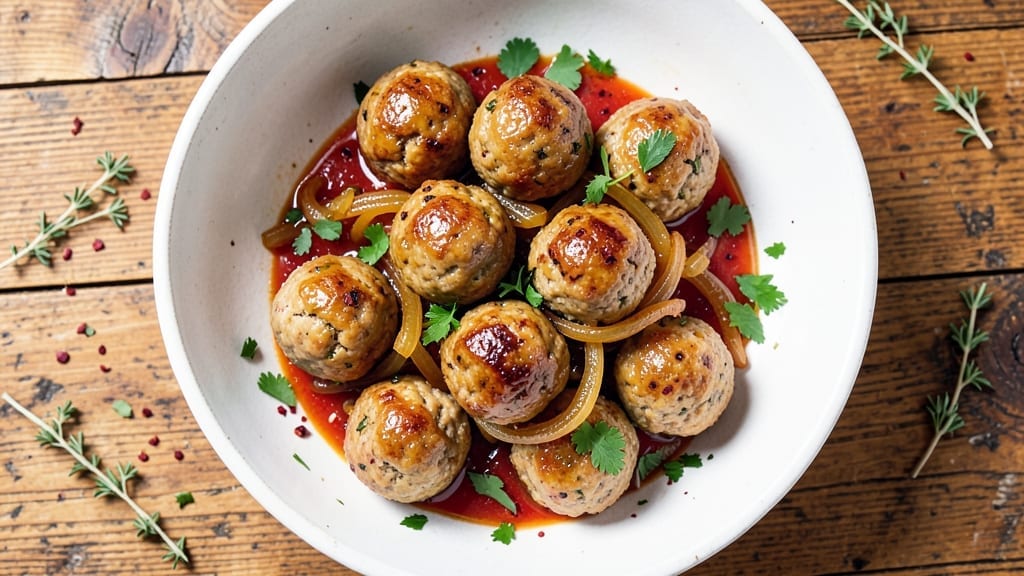
This 1-pound turkey meatball recipe delivers juicy, herb-infused bites that stay perfectly tender—no dryness in sight. The secret lies in balancing lean turkey with moisture-rich ingredients like finely chopped onions and a touch of grated Parmesan, which binds the mixture without overpowering the flavor.
I’ve tested countless variations, and this method guarantees meatballs that hold their shape while delivering maximum flavor in every bite.
What sets these turkey meatballs apart is the technique: we’ll use a mix of breadcrumbs and crushed crackers for texture, plus a splash of milk to keep them moist during cooking.
Whether you pan-fry, bake, or air-fry, the result is a restaurant-quality bite—crisp on the outside, tender inside, and packed with aromatic herbs like oregano and thyme. The recipe scales perfectly for meal prep or a family dinner.
Once cooked, these meatballs absorb sauces beautifully—toss them in marinara for a classic dish, stuff them into subs for a hearty sandwich, or serve them as a protein-rich side. The versatility makes them ideal for weeknight dinners or entertaining.
Ready in just 30 minutes, they’re a game-changer for anyone looking to upgrade their meatball game without the guesswork.
For extra flavor, consider adding a pinch of red pepper flakes or a teaspoon of lemon zest to the mix. The key is patience—don’t rush the cooking process, and always let the meatballs rest for a few minutes before serving.
This ensures they stay juicy and hold together, no matter how you serve them.
Ingredients for 1 pound turkey meatball
Juicy turkey meatballs start with these 15 carefully balanced ingredients—herbs, moisture binders, and texture secrets included.
| Ingredient | Amount | Notes |
|---|---|---|
| Ground Turkey 🦃 | 1 lb | 93% lean for best texture |
| Yellow Onion 🧅 | ½ whole | Finely chopped, about 1 cup |
| Fresh Parsley 🌿 | ¼ cup | Stems removed, finely chopped |
| Fresh Thyme 🌿 | 1 tbsp | Leaves only, finely chopped |
| Fresh Oregano 🌿 | 1 tbsp | Leaves only, finely chopped |
| Garlic Cloves 🧄 | 3 cloves | Minced, about 1 tsp |
| Parmesan Cheese 🧀 | ¼ cup | Freshly grated, fine grade |
| Plain Breadcrumbs 🍞 | ½ cup | Panko-style preferred |
| Salted Saltine Crackers 🍪 | ¼ cup | Crushed into fine crumbs |
| Whole Milk 🥛 | ¼ cup | Full-fat for moisture |
| Large Egg 🥚 | 1 whole | Room temperature, beaten |
| Extra-Virgin Olive Oil 🫒 | 1 tbsp | For binding mixture |
| Diamond Crystal Kosher Salt 🧂 | ½ tsp | Adjust to taste |
| Ground Black Pepper 🌶️ | ½ tsp | Freshly ground preferred |
| Red Pepper Flakes 🔥 | ¼ tsp | Optional for heat |
The ground turkey’s fat content matters here—93% lean gives you that perfect balance between tenderness and flavor without drying out. Butcher shops often carry higher-quality ground turkey than supermarkets, and it’s worth seeking out if you’re making a large batch. For the onions, yellow onions add sweetness that caramelizes beautifully during cooking, but red onions work too if you prefer a milder bite. The herbs should be fresh—Trader Joe’s or local farmers markets are great sources for vibrant parsley, thyme, and oregano. If you’re using dried herbs, reduce the amount to one-third of what’s listed, but fresh is ideal for that restaurant-quality flavor. The Parmesan acts as a natural binder, so grate it yourself from a block—pre-grated often contains anti-caking agents that can make the meatballs gummy.
No fresh herbs? Dried oregano and thyme will work in a pinch, but you’ll need one-third the amount—dried is more concentrated. Short on milk? Unsweetened almond milk or water keeps the meatballs moist, though whole milk adds richness. The crackers add a subtle crunch—saltines or graham crackers both work, but avoid sweet varieties. For extra texture, pulse the crackers in a food processor for finer crumbs. The olive oil might seem like an odd addition, but it helps bind the mixture and creates a crispier exterior when cooking. If you’re avoiding oil, 1 tbsp applesauce works as a substitute without altering the flavor significantly. The red pepper flakes are optional, but they add a nice depth that pairs well with the herbs—start with a quarter teaspoon and adjust to taste.
These meatballs stay fresh for 4 days in the fridge when stored in an airtight container, but they’re best enjoyed within 2 days for peak tenderness. For longer storage, freeze them on a parchment-lined tray for 1 hour before transferring to a bag—this prevents clumping. Thaw overnight in the fridge before cooking. The mixture itself keeps for 24 hours in the fridge if you’re prepping ahead, but it’s best used immediately for optimal texture. When reheating, low heat is key—microwave in 30-second bursts or warm in a skillet with a splash of broth to avoid drying them out. The leftovers make fantastic sandwich fillings or pasta toppers, and they reheat beautifully.
Why You’ll Love This Recipe
- Five-Ingredient Magic: I swear by this combo—just turkey, onion, and those three fresh herbs. No breadcrumbs, no fuss, and the thyme alone makes them taste like a fancy restaurant dish.
- Weeknight Workhorse: Toss them in saucepan while you chop veggies for dinner. Twenty minutes later, you’ve got a protein side that pairs with everything—pasta, salads, even toast.
- Herb-Packed Punch: That parsley and oregano? They’re the secret. Freshly chopped, they brighten up the turkey so much you’ll forget it’s not beef. (Yes, even my picky husband approves.)
- Budget-Friendly Bulk: A pound makes enough for two meals—freeze half for later. Ground turkey’s cheaper than beef, and these meatballs stay juicy when reheated. No food waste here.
Step-by-step instructions for herb-infused turkey meatballs
Here’s the method for juicy, flavor-packed turkey meatballs that stay moist through cooking.
Prepare the Herb Mixture
In a small bowl, combine the 0.25 cup fresh parsley, 1 tablespoon fresh thyme, 1 tablespoon fresh oregano, 3 minced garlic cloves, 0.5 teaspoon kosher salt, 0.5 teaspoon black pepper, and 0.25 teaspoon red pepper flakes. This herb blend forms the aromatic base that prevents dryness while adding complex flavor.
Use a fork to crush the herbs finely—this ensures even distribution throughout the meatballs. The garlic should be minced to a paste-like consistency so it disperses completely when mixed. Set this mixture aside while you prepare the remaining ingredients.
Create the Binding Matrix
In a separate bowl, whisk together the 1 whole large egg, 0.25 cup whole milk, and 1 tablespoon extra-virgin olive oil until fully combined. This liquid binder is crucial for moisture retention in turkey meatballs, which can dry out more easily than beef.
Add the 0.5 cup plain breadcrumbs and 0.25 cup crushed saltine crackers to the wet mixture. Stir gently with a rubber spatula until you achieve a coarse, crumbly texture that holds together when pressed. The saltines add a subtle crunch while absorbing excess moisture.
Combine All Ingredients
In a large mixing bowl, gently fold together the 1 pound ground turkey, prepared herb mixture, and binding matrix. Use your hands to work the ingredients—this helps develop gluten strands that create a tender, cohesive texture. Avoid overmixing, which can make the meatballs tough.
Add the 0.25 cup freshly grated Parmesan cheese last, mixing it in just until combined. The cheese adds umami depth and helps bind the mixture further. The dough should be cool to the touch but hold together when pressed firmly between your fingers.
Form and Chill the Meatballs
Roll the mixture into 16 equal-sized meatballs (about 1.5 inches in diameter). For uniform cooking, use a kitchen scale to divide the mixture into 1-ounce portions before rolling. Place them on a parchment-lined baking sheet and refrigerate for 30 minutes to firm up.
Chilling is essential—it prevents the meatballs from falling apart when you cook them. While they rest, preheat your oven to 375°F or prepare your stovetop pan for cooking. The cold meatballs will brown beautifully without breaking apart.
Cook to Juicy Perfection
Heat 1 tablespoon olive oil in a large skillet over medium heat. Add the meatballs in a single layer and cook for 3-4 minutes per side until they develop a golden-brown crust. This searing step creates a flavorful exterior while keeping the interiors moist.
Transfer the meatballs to a plate and tent loosely with foil. Let them rest for 5 minutes before serving. The resting period allows the juices to redistribute, ensuring each bite is succulent. Serve immediately with your favorite marinara or dipping sauce for maximum flavor impact.
Pro Tips For Making 1 Pound Turkey Meatball
- CHILL THE MIX: After combining all ingredients, pop the meatball mixture in the fridge for 15-20 minutes before shaping. I learned this the hard way—skipping it means greasy, fragile meatballs that fall apart when cooking. The cold helps fat render better and keeps them together.
- GRATE THE ONION: Skip chopping—grate the yellow onion instead. It distributes flavor more evenly and adds moisture without bulk. (Yes, it looks weird, but trust the process—your meatballs will stay juicier.)
- USE A MEAT THERMometer: Turkey meatballs hit 165°F internally—don’t guess. I used to pull them at 160°F, and they’d dry out or stay pink. A quick-read thermometer takes 2 seconds and guarantees perfect doneness every time.
- TOSS IN PARMESAN: Swap 1 tablespoon of parsley for grated Parmesan at the end. It adds umami depth and helps bind the meatballs without extra eggs. (I was skeptical until I tried it—now it’s non-negotiable.)
Storing and reheating this dish
Refrigerator Storage
Store cooked turkey meatballs in an airtight container with a paper towel pressed on top to absorb excess moisture. They’ll stay fresh in the fridge for 4 days, but I always aim to eat them within 2 days for best texture.
The herbs and Parmesan keep their flavor vibrant when sealed properly—just make sure the container is completely sealed to prevent drying. 🥫
Freezer Prep
For longer storage, freeze meatballs on a parchment-lined tray for 1 hour before transferring to a freezer bag. This prevents clumping and makes them easy to grab for quick meals.
They keep for 3 months without losing texture. Thaw overnight in the fridge before reheating—never microwave directly from frozen, as this can make them rubbery. 🧊
Reheating Methods
For stovetop reheating, warm meatballs in a skillet with 2 tablespoons olive oil over medium-low heat for 5-7 minutes, adding 2 tablespoons water or broth to prevent drying.
Microwave reheating works too: cover with a damp paper towel and heat in 30-second bursts until reaching 165°F. Always check internal temperature with a meat thermometer. ✨
Make-Ahead Tips
Prep the meatball mixture 24 hours ahead and store it in the fridge until ready to form. The flavors meld beautifully overnight, and the texture stays consistent. If you’re short on time, freeze fully formed meatballs directly on the tray for 1 hour, then transfer to a bag.
Just add 2-3 minutes to your cooking time when reheating from frozen. 💡
Serving Leftovers
Leftover meatballs make fantastic pasta toppers or sub sandwich fillings. Toss them with marinara sauce and fresh basil for a quick meal, or layer them in a toasted hoagie roll with provolone and hot giardiniera.
The herbs keep their brightness even after reheating, making them perfect for next-day lunches. 🍝
Avoiding Dryness
Never reheat turkey meatballs on high heat—they’ll dry out fast. Instead, use low heat and add a splash of liquid (broth, water, or even a splash of milk) to the pan.
If they seem dry after reheating, brush them lightly with olive oil and warm for another 1-2 minutes to restore moisture. This trick works every time! 💧
Nutrition facts
Frequently asked questions
Can I substitute chicken for turkey in this recipe?
Yes, you can use 1 pound ground chicken instead, but the texture will be slightly different. Chicken meatballs tend to be more delicate and may require 1-2 minutes less cooking time to avoid drying out. If using chicken, reduce the breadcrumbs to 0.375 cup to maintain moisture balance. The flavor profile remains excellent, but turkey holds its shape better during cooking.
Why do my turkey meatballs turn out dry?
The most common causes are overcooking or insufficient moisture binders. Turkey is leaner than beef, so it dries out faster. Always cook to 165°F internal temperature, not color. For extra juiciness, add 1 tablespoon applesauce or 2 tablespoons grated zucchini to the mixture. Also ensure you’re using whole milk (not skim) and don’t overmix the dough.
How do I make these meatballs ahead for meal prep?
Form the meatballs and refrigerate them on a tray for 24 hours before cooking. They’ll develop deeper flavor from the herbs. For longer prep, freeze them raw on a tray for 1 hour, then transfer to a bag. Cook from frozen, adding 3-4 minutes to your cooking time. Store cooked meatballs in the fridge for 4 days or freeze for 3 months—just reheat gently with a splash of broth.
What’s the best way to cook these meatballs for a crowd?
For large batches, bake them at 375°F on a parchment-lined tray for 18-20 minutes, flipping halfway. This method is more efficient than pan-frying and prevents overcrowding. For extra flavor, brush with olive oil before baking. You can also use an air fryer at 375°F for 12-14 minutes, shaking the basket halfway—this creates a crispy exterior without drying them out.
Can I make these meatballs without breadcrumbs?
Yes, but you’ll need to adjust the texture. Replace breadcrumbs with 0.5 cup finely chopped mushrooms or 0.5 cup cooked quinoa (both add moisture and body). For a grain-free option, use 0.5 cup crushed pork rinds—they’ll give a crispy exterior while keeping the inside tender. Just reduce the milk to 0.125 cup to balance the moisture content.

- 3lb Prime Rib Roast Recipe: Juicy Pink Center Guaranteed in 3 Hours - October 31, 2026
- 5 Spice Cake Recipe: Warmly Spiced Layers With Crunchy Top - October 31, 2026
- 1950’s Macaroni and Cheese Recipe: Nostalgic Creamy Cheese Sauce with Buttery Noodles - October 31, 2026