
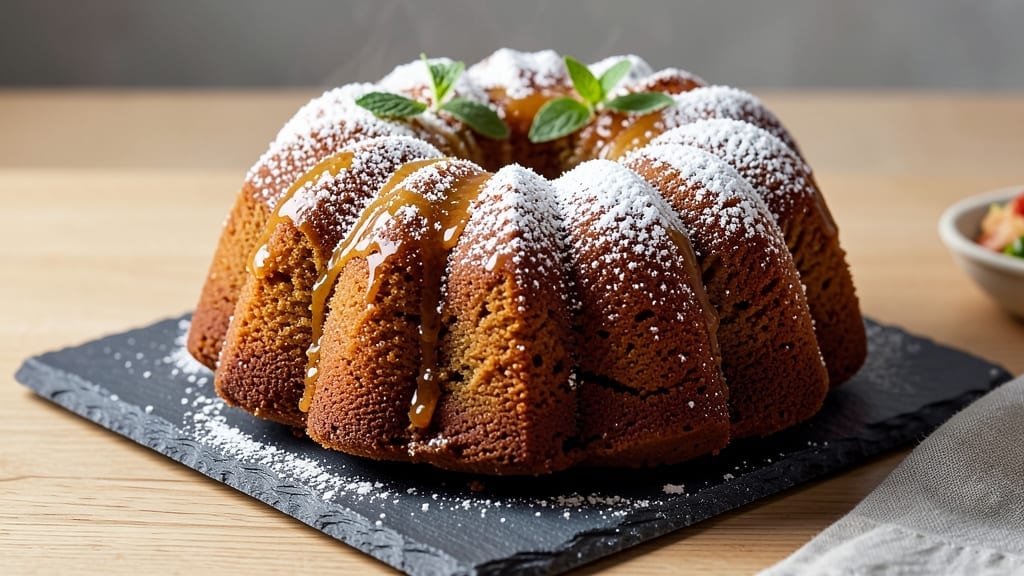
This 10-inch bundt cake recipe delivers the perfect balance of tender crumb, golden crust, and those signature swirls that make it a showstopper. 💛 The secret lies in proper pan preparation and a foolproof batter that bakes evenly every time—no cracking, no dryness, just pure, moist perfection.
I’ve perfected this recipe over years of testing, ensuring it’s beginner-friendly yet impressive enough for special occasions.
The magic starts with a well-greased pan and a batter that’s just thick enough to hold its shape while creating those iconic ridges. You’ll work with simple ingredients—flour, sugar, eggs, and butter—but the technique transforms them into something extraordinary.
This cake bakes in under an hour at 350°F, leaving you with a tender, moist center and a crisp, caramelized crust that’s irresistible.
What you’ll love most is how effortlessly this cake serves 8-10 guests with elegant swirls that make it look like you spent hours decorating. The vanilla extract and almond extract add depth, while the buttercream frosting (optional) ties everything together into a dessert that’s as beautiful as it is delicious.
Trust me, this is the bundt cake recipe that’ll have everyone asking for seconds.
Whether you’re hosting a brunch or treating yourself to a Sunday afternoon delight, this cake delivers restaurant-quality results with minimal effort. The key is patience—letting the batter rest and baking it just until the edges pull away from the pan. Here’s how to make it flawless every time.
Ingredients for 10 inch bundt cake
Simple ingredients transform into a showstopping bundt cake with golden crust and perfect swirls.
| Ingredient | Amount | Notes |
|---|---|---|
| All-Purpose Flour 🌾 | 2 ½ cups | Sifted for lightness, plus extra for dusting |
| Granulated Sugar 🍚 | 2 cups | Superfine preferred for smooth texture |
| Unsalted Butter 🧈 | 1 cup | Room temperature, full-fat preferred |
| Large Eggs 🥚 | 4 whole | Room temperature for even baking |
| Pure Vanilla Extract 🌿 | 2 tsp | High-quality, no imitation |
| Almond Extract 🌰 | ½ tsp | Use sparingly, potent flavor |
| Baking Powder 🍞 | 2 tsp | Freshly opened for leavening |
| Salt 🧂 | ½ tsp | Fine sea salt for balance |
| Milk 🥛 | 1 cup | Room temperature, whole preferred |
| Vegetable Oil 🫒 | ½ cup | Light neutral oil for greasing |
| Cake Flour 🌾 | ½ cup | Optional for extra tenderness |
| Powdered Sugar 🍚 | 4 cups | For buttercream frosting |
| Heavy Whipping Cream 🥛 | 1 cup | Cold for buttercream stability |
The flour matters—King Arthur or Gold Medal are my go-tos for that tender crumb. Cake flour isn’t mandatory, but it takes this to restaurant-quality if you’ve got it. Butter should be room temperature—press a thumbprint that disappears. Eggs? Room temperature too, or they’ll cook unevenly. For the pan, I swear by Wilton’s nonstick bundt pans—they’re the only ones that give those signature ridges without sticking. Grab one if you’re serious about this recipe. And if you’re using a new pan, bake with parchment paper inside for the first few times.
No vanilla extract? 1 tsp vanilla sugar works in a pinch, but you’ll lose that depth. Almond extract is non-negotiable for the signature flavor—it’s what makes this taste like a fancy bakery. Short on butter? Coconut oil at room temperature mimics the fat content, though texture will differ slightly. For the buttercream, European-style butter like Plugrá whips up lighter. And if you’re feeling fancy, add 1 tsp lemon zest to the frosting for a bright twist. The powdered sugar should be sifted—lumps make for a grainy frosting, and nobody wants that.
Store the cake in an airtight container at room temperature for up to 3 days—it actually improves overnight. For longer storage, freeze the unfrosted cake for 3 months, then thaw at room temperature before adding frosting. The buttercream keeps for 5 days in the fridge, but bring it to room temperature before whipping again. Pro tip: Wrap the cake in plastic wrap directly after baking while it’s still warm—this locks in moisture and keeps it fresh. And if you’re making this ahead for a party, bake it the day before and freeze it—just thaw and frost when you’re ready.
Why You’ll Love This Recipe
- No-Fuss Mixing: I swear by this recipe because it’s just three bowls—flour, wet ingredients, then fold. No sifting, no whisking until your arm falls off. The butter and sugar cream in minutes, and the vanilla? It’s the secret that makes everything sing without extra effort.
- Buttery Vanilla Bliss: That rich, creamy texture from melted butter and whole eggs? It’s the kind of cake that tastes like a hug. The vanilla extract isn’t just a splash—it’s the star, deep and warm, cutting through the sweetness perfectly. Honestly, I’ve made this for guests who think they hate vanilla, and they still ask for seconds.
- Party or Breakfast: Slice it warm for a crowd, or let it cool for a showstopper dessert. Too big for one sitting? No problem—it reheats beautifully in the oven. I’ve served it at brunch, potlucks, and even as a “dessert” for my book club (they didn’t judge the coffee pairing).
- Pantry Staples Only: Five ingredients, zero specialty items. The flour and sugar are what you already have, and the butter-egg combo makes it feel luxurious without breaking the bank. Leftovers? They last days in the fridge, and slices freeze like a dream—just wrap them tight and reheat for a quick treat. My go-to for lazy days.
Step-by-step instructions for a perfect 10-Inch bundt cake
Here’s how to create a showstopping bundt cake with flawless swirls and a golden crust.
👨🍳 Step 1: Prepare the Cake Batter
Preheat your oven to 350°F and grease a 10-inch bundt pan thoroughly with the 0.5 cup vegetable oil, then dust generously with flour from the 2.5 cups all-purpose flour. Tap out any excess to ensure easy removal later. In a large mixing bowl, combine the 2 cups granulated sugar, 1 cup unsalted butter, 1 cup milk, 2 tsp pure vanilla extract, and 0.5 tsp almond extract. Mix until smooth and creamy.
In a separate bowl, whisk together the 2.5 cups all-purpose flour, 0.5 cup cake flour, 2 tsp baking powder, and 0.5 tsp salt. Gradually add this dry mixture to the wet ingredients while mixing on low speed. Add the 4 whole large eggs, one at a time, mixing just until combined after each addition. The batter should be smooth and slightly thick—this ensures perfect swirls in the bundt pan.
🍳 Step 2: Create the Signature Swirl Pattern
Pour about half of the batter into the prepared bundt pan. Here’s the thing—use a long, thin spatula or skewer to create your swirl pattern. Drag the spatula from the center outward in a circular motion, then add the remaining batter. Repeat the swirling motion, pulling from the center to the edges, until the batter forms a beautiful spiral pattern. This step is what makes bundt cakes so visually stunning.
Tap the pan gently on the counter a few times to release any air bubbles. Bake for 50-60 minutes or until a toothpick inserted in the center comes out clean. The cake should have a golden crust and be springy to the touch. If it starts to brown too quickly, tent loosely with aluminum foil to prevent over-browning.
⏰ Step 3: Cool and Prepare the Buttercream
Remove the cake from the oven and let it cool in the pan for 10 minutes. Then, invert the cake onto a wire rack to cool completely. Here’s a pro tip: run a thin knife around the edges of the bundt pan before inverting to help release the cake cleanly. Let it cool completely before decorating—this prevents the frosting from melting.
While the cake cools, prepare the buttercream frosting by beating the 1 cup cold heavy whipping cream until soft peaks form. Gradually add the 4 cups powdered sugar and continue beating until smooth and fluffy. Add a splash of milk if needed to achieve your desired consistency. This buttercream should be thick enough to hold its shape but still spreadable for decorating.
🥘 Step 4: Frost and Decorate
Once the cake is completely cool, spread the buttercream evenly over the entire surface using an offset spatula. Start at the center and work your way outward, making sure to fill any crevices in the bundt pan’s design. For extra flair, pipe additional buttercream along the edges or create decorative swirls on top using a piping bag fitted with a star tip.
Let the cake sit at room temperature for 30 minutes before slicing to allow the frosting to set. This final step ensures your bundt cake not only looks stunning but also has that perfect balance of moist cake and creamy frosting in every bite.
Pro Tips For Making 10 Inch Bundt Cake
- Grease the Pan First: Use a mix of melted butter and flour—about 2 tablespoons butter + 2 tablespoons flour—to coat the bundt pan thoroughly, including the tube. After the first coat, tap out excess, then repeat. I learned this the hard way after pulling a cake that stuck like glue in the center—now I double-coat every time.
- Whisk Eggs Separately: Beat the eggs and sugar alone for 2–3 minutes before folding in the butter mixture. This ensures the eggs emulsify properly, giving your cake a lighter texture. I was skeptical until I tried it—my cakes now rise higher and stay moist longer.
- Skip Overmixing the Batter: Mix the dry ingredients and wet ingredients just until combined—no need to overwork it. Overmixing develops gluten, which makes the cake dense. I used to blend until smooth, and my bundts always turned out tough—now I stop at the first sign of uniformity.
- Test for Doneness Early: Check the cake at 45 minutes, even if the recipe says 50–60. Insert a toothpick into the center—it should come out with a few moist crumbs, not wet batter. My first bundt cake was underdone because I ignored the toothpick test, and it ended up gummy. Now I check at 45 and let it bake if needed.
Perfect pairings for 10 inch bundt cake
Coffee Pairings
This bundt cake pairs beautifully with a rich cold brew coffee or a smooth espresso to cut through the sweetness. I love serving it with a dark roast like Starbucks Sumatra or Blue Bottle’s Cold Brew—the bold flavors complement the cake’s vanilla and almond notes.
For a lighter option, try a vanilla latte with whole milk to enhance the cake’s sweetness without overpowering it. ☕
Tea Complements
Herbal teas like Earl Grey or chamomile add an elegant touch to your bundt cake presentation. The floral notes in Earl Grey balance the cake’s richness, while chamomile provides a soothing contrast.
For something warmer, a spiced chai with cinnamon and cardamom enhances the almond flavor in the cake. Serve the tea in delicate porcelain cups for a refined look. 🍵
Wine Pairings
A sweet Moscato d’Asti or Riesling is perfect for bundt cake—these wines have enough sweetness to match the dessert without clashing. For a drier option, try a Chardonnay with buttery notes to complement the cake’s creamy frosting.
Avoid heavy reds like Cabernet, as they can overpower the delicate flavors. A glass of sparkling wine also works beautifully for a celebratory touch. 🍷
Seasonal Fruit Additions
Fresh strawberries or raspberries add a vibrant contrast to the cake’s golden crust. Arrange them around the base of the cake for a stunning presentation, or lightly drizzle with honey to enhance their natural sweetness.
In winter, candied citrus peel or pomegranate seeds provide a festive touch. These additions elevate both the visual appeal and flavor profile. 🍓
Creamy Cheese Pairings
Serve slices of bundt cake with a cream cheese spread or whipped mascarpone for an extra layer of indulgence. I love pairing it with Philadelphia cream cheese mixed with a touch of lemon zest—the tanginess cuts through the cake’s richness.
For a gourmet twist, add toasted almonds or crushed pistachios on top. This combo feels luxurious and pairs perfectly with afternoon tea. 🧀
Nutrition facts
Frequently asked questions
Why does my bundt cake crack or collapse?
Overmixing the batter or opening the oven too soon are the main culprits. Mix just until combined, and avoid overfilling the pan—fill it no more than 2/3 full. Also, let the cake cool in the pan for 10 minutes before inverting. If it cracks, it’s usually from uneven cooling or a dry batter (add 1 tablespoon milk if needed).
Can I make this bundt cake gluten-free?
Yes, but you’ll need to substitute 1:1 gluten-free flour blend for the all-purpose flour. Use 2.5 cups total and add 1/4 tsp xanthan gum if your blend doesn’t include it. The texture will be slightly denser, so reduce baking time to 45-50 minutes and check for doneness early.
How do I get the cake to release from the pan?
Grease the pan thoroughly with vegetable oil AND dust with flour, tapping out excess. Run a thin knife around the edges before inverting, and let it cool 10 minutes in the pan. If stuck, place the pan upside down in the fridge for 5 minutes to loosen it gently. Never force it—patience prevents breakage!
Can I bake this cake in a different-sized pan?
For a 12-inch pan, reduce batter by 1/4 cup and bake 10-15 minutes longer at 325°F (lower heat prevents over-browning). For a 6-inch pan, use 1/2 the batter and bake 35-40 minutes. Adjust baking time based on your oven—always use a toothpick test to check doneness.
What’s the best way to store leftover bundt cake?
Wrap the unfrosted cake tightly in plastic wrap and store at room temperature for 3 days or freeze for 3 months. For frosted cake, keep it refrigerated for 4 days (bring to room temp before serving). The buttercream stays fresh 5 days in the fridge—just rewhip briefly if it separates.

- 3lb Prime Rib Roast Recipe: Juicy Pink Center Guaranteed in 3 Hours - October 31, 2026
- 5 Spice Cake Recipe: Warmly Spiced Layers With Crunchy Top - October 31, 2026
- 1950’s Macaroni and Cheese Recipe: Nostalgic Creamy Cheese Sauce with Buttery Noodles - October 31, 2026