
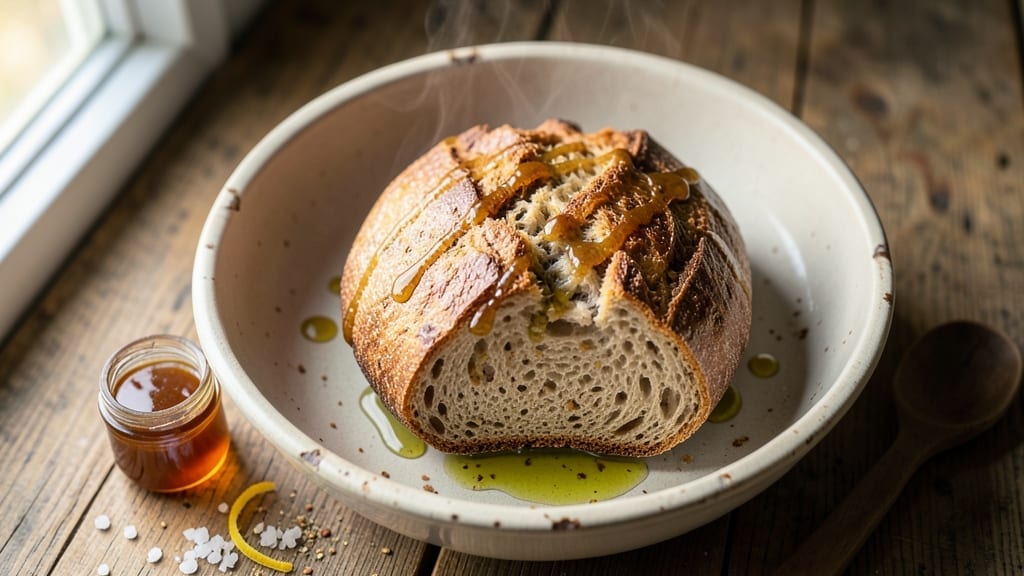
Mastering 100 percent whole wheat French bread means achieving that perfect balance of crispy crust and airy interior—something many home bakers struggle with. The secret lies in precise hydration control and a slow fermentation process that develops gluten properly, even with whole wheat flour.
I’ve refined this recipe over years to ensure it delivers restaurant-quality results without requiring a bread machine or advanced skills.
This recipe uses a simple mix of whole wheat flour, water, yeast, and a touch of honey to feed the fermentation. The dough requires two rises—one at room temperature and one in the refrigerator overnight—which allows the gluten to relax and develop fully.
This patience pays off in a loaf with an open crumb structure and a crackly crust that’s impossible to resist. No butter or milk is needed, keeping it vegetarian-friendly while still achieving rich flavor.
By the time you pull it from the oven, you’ll have a loaf with a golden, shatteringly crisp crust and a tender, airy crumb that’s perfect for sandwiches or serving with soups.
The aroma alone will have everyone asking for seconds. This method works in a standard home oven with just a Dutch oven for steam, making it accessible for any kitchen.
The key to success is attention to detail during shaping and scoring—both critical for that classic French bread appearance. Once mastered, this recipe becomes your go-to for homemade bread that’s both nutritious and delicious. Let’s get started on creating your perfect loaf.
Ingredients for 100 percent whole wheat french bread
Nine simple ingredients transform into restaurant-quality whole wheat French bread with crispy crust and airy crumb.
| Ingredient | Amount | Notes |
|---|---|---|
| Organic Whole Wheat Flour 🌾 | 5 cups | High-protein for better gluten development |
| Active Dry Yeast 🍞 | ½ tsp | Fresh yeast preferred if available |
| Honey 🍯 | 1 tbsp | Feeds fermentation for better rise |
| Warm Water 💧 | 2 ½ cups | 105-110°F for optimal yeast activation |
| Kosher Salt 🧂 | 1 ½ tsp | Diamond Crystal preferred for accuracy |
| Extra-Virgin Olive Oil 🫒 | 1 tbsp | For dough softness and crust shine |
| Cornmeal 🌽 | ¼ cup | For dusting Dutch oven |
| Ice Water ❄️ | ½ cup | For final dough adjustment |
| Baking Soda 🧪 | ¼ tsp | Optional for extra lift |
The flour is everything here—King Arthur or Bob’s Red Mill whole wheat flours work best because they’re finely milled and high in protein. King Arthur even has a whole wheat bread flour blend if you want to splurge. The yeast needs to be fresh, so check the expiration date—Fleischmann’s is reliable, but if your package smells like dust, toss it. Honey isn’t just for sweetness; it feeds the yeast during the cold ferment. For the water, use a thermometer if you can—105-110°F is perfect for activating yeast without killing it. If you’re in a hurry, make a quick yeast starter with 1 tsp honey and 1 tsp yeast in 1/4 cup warm water, let it bubble for 5 minutes, then add to your dough.
No honey? Maple syrup or agave works just as well—same fermentation boost. Short on olive oil? Avocado oil or melted coconut oil are great substitutes. The cornmeal is crucial for that perfect crust—don’t skip it. If you’re gluten-sensitive, you can replace 1 cup of the whole wheat flour with white whole wheat flour for better texture. For scoring, a razor blade gives the cleanest cuts, but a sharp serrated knife works too. The baking soda is optional but helps with that classic French bread height—if you skip it, just make sure your oven is properly preheated with the Dutch oven inside for at least 30 minutes.
This dough is best made a day ahead—the overnight cold ferment is what creates that amazing texture. Store it in the fridge in a sealed container for up to 24 hours. Once baked, let it cool completely on a wire rack before slicing—at least 2 hours. The crust stays crisp for about 3 days if stored in a bread box, but the interior gets stale faster. For longer storage, wrap tightly in plastic and freeze—it reheats beautifully in a 350°F oven for 10 minutes. The aroma alone will have everyone thinking you’re a professional baker.
Why You’ll Love This Recipe
- No-Knead Magic: I’ll admit, I was skeptical about whole wheat bread being easy—until I tried this. Just mix the organic whole wheat flour, yeast, honey, and warm water, let it rise overnight, then bake. That’s it. No standing at the counter punching dough, no fuss.
- Honey-Kissed Crust: Here’s what sold me—the honey isn’t just sweetener; it caramelizes into a golden, crackly crust that’s ridiculously better than store-bought. The inside stays soft, and that balance of nutty whole wheat with a touch of honey? Chef’s kiss.
- Weeknight Wonder: Between us, this bread is my secret weapon for lazy dinners. Toast it for breakfast, use it for sandwiches at lunch, or serve warm with dinner. It’s the one loaf that does it all—no need for a dozen different breads cluttering your pantry.
- Budget-Friendly Staple: I make a double batch every Sunday because it’s solid value. Organic whole wheat flour is pricier, sure, but it lasts forever, and the honey adds just enough richness to feel special. Plus, leftovers? They’re either frozen for later or gone in a day. Win-win.
Step-by-step instructions for perfect whole wheat French bread
Here’s how to transform whole wheat flour into golden, crusty French bread with an airy interior.
Activate the Yeast with Honey and Warm Water
In a large mixing bowl, combine the 2.5 cups warm water (between 105-110°F) with the 1 tbsp honey and 0.5 tsp active dry yeast. Stir gently and let sit for 5-10 minutes until frothy. You’ll see tiny bubbles forming on the surface—this confirms your yeast is alive and ready to work its magic.
This step is crucial for developing flavor and structure. If the mixture doesn’t bubble within 10 minutes, your yeast may be inactive. In that case, start fresh with a new packet of yeast. The honey not only feeds the yeast but also adds subtle sweetness that balances the whole wheat flavor.
Mix the Dough with Olive Oil and Salt
Add the 5 cups organic whole wheat flour and 1.5 tsp kosher salt to the yeast mixture. Stir with a wooden spoon until a shaggy dough forms. Then add the 1 tbsp extra-virgin olive oil and mix again. The dough will be sticky—this is normal with whole wheat flour.
Use your hands to knead the dough on a lightly floured surface for 8-10 minutes until smooth and elastic. Whole wheat dough requires more kneading than white flour dough because the bran and germ make it more resistant. You’ll know it’s ready when it springs back slowly when poked with your finger.
First Rise – Let the Dough Develop Flavor
Place the dough in a lightly oiled bowl, cover with a damp towel, and let rise in a warm place for 1-2 hours or until doubled in size. The dough will be slower to rise than white flour dough, but patience pays off with better flavor development.
I like to place my bowl on top of my oven with the light on to create a warm, consistent environment. Check the dough after 1 hour—it should have visibly expanded and feel lighter when pressed gently. If it doesn’t rise much, it might need more time or a warmer environment.
Shape and Second Rise for Structure
Turn the dough onto a lightly floured surface and divide it into 4 equal pieces (about 1¼ cups each). Roll each piece into a 12-inch log, tapering the ends slightly. Place the logs seam-side down in a 9×5-inch loaf pan lined with parchment paper.
Cover the pan with a damp towel and let rise again for 30-45 minutes until the dough has expanded to fill the pan. The tops should be slightly rounded and puffy. Don’t over-rise the dough in the pan—this can cause dense bread. If the dough rises too quickly, it might need a cooler environment for the second rise.
Bake with Cornmeal and Ice Water for Crust
Preheat your oven to 425°F with a Dutch oven inside for 30 minutes. Remove the Dutch oven and carefully transfer the loaf pan inside. Sprinkle the top with 0.25 cup cornmeal and drizzle with 0.5 cup ice water—this creates steam for a crispy crust.
Bake covered for 25 minutes, then remove the lid and bake uncovered for another 15-20 minutes until the bread is deep golden brown and sounds hollow when tapped on the bottom. The internal temperature should reach 190-200°F. For extra lift, you can sprinkle the 0.25 tsp baking soda on the top during the final 5 minutes of baking.
Cool and Slice for Maximum Enjoyment
Remove the bread from the pan and let it cool on a wire rack for at least 1 hour before slicing. This resting period allows the gluten to relax and the crumb to set properly. The bread will be warm to the touch but firm enough to slice cleanly.
Slice the French bread into ½-inch thick pieces for that classic baguette experience. The exterior should be crisp and golden, while the interior reveals an airy, open crumb with just the right chewiness from the whole wheat flour. Serve warm with your favorite butter or olive oil for the ultimate French bread experience.
Pro Tips For Making 100 Percent Whole Wheat French Bread
- Bloom the Yeast First: DESCRIPTION: Skip the guesswork—mix the yeast, honey, and warm water (105–110°F) in a separate bowl and let it foam for 5–10 minutes before adding flour. Whole wheat dough is dense; this step guarantees the yeast is active and saves you from a brick-like loaf later.
- Hydrate the Flour: DESCRIPTION: Whole wheat flour soaks up moisture like a sponge. Mix the dry ingredients into the wet before adding the remaining flour—this ensures even hydration and a lighter texture. I used to fight sticky dough; this change made all the difference.
- Don’t Over-Knead: DESCRIPTION: Whole wheat dough tears easily. Knead just until it passes the “windowpane test” (stretch a small piece—it should be translucent but not tear). Overworking it turns the crumb gummy, and your bread will taste like glue.
- Steam the Oven: DESCRIPTION: Place a metal tray on the oven rack, then boil a kettle of water and pour it over the tray after preheating to 450°F. The steam mimics a bakery’s crust and keeps the bread from drying out—critical for whole wheat, which lacks gluten’s stretch. (Yes, even if you’re impatient like me.)
Flavor customization for this 100 percent whole wheat french bread
Herb-Infused Variations
Add 1 tbsp dried rosemary or 1 tbsp fresh thyme to the dough during mixing for a fragrant, earthy twist. I like using Penzeys Mediterranean Herbs for consistent quality. For a stronger flavor, steep 1 tbsp fresh rosemary in the warm water before mixing with yeast.
The herbs pair beautifully with garlic butter or olive oil dips after baking. 🌿
Sweet Additions
Swap the honey for 2 tbsp maple syrup and add ½ cup raisins or chopped dried apricots for a sweet whole wheat loaf. I often use Sun-Maid raisins for their plump texture.
For extra richness, fold in 2 tbsp melted butter during the final kneading. This variation works perfectly as a breakfast loaf with jam or nut butter. 🍯
Seed and Nut Enhancements
Stir in ¼ cup pumpkin seeds or chopped walnuts during the last 2 minutes of kneading for added crunch. I prefer Bob’s Red Mill raw pumpkin seeds for their nutty flavor.
For a seed-only version, combine 2 tbsp sesame seeds, 2 tbsp flaxseeds, and 1 tbsp poppy seeds. Sprinkle these toppings on the dough before the final rise for visual appeal and texture contrast. 🌰
Savory Cheese Twist
Fold in ½ cup shredded Parmesan cheese or ½ cup crumbled feta during the second rise for a salty, umami-rich bread. I recommend Parmigiano-Reggiano for its sharp flavor.
For a tangy option, use sheep’s milk feta crumbled directly into the dough. This variation pairs exceptionally well with roasted vegetables or hummus. 🧀
Spiced Variations
Add 1 tsp cinnamon and ½ tsp nutmeg for a warm, spiced loaf perfect for breakfast. I use McCormick pure cinnamon for consistent flavor. For a smoky version, include ½ tsp smoked paprika and ¼ tsp cayenne pepper during mixing.
These variations work beautifully with apple butter or spicy mustard spreads. 🌶️
Gluten-Free Adaptation
Replace 1 cup whole wheat flour with King Arthur gluten-free flour blend for a lighter texture. Add 1 tbsp psyllium husk powder to improve structure. The dough will be stickier, so use extra cornmeal for dusting. This version requires 10-15 minutes longer kneading time for proper gluten development. 🌾
Nutrition facts
Frequently asked questions
Why does whole wheat French bread need more kneading than regular bread?
The bran and germ in whole wheat flour create more resistance during kneading. This requires 8-10 minutes of vigorous kneading to properly develop gluten and create that signature airy crumb. Think of it as giving the dough a good workout to build strength for the rise!
Can I make this bread without a Dutch oven?
Yes! If you don’t have a Dutch oven, use a heavy baking sheet with a metal bowl inverted over the loaf during the first 20 minutes of baking to create steam. The cornmeal and ice water trick still works—just pour the water into a small pan on the oven rack below. Your crust won’t be quite as crisp, but it’ll still be delicious.
How do I know when the dough is properly risen?
Press your finger gently into the dough—if it springs back slowly (leaving a slight indentation) after 1-2 hours of rising, it’s ready. For the second rise, it should fill about 80% of your loaf pan with rounded tops. Whole wheat dough rises slower than white flour, so don’t rush it! The patience pays off with better flavor.
Why did my bread turn out dense instead of airy?
Dense bread usually means one of three things: under-kneading, over-rising, or insufficient steam during baking. Double-check your kneading time (8-10 minutes minimum), ensure you didn’t let the dough overproof (it should rise just until puffy), and verify your oven was properly steamed with the Dutch oven method. Also, whole wheat flour absorbs more water—don’t add extra unless specified!
Can I make this bread in a bread machine?
Use the “whole wheat” or “basic” setting with 5 cups whole wheat flour, 2.5 cups water, 0.5 tsp yeast, 1.5 tsp salt, and 1 tbsp honey. Add 1 tbsp olive oil during the kneading cycle. The machine will handle the kneading and first rise automatically—just shape and bake as directed. Perfect for busy days!

- 3lb Prime Rib Roast Recipe: Juicy Pink Center Guaranteed in 3 Hours - October 31, 2026
- 5 Spice Cake Recipe: Warmly Spiced Layers With Crunchy Top - October 31, 2026
- 1950’s Macaroni and Cheese Recipe: Nostalgic Creamy Cheese Sauce with Buttery Noodles - October 31, 2026