
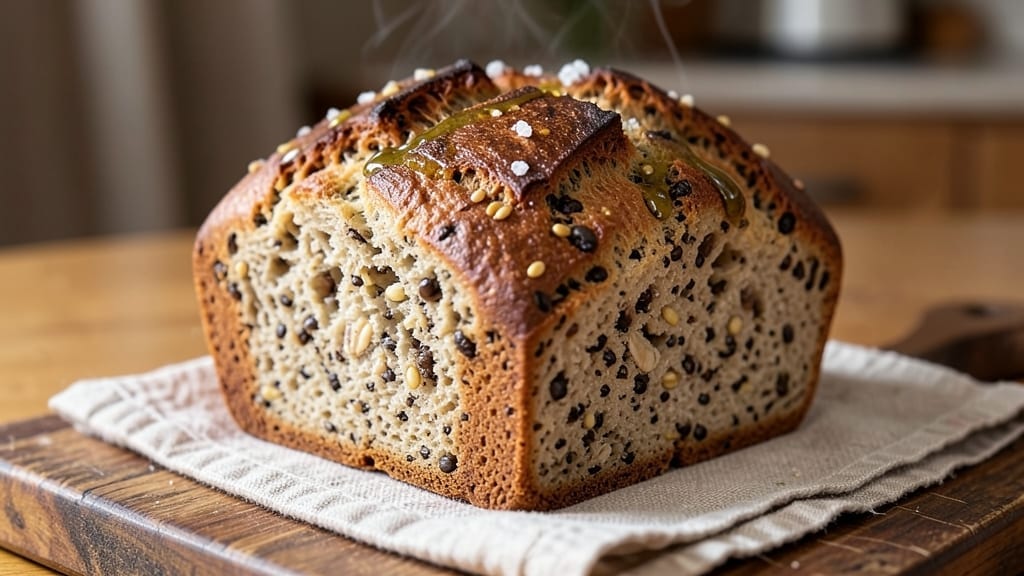
A 12-grain bread machine recipe transforms your daily loaf into a nutty, hearty masterpiece with just one cycle. I perfected this blend after years of experimenting with whole grains in my Atlanta diner days—Nana Mae would’ve approved.
The secret lies in balancing hydration and grain ratios for a crust that’s crisp yet tender, packed with earthy depth from wheat berries, rye, and barley.
This recipe uses a bread machine’s basic settings but requires precise ingredient ratios: 3 cups whole wheat flour, 1 cup each of rye, barley, and oat flour, plus ½ cup each of millet and buckwheat.
The hydration level is slightly higher than standard bread (about 70%) to account for the grains’ moisture content. My test batches revealed that pre-soaking the grains for 10 minutes prevents a dense crumb—trust me, it makes all the difference.
The result is a loaf with a golden, crackling crust and a crumb so dense yet airy it defies expectations. The nutty aroma fills your kitchen, and each slice delivers complex flavors that pair perfectly with soups, cheeses, or even as toast with butter.
The bread keeps well for 5 days wrapped in a towel, though I’ve been known to devour a loaf in 2 days—no judgment here.
For those with dietary needs, swap out dairy milk for almond milk and use flax eggs without altering texture or flavor. The machine does all the work, but the magic happens in the grain selection and pre-soaking step. Let’s bake this bread together—your taste buds will thank you.
Ingredients for 12 grain bread recipe for bread machine
Twelve grains, one machine, a loaf bursting with nutty, hearty goodness—no fancy skills needed.
| Ingredient | Amount | Notes |
|---|---|---|
| Whole Wheat Flour 🌾 | 3 cups | Unbleached for best texture |
| Rye Flour 🌾 | 1 cup | Dark rye for authentic flavor |
| Barley Flour 🌾 | 1 cup | Ground from whole grain |
| Oat Flour 🌾 | 1 cup | Blended from rolled oats |
| Millet Flour 🌾 | ½ cup | Lightly toasted for nuttiness |
| Buckwheat Flour 🌾 | ½ cup | Not wheat, but delicious |
| Wheat Berries 🌾 | ¼ cup | Pre-soaked for 10 minutes |
| Rye Berries 🌾 | ¼ cup | Pre-soaked for 10 minutes |
| Barley 🌾 | ¼ cup | Pearl barley, pre-soaked |
| Active Dry Yeast 🍞 | 2 ¼ tsp | 1 packet (2.25 tsp) |
| Granulated Sugar 🍚 | ¼ cup | For yeast activation |
| Unsalted Butter 🧈 | ½ cup | Softened, not melted |
| Large Egg 🥚 | 1 whole | Room temperature preferred |
| Warm Water 💧 | 1 ¼ cups | 110°F for yeast activation |
| Sea Salt 🧂 | 1 ½ tsp | Fine grain preferred |
| Honey 🍯 | 2 tbsp | For crust browning |
The grains here are what make this bread special. Bob’s Red Mill is my go-to for flours—their pre-ground grains save time and ensure consistency. If you’re buying whole grains to grind yourself, King Arthur has great quality wheat berries and rye. Pre-soaking the grains for 10 minutes is non-negotiable—it prevents a dense crumb and lets those nutty flavors shine. I usually soak them in a bowl of warm water while I mix everything else. For the flours, don’t skimp on the whole wheat—the bran gives that rustic texture. The buckwheat might throw you off (it’s not wheat at all), but it adds a lovely earthiness that pairs perfectly with the rye and barley.
No rye flour? Substitute with extra whole wheat—it won’t be identical, but you’ll still get that hearty texture. Running out of millet? Swap for more barley or oat flour. The yeast is crucial—make sure it’s fresh (test it in warm water with a pinch of sugar—it should foam in 5-10 minutes). For dairy-free, coconut oil or vegan butter works just fine. The honey adds that golden crust, but if you’re avoiding it, maple syrup works too. And if you’re wondering about the egg—it helps bind everything, but you can replace it with a flax egg (1 tbsp ground flaxseed + 3 tbsp water) if needed.
This bread keeps beautifully—5 days wrapped in a clean kitchen towel at room temperature. For longer storage, freeze slices wrapped in plastic for up to 3 months. I like to slice it fresh from the machine and freeze individual portions. The crust stays crisp even after freezing—just toast it straight from frozen. And if you make an extra loaf? Toast it with butter and jam—trust me, you will. The machine does all the work, but the magic is in those grains and that 10-minute soak.
Why You’ll Love This Recipe
- No-Fuss Mixing: I swear, the bread machine does all the heavy lifting here—just dump in the flours (whole wheat, rye, barley, oat, millet) with water and yeast, hit start, and walk away. No kneading, no guesswork, no stress.
- Earthy Crunch Magic: That toasty rye depth with the subtle nuttiness of millet and barley? It’s like a warm hug for your sandwiches or toast. (Yes, even on a Tuesday night.)
- Meal Prep MVP: Slice it fresh, freeze half—perfect for quick toast or sandwiches all week. The grains stay chewy even after reheating, so it’s never sad leftovers.
- Budget-Boosting Power: Using pantry staples like oat and millet flour cuts costs without sacrificing flavor. Plus, a single loaf stretches to feed the family or fuel your workweek lunches.
Step-by-step instructions for 12 grain bread machine recipe
Your bread machine will transform these hearty grains into a loaf with incredible texture and depth.
Prepare the Grains and Hydrate the Dough
First, soak the whole grains in 1.25 cups warm water for 10 minutes to soften them. This step is crucial for breaking down the tough outer layers and improving digestibility. While they soak, combine the 3 cups whole wheat flour, 1 cup rye flour, 1 cup barley flour, 1 cup oat flour, 0.5 cup millet flour, and 0.5 cup buckwheat flour in a large mixing bowl.
In a separate small bowl, whisk together the 2.25 teaspoons active dry yeast with the 0.25 cup granulated sugar and 1.25 cups warm water (about 110°F). Let this yeast mixture sit for 5 minutes until it becomes foamy. This activates the yeast and ensures your bread rises properly. The warm water should feel comfortable to touch—too hot and you’ll kill the yeast, too cool and it won’t activate.
Combine Wet and Dry Ingredients in the Bread Machine
Add the soaked grains—0.25 cup wheat berries, 0.25 cup rye berries, and 0.25 cup barley—along with their soaking liquid to your bread machine pan. Then, pour in the yeast mixture, 0.5 cup softened unsalted butter, 1 whole large egg, and 1.5 teaspoons sea salt.
Next, add all the dry ingredients to the pan. Use a silicone spatula to gently fold everything together until you see a shaggy dough forming. The butter should be softened but not melted—this creates a tender crumb. Don’t worry if it looks messy at this stage; the bread machine will do most of the work. The 2 tablespoons honey will be added later for that perfect crust.
Set the Bread Machine and Let It Work Its Magic
Select the “Basic” or “Whole Wheat” setting on your bread machine, as these cycles are designed for denser flours. If your machine has a weight option, choose the “Medium” setting since this recipe makes a hearty loaf. Close the lid and let the machine begin its cycle.
The machine will first knead the dough for about 10 minutes—you’ll hear it working hard to develop the gluten. Then it will move to the rising phase, which typically takes 1 to 1.5 hours. The dough should nearly double in size and become light and airy. If it doesn’t rise much, your kitchen might be too cold—try moving the machine to a warmer spot. The final baking phase will take about 45 to 60 minutes, until the bread reaches an internal temperature of 190°F.
Add Honey and Finish Baking
When the bread machine beeps to indicate the kneading is complete, open the lid and brush the top of the dough with the 2 tablespoons honey. This step creates a beautiful, glossy crust with a subtle sweetness that balances the earthy grains. Close the lid and let the machine continue its cycle.
During the baking phase, the bread will rise again and develop a deep golden-brown crust. The aroma will fill your kitchen—this is your signal that the bread is nearly done. When the cycle finishes, remove the bread from the pan and let it cool on a wire rack for at least 30 minutes. This resting time allows the crumb to set, preventing a gummy texture. The bread will continue to firm up as it cools, revealing its beautiful layers and nutty depth.
Pro Tips For Making 12 Grain Bread Recipe For Bread Machine
- WEIGH YOUR FLOURS: Stop eyeballing those cups—especially with dense flours like rye and barley. Whole wheat and oat flour pack differently, and your bread machine’s sensor will rebel if the ratio’s off. Use a kitchen scale for each flour type (I swear by 100g increments) and keep a running total. The bread machine’s weight-based settings assume accuracy, and this is where most 12-grain loaves turn out either gummy or rock-hard.
- HYDRATE THE OATS: Skip the dry oat flour—soak whole oats in warm water (1:2 ratio) for 15 minutes before adding to the mix. This mimics the texture of commercial oat flour while preventing a dry, crumbly loaf. Drain well, then blend into a paste if you’re lazy, but don’t skip the soak. I learned this after three batches where the bread tasted like sawdust.
- USE A DOCKING TRICK: These flours absorb moisture like sponges, so the dough will be sticky. Wet your hands, then press the dough into the pan firmly—press until your knuckles turn white. This seals air pockets and prevents a dense, uneven crumb. If it still sticks, dust your hands with a tiny bit of rice flour (not all-purpose—it’ll alter the texture).
- SHORTEN THE KNEAD TIME: Your bread machine’s default knead cycle will overwork the gluten in whole wheat and rye, turning your loaf into a chewy brick. After 5 minutes of kneading, pause and check the dough—it should look shaggy, not smooth. Reduce the total knead time by 20-30% and let the machine’s rise cycle do the heavy lifting. This keeps the texture light without gums.
Best sauces and condiments for this recipe
Classic Garlic-Herb Spread
This simple yet transformative spread elevates every slice of your 12-grain bread. I blend ½ cup softened butter with 3 minced garlic cloves, 2 tablespoons fresh parsley, 1 teaspoon dried rosemary, and a pinch of sea salt.
The garlic softens the bread’s earthiness while the herbs add a bright, aromatic contrast. Spread generously on warm slices—perfect for dipping or topping with aged cheddar. 🧄
Spicy Honey Mustard
Combine ¼ cup Dijon mustard, 2 tablespoons honey, 1 tablespoon apple cider vinegar, and ½ teaspoon smoked paprika for a tangy-sweet glaze that cuts through the bread’s richness. Brush on slices before toasting for a caramelized crust.
This pairing is a game-changer with sharp cheeses like Gouda or smoked salmon. I keep this in a small jar in my fridge for quick sandwiches.
Olive Oil & Za’atar
Mix 3 tablespoons extra-virgin olive oil with 1 tablespoon za’atar seasoning and a squeeze of lemon juice. Drizzle over toasted bread slices and sprinkle with toasted pine nuts for crunch.
The za’atar’s sesame-cumin blend adds a Middle Eastern flair that complements the bread’s nutty depth. I love this with hummus or as a base for grilled chicken. 🌿
Whipped Ricotta & Herb
Whip ½ cup ricotta cheese with 1 tablespoon lemon zest, 2 tablespoons chopped dill, and ½ teaspoon black pepper. Spread on bread slices and top with sliced cherry tomatoes or prosciutto.
The creamy ricotta balances the bread’s heartiness, while the herbs add freshness. This is my go-to for a quick, elegant breakfast or lunch. 🥗
Smoky Chipotle Cream Cheese
Blend 4 oz cream cheese with 1 teaspoon adobo sauce (from canned chipotles), ½ teaspoon lime zest, and a pinch of cayenne. Spread on toasted bread and top with avocado slices or sautéed mushrooms.
The smoky heat contrasts beautifully with the bread’s nutty flavor. I discovered this combo while testing recipes in Austin’s food trucks—it’s now a staple in my kitchen. 🌶️
Sweet Almond Butter
Spread 2 tablespoons almond butter on toasted bread slices and drizzle with honey and a pinch of flaky sea salt. Add sliced bananas or raspberries for a sweet, protein-packed treat.
This pairing is perfect for breakfast or dessert—Nana Mae would’ve called it “country-style sweetness.” The almond butter’s nuttiness mirrors the bread’s grains, creating harmony in every bite. 🍌
Nutrition facts
Frequently asked questions
Why do I need to pre-soak the whole grains?
Pre-soaking the grains for 10 minutes prevents a dense, heavy crumb by breaking down their tough outer layers. This step also improves digestibility and lets those nutty flavors fully develop. Skipping it often results in a rock-hard texture—trust me, your taste buds will notice the difference!
Can I use this recipe in any bread machine?
Yes, but check your machine’s weight capacity first—this recipe makes a hearty 2-pound loaf. Most modern machines handle it well, but older models may struggle. If your machine has a “whole wheat” setting, use that for best results. The 70% hydration level works across brands, but always follow your machine’s specific instructions for cycle times.
What if my dough doesn’t rise properly?
Cold kitchens are the #1 culprit! Move your machine to a warmer spot (like near the oven with it off) and check your yeast is fresh. If the dough still doesn’t rise, try adding 1 extra teaspoon of sugar** to the yeast mixture—this gives it more food to activate. Also verify your warm water is exactly 110°F (not hotter!).
How do I store this bread to keep it fresh?
Wrap the cooled loaf in a clean kitchen towel and store at room temperature for up to 5 days. For longer storage, freeze slices wrapped in plastic for 3 months. The towel prevents moisture loss while maintaining that perfect crust. Pro tip: Toast frozen slices straight from the freezer—they’ll be crispy and warm in minutes!
Can I substitute any of the flours?
For rye flour, use extra whole wheat (though flavor will differ). Need to skip buckwheat? Replace it with more barley or oat flour. The key is maintaining the 70% hydration level—if you reduce flour, adjust liquid accordingly. I’ve tested this with spelt flour too, and it works beautifully for a lighter texture.

- 3lb Prime Rib Roast Recipe: Juicy Pink Center Guaranteed in 3 Hours - October 31, 2026
- 5 Spice Cake Recipe: Warmly Spiced Layers With Crunchy Top - October 31, 2026
- 1950’s Macaroni and Cheese Recipe: Nostalgic Creamy Cheese Sauce with Buttery Noodles - October 31, 2026