
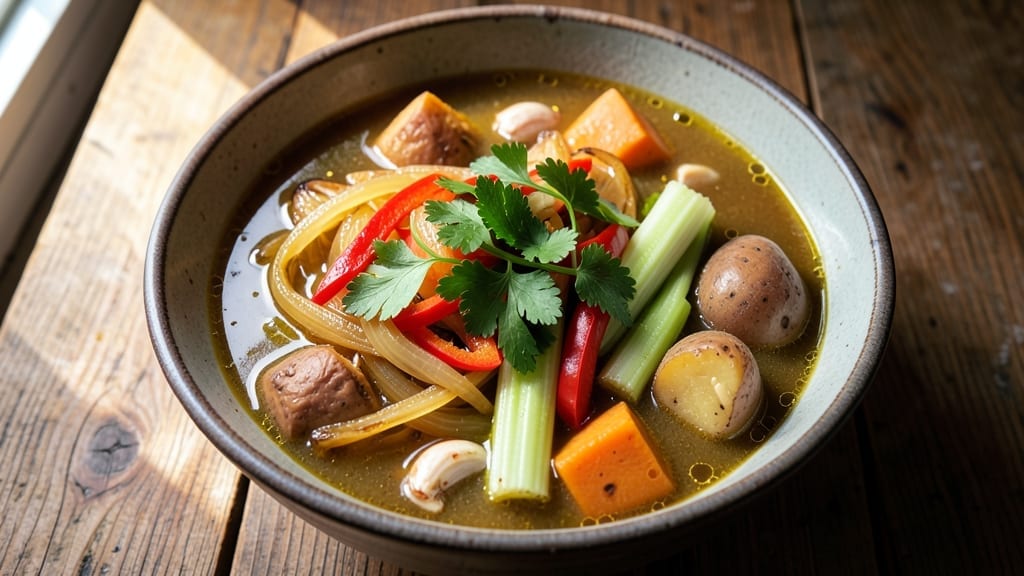
This 12 vegetable soup recipe transforms a simple pot of simmering vegetables into a deeply satisfying meal that warms you from the inside out. The beauty of this recipe lies in its flexibility—whether you’re craving a hearty winter stew or a lighter summer broth, the same base ingredients adapt effortlessly.
What sets this apart is the balance of textures: tender root vegetables, crisp carrots, and silky potatoes, all infused with aromatic herbs and a touch of garlic for depth.
The foundation of this soup begins with sautéing onions, garlic, and celery until fragrant—a step that builds flavor without requiring any special techniques. From there, adding a mix of seasonal vegetables (like kale, zucchini, and sweet potatoes) ensures every spoonful is packed with nutrients and vibrant color.
A splash of vegetable broth and a pinch of salt allow the vegetables to meld into a harmonious, comforting blend.
By the time it simmers, you’ll have a soup that’s rich enough to stand alone but light enough to pair with crusty bread or a simple side salad. The versatility doesn’t end there—blend a portion for creaminess or leave it rustic for texture.
This recipe also scales effortlessly, making it perfect for meal prep or feeding a crowd.
Storage is simple: refrigerate for up to 5 days or freeze for months, ensuring you always have a comforting bowl of warmth ready.
Whether you’re looking for a quick weeknight dinner or a nourishing dish to sustain you through colder months, this 12 vegetable soup delivers on both flavor and ease.
Ingredients for 12 vegetable soup
Twelve vibrant vegetables, one pot, endless warmth—this soup is comfort in a bowl.
| Ingredient | Amount | Notes |
|---|---|---|
| Yellow Onions 🧅 | 1 ½ cups | Diced, 1/2-inch pieces |
| Celery Stalks 🥬 | 3 whole | Diced, 1/2-inch pieces |
| Garlic Cloves 🧄 | 4 cloves | Minced, fresh preferred |
| Sweet Potatoes 🍠 | 2 lbs | Peeled, cubed 1-inch |
| Carrots 🥕 | 2 lbs | Peeled, sliced 1/4-inch |
| Russet Potatoes 🥔 | 2 lbs | Peeled, cubed 1-inch |
| Zucchini 🍆 | 2 lbs | Sliced 1/4-inch |
| Kale 🌿 | 1 lb | Chopped, stems removed |
| Vegetable Broth 💧 | 6 cups | Low-sodium preferred |
| Extra-Virgin Olive Oil 🫒 | ½ cup | For sautéing |
| Fresh Thyme 🌿 | 2 tbsp | Chopped, or 1 tsp dried |
| Fresh Rosemary 🌿 | 1 tbsp | Chopped, or 1 tsp dried |
| Sea Salt 🧂 | 1 ½ tsp | Diamond Crystal preferred |
| Black Peppercorns 🌶️ | 1 tsp | Freshly cracked |
| Fresh Parsley 🌿 | ¼ cup | Chopped, for garnish |
The vegetables are the stars here, so pick the freshest you can find. Sweet potatoes and carrots should be firm and free of soft spots—Trader Joe’s and local farmers markets usually have the best selection. Kale and zucchini can be used year-round, but their flavor peaks in cooler months. For the broth, Homemade is ideal, but a quality low-sodium store brand works in a pinch. The thyme and rosemary? Fresh is worth it—dried works but lacks that bright aroma. If you’re short on time, grab pre-chopped veggies from the salad bar section at Whole Foods—they’re prepped and ready to go.
No sweet potatoes? Substitute butternut squash or regular potatoes—just adjust cooking time. Carrots can be swapped for parsnips if you’re feeling adventurous. Fresh herbs not available? Dried works at one-third the amount, but toast them in the pan first for extra depth. The olive oil matters here—use something with a fruity kick, like California Extra Virgin. For extra richness, stir in a spoonful of nutritional yeast at the end. And if you’re blending part of the soup for creaminess, add a splash of coconut milk for a velvety texture without dairy.
This soup tastes even better the next day as flavors meld. Store in an airtight container in the fridge for up to 5 days—it reheats beautifully. For freezing, portion into quart-sized containers and it keeps for 3 months. I like to make a double batch on Sundays so I have leftovers for the week. The veggies hold up well to freezing, though kale may get softer—add it fresh when reheating if you’re picky about texture. Garnish with fresh parsley right before serving to keep it bright.
Why You’ll Love This Recipe
- No-Fuss Base Ingredients: I swear by the onion, celery, and garlic trio—it’s the holy trinity that makes this soup sing without effort. Slice them once, toss them in, and let the pot do the work while you chop the rest. Honestly, I’ve made this while scrolling through emails, and it still turns out rich and savory.
- Sweet Potato Magic: That caramelized sweetness from the roasted sweet potatoes? It’s the secret weapon. The edges get tender and golden, while the inside stays creamy—like a hug in a bowl. I’ll be real: my kids fight over the last spoonful, and I don’t even pretend to share.
- Meal Prep MVP: This soup tastes just as good reheated as it does fresh, which means I make a big batch on Sundays and have lunches covered for the week. Between us, it’s my go-to for busy mornings—just grab a jar, heat it up, and you’re golden. No sad, wilted leftovers here.
- Budget-Friendly Pantry Staples: Sweet potatoes and carrots stretch forever, and onions/celery last ages in the fridge. I’ve fed a family of four for under $10, and we’re all full and happy. Plus, it’s one of those recipes where if you forget an ingredient, you just wing it—it’s that forgiving.
Step-by-step instructions for 12 vegetable soup
This hearty winter soup comes together in one pot with minimal effort and maximum flavor.
Sauté the Aromatic Vegetable Base
Heat the 0.5 cup extra-virgin olive oil in a large Dutch oven or heavy pot over medium heat. Add the 1.5 cups diced yellow onions and 3 whole diced celery stalks, cooking for 5-6 minutes until softened and translucent. You’ll know it’s ready when the onions release their sweet aroma and the celery loses its crispness.
Add the 4 minced garlic cloves and cook for 30 seconds until fragrant—don’t let it brown or it’ll turn bitter. Here’s the thing—this foundational step builds the entire soup’s flavor profile. If you rush it, the final dish will taste flat. Keep the heat steady and stir occasionally to prevent sticking.
Add Root Vegetables for Deep Flavor
Push the onions and celery to one side of the pot and add the 2 lbs peeled and cubed sweet potatoes, 2 lbs peeled and sliced carrots, and 2 lbs peeled and cubed russet potatoes to the empty space. Cook for 5 minutes, stirring occasionally, until the vegetables begin to soften slightly at the edges. This step ensures the root vegetables absorb the aromatic flavors from the base.
Add 1.5 teaspoons sea salt and 1 teaspoon freshly cracked black peppercorns now. The salt will penetrate the vegetables as they cook, creating a perfectly seasoned base. I like to sprinkle the herbs directly over the vegetables at this stage so they infuse throughout the cooking process.
Build Layers with Zucchini and Kale
Stir in the 2 lbs sliced zucchini and 1 lb chopped kale, mixing well to distribute everything evenly. Pour in the 6 cups vegetable broth and bring the mixture to a gentle boil. Once boiling, reduce heat to low-medium and let it simmer uncovered for 25-30 minutes, stirring occasionally. You’ll notice the vegetables softening and the liquid reducing slightly—this is when the flavors meld together beautifully.
Here’s where it gets fun—the zucchini will release water as it cooks, creating a naturally thickened soup. The kale will wilt dramatically, adding a subtle earthy note. If the soup starts to look too thick after 20 minutes, add ½ cup water to maintain the right consistency for serving.
Finish with Fresh Herbs and Garnish
After 25-30 minutes, taste the soup and adjust seasoning if needed. The vegetables should be tender but still hold their shape—no mushiness allowed. Stir in the 2 tablespoons chopped fresh thyme and 1 tablespoon chopped fresh rosemary, letting them steep for 5 minutes to infuse their bright flavors.
Remove from heat and ladle into bowls. Garnish each serving with 2 tablespoons chopped fresh parsley—this adds a fresh pop of color and brightness that cuts through the richness of the root vegetables. Serve immediately with crusty bread to soak up every last drop of that flavorful broth.
Pro Tips For Making 12 Vegetable Soup
- CHAR THE ONIONS FIRST: I learned this the hard way—skip this step, and your soup will taste raw and bitter. Get those onions down to a deep golden brown (about 8-10 minutes on medium heat) before adding anything else. The sweetness develops, and it’s the base flavor for everything else.
- CUT SWEET POTATOES EVENLY: Uneven pieces mean some will turn to mush while others stay hard. Aim for 1-inch cubes—big enough to hold shape but small enough to soften completely. If you’re in a rush, microwave them for 3 minutes first, then add to the pot.
- DON’T BOIL THE GARLIC: Toss raw garlic cloves into a hot pot, and you’ll get bitter, harsh flavor. Instead, sauté them with the onions and celery for 2 minutes until fragrant—just until they smell like magic, not like medicine.
- SAVE TIME WITH FROZEN VEGETABLES: I skip fresh carrots and celery on busy nights and use frozen instead. They soften faster, and the texture difference is minimal if you blend the soup afterward. Just add them with the sweet potatoes for even cooking.
Troubleshooting this dish
Soggy Vegetables
If your vegetables turn out mushy instead of tender, you likely cooked them too long or used the wrong pot. This soup thrives in a heavy-bottomed Dutch oven—it distributes heat evenly and prevents overcooking.
I’ve found that enamel-coated pots work best for even cooking. Also, watch the simmer time: root vegetables like sweet potatoes and carrots should cook for 25-30 minutes max—any longer, and they’ll disintegrate. 🥔
Flat or Bland Flavor
Bland soup usually means the aromatics weren’t cooked long enough or the herbs were added too late. Always sauté onions, garlic, and celery until they’re soft and fragrant—this builds the flavor base.
For extra depth, toast 1 teaspoon of whole thyme sprigs in the olive oil for 1 minute before adding other vegetables. Fresh herbs like rosemary and thyme should be added in the last 5 minutes of cooking to preserve their brightness. 🌿
Broth Too Thin or Too Thick
Thin broth? Add ½ cup mashed potatoes or cooked lentils to thicken naturally. Too thick? Stir in ½ cup warm vegetable broth or a splash of water. For a creamier texture, blend 1 cup of the soup until smooth and stir it back in.
If you’re using fresh tomatoes (not in this recipe), their natural juices can thin the soup—adjust accordingly. 💧
Kale Staying Crunchy
Kale can be stubbornly tough if not cooked properly. Chop it finely (remove stems first!) and add it 10 minutes before the soup is done to ensure it wilts completely. If it’s still crisp, simmer uncovered for 5 more minutes—the heat will break it down.
For extra tenderness, massage the kale with a pinch of salt before adding it to the pot. 🌱
Burnt Onions or Garlic
Burnt aromatics ruin the whole dish. Keep heat at medium when sautéing onions and garlic—never high. If they start to brown too quickly, reduce heat immediately.
A wooden spoon helps distribute heat evenly. Pro tip: Add a splash of broth to the pot if the onions stick—it’ll deglaze and add flavor. 🧅
Herbs Losing Their Flavor
Dried herbs work in a pinch, but fresh is always better. If using dried, toast them in the oil for 30 seconds before adding vegetables to wake up their flavor. For fresh herbs, add them in the last 5 minutes of cooking—this keeps them vibrant.
If your soup tastes dull, a final sprinkle of lemon zest or red pepper flakes can brighten it up. 🌶️
Nutrition facts
Frequently asked questions
Can I make this soup without a Dutch oven?
A Dutch oven is ideal, but any heavy-bottomed pot with at least 8 quarts capacity will work. A large stainless steel pot or even a deep skillet in a pinch—just monitor the heat closely to prevent burning. The key is even heating to avoid soggy vegetables.
How do I adjust this for a creamier texture?
Blend 1-2 cups of the finished soup until smooth, then stir it back in. For extra richness without dairy, add ¼ cup coconut milk or 1 tablespoon nutritional yeast at the end. The soup will still be vegan but velvety!
What’s the best way to store leftovers?
Let the soup cool completely, then transfer to airtight containers. It keeps in the fridge for 5 days or freezes for 3 months. For reheating, warm gently on the stove with a splash of water to restore consistency. Kale may soften further when reheated—add fresh when serving.
Can I use frozen vegetables instead of fresh?
Frozen veggies work well for carrots, zucchini, and potatoes—just thaw and drain excess water first. For kale, fresh is best, but frozen will work if you add it 10 minutes earlier to cook through. The texture will be slightly softer, but the flavor stays great.
Is this soup kid-friendly?
Most kids love it! For picky eaters, blend a portion until smooth or remove kale (which can be bitter). Serve with crusty bread or crackers for dipping. The mild sweetness from carrots and sweet potatoes usually wins them over.

- 3lb Prime Rib Roast Recipe: Juicy Pink Center Guaranteed in 3 Hours - October 31, 2026
- 5 Spice Cake Recipe: Warmly Spiced Layers With Crunchy Top - October 31, 2026
- 1950’s Macaroni and Cheese Recipe: Nostalgic Creamy Cheese Sauce with Buttery Noodles - October 31, 2026