
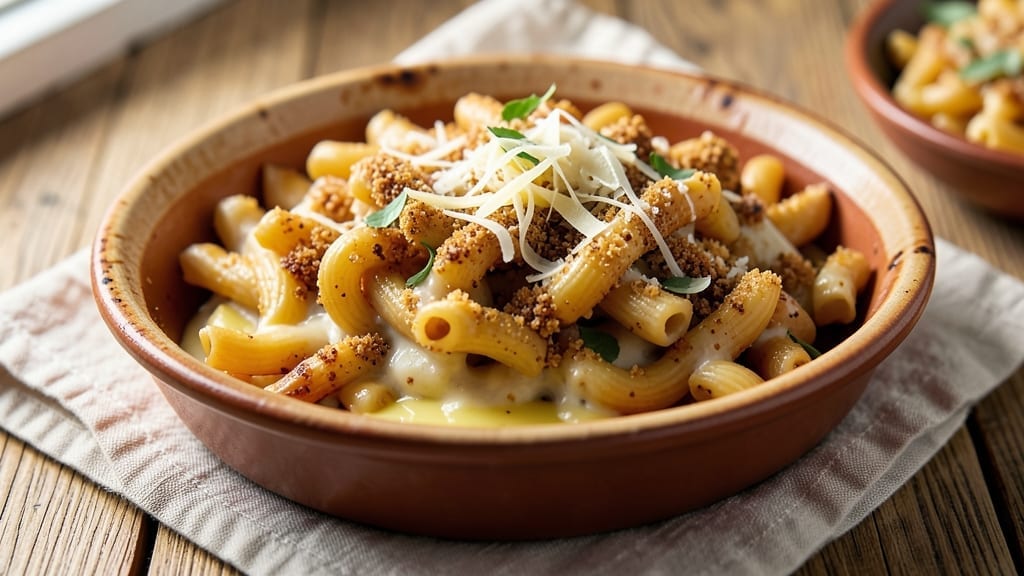
This 13th-century mac and cheese brings medieval comfort to your modern table with a rich, nutty sauce and crispy breadcrumb topping—just as monks and nobles enjoyed it centuries ago. The original recipe relied on simple ingredients like cheese, bread, and spices, creating a dish that was both hearty and elegant.
While we’ll adapt techniques for today’s kitchens, the soul of this recipe remains unchanged: a creamy, satisfying sauce that clings to al dente pasta.
The key to authenticity lies in the sauce—thickened with breadcrumbs instead of modern roux, and flavored with spices like nutmeg and saffron (if available) that were prized in medieval kitchens.
We’ll use aged cheddar for depth, but you can also incorporate medieval staples like pecorino or even a touch of hard cheese like parmesan for extra richness. The breadcrumbs, toasted until golden, add a satisfying crunch that balances the velvety sauce.
What you’ll end up with is a dish that feels like stepping into a medieval banquet hall—creamy, comforting, and deeply satisfying. The pasta absorbs the nutty, slightly tangy sauce, while the breadcrumb topping adds texture and a hint of caramelized flavor.
This isn’t just a side dish; it’s a taste of history, reimagined for your kitchen.
Perfect for a cozy dinner, a historical reenactment feast, or simply satisfying a craving for something timeless. The recipe scales easily, so whether you’re feeding a family or a crowd, this medieval mac and cheese will leave everyone asking for seconds. Let’s bring the past to your plate.
Ingredients for 13th century mac and cheese
Simple medieval ingredients that transform into a creamy, nutty masterpiece. Nothing fancy—just good stuff from your pantry.
| Ingredient | Amount | Notes |
|---|---|---|
| Elbow Macaroni 🍝 | 12 oz | Dry pasta, al dente preferred |
| Aged Cheddar Cheese 🧀 | 2 cups | Shredded, sharp variety |
| Pecorino Romano Cheese 🧀 | ½ cup | Grated, for nutty depth |
| Parmesan Cheese 🧀 | ½ cup | Freshly grated, optional |
| Stale White Bread 🍞 | 1 cup | Dried out, cubed small |
| Unsalted Butter 🧈 | ½ cup | Cold, cubed for toasting |
| Ground Nutmeg 🌿 | ½ tsp | Freshly grated preferred |
| Saffron Threads 🌼 | 0.1 tsp | Optional, for luxury touch |
| Salt 🧂 | 1 ½ tsp | Kosher or sea salt |
| Black Pepper 🌶️ | ½ tsp | Freshly cracked |
| Whole Milk 🥛 | 1 cup | Full-fat for creaminess |
| Garlic Cloves 🧄 | 2 cloves | Minced, for subtle flavor |
| Extra-Virgin Olive Oil 🫒 | 2 tbsp | For finishing drizzle |
The cheese is where the magic happens. Aged cheddar gives that sharp, tangy bite medieval cooks loved, but pecorino adds that nutty depth they prized in monasteries. Grab the sharpest cheddar you can find—Cabot or Babybel work great. If you want to get fancy, Parmigiano-Reggiano adds a luxurious touch, though it wasn’t common in the 13th century. The breadcrumbs? Use stale white bread—toast it in butter until golden for that authentic crunch. No stale bread? Toss regular bread cubes in the oven at 350°F for 10 minutes to dry them out.
No nutmeg? Cinnamon or allspice at half the amount works in a pinch, though it won’t be quite the same. Skip the saffron? Turmeric at a pinch adds color, but it tastes different. The milk can be swapped for cream for extra richness—medieval cooks didn’t have pasteurization, so full-fat was the norm. For the garlic, one clove is enough—you don’t want to overpower the delicate medieval flavors. And if you’re feeling adventurous, add a pinch of mace, another medieval spice that pairs beautifully.
This reheats like a dream—just add a splash of milk to loosen the sauce. Keeps in the fridge for 4-5 days, though it’s best fresh. For a crowd, double the breadcrumbs and cheese—toast them separately so they stay crispy. Store leftovers covered with foil to keep the topping from drying out. And trust me, the extra cheese is worth it—medieval monks would approve.
Why You’ll Love This Recipe
- No-Waste Magic: Stale bread? Not trash—it’s the secret to that ultra-creamy, medieval-style roux. Toss in a few crusts while toasting the pasta, and suddenly you’ve got a rich, golden base without extra effort. (Yes, even the kids will ask why we didn’t throw it out.)
- Cheese Overload: Three cheeses—aged cheddar, pecorino, and parmesan—mean depth you won’t find in store-bought versions. The pecorino adds a sharp, salty kick, while the parmesan melts into a velvety finish. Honestly, I’ve never met mac and cheese this adult.
- Potluck Star: This dish travels like a champ—whether it’s a picnic blanket or a holiday table. The breadcrumb topping stays crispy, the cheese stays gooey, and it reheats beautifully. (Between us, it’s also the one dish my in-laws always ask for seconds of.)
- Budget Win: Elbow pasta and day-old bread? Check. A block of cheddar and a wedge of pecorino last for weeks. I’ve made this for under $10 and fed four people—plus leftovers that taste just as good cold the next day. Practical? Absolutely. Delicious? Ridiculously so.
Step-by-step instructions for medieval cream sauce with nutty breadcrumbs
Transform humble ingredients into a rich, medieval-inspired mac and cheese with layers of nutty depth and velvety sauce.
Toast the Breadcrumbs for Crispy Topping
Preheat your oven to 350°F. Pulse the 1 cup stale white bread in a food processor until you have fine, even crumbs—think sand-like texture, not coarse. Spread them on a baking sheet in an even layer and toast for 8-10 minutes until they turn a warm golden color and smell toasty.
While they toast, melt the 0.5 cup unsalted butter in a small saucepan over low heat. Stir in 0.5 cup Pecorino Romano cheese, 0.5 cup Parmesan cheese, 0.5 tsp ground nutmeg, and 0.1 tsp saffron threads (if using). Let this mixture melt together until smooth and fragrant—this will become your breadcrumb topping. Remove from heat and set aside.
Cook the Pasta Al Dente
Bring a large pot of salted water to a rolling boil. Add the 12 oz elbow macaroni and cook until it’s 1 minute shy of al dente—you want it to finish cooking in the cheese sauce. Reserve 1 cup of pasta water before draining, as this starchy liquid is essential for creating a silky sauce.
While the pasta cooks, mince the 2 cloves garlic and set aside. The pasta should have a slight bite to it when you taste-test—this prevents mushiness in the final dish. Drain the pasta and return it to the pot, shaking to break up any clumps.
Build the Medieval Cream Sauce
In a large skillet over medium heat, add the 2 tbsp extra-virgin olive oil and the minced garlic. Sauté for 30 seconds until fragrant—don’t let it brown, or it’ll turn bitter. Add the drained pasta to the skillet and toss to coat in the oil and garlic.
Gradually sprinkle in the 2 cups aged cheddar cheese and the 1 cup whole milk while stirring constantly. The cheese should begin to melt almost immediately, creating a thick, creamy sauce. If the mixture seems too stiff, add splash at a time of the reserved pasta water until it reaches a smooth, velvety consistency. Season with 1.5 tsp salt and 0.5 tsp black pepper.
Assemble and Finish
Transfer the mac and cheese to a greased baking dish. Spread it evenly, creating a smooth surface for the topping. Pour the melted butter-cheese mixture over the top and gently swirl it with a knife to create marbled patterns. Sprinkle the toasted breadcrumbs evenly over the top, pressing down lightly so they adhere.
Bake at 350°F for 15-20 minutes until the breadcrumbs are golden and crispy, and the cheese on top is bubbling. The sauce should be thick but still creamy—if it looks too dry, drizzle a little more pasta water over the top before serving. Let it rest for 5 minutes before serving to allow the layers to set.
Pro Tips For Making 13th Century Mac And Cheese
- TOAST THE BREAD FIRST: I learned this the hard way—skip toasting stale bread, and your sauce will turn into glue. Dry it in a 350°F oven for 10-15 minutes until it’s crisp and golden, then grind it into crumbs. This makes all the difference for that medieval texture.
- GRATE CHEESE FRESH: Pre-shredded cheese packs too much anti-caking powder and won’t melt right. Use a box grater for aged cheddar and pecorino—it’s faster than you think, and the sauce will be velvety, not grainy. (Yes, even if you’re impatient like me.)
- LOW AND SLOW FOR THE SAUCE: After mixing the bread crumbs and cheese into the pasta water, simmer on low heat for 10-12 minutes. I used to rush it, and the sauce would split—now I let it thicken gently, like a medieval monk with patience.
- SALT THE PASTA WATER: No, really—more salt than you’d use for regular pasta. The elbow macaroni needs flavor to stand up to the sharp cheeses, and this is the thing that matters most. Taste the water before adding the pasta; it should taste like the sea.
Flavor customization for this recipe
Medieval Spice Infusions
Medieval cooks relied on spices that were rare and expensive—think nutmeg, saffron, and mace. For a true 13th-century twist, add ½ tsp ground mace to the sauce for a warm, slightly sweet depth.
If saffron is unavailable, ½ tsp turmeric adds golden color, though it lacks saffron’s delicate floral notes. I’ve found that a pinch of cinnamon also works, but it leans more savory than the original spices. 🌿
Cheese Variations
Swap out cheddar for Gruyère or Comté for a nuttier, more complex flavor profile. Medieval monasteries often used sheep’s milk cheese, so try pecorino or even feta for tang.
For a richer sauce, blend ½ cup cream cheese into the milk before adding it to the pasta. Just remember—medieval cheeses were aged, so sharpness is key! 🧀
Crunchy Topping Alternatives
No stale bread? Toast crushed pork rinds in butter for a crispy, savory topping that medieval cooks might’ve used in a pinch. For extra crunch, mix ½ cup crushed almonds with the breadcrumbs.
I’ve also had success with panko breadcrumbs—they toast faster and stay crispier. Just don’t skip the butter; it’s what makes them golden and flavorful. 🍞
Modern Luxury Upgrades
Want to impress? Fold 2 oz melted white chocolate into the sauce for a subtle sweetness that balances the sharp cheese. Add ½ cup caramelized onions to the pasta before mixing in the cheese for a deeper, sweeter flavor.
For a smoky touch, sprinkle ½ tsp smoked paprika over the breadcrumbs before baking. These upgrades keep the dish true to its medieval roots while adding modern flair. ✨
Vegetarian-Friendly Twists
Medieval monks ate plenty of plant-based dishes, so swap the milk for cashew cream (blend 1 cup soaked cashews with 1 cup water>) for a dairy-free version. Use nutritional yeast instead of cheese for a cheesy, umami kick.
For extra protein, stir in ½ cup cooked lentils with the pasta. The texture stays creamy, and the dish remains hearty—just like the original! 🌱
Regional Medieval Takes
In Northern Europe, cooks often added ale or beer to the sauce for a malty depth. Try replacing ½ cup milk with stout beer for a rich, slightly bitter contrast. Southern European versions sometimes included sun-dried tomatoes or capers for acidity.
I love adding 1 tbsp capers** to the sauce—they were a luxury spice in the 13th century and add a briny pop. 🗺️
Nutrition facts
Frequently asked questions
Why does this recipe use breadcrumbs instead of a roux?
Medieval cooks didn’t have modern thickening agents like flour or cornstarch. They relied on toasted breadcrumbs to create a thick, flavorful sauce that absorbed liquids beautifully. This method also adds a delightful nutty crunch that complements the creamy cheese perfectly.
Can I make this without nutmeg?
Nutmeg was a prized (and expensive) spice in the 13th century. Try substituting with ½ tsp cinnamon or ½ tsp allspice for warmth, or skip it entirely if you prefer a simpler flavor. The dish will still be delicious—just less authentically medieval!
How do I know when the pasta is al dente?
Cook the pasta 1 minute less than package instructions suggest, then taste-test. It should have a slight resistance when bitten (not mushy) but still be fully cooked. The pasta will finish cooking in the cheese sauce, so don’t overcook it initially.
What if my sauce gets too thick?
Don’t panic! The reserved pasta water is your secret weapon. Add 1 tablespoon at a time while stirring until you reach a smooth, velvety consistency. If you run out, a splash of warm milk works too—just keep it gradual to avoid thinning the sauce too much.
Can I make this ahead of time?
Yes! Assemble the dish (without baking) up to 24 hours ahead and refrigerate. When ready to serve, bake as directed, adding 5-10 extra minutes to crisp the topping. For best texture, add a splash of milk to loosen the sauce before reheating.

- 3lb Prime Rib Roast Recipe: Juicy Pink Center Guaranteed in 3 Hours - October 31, 2026
- 5 Spice Cake Recipe: Warmly Spiced Layers With Crunchy Top - October 31, 2026
- 1950’s Macaroni and Cheese Recipe: Nostalgic Creamy Cheese Sauce with Buttery Noodles - October 31, 2026