
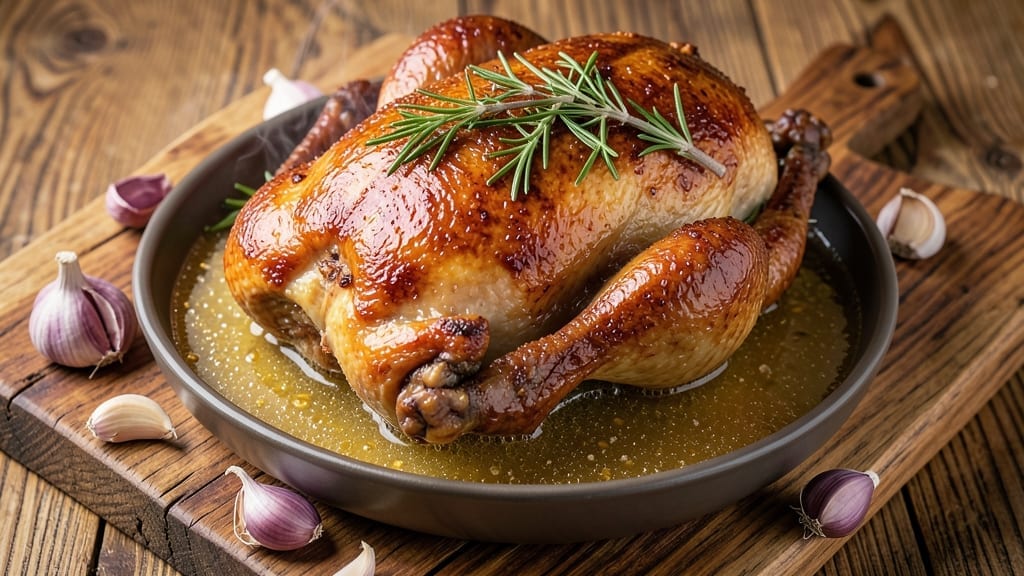
A 15lb turkey brine recipe transforms your holiday centerpiece from ordinary to extraordinary—juicy, golden meat with crispy skin that falls apart at the touch of a fork.
The secret lies in a carefully balanced brine that tenderizes deeply while preserving natural flavor, paired with precise roasting techniques that guarantee restaurant-quality results without the fuss.
This method isn’t just about moisture; it’s about control—ensuring your turkey emerges from the oven with perfect doneness and a skin so crisp it could rival any deli counter.
What sets this recipe apart is the two-stage process: an overnight brine that works its magic while you sleep, followed by a dry brine in the final hours before roasting. This dual approach locks in flavor while creating that coveted contrast between tender meat and crackling skin.
The brine itself is simple—a mix of water, salt, sugar, and aromatic spices—but the timing and technique are what elevate it from good to legendary.
Safety comes first: we’ll cover proper thawing, internal temperature checks, and resting periods to ensure your turkey is both delicious and perfectly safe for your guests.
By the time you carve into this turkey, you’ll have a bird that’s moist to the core, with skin that shatters like glass and meat so tender it melts in your mouth.
The aroma alone will have your kitchen smelling like a holiday feast, and every slice will reveal that perfect balance of seasoning and succulence. This isn’t just a turkey; it’s the centerpiece that makes your table the talk of the season.
Let’s get started on creating the juiciest, crispiest holiday bird you’ve ever served.
The beauty of this method extends beyond the turkey itself. The same brine principles apply to smaller birds, and the roasting technique scales perfectly for any size gathering. We’ll also share tips for making gravy from the drippings and pairing suggestions that complement your turkey’s rich flavors.
Whether you’re hosting a full Thanksgiving spread or a cozy family dinner, this recipe delivers professional-quality results with the confidence of a seasoned pro. Your guests won’t just eat this turkey—they’ll remember it for years to come.
Ingredients for 15lb turkey brine
Four gallons of liquid, twelve herbs, and one turkey. That’s all it takes to turn dry meat into holiday gold.
| Ingredient | Amount | Notes |
|---|---|---|
| Fresh Whole Turkey 🦃 | 15 lb | Thawed overnight in fridge |
| Water 💧 | 4 gallons | Filtered preferred for purity |
| Kosher Salt 🧂 | 1 ½ cups | Diamond Crystal preferred |
| Granulated Sugar 🍚 | ½ cup | White or brown sugar |
| Fresh Garlic Cloves 🧄 | 8 cloves | Peeled and smashed |
| Fresh Rosemary 🌿 | ¼ cup | Chopped, fresh preferred |
| Fresh Thyme 🌿 | ¼ cup | Chopped, stems removed |
| Fresh Sage 🌿 | ¼ cup | Chopped, leaves only |
| Black Peppercorns 🌶️ | 2 tbsp | Crushed, not ground |
| Bay Leaves 🌿 | 4 whole | Dried, standard size |
| Coarse Sea Salt 🧂 | ¼ cup | For dry brine stage |
| Cornstarch 🌾 | 2 tbsp | For crispy skin |
| Butter 🧈 | ½ cup | Melted, unsalted |
The turkey is non-negotiable—15 lbs is perfect for a crowd, but make sure it’s thawed properly (that’s a 24-hour fridge job). Costco or Whole Foods usually have pre-thawed options if you’re short on time. For the brine, water quality matters—filtered or spring water tastes better than tap. The salt is doing the heavy lifting here, so Diamond Crystal kosher salt dissolves perfectly. If you can’t find it, regular kosher salt works, but you might need an extra tablespoon. The herbs? Fresh is best, but dried will work in a pinch (use half the amount).
No fresh rosemary? Dried works at one-third the quantity. Short on thyme? Oregano or marjoram bridge the gap. The garlic can be roasted first for deeper flavor—just toss the whole cloves in a 400°F oven for 10 minutes before adding to the brine. For the dry brine stage, Morton coarse kosher salt is ideal if you want extra crispiness. The cornstarch is optional but worth it—it creates that restaurant-quality skin. No butter? Olive oil or avocado oil works just fine, though butter adds richness.
This brine keeps in the fridge for up to 3 days, but it’s best used fresh. The turkey itself should rest uncovered in the fridge for 12-24 hours after the wet brine before the dry brine stage. For leftovers, store in airtight containers for 3-4 days—the meat gets even more tender as it rests. Gravy? Save those drippings and strain them through a fine-mesh sieve for silky smooth results. The skin will crisp up even more after resting, so don’t skip this step.
Why You’ll Love This Recipe
- Juicy Magic: That sugar-salt-garlic combo? It doesn’t just season—it transforms the turkey into something so moist and flavorful, the skin practically cracks with crisp perfection.
- Holiday Hero: Between us, this is my Thanksgiving secret weapon. But honestly? It’s just as good for a casual Sunday supper or a last-minute dinner party when you’re swamped.
- Leftovers That Win: The turkey stays tender for days, so you’re not stuck with dry slices. I’ve turned brined turkey into sandwiches, salads, and even soup—no one ever guesses it’s day-old.
Step-by-step instructions for perfectly brined turkey
Here’s how to transform your turkey into a juicy, golden masterpiece with crispy skin.
Prepare the Wet Brine Mixture
In a large stockpot or clean garbage bag (my preferred method), combine the 4 gallons water, 1.5 cups kosher salt, and 0.5 cup granulated sugar. Stir until the salt and sugar completely dissolve—this ensures even flavor distribution throughout the turkey. The mixture should taste strongly salty, like the ocean, but don’t taste-test with your fingers.
Add the 8 cloves fresh garlic cloves, 0.25 cup fresh rosemary, 0.25 cup fresh thyme, 0.25 cup fresh sage, 2 tbsp crushed black peppercorns, and 4 whole bay leaves. I like to bruise the herbs slightly between my fingers first to release their essential oils. Let the brine steep for 30 minutes at room temperature while you prepare the turkey—this infuses the liquid with maximum flavor.
Submerge the Turkey in the Brine
Place the 15 lb fresh whole turkey in the brine solution. If using a garbage bag, seal it tightly and submerge completely in a large container of water to keep it submerged. For the stockpot method, weigh down the turkey with a plate if needed to ensure full immersion. The turkey needs to stay completely covered for 12-24 hours in the refrigerator.
Here’s the thing—don’t cut corners on time. The 12-hour minimum ensures proper salt penetration, while 24 hours delivers maximum juiciness. I’ve found that larger turkeys benefit from the extra time. Check occasionally to make sure the turkey remains fully submerged, topping off with ice cubes if needed to keep it covered.
Apply the Dry Brine and Prepare for Roasting
After brining, remove the turkey and pat it completely dry with paper towels—this is crucial for crispy skin. In a small bowl, mix the 0.25 cup coarse sea salt with the 2 tbsp cornstarch. Rub this mixture all over the turkey, including inside the cavity. The cornstarch helps create that perfect crispy texture while the coarse salt enhances flavor.
Let the turkey air-dry uncovered in the refrigerator for 4-6 hours or overnight. This step might seem like too much work, but trust me—it makes all the difference. The surface will feel tacky to the touch, which is exactly what you want. When you’re ready to cook, preheat your oven to 325°F and let the turkey sit at room temperature for 1 hour before roasting.
Roast to Golden Perfection
Place the turkey on a rack in a roasting pan, breast-side up. Pour the 0.5 cup melted butter into the cavity and around the turkey. Roast uncovered for 3-3.5 hours until the internal temperature reaches 165°F in the thickest part of the thigh. I use a meat thermometer for accuracy—this ensures perfectly cooked meat without drying it out.
About 45 minutes before the turkey is done, increase the oven temperature to 450°F to crisp the skin. Baste occasionally with pan juices for extra flavor. The skin should be deep golden brown and crispy, while the meat remains juicy and tender. Let the turkey rest for 30 minutes before carving—this allows the juices to redistribute for maximum moisture in every bite.
Pro Tips For Making 15lb Turkey Brine
- USE A BRINE BAG: I learned this the hard way—dumping a 15-pound turkey into a roasting pan full of brine is a mess. Grab a heavy-duty plastic bag (the kind that holds 5 gallons) and zip the turkey in with the brine. It stays contained, the turkey absorbs flavor evenly, and cleanup is a breeze. Just poke holes in the bag first with a fork so the turkey doesn’t float like a sad, flavorless boat.
- SMASH THE GARLIC: Skip the whole cloves if you want even flavor. Peel and roughly chop the garlic into tiny pieces—think rice-sized chunks—so it dissolves into the brine instead of just sitting there like a stubborn flavor nugget. This isn’t a garnish; it’s part of the seasoning. If you’re lazy, crush it with the flat side of a knife first.
- BRINE AT 38°F: The fridge isn’t just for storage—it’s your secret weapon. Brine the turkey at 38°F (or as close as your fridge gets) for 12–24 hours. Any warmer, and the salt starts breaking down the meat fibers faster than you’d like. Cold and slow = juicier turkey. I used to rush it, and the results were dry. Your future Thanksgiving guests won’t forgive you.
- WEIGH THE TURKEY: Don’t eyeball it. A 15-pound turkey isn’t always 15 pounds after plucking feathers or trimming. Weigh it raw, then divide the brine ratio by that exact number. Off by even a pound, and your turkey’s either swimming in weak brine or sitting in a salt desert. Grab a kitchen scale—it’s the only way to guarantee consistency. (Yes, even if you’re impatient like me.)
Troubleshooting perfect results
Brine Too Salty?
If your brine tastes overly salty, don’t panic—just add 1 cup of cold water per quart of brine and stir well. The turkey will absorb the correct salt levels during brining.
For a 15lb turkey, this usually means adding 2-3 cups of water total to dilute the brine. Always taste-test the brine after dilution to ensure it’s properly balanced. 💧
Turkey Floating Too High
When brining in a stockpot, turkeys often float with just the breast submerged. Keep them fully immersed by placing a heavy plate or baking sheet on top of the turkey. For garbage bag brining, ensure the bag is fully submerged in cold water—this keeps the turkey covered.
Never use hot water, as it can cook the turkey or cause uneven brining. 🦃
Skin Not Crispy Enough
If your turkey skin turns out soft instead of crispy, try this: After the dry brine stage, brush the skin with 1 tbsp of melted butter mixed with 1 tbsp of water before roasting.
This creates a steam barrier that promotes crispiness. Also, ensure your oven is properly preheated to 450°F for the final 45 minutes—this high heat is key for crispy skin. 🔥
Brine Smells Off
A slightly herbal, salty aroma is normal, but if your brine smells sour or rotten, discard it immediately. This usually happens if the turkey wasn’t properly refrigerated during brining (below 40°F). Always use fresh ingredients and maintain proper refrigeration to prevent spoilage.
For extra safety, add 1 tbsp of apple cider vinegar to the brine—it enhances flavor and acts as a natural preservative. 🌿
Turkey Overcooked or Dry
Overcooking happens when turkeys rest too long or are removed from the oven too early. Use a meat thermometer—the thigh should reach 165°F before removing. If your turkey feels dry, try basting with pan juices mixed with 2 tbsp of melted butter every 30 minutes during roasting.
Also, never skip the 30-minute rest—this redistributes juices and keeps the meat moist. ⏳
Brine Leaking or Spilling
If using a garbage bag, ensure it’s fully sealed and submerge it in a large container of cold water. For stockpot brining, place the pot on a tray to catch any potential spills.
If the brine leaks during refrigeration, simply transfer it to a larger container or reseal the bag tightly. Always keep the turkey fully submerged to prevent uneven brining. 💡
Nutrition facts
Frequently asked questions
Can I use a smaller container for the brine?
For a 15lb turkey, you need at least 4 gallons of brine to fully submerge the bird. If your container isn’t large enough, use a clean garbage bag sealed tightly and submerge it in a larger container of cold water. This keeps the turkey fully covered while saving space. Never use a container smaller than 1 gallon per 5 lbs of turkey.
How do I know when the turkey is fully brined?
The turkey should stay completely submerged for the full 12-24 hours. Check occasionally and add ice cubes to keep it covered. For visual confirmation, the turkey’s skin should appear slightly plump and the brine should taste strongly salty (like the ocean). If the turkey floats too high, weigh it down with a plate.
Can I skip the dry brine stage?
While possible, skipping the dry brine will compromise skin crispiness. The 4-6 hour dry brine with cornstarch and coarse salt creates that perfect crackling texture. If short on time, at least pat the turkey completely dry after the wet brine and let it air-dry for 2 hours before roasting—this still improves results.
What if my turkey is frozen?
Never brine a frozen turkey. First thaw it in the fridge for 24 hours per 5 lbs (so 6 days for a 15lb bird). For faster thawing, use the cold water method: submerge the sealed turkey in cold water, changing the water every 30 minutes until fully thawed. Always cook or brine within 1-2 days of thawing.
How do I make gravy from the drippings?
After removing the turkey, pour the pan drippings into a fat separator or large measuring cup. Let it sit for 10 minutes, then carefully skim off the fat (about 1 cup for a 15lb turkey). Pour the remaining liquid into a saucepan, add 2 cups of turkey or chicken stock, and simmer until thickened. For extra richness, whisk in 2 tbsp of butter at the end.

- 3lb Prime Rib Roast Recipe: Juicy Pink Center Guaranteed in 3 Hours - October 31, 2026
- 5 Spice Cake Recipe: Warmly Spiced Layers With Crunchy Top - October 31, 2026
- 1950’s Macaroni and Cheese Recipe: Nostalgic Creamy Cheese Sauce with Buttery Noodles - October 31, 2026