
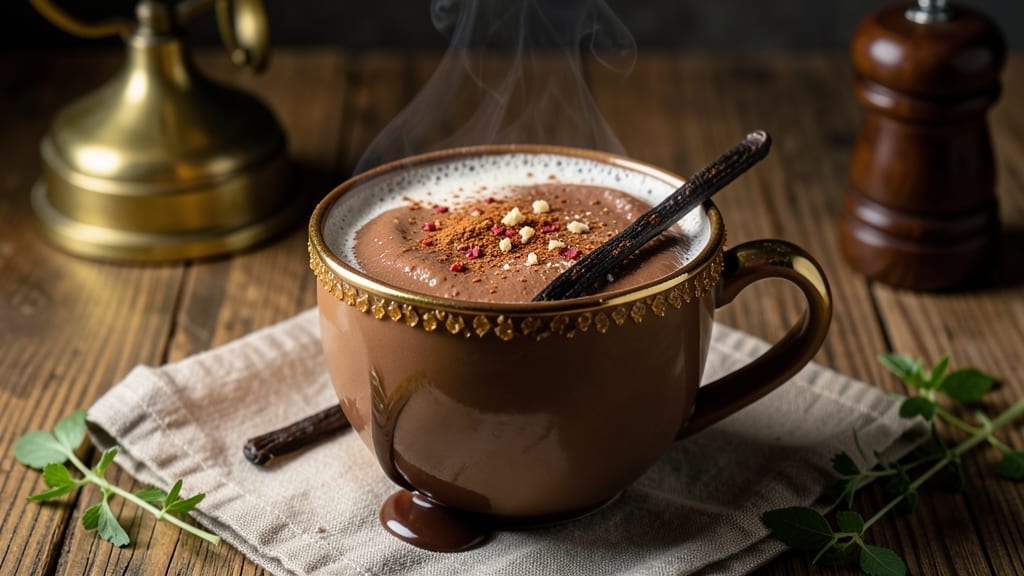
This 17th-century hot chocolate recipe transports you to colonial kitchens where chocolate mass, cinnamon, and nutmeg created a beverage fit for royalty.
The secret lies in tempering the chocolate properly to achieve that signature velvety texture with pockets of molten chocolate—just as it was enjoyed by European elites and early American settlers.
Unlike modern versions, this recipe relies on authentic ingredients like ground cacao, spices, and warm milk for a rich, complex flavor profile that’s both historical and deeply satisfying.
The process begins with carefully tempering the chocolate mass to create those signature molten chunks that melt luxuriously on the tongue. Aromatic spices like cinnamon and nutmeg are toasted to deepen their flavors, while a touch of vanilla adds warmth that bridges the gap between old-world tradition and modern taste.
The result is a drink that’s spiced, velvety, and impossibly rich—far from the sweetened, milky versions we know today.
What makes this recipe truly special is its historical authenticity. The tempering technique ensures the chocolate develops its signature snap and shine, while the slow simmering of milk with spices infuses every sip with aromatic depth.
This isn’t just a drink; it’s a taste of the past, recreated with precision for modern palates. The golden, frothy finish is the hallmark of a properly made 17th-century hot chocolate.
Perfect for cozy evenings, holiday gatherings, or historical reenactments, this recipe delivers the bold, spiced richness of colonial-era hot chocolate without sacrificing modern convenience. The method is straightforward once you master the tempering, and the ingredients—though specialized—are accessible for those willing to seek them out.
Let’s bring history to your cup.
Ingredients for 17th century hot chocolate
Historical authenticity meets luxurious texture with these carefully sourced ingredients.
| Ingredient | Amount | Notes |
|---|---|---|
| Chocolate Mass (or Cacao Nibs) 🍫 | 8 oz | High-quality, stone-ground preferred |
| Whole Milk 🥛 | 4 cups | Whole milk for richness |
| Ground Cinnamon 🌿 | 1 tbsp | Toasted for deeper aroma |
| Ground Nutmeg 🌿 | ½ tsp | Freshly grated preferred |
| Vanilla Beans 🍈 | 1 whole | Split lengthwise for seeds |
| Granulated Sugar 🍚 | ½ cup | Adjust to taste |
| Heavy Cream 🥛 | ½ cup | Optional for frothiness |
| Pinch of Salt 🧂 | ¼ tsp | Enhances spice flavors |
| Orange Peel 🍊 | 1 tbsp | Finely grated zest |
| Unsalted Butter 🧈 | 2 tbsp | For tempering chocolate |
| Dark Chocolate Chunks 🍫 | 4 oz | 70% cacao, chopped |
The chocolate mass is the heart of this recipe—look for stone-ground cacao from specialty stores like Penzeys or Ghirardelli for that authentic 17th-century depth. If using cacao nibs, toast them lightly in a dry pan to intensify the flavor. Whole milk is non-negotiable; its fat content creates the signature velvety mouthfeel. For spices, toast your cinnamon and nutmeg in a dry skillet for 30 seconds to release their aromatic oils—this makes all the difference. Vanilla beans should be plump and fragrant; Madagascar Bourbon beans are ideal. The sugar balances the bitterness, but adjust based on your cacao’s intensity.
No chocolate mass? High-quality dark chocolate (70% cacao) melted and tempered works as a substitute, though it won’t have the same historical authenticity. Swap heavy cream for coconut milk for a lighter version, though it’ll lack richness. If you’re short on vanilla, vanilla extract at half the amount suffices, but the seeds add complexity. For the orange peel, zest from a blood orange adds a subtle tartness that complements the spices beautifully. The butter is crucial for tempering—use European-style butter with higher fat content for better results. And if you’re feeling adventurous, a pinch of cardamom** can add an authentic colonial touch.
Store ground spices in airtight containers away from light to preserve their potency for up to 6 months. Whole vanilla beans keep for 1 year** in a cool, dark place. Prep ahead by toasting your spices and grating the orange peel—these steps can be done a week in advance. The tempered chocolate chunks can be stored in the fridge for 3 days**, though they’re best used immediately for that signature molten experience. For a crowd, double the batch and keep the milk warm in a slow cooker on low heat.
Why You’ll Love This Recipe
- No-Fuss Simplicity: I swear by this recipe because it’s basically foolproof—just heat milk, whisk in the chocolate mass, and let the spices do their magic. No tempering, no fancy equipment, just a pot and a spoon. Even my college-dorm microwave version worked.
- Velvet-Smooth Richness: That first sip? Pure decadence. The cacao nibs melt into a velvety texture while cinnamon and nutmeg add warmth without overpowering. Split a vanilla bean for that extra touch—trust me, it’s worth the effort.
- Date Night Ready: Between us, this is my go-to for cozy evenings. Serve it steaming in mugs with whipped cream, or pour it into glasses for a fancier vibe. Works just as well for solo movie nights as it does for impressing guests.
- Budget-Friendly Luxury: A single batch costs pennies but tastes like a five-star dessert. The spices last forever, and you can use store-bought chocolate mass or even nibs if you’re feeling adventurous. Leftovers? Just reheat with a splash of milk—no waste here.
Step-by-step instructions for 17th century hot chocolate
This method recreates the luxurious, spiced hot chocolate enjoyed by European aristocracy centuries ago.
Temper the Chocolate Mass for Richness
Place the 8 oz chocolate mass (or cacao nibs) in a heavy-bottomed saucepan over low heat. Add the 4 cups whole milk and stir gently with a wooden spoon, keeping the temperature below 160°F to prevent scorching. The mixture should thicken gradually into a velvety paste—this is critical for authentic texture. If using cacao nibs, they’ll melt into a smooth, bittersweet base rather than forming chunks.
Once fully melted and smooth, remove from heat and stir in the 1 tbsp ground cinnamon, 0.5 tsp ground nutmeg, 0.25 tsp pinch of salt, and 1 tbsp orange peel. The spices should dissolve completely, creating an aromatic foundation. Here’s where the 17th-century magic happens—the spices meld with the chocolate’s natural acidity, developing complex flavors that modern versions often miss.
Infuse with Vanilla and Sweetener
Return the saucepan to medium-low heat and add the 0.5 cup granulated sugar and 0.5 cup heavy cream. Scrape the seeds from the 1 whole vanilla bean and add them to the pot along with the empty pod. Simmer gently for 5-7 minutes, stirring occasionally, until the mixture reaches 170°F—just below boiling. The vanilla seeds will release their floral notes while the cream adds luxurious body.
Taste and adjust sweetness if needed—17th-century recipes often balanced chocolate’s bitterness with sugar. The mixture should taste rich but not cloying, with the spices subtly present. Remove from heat and let steep for 5 minutes to allow the vanilla to fully infuse. This step transforms the chocolate from simple to extraordinary, just as it would have for Spanish and French nobility.
Temper the Chocolate Chunks for Molten Texture
In a separate small saucepan, melt the 2 tbsp unsalted butter over low heat until just liquid. Add the 4 oz dark chocolate chunks and stir gently until completely melted. The butter helps prevent the chocolate from seizing as it reintegrates with the hot liquid. Keep this mixture at 150°F—any hotter and the chocolate will scorch.
Slowly pour the melted chocolate-butter mixture into the spiced chocolate base while whisking continuously. The contrast in temperatures creates a luxurious, velvety texture with pockets of molten chocolate. This technique, known as “tempering,” was a hallmark of 17th-century confectionery and ensures each sip delivers both smoothness and surprise.
Serve Immediately for Peak Experience
Divide the hot chocolate among 4 warmed mugs or stoneware bowls—traditional serving vessels that maintain heat. Garnish each portion with a sprinkle of additional ground cinnamon and a few dark chocolate shavings for visual appeal. The contrast of the warm spiced chocolate against the cool garnishes enhances both texture and presentation.
Serve immediately while the chocolate retains its luxurious mouthfeel. The 170°F serving temperature is ideal—hot enough to melt any remaining chocolate chunks on the tongue but cool enough to appreciate the complex flavors. This was how it was enjoyed in 17th-century salons: as both a beverage and an experience, served with small pastries or fresh fruit to complement its richness.
Pro Tips For Making 17th Century Hot Chocolate
- Temper the Milk: DESCRIPTION:
- Toast the Spices: DESCRIPTION:
- Split the Vanilla: DESCRIPTION:
- Whisk Like You Mean It: DESCRIPTION:
Make-ahead tips for this dish
Prep Ahead Spices
Toast your cinnamon and nutmeg up to 2 weeks in advance and store in an airtight container—this intensifies their aroma without overpowering. I like to toast them in a dry skillet over medium heat for 1 minute, stirring constantly until fragrant.
Grate the orange peel and store it in the fridge for up to 5 days in a sealed container with a paper towel to absorb moisture. This step saves time and ensures your spices are always ready for that signature 17th-century warmth. ✨
Temper Chocolate Chunks
Make the dark chocolate chunks ahead of time by melting 2 tbsp butter with 4 oz chocolate and letting it set at room temperature for 30 minutes. Once firm, chop into ½-inch pieces and store in the fridge for up to 3 days in an airtight container.
These pre-tempered chunks will melt luxuriously on the tongue, just like the original colonial versions. Pro tip: Use a microplane to create thin shavings for garnishing—it adds a professional touch. 🍫
Infuse Milk Base
Prepare the milk base in advance by heating 4 cups whole milk with 0.5 cup sugar and 1 vanilla bean (seeds scraped) until it reaches 160°F. Let it cool to room temperature, then refrigerate for up to 24 hours.
Reheat gently on the stovetop before combining with the chocolate mass—this ensures the spices and vanilla infuse perfectly without overpowering the chocolate. I often make this the night before for a foolproof morning treat. 🥛
Assemble Components
Keep the chocolate mass and spices separate until ready to serve. Store the 8 oz chocolate mass in a cool, dark place for up to 3 months in an airtight container.
When ready to serve, simply melt the chocolate mass with the pre-infused milk base over low heat and stir in the tempered chocolate chunks just before serving. This assembly-line approach keeps everything fresh and ensures the molten texture remains intact. 💫
Batch for Gatherings
Double the recipe and store components separately for crowds. Use a slow cooker on low heat to keep the milk base warm for up to 4 hours, stirring occasionally. Pre-temper the chocolate chunks in bulk and store them in the fridge.
When guests arrive, simply reheat the milk base, combine with the chocolate mass, and add the chunks—this keeps the process seamless and stress-free. Perfect for holiday gatherings or historical reenactments! 🎉
Freeze for Later
For long-term storage, freeze the fully assembled hot chocolate in ice cube trays or small containers. Each cube or portion can be reheated in the microwave for 20-30 seconds or on the stovetop with a splash of milk to restore its creamy texture.
While freezing isn’t traditional, it’s a modern convenience that preserves the rich flavors for up to 3 months. Just add a sprinkle of fresh spices when reheating to revive the aroma. ❄️
Nutrition facts
Frequently asked questions
What makes 17th-century hot chocolate different from modern versions?
Unlike today’s sweetened, creamy drinks, 17th-century versions were spice-forward with cinnamon, nutmeg, and sometimes chili. They used chocolate mass (not sugar-loaded milk chocolate) and were served with molten chocolate chunks for texture. The tempering process created that signature velvety mouthfeel with pockets of rich chocolate that modern recipes often skip.
Can I substitute chocolate mass if I can’t find it?
Yes! Use high-quality dark chocolate (70% cacao) melted and tempered, though it won’t be identical. For authenticity, toast cacao nibs first to deepen their flavor. Avoid milk chocolate—its sugar content throws off the historical balance of spices and bitterness. The key is achieving that 170°F serving temperature to maintain the molten texture.
Why does the recipe call for tempering chocolate chunks?
Tempering creates the signature snap and shine of 17th-century chocolate while ensuring those chunks melt luxuriously on the tongue. The butter in the recipe helps stabilize the chocolate’s fat crystals, preventing it from seizing when combined with hot liquid. This technique was used by colonial confectioners to create a velvety texture with surprise bursts of flavor—just like the original royal hot chocolate.
How do I adjust the spice level for sensitive palates?
Start with half the cinnamon (0.5 tbsp) and reduce nutmeg to ¼ tsp. For warmth without intensity, add a pinch of cardamom instead. The vanilla and orange peel already provide aromatic depth, so you can omit nutmeg entirely if needed. Remember, 17th-century versions were boldly spiced—this is a modern adaptation for delicate tastes.
Can I make this without a vanilla bean?
Yes! Use ½ tsp vanilla extract instead, but you’ll miss the floral complexity of fresh seeds. For a closer match, combine ¼ tsp vanilla extract with 1 tsp bourbon or rum**—this mimics the alcohol infusion used in colonial recipes. The orange peel adds citrus brightness that helps balance any missing vanilla depth.

- 3lb Prime Rib Roast Recipe: Juicy Pink Center Guaranteed in 3 Hours - October 31, 2026
- 5 Spice Cake Recipe: Warmly Spiced Layers With Crunchy Top - October 31, 2026
- 1950’s Macaroni and Cheese Recipe: Nostalgic Creamy Cheese Sauce with Buttery Noodles - October 31, 2026