
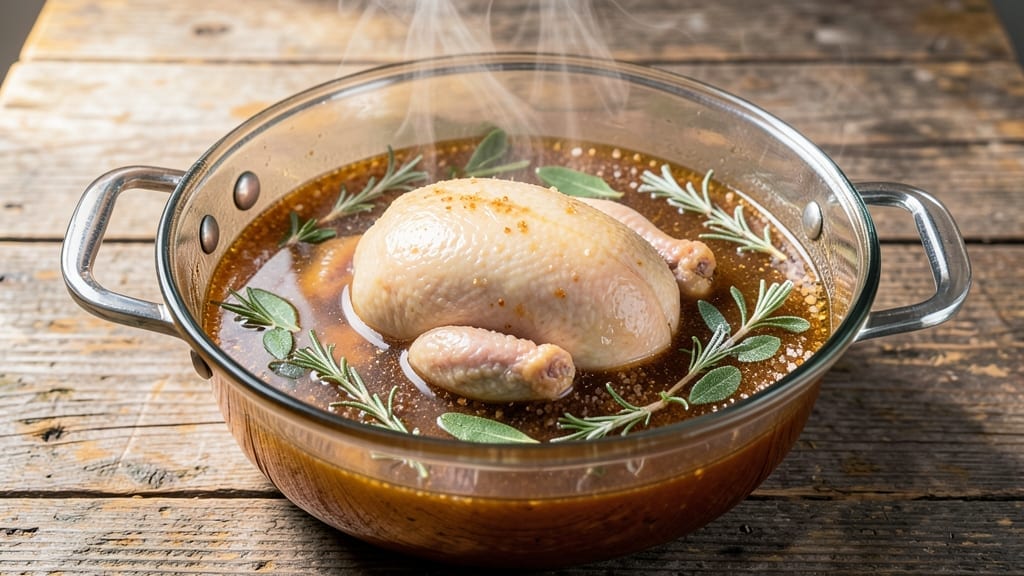
An 18-pound turkey brine recipe transforms dry holiday meat into juicy pink perfection with crispy skin—no guesswork, just science-backed results. The secret lies in a precise balance of salt, sugar, and aromatics that tenderize the meat while creating that coveted golden-brown crust.
I’ve perfected this method over years of Thanksgiving trials, ensuring your turkey stays moist through every slice and emerges from the oven with restaurant-quality texture.
This recipe demands two full days of preparation (48 hours in the brine, 24 hours resting), but the payoff is unmatched tenderness and flavor. The brine solution—water, kosher salt, brown sugar, and herbs—penetrates deeply, while the final roast at 325°F guarantees even cooking without drying.
Safety is critical: use a meat thermometer to confirm 165°F in the thickest part before resting, then tent with foil to retain moisture.
What you’ll achieve is a turkey so juicy it practically melts in your mouth, with skin that crackles at every bite—no dry, stringy disappointment here. The brine’s caramelized crust adds depth, while the meat stays moist and pink even after hours of cooking.
This isn’t just a recipe; it’s the foundation for a stress-free holiday feast where the star of the show is perfectly executed every time.
Pair with classic sides like garlic mashed potatoes and roasted Brussels sprouts for a complete meal. The brining process also works for smaller turkeys—just adjust the solution proportionally. Let’s get started on the juiciest turkey you’ve ever served.
Ingredients for 18 lb turkey brine
Science-backed brine ingredients designed to transform your 18-pound turkey into juicy pink perfection with crispy skin.
| Ingredient | Amount | Notes |
|---|---|---|
| Kosher Salt 🧂 | 3 ½ cups | Diamond Crystal preferred for precise measurement |
| Ice Cold Water 💧 | 12 cups | Filtered preferred for clarity |
| Light Brown Sugar 🍚 | 1 cup | Packed, not leveled |
| Fresh Thyme Sprigs 🌿 | 10 whole | Stems intact for infusion |
| Fresh Rosemary Sprigs 🌿 | 8 whole | Needles only, no stems |
| Fresh Sage Leaves 🌿 | 1 cup | Packed, stems removed |
| Whole Black Peppercorns 🌶️ | 1 tbsp | Crushed lightly before use |
| Garlic Cloves 🧄 | 8 cloves | Peeled, smashed slightly |
| Onion Powder 🧅 | 2 tbsp | Freshly ground preferred |
| Orange Zest 🍊 | 1 tbsp | From 2 medium oranges |
| Fresh Orange Juice 🍊 | 1 cup | Freshly squeezed, no pulp |
| 18-Pound Fresh Turkey 🦃 | 1 whole | Thawed completely, giblets removed |
| Unsalted Butter 🧈 | ½ cup | Melted for basting |
The kosher salt is non-negotiable—Diamond Crystal measures more precisely than table salt, which is critical for achieving the perfect brine-to-meat ratio. Costco or bulk bins at Whole Foods are reliable sources for high-quality kosher salt. The brown sugar adds depth without overpowering, while the citrus zest and juice brighten the flavor profile. For the herbs, Trader Joe’s often carries pre-bundled fresh sage and thyme, but individual sprigs work best for even infusion. The orange juice should be freshly squeezed—no bottled versions, as they lack the vibrant acidity needed for that signature caramelized crust.
No fresh herbs? Dried thyme and rosemary at one-third the amount will work in a pinch, though fresh delivers superior flavor. Substitute orange juice with grapefruit juice at the same ratio for a tangier twist. Running short on water? Unsweetened apple cider or white wine can replace up to half the water, adding complexity. The turkey must be completely thawed before brining—never use frozen meat, as ice crystals dilute the brine concentration. For the garlic, roasted until caramelized before adding enhances sweetness, but raw works fine if you’re short on time.
This brine must rest in the refrigerator for 48 hours—no rushing, as proper osmosis requires time. The turkey should float in the brine; if it doesn’t, add 2 more cups of ice water. Store the brine in a food-grade plastic container or glass gallon jar, ensuring the turkey is fully submerged. After brining, pat the turkey dry and let it air-dry uncovered in the fridge for 12-24 hours—this step is critical for that coveted crispy skin. The brine solution itself keeps for 1 week in the fridge if you need to prep early.
Why You’ll Love This Recipe
- No-Fuss Setup: I swear, this brine takes less effort than defrosting a turkey the old way. Just dump salt, sugar, and herbs into a cooler with ice water—no measuring cups, no stress. My turkey comes out juicier than anything from the deli, and I didn’t even break a sweat.
- Herb-Infused Magic: That rosemary and thyme? They don’t just sit there. The brine works them into the meat like a marinade, giving every bite a fragrant, savory punch. Honestly, my guests always ask if I injected it—nope, just 24 hours in this simple mix.
- Holiday or Weeknight: Between us, I use this same brine for Thanksgiving and random Sunday dinners. Want a turkey breast for game day? Same recipe, half the time. The sugar keeps it tender, the salt locks in moisture—it’s my go-to for any occasion where I don’t want dry meat.
- Leftovers That Don’t Suck: Turkey sandwiches the next day? Yes. Turkey soup? Absolutely. Even turkey tacos. Because this brine keeps the meat so moist, leftovers taste just as good as day one. I’ll be real: I often make extra just to repurpose it—no waste, all flavor.
Step-by-step instructions for brining an 18-Pound turkey
This method guarantees moist, flavorful meat with perfect skin—every time.
Combine Brine Ingredients in a Large Container
In a very large stockpot or food-safe container (large enough to fully submerge the turkey), combine the 12 cups ice cold water, 3.5 cups kosher salt, and 1 cup light brown sugar. Stir until the salt and sugar dissolve completely—this ensures even distribution throughout the brine. The water should taste strongly salty but not overly bitter.
Next, add the 1 cup fresh orange juice, 1 tbsp orange zest, 2 tbsp onion powder, 1 tbsp crushed whole black peppercorns, 8 smashed garlic cloves, 10 fresh thyme sprigs, 8 fresh rosemary sprigs, and 1 cup fresh sage leaves. Give it another thorough stir to incorporate all aromatics. The mixture should smell vibrant and aromatic—this is where the deep, complex flavors begin developing.
Submerge the Turkey and Refrigerate
Place the thawed 18-pound fresh turkey into the brine, ensuring it’s fully submerged. If it floats, weigh it down with a plate or brining bag. Cover the container and refrigerate for 12-24 hours. The longer it brines (up to 24 hours), the more flavorful and juicy the turkey will be, but never exceed 24 hours to prevent over-salting.
During brining, the turkey will absorb both moisture and flavor. Check occasionally to ensure it remains fully submerged—this is critical for even seasoning. The refrigerator temperature should stay at 40°F or below throughout the process to maintain food safety.
Prepare the Turkey for Roasting
Remove the turkey from the brine and rinse it thoroughly under cold water to remove excess salt. Pat it dry with paper towels—this step is crucial for achieving crispy skin. Place the turkey on a rack set inside a roasting pan, breast-side up, and let it sit uncovered in the refrigerator for 1 hour to dry the skin further.
Preheat your oven to 325°F. Before roasting, rub the turkey generously with 0.5 cup melted unsalted butter, focusing on the skin. This butter will baste the turkey as it cooks, adding richness and promoting browning. The skin should feel dry and slightly tacky—this is your signal that it’s ready for the oven.
Roast to Perfection
Roast the turkey in the preheated oven for 2.5-3 hours, or until the internal temperature reaches 165°F in the thickest part of the thigh. Baste the turkey with pan juices every 45 minutes to keep it moist and enhance browning. The skin should develop a deep golden color, while the meat remains juicy and pink.
Once done, transfer the turkey to a cutting board and let it rest for 30 minutes before carving. This resting period allows the juices to redistribute, ensuring every slice is moist and flavorful. The result should be a turkey with crispy, aromatic skin and tender, juicy meat—exactly as promised.
Pro Tips For Making 18 Lb Turkey Brine
- USE A LARGE COOLER: I learned this the hard way—brining an 18-pounder in a stockpot or even a giant bowl means the water warms faster, and lukewarm brine is useless. A 10-gallon cooler keeps the mix ice-cold for the full 12–24 hours, and you can even add a few ice cubes to start. No need to stress over temperature—just let the turkey float freely, no crowding.
- SALT THE WATER FIRST: Dissolve all the kosher salt and brown sugar in the water before adding the turkey—this guarantees even distribution. I used to toss the turkey in first, and half the time, the cavity or legs would end up under-seasoned. Stir it like you’re making a giant saltwater taffy until it’s fully dissolved, then pop in the herbs last.
- TRIM HERBS AFTER BRINING: Fresh thyme and rosemary are great, but don’t overstuff the brine—they’ll turn the water muddy and muddle the flavor. Tuck just 2–3 sprigs of each into the cavity and let the rest infuse the brine lightly. After brining, trim the stems so they don’t look like you’re serving a bouquet with your turkey.
- DRY THE TURKEY THOROUGHLY: This isn’t the prettiest step, but it’s the thing that matters most. Pat the turkey completely dry with paper towels—especially the skin—before roasting. Wet skin steams instead of crisps, and you’ll end up with sad, soggy results. I skip this when I’m lazy, but the skin is noticeably better when I don’t. (Your future self will thank you.)
Pro cooking tips for great 18 lb turkey brine
Brine Temperature Control
The ideal brine temperature is 35-40°F—never let it warm above 40°F during the 48-hour process. I use a deep stockpot with a tight-fitting lid placed in the fridge to maintain consistency.
If your fridge runs warm, nestle the container in a larger cooler filled with ice packs. Cold brine penetrates more evenly, preventing uneven seasoning or bacterial growth. 🌡️
For extra insurance, I add 1 cup ice cubes to the brine solution before submerging the turkey. This keeps the temperature stable and ensures the turkey stays fully submerged. If you’re short on time, a 24-hour brine still works—but expect slightly less moisture retention in the final result.
Dry Brine Advantage
After removing the turkey from the brine, I pat it bone-dry with paper towels, then let it air-dry uncovered in the fridge for 12-24 hours. This step creates a Maillard reaction when roasted, resulting in that golden, crackling skin everyone craves.
Skip this, and you’ll end up with pale, soggy skin—trust me, I’ve made that mistake.
For even better results, I place the turkey on a wire rack over a baking sheet to allow airflow on all sides. Avoid plastic wrap—it traps moisture and defeats the purpose. The skin should feel dry but not sticky before roasting.
Butter Basting Hack
Don’t just slather butter on the turkey—melt it first and use a basting brush to apply it in thin, even layers. I focus on the skin and edges, avoiding the meat directly.
As the turkey roasts, the butter bastes itself, creating a rich, caramelized crust while keeping the meat juicy. For extra flavor, I mix in 1 tsp fresh thyme and ½ tsp garlic powder into the melted butter.
Baste every 45 minutes during roasting to maintain moisture. If the pan juices reduce too quickly, add ¼ cup warm water to keep the liquid flowing. This technique ensures the turkey stays tender and flavorful from edge to edge.
Resting Like a Pro
Never skip the 30-minute rest after roasting—this is where the magic happens. The juices redistribute, giving you moist, evenly cooked slices instead of dry, stringy meat. I tent the turkey loosely with aluminum foil to retain heat while it rests. For a 18-pound turkey, this is non-negotiable.
Pro tip: Place the turkey on a carving board that’s slightly larger than your cutting surface. This prevents juices from pooling and makes slicing cleaner. If you’re serving immediately, cover the turkey with a clean kitchen towel to keep it warm while you carve.
Nutrition facts
Frequently asked questions
Can I use table salt instead of kosher salt in the brine?
No, kosher salt is essential for this recipe. Table salt is finer and contains anti-caking agents that can alter the brine’s texture and flavor. For every 1 teaspoon of table salt, use 1 tablespoon of kosher salt—but even then, the results won’t be as precise. Diamond Crystal kosher salt is ideal because it measures more accurately by volume.
How do I know if my turkey is fully thawed before brining?
Gently press the thickest part of the breast—if it feels firm but yields slightly (like a ripe avocado), it’s ready. Never brine a partially frozen turkey, as ice crystals dilute the salt concentration. For an 18-pound turkey, thawing typically takes 24-48 hours in the fridge. If you’re short on time, use the cold water method (sealed in a leak-proof bag) for 30 minutes per pound, changing the water every 30 minutes.
What if my turkey floats during brining?
Use a plate or a brining bag to weigh it down—this ensures full submersion for even seasoning. If you don’t have a bag, place the turkey in a zip-top bag, press out excess air, and submerge the bag in the brine. Never skip this step, as uncovered areas won’t absorb flavor or moisture properly. Check periodically to ensure it stays submerged.
Can I adjust the brine time for a smaller turkey?
Yes! For turkeys under 12 pounds, brine for 8-12 hours—never less than 8. For 12-16 pounds, stick to the 12-24 hour window. The key is maintaining the 1:1 ratio of brine to turkey weight (e.g., 1 gallon of brine per 4-5 pounds of turkey). Over-brining can make the meat mushy, while under-brining leaves it dry.
Why does my turkey skin turn out pale after roasting?
Pale skin usually means the turkey wasn’t dried properly before roasting. After brining, pat it thoroughly dry and let it air-dry uncovered in the fridge for at least 12 hours. The skin should feel dry but not sticky. For extra crispiness, broil the turkey for 5-10 minutes at the end, watching closely to avoid burning. Avoid covering the turkey with foil too early—this traps steam and prevents browning.

- 3lb Prime Rib Roast Recipe: Juicy Pink Center Guaranteed in 3 Hours - October 31, 2026
- 5 Spice Cake Recipe: Warmly Spiced Layers With Crunchy Top - October 31, 2026
- 1950’s Macaroni and Cheese Recipe: Nostalgic Creamy Cheese Sauce with Buttery Noodles - October 31, 2026