
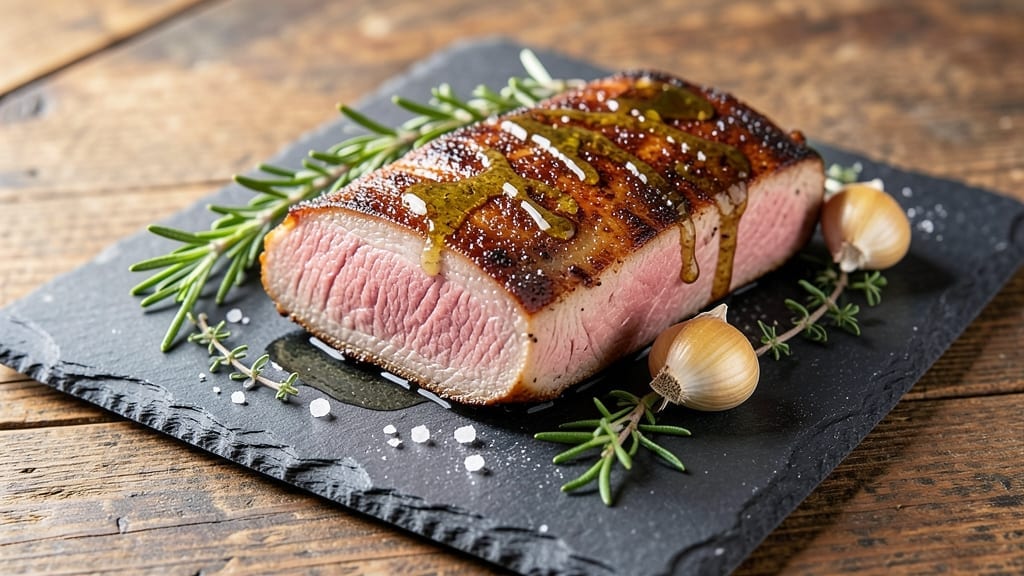
This 1lb pork loin recipe delivers a perfectly herb-crusted roast with a juicy pink center—exactly what transforms a weeknight dinner into something special. 🌟 As someone who’s cooked thousands of pounds of pork, I know the secret lies in precise timing and a flavorful crust that locks in moisture while creating that irresistible golden-brown sear.
The magic happens with a simple herb crust—garlic, rosemary, and thyme pressed into the meat—that forms a flavorful bark while keeping the inside tender. We’re talking about a foolproof method that delivers restaurant-quality results without requiring fancy equipment.
Just a few basic ingredients, a hot oven, and about 30 minutes of hands-off cooking time.
What you’ll end up with is a beautifully seared pork loin with crisp edges and a pink center that’s still juicy and tender. The herb crust adds layers of aromatic flavor that’ll have everyone asking for seconds.
This is the kind of pork roast that pairs perfectly with roasted potatoes or a fresh green salad.
Whether you’re cooking for one or planning a small gathering, this recipe scales beautifully while maintaining that perfect balance of texture and flavor. Let’s get started with a method that’s been tested and refined over years of cooking pork at every level.
Ingredients for 1lb pork loin
Eleven ingredients transform a simple pork loin into restaurant-quality perfection with crisp edges and juicy pink center.
| Ingredient | Amount | Notes |
|---|---|---|
| Pork Loin (Center Cut) 🐖 | 1 lb | Bone-in preferred for even cooking |
| Fresh Rosemary 🌿 | ¼ cup | Finely chopped, fresh preferred |
| Fresh Thyme 🌿 | ⅛ cup | Leaves only, stems removed |
| Garlic Cloves 🧄 | 6 cloves | Minced, skin-on for flavor |
| Extra-Virgin Olive Oil 🫒 | 2 tbsp | High-quality, fruity variety |
| Diamond Crystal Kosher Salt 🧂 | 1 ½ tsp | Fine grain preferred |
| Freshly Ground Black Pepper 🌶️ | ½ tsp | Cracked peppercorns preferred |
| Unsalted Butter 🧈 | ½ oz | Cold, cubed for crust |
| Fresh Lemon Juice 🍋 | 1 tbsp | From organic lemons |
| All-Purpose Flour 🌾 | ¼ cup | For dusting, low-protein preferred |
| Fresh Parsley 🌿 | ⅛ cup | Chopped, for garnish |
The pork loin is non-negotiable here—center-cut with bone-in delivers the best results. Look for a piece with good marbling and even thickness. Whole Foods or local butchers often carry premium cuts, but the standard supermarket selection works fine if it’s fresh. The herb crust relies on fresh rosemary and thyme, so skip the dried unless it’s labeled ‘culinary grade’—it lacks the aromatic complexity. For the garlic, skin-on cloves add subtle sweetness when minced. I always buy organic garlic when possible, as the skins come off more easily.
No fresh rosemary? Dried at one-third the amount works in a pinch, but the flavor won’t be as vibrant. Substituting lemon zest for juice adds brightness if you’re out of lemons. The butter crust requires cold butter cubes—don’t skip this step, as it creates that irresistible golden-brown sear. For the olive oil, low-acidity varieties like California extra-virgin prevent bitterness. The flour is just for dusting—use a fine-mesh sieve to avoid lumps. If you’re cooking for a crowd, double the recipe but increase the oven time by 10 minutes.
Keep the pork loin wrapped in parchment paper in the fridge for up to 2 days before cooking. The herb mixture can be prepped 1 day ahead and stored in an airtight container. Once cooked, the roast reheats beautifully—warm in a 300°F oven for 10 minutes with a splash of water or broth. For presentation, arrange the parsley garnish in a herb fan pattern over the sliced pork. Leftovers keep for 3 days in the fridge or 3 months frozen, though the texture suffers slightly after freezing.
Why You’ll Love This Recipe
- No-Chop Necessary: I swear by this—just a single slab of pork loin, a few sprigs of rosemary and thyme, and a handful of garlic cloves. Minimal prep, zero fuss, and the herbs do all the work while you’re stirring the pan.
- Herb-Packed Magic: That combo of rosemary and thyme? It’s like a flavor hug. The garlic cloves caramelize just enough to add a sweet, savory punch, while the olive oil keeps it juicy and rich—no dry pork loin here.
- Weeknight to Dinner Party: Same recipe, different vibes. Toss it on the grill for a summer BBQ, roast it in the oven for a fuss-free family dinner, or even slice it thin for sandwiches. It’s my go-to when I need something reliable but impressive.
- Leftovers That Don’t Suck: Between us, most pork recipes leave you with sad, dry leftovers. Not this one. The center-cut stays tender, and the herbs keep it tasting fresh even reheated—perfect for lunchboxes or a lazy Wednesday night.
Step-by-step instructions for herb-crusted pork loin
Master this technique and you’ll achieve a perfectly pink center with a golden, aromatic herb crust every time.
👨🍳 Step 1: Prepare the Herb Crust Mixture
In a small bowl, combine the 0.25 cup fresh rosemary and 0.125 cup fresh thyme leaves. Finely chop the 6 cloves garlic (including skins for maximum flavor) and add to the bowl. Drizzle in the 2 tbsp extra-virgin olive oil and mix until the herbs are thoroughly coated and fragrant.
Add the 1.5 tsp diamond crystal kosher salt and 0.5 tsp freshly ground black pepper to the herb mixture. Using your hands, work the salt and pepper into the herbs until they form a coarse, textured paste. This herb crust will create that signature golden crust while infusing the pork with deep herbal notes throughout.
👨🍳 Step 2: Season and Coat the Pork Loin
Pat the 1 lb pork loin completely dry with paper towels—this is critical for achieving that crisp crust. Season both sides generously with additional salt and pepper if needed, then press the herb mixture firmly onto all sides of the pork, covering it completely. The crust should adhere well and feel substantial.
Transfer the coated pork to a plate and refrigerate uncovered for 30 minutes. This chilling step allows the herb mixture to adhere better and prevents the pork from releasing too much moisture during cooking. I like to place a wire rack over the plate to ensure proper air circulation around the meat.
🔥 Step 3: Sear for Maximum Flavor Development
Preheat your oven to 425°F. Heat a heavy oven-safe skillet (like cast iron) over medium-high heat until smoking hot. Add the pork loin and sear for 3-4 minutes per side until a deep golden-brown crust forms. You’ll see the herb crust darken and crisp slightly—this is your signal that the Maillard reaction is working its magic.
Once both sides are well-browned, transfer the skillet to the preheated oven. The residual heat in the pan will help maintain the crust’s integrity as it continues cooking. Roast for 15-20 minutes, or until the internal temperature reaches 140°F when measured with a meat thermometer inserted into the thickest part of the loin.
⏰ Step 4: Finish with Butter and Rest
Remove the pork from the oven and increase the heat to 450°F. Add the 0.5 oz cold cubed butter and 1 tbsp fresh lemon juice to the skillet. Spoon the melted butter mixture over the pork, basting it generously on all sides. Return to the oven for 5-7 minutes to create a glossy finish.
The butter basting adds richness and helps create that signature pink center by preventing the surface from drying out too quickly. Transfer the pork to a cutting board and tent loosely with foil. Let it rest for 10-15 minutes before slicing—this crucial resting period allows the juices to redistribute throughout the meat.
🔪 Step 5: Slice and Garnish
Using a sharp carving knife, slice the pork loin into ½-inch thick medallions against the grain. The slices should be tender with a perfect pink center and a golden herb crust. Arrange the slices on a warmed platter and sprinkle with the 0.125 cup chopped fresh parsley for a pop of color and freshness.
Serve immediately with pan juices spooned over the top. The herb crust should be crisp yet fragrant, and each bite should deliver that ideal balance of tender meat with a burst of rosemary and thyme. The lemon butter basting adds a bright finish that cuts through the richness of the pork.
Pro Tips For Making 1lb Pork Loin
- SEAR FIRST, THEN SLOW: Take the pork loin out of the fridge 30 minutes before cooking—cold meat steams instead of searing. Get your pan screaming hot (medium-high) with olive oil, then let that loin sit for 2 full minutes per side without moving it. I used to rush this, and the herbs just stuck instead of building flavor.
- CHOP HERBS COARSELY: Tiny herb pieces turn to mush and disappear. Roughly chop rosemary and thyme into ¼-inch pieces—big enough to taste but small enough to release oils. The garlic? Smash those cloves with the flat side of your knife first, then slice thinly. This isn’t gourmet plating; it’s flavor distribution.
- DON’T OVERCOOK THE GARLIC: Add the smashed garlic to the pan after the pork has seared and browned—about 2 minutes in. If you toss it in at the start, it burns before the pork ever gets a chance to cook through. Burnt garlic ruins everything, and no one’s got time for that.
- REST IT UNDER FOIL: Pull the pork off the heat at 140°F (it’ll hit 145°F while resting). Tent it loosely with foil and let it sit for 10 minutes—no peeking. I used to cut into it early, and the juices would pool on my plate instead of staying in the meat. Patience here makes the difference between dry and perfect.
Common mistakes when making perfect results
Overcooking the Pork
I can’t tell you how many times I’ve seen perfectly good pork turn dry and tough because someone pulled it from the oven too early or cooked it too long.
Pork loin has a narrow window between 140°F and 145°F for that ideal pink center—any hotter and you’ll end up with dry, stringy meat. Always use a meat thermometer inserted into the thickest part of the loin.
If you’re cooking for a crowd, remove the pork when it reaches 140°F and let it rest—it’ll continue cooking slightly from residual heat.
Skipping the Resting Time
This is a rookie mistake that ruins an otherwise perfect roast. When you slice pork immediately after cooking, all the juices rush to the surface, leaving you with dry slices. That 10-15 minute rest is non-negotiable—it allows the muscle fibers to relax and redistribute those precious juices.
I’ve seen chefs lose entire meals because they couldn’t wait those few minutes. Trust me, it makes all the difference in the world. 💫
Using Wet Herbs
Fresh herbs are essential for that aromatic crust, but using wet herbs straight from the fridge is a recipe for disaster. When herbs are too damp, they won’t adhere properly to the pork and will create a soggy crust instead of a crisp, golden one.
Always pat your rosemary and thyme completely dry with paper towels before mincing and mixing with the other ingredients. I like to spread them out on a clean kitchen towel and press gently to remove excess moisture.
Uneven Thickness
If your pork loin has uneven thickness, you’ll end up with some slices overcooked and others underdone. Before cooking, trim any uneven edges with a sharp knife to create an even surface. This might seem like a small detail, but it ensures consistent doneness throughout the entire roast.
I always check for thickness by running my fingers along the surface—any variation of more than ¼ inch should be trimmed down. This step takes just a few minutes but prevents a lot of frustration later.
Not Preheating the Pan
Searing the pork in a pan that isn’t properly heated will result in a pale, flavorless crust instead of that beautiful golden-brown sear we’re after. Your cast iron or heavy skillet needs to be smoking hot before the pork goes in.
I test by sprinkling a few drops of water—they should sizzle and evaporate instantly. If you’re in a hurry, you can preheat the pan on the stove while the oven comes up to temperature. This might seem like an extra step, but it’s what creates that restaurant-quality crust.
Overcrowding the Pan
Trying to cook a large pork loin in a small pan is a recipe for steaming instead of searing. The meat needs room to develop that beautiful crust through direct contact with the hot surface.
If your pan isn’t large enough, cook the pork in batches—first one side, then flip and sear the other side. I’ve had to re-cook entire loins because they came out more like boiled pork than seared.
A good rule of thumb is to have at least 1 inch of space around the pork in your pan for proper heat circulation.
Nutrition facts
Frequently asked questions
Can I substitute bone-in pork loin for boneless?
Bone-in pork loin actually cooks more evenly and delivers better flavor! The bone helps retain moisture and creates a more stable heat distribution. If you must use boneless, look for a piece with even thickness—trim any uneven edges to ensure consistent doneness. The cooking time will be slightly shorter (about 5-7 minutes less total).
How do I adjust this recipe for a larger crowd?
For every additional pound, increase cooking time by 10-12 minutes and add 1 tbsp extra olive oil to the herb mixture. Double the butter and lemon juice for basting. The key is to maintain the same thickness—slice larger loins into even medallions before cooking. For 3-4 lbs, you’ll need a larger roasting pan or sheet tray.
What’s the best way to reheat leftovers?
Slice leftovers into ½-inch medallions and reheat in a 300°F oven for 10-12 minutes with a splash of chicken broth. For microwave reheating, use 20-second bursts on medium power, covering with a damp paper towel. Never reheat pork beyond 165°F—the herb crust may crisp up again, but the meat should remain tender.
Can I make this recipe ahead of time?
Cook the pork completely (to 145°F), then chill it in the fridge for 2 hours before slicing. The herb crust stays crisp when reheated. For make-ahead prep, assemble the herb mixture 1 day ahead and store in an airtight container. The pork itself can be refrigerated 2 days max before cooking for best texture.
What’s the ideal doneness for pork loin?
For juicy, tender results, aim for 140°F-145°F internal temperature—this gives that signature pink center. 140°F is perfect for medium-rare, while 145°F gives a slightly firmer texture. Never exceed 150°F or the meat will become dry. Always use a meat thermometer for accuracy—visual cues alone can be misleading with herb-crusted pork.

- 3lb Prime Rib Roast Recipe: Juicy Pink Center Guaranteed in 3 Hours - October 31, 2026
- 5 Spice Cake Recipe: Warmly Spiced Layers With Crunchy Top - October 31, 2026
- 1950’s Macaroni and Cheese Recipe: Nostalgic Creamy Cheese Sauce with Buttery Noodles - October 31, 2026