
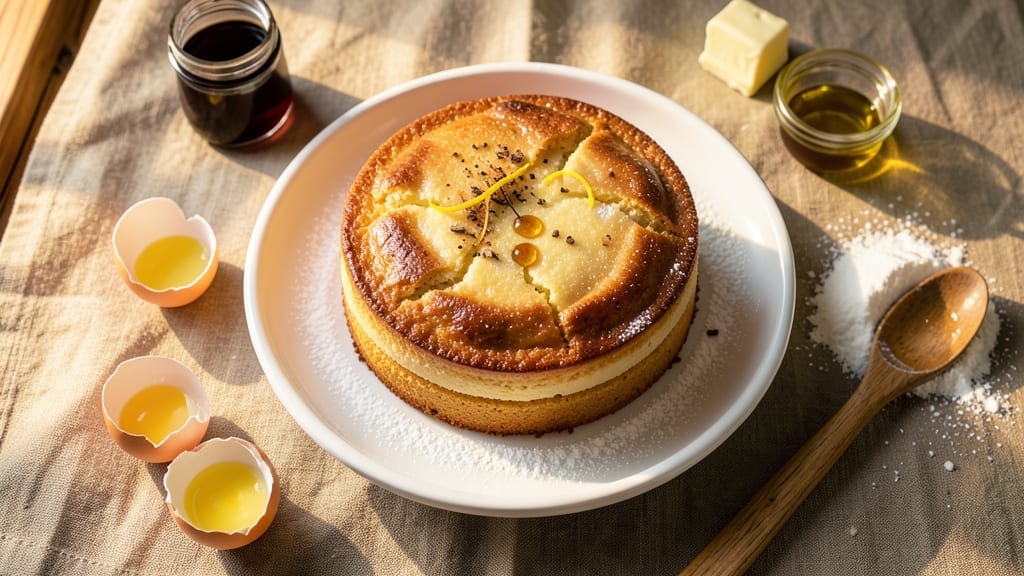
This 2-egg vanilla cake recipe delivers perfectly light, fluffy layers with a tender crumb—no heavy frosting required. The secret lies in precise mixing and a simple technique that creates airy texture without needing extra eggs or butter.
I’ve baked this version countless times for special occasions, and it never fails to impress with its delicate balance of sweetness and structure.
What sets this cake apart is its foolproof method: just two eggs, a touch of oil for moisture, and a gentle folding technique that incorporates air without overmixing. The result is layers that rise evenly, with a fine crumb that melts in your mouth.
No special equipment needed—just a standard mixing bowl and your favorite no-fuss frosting (or skip it entirely for a clean, elegant finish).
By the time it emerges from the oven, you’ll have a cake that’s golden and tender, with edges that stay soft rather than dry. The vanilla flavor shines through without being overpowering, making it versatile for any celebration or simple indulgence.
The best part? It bakes in just 30 minutes, leaving you time to enjoy the process.
Serve with fresh berries, a dusting of powdered sugar, or a light whipped cream topping. This recipe scales perfectly for crowd-sized cakes or single-serving layers—ideal for birthdays, tea time, or whenever you crave something elegant yet effortless. Let’s get started!
Ingredients for 2 egg vanilla cake
Two eggs, a whisper of oil, and a touch of butter—this is all you need for cake layers that defy expectations.
| Ingredient | Amount | Notes |
|---|---|---|
| Large Eggs 🥚 | 2 whole | Room temperature for best mixing |
| All-Purpose Flour 🌾 | 1 ½ cups | Sifted, spooned lightly |
| Granulated Sugar 🍚 | 1 cup | White or light brown |
| Pure Vanilla Extract 🌸 | 2 tsp | High-quality, pure vanilla |
| Vegetable Oil 🫒 | ½ cup | Light, neutral flavor |
| Unsalted Butter 🧈 | ¼ cup | Softened, not melted |
| Milk 🥛 | ½ cup | Whole milk preferred |
| Baking Powder 🧂 | 1 ½ tsp | Freshly opened |
| Salt 🧂 | ½ tsp | Fine sea salt |
| Powdered Sugar 🍚 | ¼ cup | Optional for frosting |
| Fresh Blueberries 🫐 | ½ cup | Optional, for swirls |
The eggs are your secret weapon here. Room temperature eggs mix more smoothly, so pull them out 30 minutes before baking. For flour, King Arthur brand is my go-to—it’s finely milled and reliable. If you’re using a boxed mix, skip the baking powder since it’s already included. The vanilla extract should be pure, not imitation—look for brands like Nielsen-Massey or McCormick. Butter matters too: Plugrá or Land O’Lakes work perfectly when softened to room temperature, not melted. That’s key—melted butter changes the texture entirely.
No vanilla extract? Vanilla sugar or even vanilla bean paste works in a pinch, but pure extract is ideal. Running short on milk? Almond milk or even water will work, though the cake might be slightly denser. The blueberries are optional but add a lovely pop of color and juicy contrast. If you’re skipping them, fold in a few chocolate chips instead. For the powdered sugar, Domino brand is finely ground and perfect for dusting. If you’re making this ahead, bake the cake first and store it wrapped at room temperature for up to 2 days—it actually tastes better the next day as the flavors meld.
This cake keeps beautifully in an airtight container for 3 days at room temperature, or 1 week in the fridge if you’ve added frosting. For longer storage, freeze the unfrosted layers wrapped tightly in plastic for up to 3 months. Thaw overnight in the fridge before frosting. The frosting? Skip it entirely for a clean finish, or dust with powdered sugar for an elegant touch. I often make a double batch—one for now, one for later. The leftovers reheat perfectly in the microwave for 10 seconds if you prefer it warm.
Why You’ll Love This Recipe
- No Mixer Needed: Mixing the batter is just folding flour into beaten eggs—no electric mixer required. Honestly, my stand mixer stays quiet for this one; a whisk and a bowl do the job just fine.
- Vanilla Kicks In: That pure vanilla extract? It’s the star. The oil keeps it moist, but the vanilla makes every bite smell like a bakery—no artificial junk, just real flavor.
- Crowd-Pleaser Slices: Cut into squares or serve whole—it’s perfect for picnics, potlucks, or even a quick dessert with coffee. Between us, my in-laws keep asking for the recipe after one slice.
- Budget Baking Wins: Two eggs and a cup of sugar stretch further than you’d think. I’ve made this for birthdays, book club meetups, and lazy Sundays—always a hit, always affordable.
Step-by-step instructions for light-as-air vanilla cake
Here’s how to create tender, fluffy layers that rise perfectly every time—no heavy frosting required.
Prepare the Dry and Wet Ingredients Separately
First, sift together the 1.5 cups all-purpose flour, 1.5 teaspoons baking powder, and 0.5 teaspoon salt in a medium bowl. This ensures no lumps remain and creates a light, airy base for your cake. Set aside while you prepare the wet ingredients.
In a separate large bowl, whisk together the 2 whole large eggs (at room temperature), 1 cup granulated sugar, 2 teaspoons pure vanilla extract, 0.5 cup vegetable oil, and 0.25 cup softened unsalted butter. Whisk vigorously for 2-3 minutes until the mixture is pale, thick, and nearly doubles in volume. This step incorporates air, which is key to that light-as-air texture.
Combine Wet and Dry Ingredients Gently
Gradually add the sifted dry ingredients to the wet mixture in three additions, folding gently with a spatula after each addition. This prevents overmixing, which can make the cake dense. Stop mixing as soon as the flour is just incorporated—you should still see a few streaks of flour in the batter.
Next, pour in the 0.5 cup milk and mix until smooth. If using the 0.5 cup fresh blueberries, fold them in now—gently to avoid crushing them. For an even prettier swirl, spoon a few spoonfuls of batter over the blueberries, then fold again. Pour the batter into two 8-inch round cake pans lined with parchment paper.
Bake Until Golden and Springy
Preheat your oven to 350°F and place the cake pans inside to warm for 5 minutes. This ensures even baking. Bake the cakes for 25-30 minutes, or until a toothpick inserted into the center comes out clean and the tops are golden brown. Rotate the pans halfway through baking for even browning.
Let the cakes cool in the pans for 10 minutes, then transfer to a wire rack to cool completely. This gradual cooling prevents cracking and ensures the layers hold their shape when frosting.
Frost with Powdered Sugar for a No-Fuss Finish
Once the cakes are fully cooled, place one layer on a serving plate. In a small bowl, whisk together the 0.25 cup powdered sugar with 1-2 tablespoons milk until smooth. Spread this light glaze evenly over the first layer, then top with the second layer. The powdered sugar glaze adds just enough sweetness without overwhelming the delicate vanilla flavor.
For extra flair, dust the top and sides with additional powdered sugar. Serve immediately or store covered at room temperature for up to 2 days. The cake tastes best fresh, but it holds up well for celebrations too.
Pro Tips For Making 2 Egg Vanilla Cake
- Whisk Eggs Until Ribbon Stage: I learned this the hard way—under-whisked eggs make a dense, gummy cake. Beat those two eggs with sugar until the mixture falls in a thick ribbon when you lift the whisk. That’s how you get that light, airy texture this small-batch cake deserves.
- Sift Flour Like You Mean It: No, shaking flour over the bowl doesn’t count. Sift that all-purpose flour through a fine-mesh strainer to cut out lumps and aerate it. Your cake will rise more evenly, and you’ll avoid that weird grainy bite. (Yes, even if you’re impatient like me.)
- Grease Pan And Dust Flour: Vegetable oil alone won’t prevent sticking—trust me, I’ve pulled a cake out with half of it glued to the pan. After greasing, sprinkle in flour, tap out the excess, and give it a quick shake. This is the non-negotiable step for a clean release.
- Bake at 350°F—Not Hotter: I was skeptical until I tried it: 350°F is the sweet spot for this two-egg cake. Higher heat speeds up the top browning while the center stays underdone. Check for doneness at 25–30 minutes with a toothpick—it should come out with a few moist crumbs, not wet batter.
Essential equipment for this dish
Mixing Essentials
You only need a standard mixing bowl and a whisk for this recipe—no stand mixer required! I use a large, deep bowl (like Pyrex glass) to prevent spills during vigorous whisking.
A rubber spatula is perfect for gently folding in dry ingredients, as its flexible edge helps scrape every last bit of batter from the bowl. For measuring, a liquid measuring cup for the oil and milk, and a dry measuring cup for the flour and sugar work best. 🥄
Baking Tools
Two 8-inch round cake pans are essential—opt for light-colored metal pans (like Wilton Perfect Results) for even heat distribution. Line the bottoms with parchment paper to prevent sticking and ensure clean layers.
A toothpick is your best friend for checking doneness—insert it into the center and wait 5 seconds to see if it comes out clean. For preheating, a kitchen timer helps track the 5-minute pan warming before baking.
Cooling Gear
After baking, transfer cakes to a wire cooling rack to prevent soggy bottoms. I recommend a stainless steel rack (like OXO Good Grips) for durability. For storage, use an airtight container (like Rubbermaid Brilliance) to keep layers fresh for up to 3 days.
If freezing, wrap each layer tightly in plastic wrap before placing in a ziplock freezer bag to prevent freezer burn. A small offset spatula helps spread the powdered sugar glaze evenly between layers. ✨
Optional Extras
For blueberry swirls, a small spoon works perfectly to dollop batter over berries. A fine-mesh sieve helps dust powdered sugar evenly for that restaurant-quality finish. If you’re ambitious, a pastry bag with a star tip lets you create elegant swirls with glaze.
For serving, a large platter (like Corelle stoneware) elevates the presentation. Trust me, these small tools make all the difference! 💫
Nutrition facts
Frequently asked questions
Can I substitute the vegetable oil with butter?
You can use ½ cup melted butter instead of oil, but the texture will be slightly denser. For best results, keep the oil in the recipe—it creates a lighter crumb. If you do use butter, make sure it’s fully melted and cooled slightly before mixing to avoid scrambling the eggs.
Why does my cake sink in the middle?
This usually happens from overmixing or opening the oven too soon. Mix just until combined (a few flour streaks are fine), and bake until a toothpick comes out clean. For extra insurance, preheat your oven for 15 minutes and avoid opening it during the first 20 minutes of baking.
How do I make this cake gluten-free?
Replace the all-purpose flour with a 1:1 gluten-free baking flour blend (like Bob’s Red Mill) plus ½ teaspoon xanthan gum. Add 1-2 tablespoons extra milk to compensate for dryness. Test in a small batch first, as gluten-free flours vary in behavior.
Can I bake this in a different pan size?
Yes! For an 8-inch pan, bake 25-30 minutes. For a 9-inch pan, reduce baking time to 20-25 minutes. If using a loaf pan, bake 45-50 minutes at 325°F. Always check with a toothpick, as pan size affects heat distribution.
What’s the secret to keeping this cake moist?
Store it in an airtight container with a slice of bread or a damp paper towel. For extra moisture, brush warm layers with simple syrup (equal parts sugar and water, heated until dissolved) before assembling. The powdered sugar glaze also helps lock in freshness for 2-3 days at room temperature.

- 3lb Prime Rib Roast Recipe: Juicy Pink Center Guaranteed in 3 Hours - October 31, 2026
- 5 Spice Cake Recipe: Warmly Spiced Layers With Crunchy Top - October 31, 2026
- 1950’s Macaroni and Cheese Recipe: Nostalgic Creamy Cheese Sauce with Buttery Noodles - October 31, 2026