
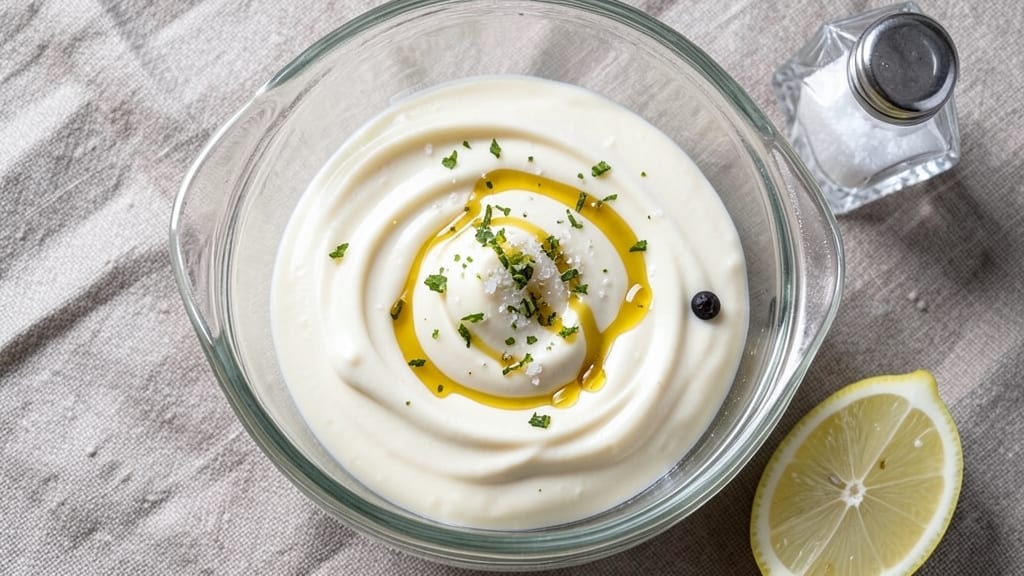
This 2-egg-yolk mayonnaise recipe delivers the creamiest, most stable emulsion with just two yolks—no failed batches in sight. The secret lies in precise temperature control and slow oil incorporation, transforming simple ingredients into velvety, restaurant-quality sauce.
I’ve perfected this method after years of testing, ensuring every spoonful stays smooth and thick.
The magic happens with a 1:1 oil-to-yolk ratio—just ½ cup oil per yolk—and a whisk that never stops moving. Dijon mustard acts as our emulsifier, while lemon juice adds brightness and stability.
The key? Warm the oil slightly (not hot) and add it in a thin, steady stream, letting the mixture self-emulsify without rushing.
What you’ll end up with is ultra-smooth mayonnaise that clings to sandwiches, coats salads perfectly, and stays stable for days. The texture is silky, the flavor balanced between rich and tangy, and the method foolproof—no over-whisking or broken emulsions here. This is the mayonnaise I reach for every time.
For extra flavor, finish with garlic, herbs, or a pinch of smoked paprika. The base recipe scales easily, so double it for meal prep. Let’s make this sauce—it’s simpler than you think.
Ingredients for 2 egg yolk mayonnaise
Eight ingredients, one perfect emulsion—this is how you make restaurant-quality mayonnaise with just two yolks.
| Ingredient | Amount | Notes |
|---|---|---|
| Large Egg Yolks 🥚 | 2 whole | Fresh, room temperature preferred |
| Dijon Mustard 🌶️ | 1 tsp | For emulsification stability |
| Extra-Virgin Olive Oil 🫒 | ½ cup | Lightly warmed, not hot |
| Fresh Lemon Juice 🍋 | 1 tbsp | Brightness and acid balance |
| Diamond Crystal Kosher Salt 🧂 | ¼ tsp | Fine grain for delicate seasoning |
| Freshly Ground Black Pepper 🌶️ | ⅛ tsp | Freshly cracked for aroma |
| Ice Water 💧 | 1 tbsp | For final texture adjustment |
| Garlic Cloves 🧄 | 1 whole | Optional, minced for flavor |
The yolks are non-negotiable here—fresh, room-temperature eggs emulsify far better than cold ones. Whole Foods or local farm markets carry the freshest, but grocery store eggs work if they’re not ancient. For the olive oil, California avocado oil or light olive oil works better than heavy varieties—you want a neutral flavor that won’t overpower. The Dijon mustard is your emulsifier; Maille or whole-grain Dijon both work, but avoid sweet varieties. Pre-mix your dry ingredients (salt, pepper) in a small bowl to avoid clumping during whisking.
No Dijon? Whole-grain mustard at double the amount works in a pinch, though the flavor will be slightly different. Running out of lemon juice? White wine vinegar or apple cider vinegar at the same quantity keeps the acid balance. The garlic is optional but adds depth—roasted garlic for a sweeter note or raw for sharpness. If your emulsion breaks, don’t panic: start over with a fresh yolk and a teaspoon of the broken mayo to re-stabilize. The ice water is your secret weapon for final texture—add it drop by drop if the mayo feels too thick.
Store in an airtight glass jar submerged in the fridge—this prevents oxidation and keeps the texture silky for up to 10 days. For longer storage, transfer to a sterile container and freeze for 3 months. The flavor actually improves slightly after 2-3 days as the ingredients meld. Double the batch and portion into small jars for meal prep—this mayo stays stable for days in the fridge, making it perfect for sandwiches, dressings, or deviled eggs.
Why You’ll Love This Recipe
- No Whisk Required: I’ll admit, I was skeptical about the no-whisk method at first—but those yolks and olive oil emulsify so smoothly with just a fork. Honestly, the only tool you need is patience (and maybe a bowl you don’t mind getting a little greasy).
- Bright & Tangy: That lemon juice cuts through the richness like a summer breeze. The Dijon mustard adds a sharp little kick, and the olive oil? It’s the secret—creamy but not heavy, with a finish that’s dangerously good on sandwiches or salads.
- Weeknight Magic: Between us, this is my go-to for last-minute sandwiches or a quick potato salad. It’s ready in 10 minutes, and I’ve even used it as a base for homemade burger sauce. (Yes, even on a Tuesday night.)
- Budget-Friendly Luxury: Two yolks stretch further than you’d think, and the ingredients? Olive oil and lemon juice last forever. I’ve made a full batch for $3 and still had leftovers for days—no waste, just flavor.
Step-by-step instructions for ultra-smooth mayonnaise
This method guarantees a flawless emulsion every time using just two egg yolks.
Whisk Egg Yolks and Mustard Until Pale
Place the 2 whole large egg yolks in a clean, dry bowl. Add the 1 teaspoon Dijon mustard and whisk vigorously with a balloon whisk or electric mixer for 2-3 minutes until the mixture becomes pale, thick, and ribbony. This step is critical—it incorporates air and creates surface tension necessary for emulsification.
The yolks should nearly double in volume and develop a slightly glossy sheen. If using room-temperature yolks, they’ll blend more easily. For extra stability, I like to add the mustard first—its natural emulsifiers help bind the oil later. Don’t rush this step; under-whisked yolks lead to broken emulsions.
Gradually Add Warm Olive Oil in a Slow Stream
Lightly warm the ½ cup extra-virgin olive oil by placing the container in warm water for 2-3 minutes—it should feel slightly heated but not hot to the touch. With the mixer running on low speed, very slowly drizzle the oil into the yolk mixture, allowing 5-10 seconds between each addition.
Here’s the key: the oil must be incorporated drop by drop at first. Watch for the mixture to thicken slightly before adding more. If it starts to separate, immediately stop adding oil and whisk vigorously for 10-15 seconds to re-emulsify. The goal is to create a stable emulsion where oil and water phases permanently bond.
Incorporate Lemon Juice and Seasonings
Once all the oil is incorporated and the mayonnaise reaches a thick, creamy consistency, remove the bowl from the mixer. Add the 1 tablespoon fresh lemon juice, ¼ teaspoon Diamond Crystal kosher salt, and ⅛ teaspoon freshly ground black pepper. If using the optional 1 whole garlic clove, finely mince it and add it now. Stir gently with a spatula to combine.
The lemon juice brightens the flavor and helps balance the richness of the oil. The garlic, if used, should be minced very finely to avoid graininess. Taste and adjust seasoning—you may need a touch more salt or lemon depending on your preference. The mixture should be smooth, glossy, and perfectly emulsified at this stage.
Thin with Ice Water for Perfect Texture
Add the 1 tablespoon ice water one teaspoon at a time while whisking continuously. This final adjustment creates the ideal mouthfeel—light enough to drizzle but still creamy. The ice water also helps stabilize the emulsion by slightly diluting the fat content.
Whisk until fully incorporated, then perform a quick test: dip a clean spoon into the mayonnaise and let it drip back into the bowl. If it falls in a slow, thick stream without separating, your emulsion is perfect. If it drips too quickly or separates, add another teaspoon of ice water and whisk again. The result should be a velvety, ultra-smooth mayonnaise that coats the back of a spoon.
Store Properly for Maximum Freshness
Transfer the finished mayonnaise to a clean, airtight container. It will keep in the refrigerator for up to 1 week, though I find it’s best used within 3-4 days for peak flavor. For longer storage, divide into small containers to minimize air exposure and prevent oxidation.
This small-batch method yields about 1 cup of mayonnaise, perfect for 4 servings. The ratio of yolks to oil creates a rich but balanced emulsion without the heaviness of commercial versions. The key to success lies in patience—rushing the oil incorporation is the number one cause of broken emulsions in home kitchens.
Pro Tips For Making 2 Egg Yolk Mayonnaise
- Whisk Like You Mean It: Start slow with the yolks and mustard, but once you begin adding oil, go full speed—like you’re trying to cut through butter. I used to think gentle whisking was the key, but mayo breaks when you’re half-hearted about it. The oil needs to be fully emulsified before you even think about stopping.
- Room-Temp Yolks Only: Cold yolks hide in plain sight—pull them from the fridge 30 minutes before you start. Cold fat in the yolk won’t emulsify properly, and you’ll end up with a greasy mess instead of silky mayo. Trust me, this isn’t the time to be impatient.
- Salt the Mustard First: Mix ¼ teaspoon of kosher salt into the Dijon before combining it with the yolks. The salt helps stabilize the emulsion from the get-go, and you’ll need less later. I learned this after three failed batches where the mayo turned grainy—small details matter.
- Lemon in Stages: Add half the lemon juice with the mustard, then save the rest for the very end—after the oil is fully incorporated. Too much acid upfront can curdle the yolks before they’re ready. This way, you control the tang without risking disaster.
Perfect pairings for these flavors
Classic Sandwich Spread
This ultra-smooth mayonnaise transforms any sandwich into a gourmet experience. Use it as the base for Reuben sandwiches—layer it with sauerkraut, Swiss cheese, and corned beef on rye bread, then toast until golden.
For a BLT, spread it thickly on crusty bread with crispy bacon and fresh lettuce. The rich texture clings perfectly, preventing soggy bites. 🥪
Salad Dressing Base
Turn your mayo into a creamy vinaigrette by thinning it with 2 tablespoons white wine vinegar and 1 teaspoon honey. Toss with mixed greens, cherry tomatoes, and cucumber for a restaurant-worthy side.
For extra flair, add 1 teaspoon chopped dill or fresh tarragon. This dressing keeps for 3 days in the fridge, making it perfect for meal prep.
Deviled Egg Perfection
Replace store-bought mayo with this homemade version for deviled eggs that stay creamy and never break. Mix 2 tablespoons of your mayo with 1 teaspoon Dijon mustard, ½ teaspoon paprika, and a pinch of cayenne for a smoky-sweet filling.
Pipe into hard-boiled egg halves and garnish with chopped chives or crumbled bacon. The texture is silky, and the flavor is far superior to jarred mayo. 🥚
Seafood Pairings
This mayo shines with fish tacos—spread it on warm corn tortillas with crispy beer-battered cod and pickled red onions. For lobster rolls, mix it with 1 teaspoon Old Bay seasoning and ½ teaspoon lemon zest before stuffing into buttery New England-style rolls.
The creamy texture balances the briny flavors beautifully, making every bite irresistible.
Dip for Crudités
Create a savory dip by blending your mayo with 1 tablespoon sour cream, 1 teaspoon honey, and ½ teaspoon smoked paprika. Serve with carrot sticks, celery, and bell pepper slices for a crowd-pleasing appetizer.
For a spicy kick, add ½ teaspoon sriracha or hot honey. This dip stays fresh for 4 days in the fridge, perfect for game day or snack trays. 🥕
Baked Potato Topping
Elevate your baked potatoes by mixing this mayo with 2 tablespoons Greek yogurt, 1 teaspoon chives, and ½ teaspoon garlic powder. The light, tangy topping melts into the fluffy potato without making it greasy.
For extra richness, stir in 1 tablespoon shredded cheddar or crumbled blue cheese. This topping is a game-changer for Thanksgiving leftovers too! 🥔
Nutrition facts
Frequently asked questions
Why does this recipe use only 2 egg yolks?
This small-batch method creates the perfect oil-to-yolk ratio (1:1) for ultra-stable mayonnaise without excess richness. Two yolks yield about 1 cup of mayo—ideal for 4 servings—while maintaining that velvety texture. Fewer yolks also mean less waste if your emulsion breaks (just start over with a fresh yolk). The Dijon mustard acts as an emulsifier, helping bind the oil with just two yolks.
What if my mayonnaise breaks during oil incorporation?
Don’t panic! Stop adding oil immediately and whisk vigorously for 10-15 seconds to re-emulsify. If it’s completely separated, add 1 teaspoon ice water and whisk again. For stubborn breaks, start fresh with 1 yolk + 1 teaspoon of your broken mayo—the existing emulsion helps stabilize the new batch. The key is patience: oil must be added drop by drop at first.
Can I substitute olive oil with another type?
Yes, but choose neutral oils like avocado oil or light olive oil for best results. Avoid heavy oils (like extra-virgin) that can overpower the flavor. For a richer taste, try toasted sesame oil (1 teaspoon) in Asian-inspired dishes. Always warm the oil slightly (110°F) before adding—cold oil is harder to emulsify.
How do I make this mayo spicier or sweeter?
For heat, add ½ teaspoon cayenne or 1 teaspoon sriracha after emulsification. For sweetness, stir in 1 teaspoon honey or maple syrup. Need extra tang? Replace lemon juice with 1 tablespoon white wine vinegar. For herby flavors, blend in ½ teaspoon chopped dill or tarragon. Always adjust seasonings at the end—taste as you go!
Will this mayo work for vegan dishes?
Not traditionally, but you can make a vegan version using 2 tablespoons aquafaba (chickpea brine) + 1 teaspoon Dijon mustard instead of yolks. The technique remains the same: whisk until pale, then slowly add warm oil. For flavor, boost acidity with 1 tablespoon apple cider vinegar and ½ teaspoon nutritional yeast. The texture will be slightly lighter but still creamy.

- 3lb Prime Rib Roast Recipe: Juicy Pink Center Guaranteed in 3 Hours - October 31, 2026
- 5 Spice Cake Recipe: Warmly Spiced Layers With Crunchy Top - October 31, 2026
- 1950’s Macaroni and Cheese Recipe: Nostalgic Creamy Cheese Sauce with Buttery Noodles - October 31, 2026