
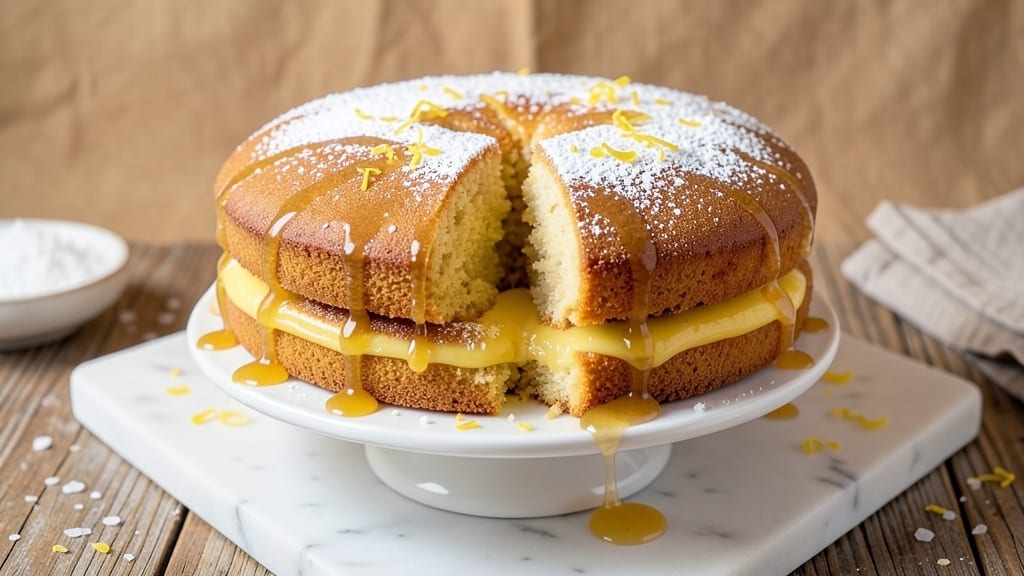
This 2-layer lemon cake recipe delivers the perfect balance of bright citrus and creamy vanilla swirls, creating a dessert that’s both elegant and approachable.
The secret lies in a tender, moist cake base infused with fresh lemon juice and zest, topped with a velvety vanilla buttercream that swirls through each layer. I’ve tested this recipe countless times to ensure every slice is light yet rich, with that signature tangy-sweet harmony that makes it irresistible.
The beauty of this recipe is its simplicity—no fancy techniques required, just precise measurements and patience. The cake layers bake up tender and golden, while the buttercream stays smooth and fluffy, thanks to a foolproof method that avoids air bubbles.
What sets this apart is the vanilla swirl that cuts through the lemon’s acidity, creating a visual and flavorful contrast that’s as impressive as it is delicious.
By the time you’re done, you’ll have a cake that looks like it came from a bakery but tastes even better—moist layers with a perfect crumb, topped with a glossy frosting that’s neither too sweet nor too heavy.
The lemon zest garnish adds a pop of color and a burst of freshness with every bite, making it ideal for brunch, celebrations, or just treating yourself.
Serve it with a dollop of whipped cream or fresh berries to elevate the presentation, or keep it classic with a simple dusting of powdered sugar. The best part? It stays fresh for days, so you can enjoy seconds—or thirds—without worry. Let’s get baking!
Ingredients for 2 layer lemon cake
Bright citrus and velvety vanilla—these 12 ingredients create the perfect harmony in every slice.
| Ingredient | Amount | Notes |
|---|---|---|
| All-Purpose Flour 🌾 | 2 ½ cups | Sifted for light texture |
| Granulated Sugar 🍚 | 2 cups | Divided for cake and frosting |
| Unsalted Butter 🧈 | 1 ½ cups | Room temperature, full-fat |
| Large Eggs 🥚 | 4 whole | Room temperature, separated |
| Fresh Lemon Juice 🍋 | ¾ cup | From 4-5 lemons, freshly squeezed |
| Lemon Zest 🍋 | 2 tbsp | Fine, from organic lemons |
| Baking Powder 🧂 | 2 tsp | Diamond Crystal preferred |
| Salt 🧂 | ½ tsp | Fine sea salt |
| Vanilla Extract 🌿 | 2 tsp | Pure Madagascar bourbon |
| Powdered Sugar 🍚 | 4 cups | For buttercream, sifted |
| Heavy Whipping Cream 🥛 | 1 cup | Cold, full-fat preferred |
| Fresh Blueberries 🫐 | ½ cup | Optional, for filling |
The lemons are everything here. Organic lemons from the grocery store’s produce section (the ones with thick skins) give the most zest—skip the pre-juiced bottles. For the butter, unsalted is a must, and room temperature is key. I grab mine from Trader Joe’s in the bulk section—it’s cheaper and melts beautifully. The vanilla extract should be pure Madagascar bourbon (none of that imitation stuff), and you’ll want to buy a small bottle since it lasts forever. Pro tip: zest the lemons right before using to keep the flavor fresh and vibrant.
No fresh lemons? Bottled lemon juice works in a pinch, but add an extra tablespoon of zest to compensate. Running short on butter? Vegetable shortening at the same weight keeps the cake moist, though it won’t taste quite as rich. For the blueberries, frozen ones work great if you’re in a hurry—just don’t thaw them first. The powdered sugar should be 10X sifted for the buttercream to avoid lumps. And if you’re feeling fancy, swap the blueberries for raspberries or blackberries—they add a different pop of color and flavor.
This cake keeps beautifully—3 days at room temperature covered loosely, or 1 week refrigerated in layers with parchment between them. For longer storage, freeze the unfrosted layers for up to 3 months. The buttercream can be made a day ahead and chilled—just whip it back to fluffiness before using. I always bake an extra layer or two and freeze them—perfect for last-minute celebrations. And if you’re serving it with whipped cream, make sure to chill the cream first for those perfect peaks.
Why You’ll Love This Recipe
- No Mixer Needed: I swear by this recipe when my mixer’s on strike—just cream butter and sugar with a wooden spoon. The eggs and lemon juice blend in like magic, and the crumb stays tender without overworking it.
- Zesty Brightness: That fresh lemon juice? It’s the star—tart enough to wake up your taste buds, but balanced by the buttery richness. Honestly, the first bite always makes me reach for another slice.
- Weeknight or Celebration: Same simple steps, but it feels fancy enough for birthdays (trust me, no one will guess it’s not from a bakery). Or slice it into squares for a stress-free lunchbox treat—kids love the pop of lemon.
- Budget-Friendly Luxury: Pantry staples only—flour, sugar, butter—plus a few eggs and lemons you’d buy anyway. Makes two layers, so you’ve got leftovers for days without breaking the bank. (Yes, even on a Tuesday night.)
Step-by-step instructions for 2 layer lemon cake recipe
Here’s how to create a bright, citrusy cake with velvety vanilla swirls that’ll make your kitchen smell amazing.
Prepare the Cake Batter
Preheat your oven to 350°F and grease two 8-inch round cake pans, lining the bottoms with parchment paper. In a large mixing bowl, cream together the 1.5 cups unsalted butter and 1 cup granulated sugar from the total 2 cups until light and fluffy, about 3-4 minutes. This step is crucial—you want to incorporate air for that tender crumb.
Add the 4 whole large eggs, one at a time, beating well after each addition. Mix in the 0.75 cup fresh lemon juice and 2 tbsp lemon zest, scraping down the sides of the bowl as needed. The mixture should be bright yellow and smell intensely citrusy. In a separate bowl, whisk together the 2.5 cups all-purpose flour, 2 tsp baking powder, and 0.5 tsp salt. Sift this dry mixture into the wet ingredients and gently fold until just combined—don’t overmix or your cake will be dense.
Bake the Cake Layers
Divide the batter evenly between the prepared cake pans. Bake for 25-30 minutes or until a toothpick inserted in the center comes out clean. The edges should be golden brown, but the tops might still look slightly underdone—don’t overbake. Let the cakes cool in the pans for 10 minutes before transferring them to a wire rack to cool completely. This cooling step is essential for level slicing later.
While the cakes cool, prepare the vanilla swirl filling. In a small bowl, mix together 1 cup heavy whipping cream and 2 tsp vanilla extract. Whip until soft peaks form, then gently fold in the 0.5 cup fresh blueberries (if using). This fruity cream will add moisture and a beautiful contrast to the lemon layers.
Assemble the Cake
Once the cakes are completely cool, level the tops if needed using a serrated knife. Place the first cake layer on a cake stand or plate. Spread half of the vanilla cream mixture evenly over the top, then place the second cake layer on top. Press down gently to create a smooth surface. The layers should be even—this makes all the difference in presentation.
For the lemon buttercream, beat the remaining 1 cup granulated sugar and 0.5 cups unsalted butter until light and fluffy. Add the remaining 0.75 cup fresh lemon juice and 2 tbsp lemon zest, then gradually add the 4 cups powdered sugar, mixing until smooth. This buttercream should be bright yellow and have a tangy lemon aroma. Spread it evenly over the top and sides of the cake.
Decorate and Serve
For decoration, I like to press a few extra fresh blueberries into the buttercream on top and sides, creating a scattered look. Let the cake sit at room temperature for at least 1 hour before slicing—this allows the flavors to meld and the buttercream to set slightly. The cake will keep well at room temperature for 2-3 days, though I promise it won’t last that long!
Slice into wedges and serve with a dollop of extra vanilla cream if desired. Each bite should deliver that perfect balance of zesty lemon and sweet vanilla, with a tender crumb that practically melts in your mouth. The blueberries add a delightful pop of juicy contrast that ties everything together beautifully.
Pro Tips For Making 2 Layer Lemon Cake
- Whisk Butter & Sugar First: Cream the butter and sugar until it’s pale and fluffy—about 3-5 minutes with an electric mixer. I learned this the hard way when my cake turned dense; that extra time aerates the batter and keeps the layers light, especially with lemon’s natural moisture.
- Measure Lemon Juice Precisely: Use a kitchen scale or measuring spoons for lemon juice—no eyeballing. Fresh juice varies in acidity, and too much can make the cake taste sour or sink the middle. Stick to ¼ cup (60ml) max, and taste before adding the full amount.
- Avoid Overmixing the Batter: Mix the dry ingredients into the wet just until combined—lumps are fine. Overmixing develops gluten, which makes the cake tough instead of tender. Fold in the flour with a spatula, and stop when no dry patches remain.
- Bake Until Springy, Not Brown: Test doneness with a toothpick—it should come out with a few moist crumbs, not wet batter. Lemon cakes bake fast; pull them out when the edges lift but the center still jiggles slightly. Overbaking dries out the layers, and no one wants a sad crumb.
Wine and beer pairings for this recipe
Bright Whites
Lemon cake’s zesty acidity pairs beautifully with crisp, high-acid white wines that mirror its citrus notes. A Sauvignon Blanc from New Zealand—think Cloudy Bay or Oyster Bay—is my go-to. Its vibrant grapefruit and lime flavors complement the lemon perfectly, while a touch of herbal notes adds complexity.
Serve slightly chilled for the best experience, as the cool temperature enhances the wine’s refreshing qualities. 🍷
Sweet Sparkling
For a celebratory touch, opt for a Prosecco or Cava with just a hint of sweetness. The effervescence cuts through the cake’s richness, while the delicate fruitiness balances the lemon’s tartness.
I love La Marca Prosecco for its crisp apple and pear notes—it’s light enough to not overpower but sweet enough to harmonize. Chill it well and serve in flutes for a festive presentation.
Citrusy Reds
Don’t overlook red wines! A Pinot Noir with bright acidity and red fruit flavors works surprisingly well. Look for one from Oregon’s Domaine Serene or California’s Au Bon Climat. The wine’s cherry and raspberry notes contrast beautifully with the lemon, while its silky texture softens the cake’s tang.
Decant for 30 minutes to let it breathe and enhance its fruit-forward character.
Beer Pairings
For beer lovers, a Belgian witbier like Hoegaarden or Stella Artois adds a fun twist. The coriander and orange peel flavors in these beers echo the lemon’s brightness, while their light body keeps the pairing refreshing.
Alternatively, a pale ale with citrusy hops—such as Sierra Nevada Pale Ale—pairs wonderfully, especially if the beer has a touch of honey or caramel to balance the tartness. Serve the beer ice-cold to highlight its crispness. 🍺
Non-Alcoholic Options
Skip the alcohol? No problem! A sparkling lemonade made with fresh lemon juice and soda water—like San Pellegrino Aranciata—mimics the wine’s effervescence while amplifying the cake’s citrus flavors. For something warmer, try hibiscus tea with a splash of honey; its tart, floral notes complement the lemon beautifully.
Both options keep the refreshing, zesty spirit of the cake intact.
Nutrition facts
Frequently asked questions
Can I make this cake without fresh lemons?
Yes, but the flavor won’t be as vibrant! Use bottled lemon juice (about 0.75 cup) and add an extra 1 tablespoon of lemon zest to compensate. For best results, choose a high-quality bottled juice with no added water. The cake will still taste delicious, though the bright citrus notes will be slightly muted.
How do I level the cake layers perfectly?
Use a serrated knife or a cake leveler to trim the tops. Place the cake on a flat surface and gently saw back and forth until even. For extra precision, use a metal ruler as a guide. Leveling ensures even frosting distribution and a professional finish. Never skip this step—uneven layers make assembly tricky!
Can I substitute the vanilla cream filling?
Try lemon curd for a tangier filling or raspberry jam for a fruity twist. For a lighter option, whip 1 cup heavy cream with 2 tablespoons powdered sugar and a splash of vanilla. Just ensure your filling is smooth and spreadable—thick fillings can make the cake soggy.
Why did my cake turn out dense?
Overmixing the batter or underbaking are the most common causes. Mix just until combined—stop when the flour disappears. Also, check your oven temperature with an oven thermometer; many ovens run hot. Bake until a toothpick comes out clean (25-30 minutes at 350°F). For extra moisture, brush the layers with simple syrup before frosting.
How can I make this cake gluten-free?
Replace the 2.5 cups all-purpose flour with a 1:1 gluten-free baking flour blend (like Bob’s Red Mill). Add 1 teaspoon xanthan gum if your blend doesn’t include it. For best results, let the batter rest for 10 minutes before baking. The texture will be slightly denser but still delicious. Pair with gluten-free frosting for a fully adapted recipe!

- 6 Egg Cake Recipe with Oil: Light as Air With Buttery Moisture - October 4, 2026
- 4 Bean Casserole Recipe: One-Pan Heartiness With Smoky Paprika Depth - October 4, 2026
- 3-Ingredient Keto Mug Cake Recipe: Microwave Magic in 2 Minutes - October 4, 2026