
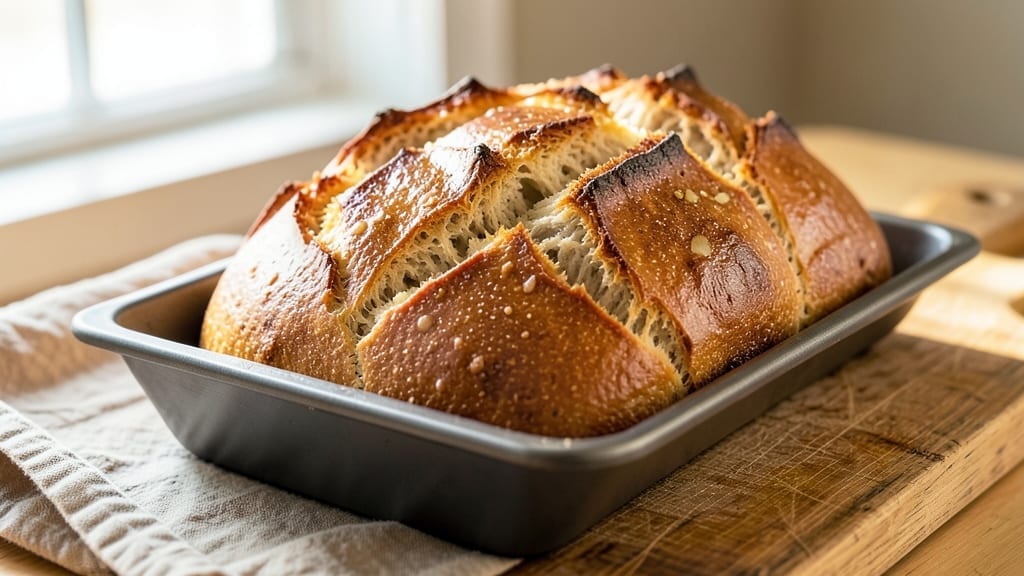
A 2 lb spelt bread machine recipe transforms your kitchen into a bakery with minimal effort—just load, set, and let the machine do the work. Spelt’s nutty flavor and dense texture create a heartier loaf than traditional wheat bread, packed with fiber and protein.
The bread machine’s knead cycle develops gluten perfectly, ensuring a crisp crust and tender crumb without the guesswork of hand-kneading.
This recipe leverages spelt flour’s natural moisture retention, which means no need for extra yeast or water adjustments. The dough cycle (typically 2-3 hours) allows flavors to meld while building structure for that satisfying pull-apart texture.
Optional add-ins like flaxseeds or rosemary elevate nutrition and aroma without compromising the bread’s signature rustic appeal.
By the time your bread machine chimes, you’ll have a crusty, golden loaf with a satisfying crack and a crumb that’s denser yet lighter than artisanal wheat bread. The nutty depth of spelt shines through, making this loaf ideal for sandwiches, toast, or serving alongside soups.
No special skills required—just follow the settings and let the machine handle the rest.
For best results, use a basic bread machine setting (dough/knead cycle) and avoid overloading the pan. Spelt’s heavier weight means slightly less rise than wheat, but the texture remains delightfully substantial. Store wrapped at room temperature for up to 3 days or freeze for longer shelf life. Ready to bake?
Ingredients for 2 lb spelt bread machine
Spelt flour, yeast, and a touch of butter—everything you need for a hands-free loaf with rustic charm.
| Ingredient | Amount | Notes |
|---|---|---|
| Spelt Flour 🌾 | 3 ½ cups | Unbleached, for nutty flavor |
| Active Dry Yeast 🍞 | ¼ tsp | Or 1 packet instant yeast |
| Granulated Sugar 🍚 | ½ tsp | Feeds yeast for rise |
| Unsalted Butter 🧈 | ¼ cup | Softened, full-fat preferred |
| Whole Milk 🥛 | ¾ cup | Warmed to room temperature |
| Large Egg 🥚 | 1 whole | Room temperature |
| Sea Salt 🧂 | 1 ½ tsp | Fine grain preferred |
| Extra-Virgin Olive Oil 🫒 | 1 tbsp | For crust enhancement |
| Flaxseeds (optional) 🌰 | ¼ cup | Ground, for added fiber |
| Fresh Rosemary (optional) 🌿 | 1 tbsp | Chopped, for aroma |
| Water 💧 | 1 ¼ cups | Room temperature |
Spelt flour is the star here, and Bob’s Red Mill or King Arthur brands deliver the best texture. Look for unbleached varieties—they hold moisture better for that perfect crumb. The yeast should be fresh (test by dissolving a pinch in warm water—it should foam within 10 minutes). Butter adds richness, but if you’re watching fat, apricot jam works as a vegan sub. For the milk, whole milk gives the best rise, but almond milk works in a pinch—just add a splash of vinegar to mimic acidity. Rosemary and flaxseeds are optional but elevate flavor and nutrition—Trader Joe’s has great pre-ground flaxseed if you don’t want to grind it yourself.
No spelt flour? Whole wheat flour at a 1:1 ratio works, but texture will be denser. Skip the butter? Olive oil or melted coconut oil keeps it vegan. Fresh yeast? Active dry yeast works fine—just let it proof in warm water with sugar for 5 minutes before adding to dry ingredients. The egg binds the dough—flax egg (1 tbsp ground flax + 3 tbsp water) is a great vegan swap. For the water, filtered or bottled is best to avoid odd flavors. And if you’re feeling fancy, add a pinch of honey or maple syrup (though it’s not vegan) to deepen the crust color.
This dough keeps best in the fridge for 2 days if you’re prepping ahead—just let it sit at room temp for 30 minutes before baking. For longer storage, freeze the dough ball and bake straight from frozen (add 10-15 minutes). The loaf stays fresh wrapped at room temp for 3 days, but toasting revives it perfectly. Slice and freeze portions for up to 3 months—just reheat wrapped in foil at 350°F for 5 minutes. Pro tip: Brush the crust with olive oil right after baking for extra shine.
Why You’ll Love This Recipe
- Machine Magic: I swear by my bread machine for this one—just dump in the spelt flour, yeast, and a splash of warm milk, then let it do the work. No kneading, no mess, no stress.
- Buttery Comfort: That soft, golden crust with a tender crumb? It’s all thanks to the butter and milk—rich but not heavy, with just enough sweetness from the sugar to make it irresistible.
- Weeknight Workhorse: Freeze half the loaf for toast later, slice it for sandwiches, or serve it warm with jam. Honestly, I’ve used it for everything from breakfast to dinner scraps—it’s that reliable.
- Budget-Friendly Staple: Spelt flour might sound fancy, but a little goes a long way, and the yeast stretches the dough perfectly. One batch feeds my family for days without breaking the bank.
Step-by-step instructions for hands-free spelt bread machine Magic
Your bread machine does all the heavy lifting—just follow these precise steps.
Combine Wet Ingredients in Bread Machine Pan
In the bread machine pan, mix the 1.25 cups water (room temperature), 0.75 cup whole milk (warmed), 0.25 cup softened unsalted butter, and 1 tbsp extra-virgin olive oil until the butter melts completely. This creates a silky base that helps develop gluten in our spelt flour.
Add the 0.5 tsp granulated sugar and 0.25 tsp active dry yeast, then stir gently with a silicone spatula. The yeast will begin activating immediately—you’ll see tiny bubbles forming on the surface within 5 minutes. This is your signal that fermentation is starting.
Incorporate Dry Ingredients and Optional Add-Ins
Create a well in the center of the wet mixture and add the 3.5 cups spelt flour all at once. Using the spatula, gently fold from the bottom up until just combined—you should still see some flour streaks. Overmixing develops gluten too early, which can make the final loaf dense.
If using, sprinkle the 0.25 cup ground flaxseeds and 1 tbsp chopped fresh rosemary over the top and fold them in lightly. The flaxseeds add fiber while the rosemary infuses subtle earthy notes. Add the 1 whole large egg and 1.5 tsp sea salt, then stir until fully incorporated.
Set Bread Machine to Basic White Bread Cycle
Scrape all the dough from the sides of the pan into the center, then use a wet spatula to create a smooth surface. This ensures even fermentation. Select the “Basic White Bread” setting on your bread machine—this cycle typically runs for about 3-3.5 hours including kneading, rising, and baking.
Start the cycle and let the machine do its work. The dough will first knead vigorously, then rise dramatically (you’ll see it nearly fill the pan). This is when the gluten develops and the yeast activates fully. The machine will automatically switch to baking mode when ready.
Monitor for Perfect Crust and Internal Temperature
About 20 minutes before the cycle completes, the bread will begin browning. If you want a darker crust, you can lightly brush the loaf with water and sprinkle additional sea salt at this stage. The bread is done when it reaches an internal temperature of 190-200°F and has a hollow sound when tapped on the bottom.
Remove the bread from the pan immediately and place it on a wire rack to cool for atstrong>30 minutes. This resting period allows the steam to escape and prevents a gummy interior. The crust should be crisp and golden, while the interior remains soft with that characteristic spelt nutty flavor.
Slice and Serve for Maximum Freshness
Using a serrated knife, cut the loaf into 4 equal portions (about 2 inches thick each). The crumb should be open and airy with a slight chewiness from the spelt. Serve warm with butter or olive oil for the best texture contrast.
For even better flavor, let the bread cool completely before slicing—this allows the gluten to fully relax and prevents a gummy texture. Store any leftovers wrapped in a bread bag at room temperature for up to 3 days, or freeze for up to 1 month.
Pro Tips For Making 2 Lb Spelt Bread Machine
- Weigh Your Spelt: Spelt flour packs differently than all-purpose—don’t eyeball it. Use a kitchen scale for the 2 lbs; even a 1-ounce mismeasure means your bread will turn out denser than expected. (Yes, I’ve ruined a batch by guessing.)
- Warm the Milk First: Dump cold whole milk straight into the bread machine? That’s how you kill the yeast. Heat it to 110°F (just warm to the touch) before mixing—your dough will rise faster and taste richer. I learned this after watching my first batch take three times longer to proof.
- Skip the Extra Sugar: The recipe already calls for granulated sugar—don’t double up for “sweeter bread.” Too much sugar feeds the yeast too aggressively, leading to a gummy, overproofed loaf. Trust the original amount; it’s balanced for flavor and texture.
- Grease the Pan Lightly: Butter the bread machine pan with unsalted butter (yes, even if your recipe calls for it later)—just a thin, even coat. This prevents sticking, especially with spelt’s sticky nature. Over-greasing? Your bread will taste like a butter bath. (I’ve been there.)
Creative variations of 2 lb spelt bread machine
Herb-Infused Variations
Swap rosemary for 1 tbsp fresh thyme or 1 tsp dried oregano for a Mediterranean twist. The thyme adds a floral brightness that pairs beautifully with spelt’s nutty depth.
For a garlic and herb loaf, mix 1 minced garlic clove into the wet ingredients and top with 1 tbsp chopped parsley before baking. I love this variation for sandwiches—it adds a savory punch without overpowering. 🌿
Seed and Nut Boosters
Add ¼ cup pumpkin seeds or ¼ cup walnuts for extra crunch and omega-3s. Toast the seeds or nuts in a dry pan for 2-3 minutes until fragrant, then fold them into the dough.
For a sunflower-chia boost, replace flaxseeds with ¼ cup chia seeds—they absorb moisture like a sponge, creating a moist crumb. These additions work best with a slightly longer knead cycle (check your machine’s manual).
Sweet Spelt Twists
Transform your loaf into a cinnamon-raisin bread by adding 1 tsp cinnamon and ½ cup raisins to the dough. For a honey-oat version, reduce sugar to ¼ tsp and add 2 tbsp honey to the wet ingredients, then stir in ¼ cup rolled oats.
Both variations work well with a shorter bake cycle (about 2 hours) to prevent over-browning. The sweetness balances spelt’s earthy notes perfectly. 🍯
Gluten-Free Adaptation
Replace 1 cup spelt flour with a 1:1 gluten-free flour blend (like Bob’s Red Mill GF Mix) and add ½ tsp xanthan gum to the dry ingredients. Expect a denser texture—spelt’s gluten-free version lacks the same lift, so reduce water by ¼ cup to compensate.
For binding, add 1 extra tbsp olive oil to improve moisture retention. This works best in machines with a dough setting (not rapid).
Savory Add-Ins
Boost umami with 2 tbsp nutritional yeast (for a cheesy flavor) or 1 tbsp smoked paprika for a subtle smokiness. For a sourdough-style loaf, replace ½ cup water with ½ cup active sourdough starter—this adds tang and depth.
I recommend using these add-ins with whole milk to enhance richness. The bread machine’s knead cycle helps distribute flavors evenly. 🔥
Nutrition facts
Frequently asked questions
Why does my spelt bread turn out denser than regular wheat bread?
Spelt flour has a higher protein content and less gluten than wheat, which creates a denser, heartier crumb. The bread machine’s knead cycle helps develop structure, but expect a slightly heavier texture than white bread. For lighter results, reduce water by 1-2 tablespoons and add 1 extra tablespoon olive oil to improve moisture retention.
Can I make this recipe without a bread machine?
Yes! Mix the ingredients by hand, then knead for 10 minutes (or until smooth) before letting the dough rise for 1-2 hours in a warm place. Shape into a loaf, place in a greased pan, and bake at 375°F for 35-40 minutes until golden. The texture will be slightly denser without the machine’s precise kneading.
How do I know when my bread machine cycle is complete?
Your bread machine will automatically switch to baking mode after kneading and rising. The cycle ends when the bread reaches an internal temperature of 190-200°F and has a hollow sound when tapped on the bottom. Most machines also emit a chime when done—check your manual for exact settings.
What if my spelt dough sticks to the bread machine pan?
Spelt flour is naturally sticky due to its high moisture content. Lightly grease the pan with olive oil before adding ingredients, and use a silicone spatula to scrape all dough from the sides. For stubborn dough, add 1 extra tablespoon flour during mixing—but don’t overdo it, or the texture may become dry.
Can I use this recipe for sandwiches or toast?
The slightly denser texture makes it perfect for sandwiches—it holds up better than lighter breads. For toast, slice thickly (½-inch) and toast until golden and crisp. Brush with olive oil or butter for extra richness. The nutty flavor pairs beautifully with savory fillings like hummus or smoked salmon.

- 6 Egg Cake Recipe with Oil: Light as Air With Buttery Moisture - October 4, 2026
- 4 Bean Casserole Recipe: One-Pan Heartiness With Smoky Paprika Depth - October 4, 2026
- 3-Ingredient Keto Mug Cake Recipe: Microwave Magic in 2 Minutes - October 4, 2026