
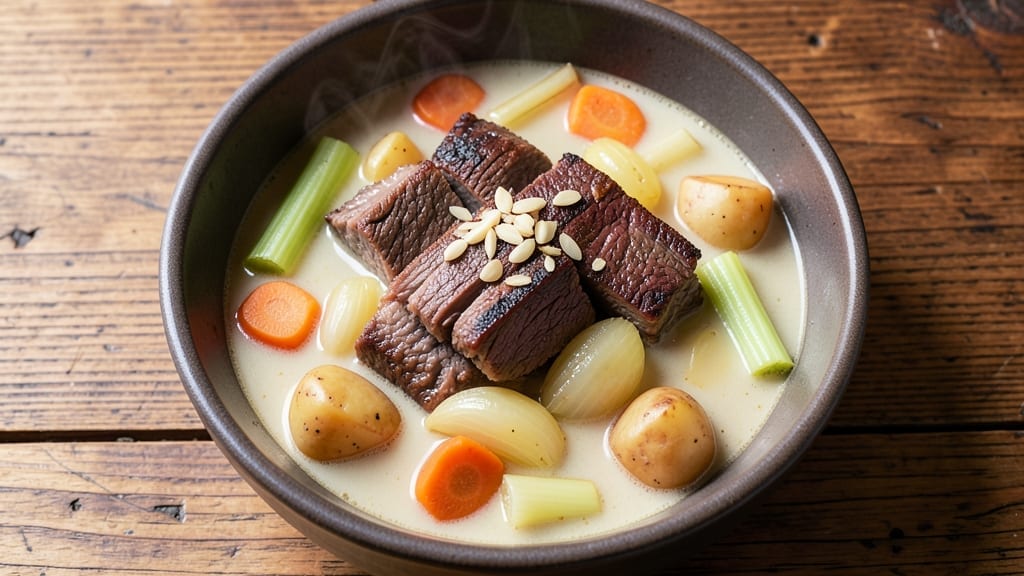
This 2 x 4 soup recipe delivers the ultimate hearty beef and vegetable stew that simmers into rich, comforting perfection—exactly what you crave when the weather turns chilly. 🍲 The name comes from its signature 2-inch cubes of beef and 4-inch vegetables, creating a balanced, melt-in-your-mouth texture that’s impossible to resist.
What sets this apart is the slow-cooked depth of flavor, where tough cuts transform into tender, juicy bites while absorbing the aromatic broth.
The beauty of this recipe lies in its simplicity and versatility. With just a handful of simple ingredients—beef chuck, potatoes, carrots, onions, and herbs—you’ll create a stew that’s both satisfying and restaurant-quality.
The key is simmering low and slow, allowing the flavors to meld and the beef to become fork-tender without drying out. It’s the kind of dish that tastes even better the next day, making it perfect for meal prep or a cozy weeknight dinner.
By the time you’re done, you’ll have a perfectly balanced stew with tender beef, caramelized vegetables, and a deeply flavorful broth that coats every bite. The aroma alone will fill your kitchen with warmth, while the hearty texture makes it a filling meal that’s easy to customize.
Whether you’re feeding a crowd or saving leftovers for lunch, this recipe delivers comfort in every spoonful.
Pair it with crusty bread for soaking up the rich sauce or serve it alongside a simple green salad for a complete meal. The flexibility of this stew means it works for any occasion—weeknight dinners, holiday gatherings, or even a quick freezer meal for busy days.
Let’s get started on this timeless classic!
Ingredients for 2 x 4 soup
Simple ingredients that transform into a rich, comforting beef stew perfect for chilly evenings.
| Ingredient | Amount | Notes |
|---|---|---|
| Beef Chuck Roast 🥩 | 3 lb | Cut into 2-inch cubes |
| Yellow Onions 🧅 | 2 whole | Cut into 4-inch chunks |
| Carrots 🥕 | 4 whole | Cut into 4-inch pieces |
| Russet Potatoes 🥔 | 4 whole | Cut into 4-inch chunks |
| Celery Stalks 🧄 | 4 whole | Cut into 4-inch pieces |
| Garlic Cloves 🧄 | 6 cloves | Smashed but not minced |
| Tomato Paste 🍅 | ½ cup | No sugar added preferred |
| Beef Broth 💧 | 6 cups | Low-sodium preferred |
| Red Wine 🍷 | 1 cup | Bold dry variety |
| Fresh Thyme 🌿 | 2 tbsp | Leaves only, chopped |
| Fresh Rosemary 🌿 | 1 tbsp | Chopped, stems removed |
| Bay Leaves 🌿 | 2 whole | Dried, standard size |
| Salt 🧂 | 1 ½ tsp | Kosher or sea salt |
| Black Peppercorns 🌶️ | 1 tsp | Freshly cracked |
| Olive Oil 🫒 | 2 tbsp | For searing beef |
The beef is everything here—chuck roast has just enough fat to stay juicy while slow-cooking. Grab a 3-pound piece from the butcher counter or pre-cut cubes at Costco for convenience. Look for good marbling, not lean cuts—they dry out. The vegetables should be roughly the same size (4-inch chunks) so they cook evenly. Organic produce from the farmers market adds extra flavor, but regular grocery store veggies work just fine. Don’t skimp on the garlic—those smashed cloves infuse the broth with serious depth.
No beef broth? Water plus 2 beef bouillon cubes gets you close. Running short on red wine? Extra beef broth with 1 tbsp balsamic vinegar mimics the acidity. Fresh herbs can’t be beat, but dried thyme at one-third the amount works in a pinch. The tomato paste is non-negotiable—it’s what gives that rich, concentrated flavor. If you’re using pre-cut veggies, check for freshness—wilted carrots or limp celery will make the whole stew taste sad. For the potatoes, Russets hold up best to long cooking.
This stew tastes even better the next day—make extra for lunches. Keeps 5-6 days in the fridge, freezes for up to 3 months. I portion mine into 2-cup containers for easy reheating. The broth reduces as it sits, so add a splash of water or broth when reheating. Leftovers? Even more flavorful—just warm through gently and enjoy.
Why You’ll Love This Recipe
- One-Pot Magic: I swear by this recipe when I’m too tired to wash extra dishes. Toss everything—chuck roast, onions, carrots, potatoes—into a single pot with broth, and let it simmer. No chopping boards to clean, no straining colanders. Just pure, satisfying simplicity.
- Deep, Slow-Roasted Richness: That beef chuck roast? It’s the star. After hours of simmering, it practically falls apart in your spoon, releasing flavor like a cozy hug. The carrots and potatoes soften just enough to soak up all that meaty goodness—no mushy texture here.
- Meal Prep MVP: Between us, this soup is my secret weapon for busy weeks. Make a big batch on Sunday, and you’ve got lunches covered for days. The flavors only get better as it sits, and reheating is a breeze—just stir and serve.
- Budget-Friendly Feast: A whole chuck roast for a few dollars a pound? Yes, please. This recipe stretches one into four hearty servings, and the veggies are pantry staples. It’s the kind of dish that makes you feel like you’re feeding a crowd without breaking the bank.
Step-by-step instructions for 2 x 4 soup recipe
Here’s how to transform tough beef and veggies into a restaurant-quality stew that gets better overnight.
🔥 Step 1: Sear the Beef for Deep Flavor
Heat a large Dutch oven over medium-high heat until hot. Add the 2 tablespoons olive oil and swirl to coat the bottom. Working in batches (you’ll need two rounds), add the 3 lb beef chuck roast cut into 2-inch cubes—don’t crowd the pan. Let each piece sear undisturbed for 2-3 minutes until deeply browned on all sides. This step builds the rich foundation of your stew.
Real talk: If you skip this, your soup will taste bland. I press down gently on the beef cubes during the first minute—this prevents them from curling and ensures even contact with the pan. Transfer the browned beef to a plate as you work, keeping it warm.
🍳 Step 2: Sauté the Vegetable Base
In the same Dutch oven (no need to wipe it clean—those browned bits are pure flavor), add the 2 whole yellow onions cut into 4-inch chunks, 4 whole carrots cut into 4-inch pieces, and 4 whole celery stalks cut into 4-inch pieces. Cook for 8-10 minutes until the vegetables begin to soften and the onions turn translucent. Stir occasionally to prevent sticking.
Here’s the thing—you want these veggies to caramelize slightly but not fully cook. They’ll finish in the simmering liquid, so keep them slightly firm. Add the 6 smashed garlic cloves and cook for another 30 seconds until fragrant—this prevents them from burning in the next step.
🥘 Step 3: Build the Rich Stew Base
Stir in the 0.5 cup tomato paste and cook for 1 minute to toast its flavors. Pour in the 1 cup red wine and scrape up all those delicious browned bits from the bottom of the pot. Let it simmer for 3-4 minutes until the wine reduces by half and the alcohol burns off—you’ll smell that rich, concentrated aroma.
Add the seared beef back to the pot along with the 6 cups beef broth, 2 whole bay leaves, 2 tablespoons chopped fresh thyme, 1 tablespoon chopped fresh rosemary, 1.5 teaspoons salt, and 1 teaspoon freshly cracked black peppercorns. Bring to a gentle boil, then reduce heat to low and cover partially.
⏰ Step 4: Simmer Until Tender
Let the stew bubble gently for 1.5 hours—this is where the magic happens. The beef should be fork-tender but not falling apart. I check periodically and stir gently to prevent the veggies from sticking to the bottom. If the liquid reduces too much (it shouldn’t with these quantities), add ½ cup water to maintain the perfect consistency.
After 1.5 hours, add the 4 whole russet potatoes cut into 4-inch chunks. These starchy potatoes will soak up the rich flavors and thicken the stew naturally. Return to a simmer and cook uncovered for another 45-60 minutes until the potatoes are tender and the stew has reached its perfect thickness.
🍽️ Step 5: Finish and Serve
Remove the 2 bay leaves and adjust seasoning if needed—this stew should taste rich and satisfying. I like to taste as I go, adding a pinch more salt or a crack of pepper if necessary. The potatoes should be tender enough to pierce with a fork but still hold their shape slightly.
Serve immediately with crusty bread for dipping, or let it rest at room temperature for 1 hour before serving—this allows the flavors to meld even more. Each spoonful should deliver tender beef, caramelized vegetables, and that perfect balance of wine and herb complexity. Leftovers taste even better the next day!
Pro Tips For Making 2 X 4 Soup
- Brown the Chuck Twice: After searing the roast in the Dutch oven, remove it and crank the heat to medium-high. Toss in the onions, carrots, celery, and potatoes—sauté them for 5 minutes until they soften and start sticking. Then return the beef, add broth, and simmer. That second brown layer on the veggies means deeper flavor, not just mush. (Yes, it’s extra work, but your soup will taste like it simmered all day.)
- Cut Potatoes in 1.5-inch Chunks: Russets break apart when overcooked, so cut them into 1.5-inch cubes—not too small, not too big. They’ll hold their shape while the beef melts into the broth. I learned this the hard way when my first batch turned to gluey sludge.
- Don’t Crowd the Pot: If your Dutch oven is packed with veggies and beef, the center won’t cook through. Start by browning half the onions and celery, then set them aside before adding the rest. A tight pot = unevenly cooked ingredients. (Trust me, you’ll notice the difference.)
- Deglaze with Cold Broth: After browning the beef, splash in 1 cup of cold broth instead of hot. The temperature shock loosens all the fond stuck to the bottom—more flavor, less scraping. I was skeptical until I tried it, and now I never go back.
Wine and beer pairings for these flavors
Red Wine Pairings
The bold flavors of this beef stew demand a wine that can stand up to its richness while complementing its depth. I reach for a Cabernet Sauvignon from Napa Valley—its dark fruit notes and firm tannins cut through the stew’s heartiness.
A Malbec from Argentina offers a softer approach with juicy blackberry flavors that enhance the beef’s natural richness. Avoid light wines like Pinot Noir; they’ll get lost in the stew’s robust profile. 🍷
Beer Complements
A robust amber ale like Fat Tire or Leinenkugel’s Summer Shandy bridges the gap between the stew’s depth and your palate’s refreshment. The malt sweetness balances the wine’s acidity, while the hop bitterness cleanses between bites.
For a darker option, try a brown ale like Samuel Smith’s Nut Brown Ale—its caramel notes harmonize beautifully with the caramelized onions. Avoid IPAs; their hop intensity can clash with the stew’s savory complexity.
Light Options
If you prefer something lighter, a crisp Sauvignon Blanc with citrus notes provides a refreshing contrast. I’ve found Kim Crawford Sauvignon Blanc from New Zealand works surprisingly well—its zesty acidity brightens the dish without overpowering it.
For a non-alcoholic pairing, sparkling apple cider with a splash of lemon mimics the wine’s acidity while adding a festive touch. 🍏
Regional Variations
In France, this stew would traditionally pair with a Bordeaux—its earthy undertones mirror the thyme and rosemary. For an Italian twist, try a Chianti Classico, where the wine’s acidity complements the tomato paste’s richness.
In Germany, a Spätburgunder (Pinot Noir) offers a lighter but still flavorful option that won’t overpower the dish’s hearty profile.
Serving Temperature
Serve your wine or beer slightly cooler than room temperature—about 50-55°F for reds and 45-50°F for whites. Chill your beer for 30-45 minutes before serving to enhance its malt sweetness.
I like to pour my wine first, let it breathe for 10 minutes in the glass, then take the first sip with the first bite of stew. This sequence lets you experience the full flavor progression. 🍷
Nutrition facts
Frequently asked questions
Why is this called “2 x 4” soup?
The name comes from the traditional cut sizes: 2-inch beef cubes and 4-inch vegetable chunks. This creates perfect bite-sized pieces while keeping the cooking time balanced. The uniform size ensures everything cooks evenly without some ingredients turning mushy while others stay tough. It’s a classic technique that dates back to old-school home cooking!
Can I use a slow cooker for this recipe?
Brown the beef first in a skillet, then transfer everything to your slow cooker. Cook on low for 7-8 hours or high for 4-5 hours until the beef is tender. The slow cooker actually enhances the flavors since it simmers gently for hours. Just add the potatoes during the last 1 hour of cooking.
What if I don’t have red wine?
No problem! Use 1 cup beef broth plus 1 tablespoon balsamic vinegar for the acidity, or substitute with 1 cup apple cider for a sweeter alternative. The tomato paste will still provide depth, but the wine adds that special richness. For a non-alcoholic option, try 1 cup cranberry juice with a splash of vinegar.
How do I make this vegetarian?
Replace the beef with 3 cups hearty mushrooms (like portobello) or 2 cups lentils, and use vegetable broth instead. Add 1 tablespoon soy sauce or 1 teaspoon smoked paprika for depth. The potatoes and carrots will still hold up beautifully, and the wine/herb combination works perfectly. Just reduce the cooking time to 1 hour total for the veggie version.
Why does my stew taste bland?
Most likely, you skipped the searing step or didn’t deglaze the pot. The browned bits (fond) on the bottom contain concentrated flavor—always scrape them up with the wine or broth. Also, taste as you go and adjust seasoning gradually. If it’s still bland, try adding 1 extra bay leaf or ½ teaspoon Worcestershire sauce at the end. Patience is key—rushing the simmering time often leads to bland results!

- 6 Egg Cake Recipe with Oil: Light as Air With Buttery Moisture - October 4, 2026
- 4 Bean Casserole Recipe: One-Pan Heartiness With Smoky Paprika Depth - October 4, 2026
- 3-Ingredient Keto Mug Cake Recipe: Microwave Magic in 2 Minutes - October 4, 2026