
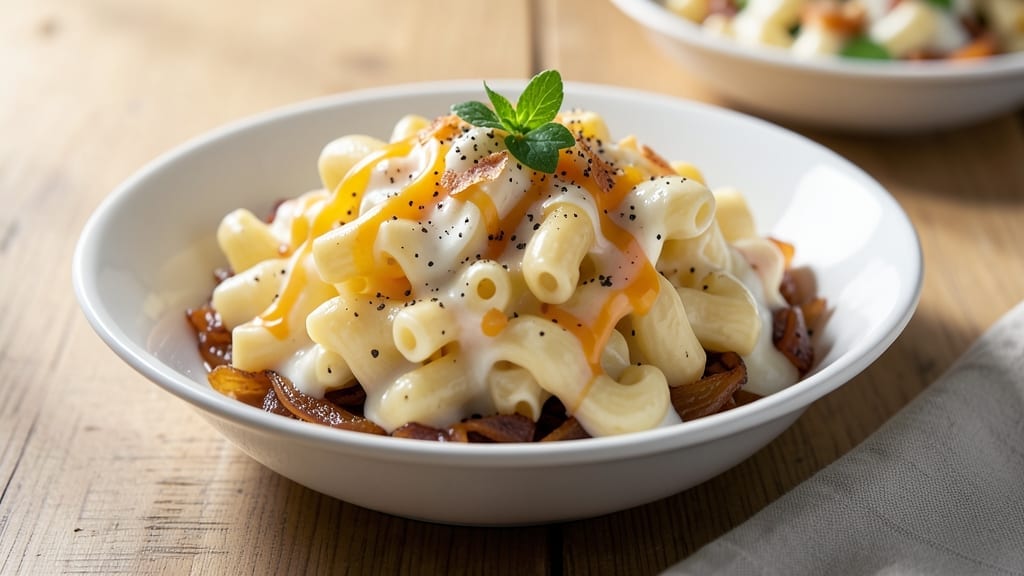
This 20-minute mac and cheese recipe delivers restaurant-quality creaminess without the hours of simmering—perfect for weeknight dinners or game day appetizers. The secret lies in a foolproof one-pot method that combines al dente pasta with a velvety cheese sauce, all ready in just 20 minutes.
No fancy techniques required, just simple ingredients and precise timing to create that signature ultra-creamy texture we all crave.
The magic happens when you cook the pasta directly in the dairy mixture, allowing the starchy water to create an emulsified sauce that clings to every noodle.
I use a blend of sharp cheddar and cream cheese for depth, but the real game-changer is the slow addition of milk while stirring constantly—this prevents lumps and ensures a smooth, velvety finish that rivals any takeout version. The result?
A dish so rich and satisfying, it transforms ordinary pasta into a comforting masterpiece.
What makes this recipe truly special is its versatility—customize it with crispy bacon bits, toasted breadcrumbs, or even a sprinkle of smoked paprika for extra flavor. The creamy sauce coats every bite perfectly, making it ideal for sharing or meal prep.
Whether you’re feeding a family or craving a solo indulgence, this mac and cheese delivers comfort in record time.
Serve it as a side dish or a hearty main course, and don’t forget the garnish—extra cheese, chives, or a drizzle of hot sauce elevate it to next-level deliciousness. Ready to make the creamiest mac and cheese in just 20 minutes? Let’s get started with the full recipe.
Ingredients for 20 minute mac and cheese
Twelve simple ingredients transform into velvety perfection in one pot.
| Ingredient | Amount | Notes |
|---|---|---|
| Elbow Macaroni 🍝 | 12 oz | Dry, medium or short shape |
| Sharp Cheddar Cheese 🧀 | 2 cups | Shredded, aged 2+ years |
| Cream Cheese 🧈 | 8 oz | Full-fat, softened to room temp |
| Whole Milk 🥛 | 2 cups | Whole for creaminess, cold |
| Unsalted Butter 🧈 | 4 tbsp | Cold, cut into small cubes |
| Yellow Onion 🧅 | 1 small | Diced, about 1/2 cup |
| Garlic Cloves 🧄 | 2 cloves | Minced, fresh preferred |
| All-Purpose Flour 🌾 | 2 tbsp | For thickening, sifted |
| Salt 🧂 | 1 ½ tsp | Kosher or sea salt |
| Black Pepper 🌶️ | ½ tsp | Freshly ground preferred |
| Smoked Paprika 🌶️ | ¼ tsp | Optional for depth |
| Fresh Chives 🌿 | 2 tbsp | Chopped, for garnish |
The cheeses are non-negotiable here—sharp cheddar for tang and cream cheese for that signature ultra-creamy texture. Kraft or Cabot are solid choices, but if you’ve got a favorite aged cheddar, use it. The whole milk is key for richness; skip the skim and don’t even think about almond milk here. For the onion, yellow or white both work—just make sure it’s fresh, not wilty. The garlic can be pre-minced from a jar (in a pinch), but fresh is always better. If you’re prepping ahead, shred the cheese and dice the onion first—it saves time during the critical cooking phase.
No sharp cheddar? Monterey Jack or pepper jack works in a pinch, though the flavor won’t be as complex. Out of cream cheese? Substitute with an extra 1/2 cup of cheddar plus 2 tbsp milk powder—it’s not identical, but close. The smoked paprika is optional, but if you love smoky flavors, add it to the dry mix at the end. For a dairy-free version (though this isn’t vegan), use nutritional yeast and coconut milk, but the texture will be different. The flour is just for thickening—if you’re watching carbs, you can omit it and stir more frequently, but the sauce might be slightly thinner. For the butter, European-style or ghee adds even more richness if you’re feeling fancy.
This sauce gets better as it sits, so make it a day ahead if you can. Store in an airtight container in the fridge for up to 3 days, or freeze portions for 2 months. The pasta stays al dente longer when cold, so assemble the dish right before serving. For meal prep, keep the cheese sauce separate until reheating—microwave in 30-second bursts, stirring between each, to prevent separation. Garnish with chives right before serving, as they lose their pop when sitting too long. Double the recipe—it disappears faster than you think.
Why You’ll Love This Recipe
- No Boil-Over Chaos: I swear by the stovetop method here—no straining pasta into a sink, no splattered cheese everywhere. Just simmer the elbows right in the sauce until they’re tender, and the cheese melts into that perfect, thick blanket. (Yes, even my toddler can handle this.)
- Sharp Cheddar Magic: That moment when the sharp cheddar and cream cheese melt together? It’s like a hug in a bowl. The cream cheese keeps it creamy without being heavy, while the chedddar gives it that tangy kick that makes it taste like a restaurant dish—not just a quick weeknight meal.
- Leftover Luxury: This recipe actually improves the next day. The flavors meld overnight, and the sauce gets even richer. I make a double batch on Sundays so I can reheat portions all week—no sad, dry mac and cheese here.
- Budget Comfort: Five ingredients, all affordable staples. Elbow pasta, a block of cheddar, a tub of cream cheese—this is the kind of meal that stretches your grocery budget without sacrificing taste. Plus, it’s the kind of dish that makes you feel like you’re treating yourself, even when you’re not.
Step-by-step instructions for ultra-creamy one-pot mac and cheese
This method delivers velvety, restaurant-quality mac and cheese in just 20 minutes using simple techniques.
Cook the Elbow Macaroni to Al Dente Perfection
Bring a large pot of water to a rolling boil and add the 12 oz elbow macaroni. Cook until 1-2 minutes shy of package directions for al dente—you want the pasta to have a slight bite when bitten. This ensures it doesn’t turn mushy when combined with the sauce later.
While the pasta cooks, add 1.5 tsp salt to the boiling water. I like to taste the water—it should taste like the ocean. Reserve 1 cup of pasta water before draining, as this starchy liquid is essential for creating a silky sauce. Drain the pasta and set it aside in the pot, leaving the heat on low to keep it warm.
Build the Ultra-Creamy Cheese Sauce
In the same pot with the cooked pasta, add the 4 tbsp cold unsalted butter and the 1 small diced yellow onion. Stir over medium-low heat for 3-4 minutes until the onion softens and the butter melts completely. This step develops a subtle sweetness that balances the sharp cheddar.
Add the 2 cloves minced garlic and cook for 30 seconds until fragrant. Immediately whisk in the 2 tbsp all-purpose flour and stir for 1 minute to remove any raw flour taste. Slowly pour in the 2 cups cold whole milk while whisking continuously to prevent lumps from forming. The sauce should begin to thicken immediately.
Melt the Cheeses for Maximum Creaminess
Reduce the heat to low and add the 2 cups shredded sharp cheddar cheese and 8 oz softened cream cheese. Stir constantly for 3-4 minutes until the cheeses melt completely and the sauce becomes smooth and glossy. If the sauce thickens too much, add 2-3 tablespoons of reserved pasta water to reach your desired consistency.
Season with the 0.5 tsp black pepper and 0.25 tsp smoked paprika, stirring well to distribute evenly. The smoked paprika adds depth without overpowering the cheddar. Taste and adjust seasoning—you may need a pinch more salt depending on the saltiness of your cheddar.
Combine and Finish with Fresh Herbs
Return the pasta to the pot and stir gently to coat every strand with the creamy sauce. The mixture should be thick enough to cling to the macaroni without being gluey. If it’s too thick, add more reserved pasta water 1 tablespoon at a time until it reaches a velvety consistency.
Remove from heat and stir in the 2 tbsp chopped fresh chives. The chives add a bright, fresh contrast to the rich cheese sauce. For extra indulgence, top with additional shredded cheddar and serve immediately while still bubbly and creamy.
Pro Tips For Making 20 Minute Mac And Cheese
- BOIL THE PASTA FAST: Use a big pot with plenty of water and a pinch of salt—no crowding the noodles. I learned this the hard way: crammed pasta boils unevenly, and you’ll end up with some al dente and some mushy elbows. High heat, covered, gets them done in 8-9 minutes, not 12.
- GRATE THE CHEESE FINE: Sharp cheddar loses its bite when shredded in a box. Pulse it in a food processor for 3-4 seconds—you want tiny, sand-like pieces that melt smoothly. Cream cheese stays soft, so just cut it into chunks; no need to pre-shred.
- DON’T SKIP THE MILK WARMUP: Cold milk makes the sauce seize up like glue. Heat the milk in the same pot you cooked the pasta in—just warm it to 160°F (or until tiny bubbles form at the edges). Then whisk in the butter and cheeses; the sauce will come together like a dream.
- REST IT UNDER FOIL: The sauce looks perfect when you pour it over the pasta, but it’ll turn runny as soon as you serve it. Transfer the bowl to the oven (or cover it tightly with foil) for 5 minutes. This lets the starches set—no more sad, soupy mac.
Storing and reheating your 20 minute mac and cheese
Refrigerator Storage
Let your mac and cheese cool completely before transferring to an airtight container—I use glass Pyrex with snap-on lids. Store in the fridge for up to 3 days, but the flavor actually deepens overnight as the cheeses meld.
The pasta stays al dente longer when cold, so assemble right before serving if possible. 🥄
Freezer Prep Tips
For long-term storage, portion into quart-sized freezer bags or airtight containers, leaving ½-inch headspace for expansion. Freeze for up to 2 months, but I recommend 1 month for best texture. Label with the date—trust me, you’ll forget! Thaw overnight in the fridge before reheating. Never microwave from frozen.
Stovetop Reheating
My preferred method is stovetop because it restores that velvety texture. Transfer mac and cheese to a skillet over medium-low heat and add 2-3 tablespoons of milk or water to loosen the sauce.
Stir frequently for 5-7 minutes until heated through (165°F). The sauce will thicken slightly—just add more liquid if needed. 🔥
Microwave Method
For quick reheating, cover with a damp paper towel and microwave in 30-second bursts, stirring between each. Start with 70% power to prevent separation. Add a splash of milk if the sauce looks dry. This method works best for single servings—don’t overcrowd the microwave. Stir vigorously before serving.
Garnish Fresh
Always add fresh chives or extra cheese right before serving—they lose their pop when reheated. For a crispy top, sprinkle with panko breadcrumbs and broil for 2-3 minutes until golden. This adds texture contrast that makes it feel restaurant-quality. 💫
Make-Ahead Sauce
If prepping ahead, make the cheese sauce separately and store it in the fridge for up to 3 days. When ready to serve, simply reheat the sauce and mix with cooked pasta.
This keeps the noodles from getting soggy. For extra creaminess, stir in 1 tbsp butter while reheating. The sauce gets even richer as it sits!
Nutrition facts
Frequently asked questions
Can I use a different type of pasta?
Short pasta shapes like cavatappi or shells work best—they trap the creamy sauce beautifully. Avoid long noodles (spaghetti, linguine) as they won’t hold the sauce well. For a fun twist, try penne or farfalle, but stick to 12 oz total for proper proportions.
Why did my sauce get grainy?
Graininess usually means the cheese didn’t melt completely or you added it too quickly. Always use room-temperature cream cheese and stir constantly on low heat for 3-4 minutes. For extra smoothness, strain the sauce through a fine-mesh sieve if needed.
Can I make this mac and cheese without flour?
Yes! Replace the 2 tbsp flour with 2 tbsp cornstarch for a gluten-free option. The sauce will thicken just as well, though you may need to add 1 extra tbsp of milk to maintain creaminess. Stir constantly to prevent lumps from forming.
What’s the best way to add protein?
Cook 4 oz of bacon until crispy and crumble it in at the end, or stir in ½ cup cooked chicken after removing from heat. For a veggie boost, add ½ cup steamed broccoli—just make sure it’s well-drained to avoid a watery sauce.
How do I fix a sauce that’s too thin?
Stir in 1 tbsp butter at a time while heating gently—it will thicken the sauce immediately. If that doesn’t work, mix 1 tsp cornstarch with 1 tbsp cold milk, stir into the sauce, and cook for 1-2 minutes until thickened. Never add raw flour directly to hot sauce!

- 3lb Prime Rib Roast Recipe: Juicy Pink Center Guaranteed in 3 Hours - October 31, 2026
- 5 Spice Cake Recipe: Warmly Spiced Layers With Crunchy Top - October 31, 2026
- 1950’s Macaroni and Cheese Recipe: Nostalgic Creamy Cheese Sauce with Buttery Noodles - October 31, 2026