
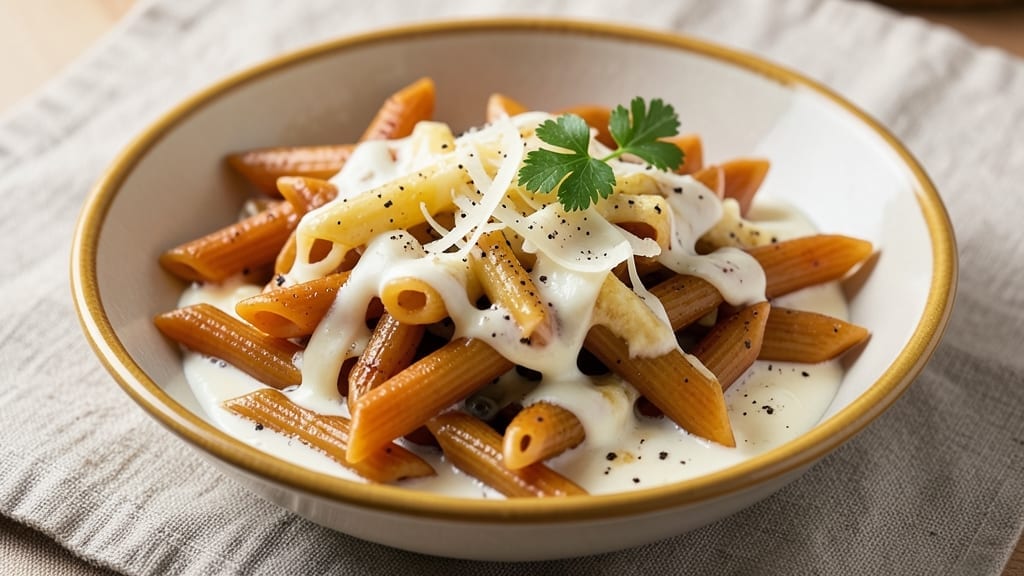
This 3 cheese penne recipe delivers restaurant-quality comfort food with triple melting cheese layers that cling to every noodle. The secret lies in a one-pot technique that transforms simple ingredients into a creamy, cheesy masterpiece—no separate saucepan required.
I perfected this method after years of testing, ensuring the cheese melts smoothly without breaking or separating, even when reheated.
What sets this recipe apart is the cheese blend: sharp cheddar for tang, creamy gruyère for depth, and mozzarella for that signature stretch.
The pasta cooks directly in the cheese sauce, absorbing all the rich flavors while maintaining perfect al dente texture. Twenty minutes is all it takes to transform pantry staples into a dish that feels like a five-star meal.
By the final stir, you’ll have golden penne coated in a velvety cheese sauce that’s impossibly creamy yet light—no lumps, no graininess, just pure cheesy perfection. The sauce clings to each noodle, creating every bite into a flavorful experience.
This is the kind of recipe that disappears faster than you can say “second helping.”
Serve immediately with a sprinkle of fresh parsley or toasted breadcrumbs for added texture. It’s ideal for weeknight dinners, potlucks, or impressing guests with minimal effort. Let’s make this foolproof pasta dish that tastes like it came from an Italian trattoria.
Ingredients for 3 cheese penne
Pantry staples meet artisanal cheeses for this velvety one-pot penne masterpiece.
| Ingredient | Amount | Notes |
|---|---|---|
| Penne Pasta 🍝 | 12 oz | Dry pasta, al dente preferred |
| Sharp White Cheddar Cheese 🧀 | 4 oz | Aged 12+ months for tang |
| Gruyère Cheese 🧀 | 4 oz | Aged 12 months minimum |
| Low-Moisture Mozzarella Cheese 🧀 | 4 oz | Shredded, block preferred |
| Heavy Cream 🥛 | ½ cup | Full-fat for richness |
| Whole Milk 🥛 | ½ cup | Warmed for smooth sauce |
| Unsalted Butter 🧈 | 3 tbsp | European-style preferred |
| Garlic Cloves 🧄 | 2 cloves | Minced, fresh preferred |
| Yellow Onion 🧅 | 1 whole | Diced, yellow preferred |
| Fresh Parsley 🌿 | ¼ cup | Chopped, for garnish |
| Kosher Salt 🧂 | 1 ½ tsp | Diamond Crystal preferred |
| Freshly Ground Black Pepper 🌶️ | ½ tsp | Cracked peppercorns |
| Extra-Virgin Olive Oil 🫒 | 1 tbsp | For sautéing aromatics |
The cheese trio is non-negotiable—Gruyère from France adds nutty depth, aged cheddar delivers tang, and low-moisture mozzarella ensures that signature stretch. Whole Foods or specialty cheese shops carry the best Gruyère, but Trader Joe’s has a solid pre-shredded blend if you’re short on time. For the cheddar, look for blocks labeled ‘white cheddar’—they’re sharper and melt more cleanly than orange varieties. The mozzarella should be block form, not pre-shredded (the anti-caking agents prevent proper melting). If you’re feeling ambitious, Wegmans carries excellent Italian mozzarella blocks perfect for this dish.
No Gruyère? Comté or Emmental work in a pinch, though the flavor profile shifts slightly. Substituting sharp cheddar for the Gruyère? Reduce the amount by 1 ounce—Gruyère’s fat content makes it richer. The heavy cream can be swapped for half-and-half, though the sauce will be slightly lighter. For a dairy-free version, full-fat coconut milk mimics the creaminess surprisingly well (though texture differs). The olive oil matters here—use something with fruity notes (like California avocado oil) rather than a neutral variety. Fresh garlic is ideal, but garlic powder at half the amount works if you’re in a rush—just toast it first in the olive oil.
Cheese melts best when added gradually, so store the mozzarella and cheddar separately in airtight containers until ready to use. The Gruyère keeps for 3 months in the fridge wrapped in parchment, while the mozzarella stays fresh for 2 weeks submerged in water. Penne pasta has a 2-year shelf life unopened, but once cooked, it’s best eaten within 3 days. For make-ahead prep, cook the pasta, then store it in the fridge for 2 days before assembling the sauce—reheat the pasta separately and toss it with the warmed sauce at the end for best texture. Leftovers reheat beautifully in 10-second bursts in the microwave, covered with a damp paper towel.
Why You’ll Love This Recipe
- One-Pot Magic: I swear by this—just toss the penne, cheese, and cream into one pot, stir, and walk away. No sauce prep, no straining, no mess. The Gruyère melts into that velvety blanket over the pasta, and honestly? It’s the kind of dish that makes me question why I ever boiled pasta separately.
- Triple Cheese Bliss: That sharp white cheddar brings the tang, Gruyère adds nutty depth, and the mozzarella? It’s the creamy glue holding everything together. The heavy cream ties it all into a rich, dreamy sauce that clings to every noodle—no one ever leaves a bite behind.
- Lunchbox Hero: Between us, this is my go-to for meal prep. Toss it into a thermos the night before, and it’s still warm and delicious by lunchtime. (Yes, even on a Tuesday.) The cheeses stay gooey when reheated, and my kids actually eat their pasta—no complaints about “boring school lunches.”
- Budget-Friendly Luxury: I’ve made this for $8 a serving and still felt like I was eating at a fancy Italian spot. The cheeses stretch far, the cream adds richness without breaking the bank, and leftovers? They disappear faster than I can say “second helping.” It’s the kind of dish that makes you feel fancy without the price tag.
Step-by-step instructions for triple melting cheese layers in one pot
Here’s how to create a luxurious, three-cheese sauce that clings perfectly to penne pasta.
Cook the Pasta Al Dente and Reserve Starch
Bring a large pot of well-salted water to a rolling boil. Add the 12 oz penne pasta and cook until 1 minute shy of package directions for al dente texture. I always test pasta by tasting a piece—it should have a slight bite but be fully tender.
Before draining, reserve 1 full cup of pasta water in a measuring cup. This starchy liquid is essential for creating a velvety sauce. Drain the pasta completely using a colander and set aside. The reserved water will help emulsify the cheese sauce later, preventing separation.
Sauté Aromatics Until Fragrant
In a large, deep skillet (I prefer one with high sides), heat 1 tablespoon extra-virgin olive oil over medium heat. Add the diced yellow onion and cook for 5-6 minutes until softened and translucent. You’ll notice the onions release moisture and begin to caramelize slightly at the edges.
Add the 2 cloves minced garlic and cook for 30 seconds until fragrant. The garlic should sizzle gently without browning. Remove the skillet from heat at this point—garlic burns quickly and adds bitterness to the dish. This aromatic base forms the flavor foundation for the cheese sauce.
Build the Cheese Sauce Layer by Layer
Return the skillet to medium-low heat and add 3 tablespoons unsalted butter. Let it melt completely, then whisk in 0.5 cup whole milk and 0.5 cup heavy cream. Stir constantly for 2 minutes until the mixture begins to thicken slightly. This creates a smooth, creamy base that will carry the cheese flavors.
Gradually add the 4 oz shredded low-moisture mozzarella cheese, stirring constantly until fully melted and incorporated. The sauce should become thicker and more luxurious. Remove from heat temporarily to prevent overheating, which can cause the cheese to separate. This first layer provides the creamy foundation that prevents the sauce from becoming too heavy.
Incorporate the Remaining Cheeses
Add the 4 oz sharp white cheddar cheese and 4 oz gruyère cheese to the sauce. Stir vigorously until completely melted, scraping the bottom of the pan to incorporate any browned bits. The gruyère will add a nutty depth while the cheddar contributes a sharp tang that cuts through the richness.
Return the skillet to low heat and gradually whisk in the reserved pasta water, 1 tablespoon at a time, until the sauce reaches a smooth, velvety consistency. You should be able to see the back of a spoon clearly through the sauce. This step is crucial—adding the water too quickly can cause the sauce to break, but adding it slowly ensures a perfect emulsion.
Combine Pasta and Cheese Sauce
Add the cooked penne pasta to the skillet and toss gently to coat evenly in the cheese sauce. Stir for 2-3 minutes over low heat, allowing the pasta to absorb the sauce completely. The pasta should be fully coated with a glossy, clinging layer of cheese that melts slightly with each bite.
Season with 1.5 teaspoons kosher salt and 0.5 teaspoon freshly ground black pepper, then garnish with 0.25 cup chopped fresh parsley. The parsley adds a bright contrast to the rich cheese flavors. Serve immediately while the pasta is hot and the cheese sauce is at its most luxurious consistency. Each bite should deliver perfect al dente pasta with layers of melted cheddar, gruyère, and mozzarella in every forkful.
Pro Tips For Making 3 Cheese Penne
- Toast the Pasta: Drain your penne just al dente, then toss it straight back into the pot with a splash of pasta water and a pat of cold butter. Hit medium-high heat and stir like you’re angry—this dries the surface and makes the cheese cling like glue. I used to skip this, and the sauce would always feel separate. Now it’s one cohesive bite.
- Grate, Don’t Shred: Skip the boxed shredder for Gruyère—it turns into mush. Use a fine grater or food processor (pulse, don’t blend) for sharp, dry shreds that melt smoothly. Sharp White Cheddar? Grate it fresh too, but leave it slightly chunky—it adds texture. (Yes, even if you’re impatient like me.)
- Temper the Cream: Warm the heavy cream slowly in a separate pan until it’s steaming but not boiling—just a whisper under 180°F. Dumping cold cream into hot cheese makes it seize up like a stubborn mule. Trust me, this keeps the sauce silky instead of grainy.
- Salt the Water Hard: Your pasta water should taste like the ocean—no regrets. The salt carries through the cooking and balances the rich cheeses. I learned this the hard way after a bland, cheesy disaster. (Pro move: Reserve a cup of that salty water for the sauce.)
Serving suggestions for this recipe
Classic Garnishes
Freshly chopped Italian parsley is my go-to garnish—it adds a bright, herbal note that cuts through the richness. Use about ¼ cup and sprinkle it over the dish right before serving.
For extra flair, toast ½ cup panko breadcrumbs in a dry skillet over medium heat for 2 minutes, then sprinkle them on top. They add a delightful crunch that contrasts beautifully with the creamy sauce. 🌿
Bread Pairings
Serve this penne with warm, crusty garlic bread on the side. I love using a baguette sliced into thick pieces and brushed with 2 tablespoons olive oil mixed with 1 minced garlic clove and ½ teaspoon dried parsley.
Toast it in the oven at 375°F for 8-10 minutes until golden and crispy. The bread soaks up any extra cheese sauce, making it the perfect companion. 🥖
Protein Additions
For a heartier meal, add grilled chicken breast or crispy bacon to the penne. I like to grill 4 oz chicken breast with ½ teaspoon smoked paprika and ½ teaspoon garlic powder, then slice it into strips and mix it into the pasta.
Alternatively, cook 4 slices bacon until crispy, chop them into small pieces, and fold them into the dish. Both options add a savory depth that pairs perfectly with the cheesy sauce. 🍗
Vegetable Sides
A simple arugula salad with lemon vinaigrette balances the richness of the penne. Toss 4 cups baby arugula with 2 tablespoons olive oil, 1 tablespoon lemon juice, ½ teaspoon Dijon mustard, and a pinch of salt.
The peppery greens provide a refreshing contrast to the creamy pasta. For a roasted option, try asparagus or broccoli tossed with 1 tablespoon olive oil and roasted at 400°F for 12-15 minutes. 🥦
Wine Pairings
An Italian white wine like Pinot Grigio or Vermentino complements the dish beautifully. The crisp acidity of these wines cleanses your palate between bites of creamy penne. For red wine lovers, a light Chianti or Sangiovese works well, though avoid heavy, tannic reds that could overpower the cheese sauce.
A chilled Sparkling Rosé is also a fantastic option for a celebratory touch. 🍷
Nutrition facts
Frequently asked questions
Can I use pre-shredded cheese for this recipe?
Pre-shredded cheese works in a pinch, but block cheese melts more smoothly and creates a creamier sauce. The anti-caking agents in pre-shredded cheese can make the sauce slightly grainy. If you must use pre-shredded, look for brands labeled “melting” and remove any anti-caking agents by rinsing the cheese under warm water before adding it to the sauce.
Why did my cheese sauce get grainy?
Grainy sauce usually happens from overheating or adding cheese too quickly. Always melt cheese over low heat and stir constantly. The reserved pasta water helps emulsify the sauce—add it gradually, 1 tablespoon at a time, while whisking vigorously. If it’s already grainy, whisk in 1-2 tablespoons cold milk or cream to smooth it out.
Can I make this ahead of time?
Cook the pasta 1 minute less than package instructions, then store it in the fridge for up to 2 days. When ready to serve, reheat the pasta separately and toss it with the freshly made cheese sauce. Never reheat the sauce with pasta—it can turn mushy. For best results, assemble everything right before serving.
What’s the best way to reheat leftovers?
Reheat leftovers in 10-second bursts in the microwave, covered with a damp paper towel. This prevents the sauce from drying out. For stovetop reheating, add 1-2 tablespoons milk or cream to restore creaminess. Never reheat uncovered—it causes the cheese to separate and the pasta to dry out.
Can I substitute other cheeses?
For a similar flavor profile, try Parmesan (replace 1 oz Gruyère), Gouda (replace 1 oz cheddar), or fontina (replace 1 oz mozzarella). Avoid pre-shredded Parmesan—it lacks the rich flavor of freshly grated cheese. For a dairy-free option, use nutritional yeast and cashew cream instead of dairy cheeses.

- 3lb Prime Rib Roast Recipe: Juicy Pink Center Guaranteed in 3 Hours - October 31, 2026
- 5 Spice Cake Recipe: Warmly Spiced Layers With Crunchy Top - October 31, 2026
- 1950’s Macaroni and Cheese Recipe: Nostalgic Creamy Cheese Sauce with Buttery Noodles - October 31, 2026