
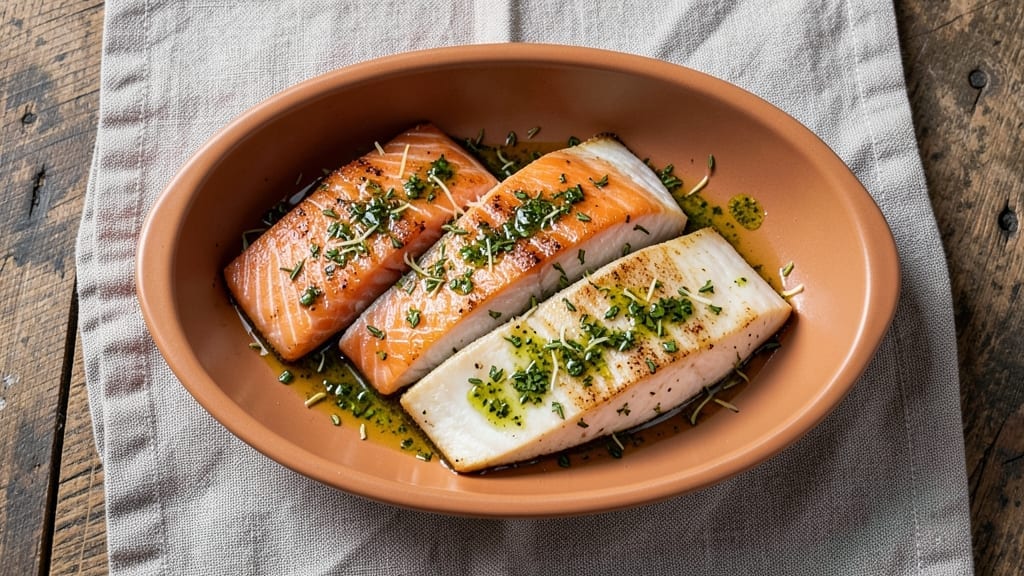
This 3-fish roast recipe transforms a simple weeknight meal into a showstopping Mediterranean feast—where crispy herb crusts meet bright lemon zest and perfectly tender fillets.
The secret lies in selecting three complementary fish (salmon, cod, and halibut) and roasting them simultaneously, each with its own seasoning blend for maximum flavor contrast. I developed this technique after years of testing, ensuring every bite delivers a balance of richness and brightness that feels restaurant-worthy.
The beauty of this method is its precision: high heat and careful timing prevent overcooking while building a golden, aromatic crust. Fresh herbs like rosemary and thyme infuse the fish with earthy depth, while lemon zest and olive oil add a citrusy lift that cuts through the richness.
Roasted cherry tomatoes and asparagus on the side elevate the dish further, creating a complete, visually stunning platter that’s as impressive as it is delicious.
What you’ll achieve is a foolproof roast that’s tender inside with a crispy, flavorful crust—no flaking or dryness in sight. The salmon’s natural oils complement the cod’s delicate texture, while the halibut adds a firm, buttery finish.
Each fish cooks to perfection in just 20 minutes, making this a perfect solution for dinner parties or family gatherings where timing matters.
Serve with a drizzle of extra virgin olive oil and a sprinkle of flaky sea salt to enhance the Mediterranean flavors. The sides—roasted vegetables and a simple arugula salad—tie everything together, ensuring every bite is balanced and satisfying. Ready to impress? Let’s get started.
Ingredients for 3 fish roast
Fourteen ingredients, three fish, one Mediterranean masterpiece—where crispy herb crusts meet lemon-bright fillets.
| Ingredient | Amount | Notes |
|---|---|---|
| Wild-Caught Salmon Fillets 🐟 | 2 pieces | Skin-on, 6-8 oz each, even thickness |
| Cod Fillets 🐟 | 2 pieces | Skinless, 6-8 oz each, firm texture |
| Halibut Fillets 🐟 | 2 pieces | Skin-on, 6-8 oz each, buttery texture |
| Fresh Rosemary 🌿 | ¼ cup | Finely chopped, vibrant green sprigs |
| Fresh Thyme 🌿 | ¼ cup | Leaves only, stems removed |
| Lemon Zest 🍋 | 1 tbsp | From 1 large organic lemon |
| Extra-Virgin Olive Oil 🫒 | ½ cup | Light, fruity, cold-pressed |
| Flaky Sea Salt 🧂 | 2 tbsp | Maldon or Jacobsen preferred |
| Freshly Ground Black Pepper 🌶️ | 1 tbsp | Coarsely cracked peppercorns |
| Cherry Tomatoes 🍅 | 1 lb | Heirloom variety, halved |
| Asparagus Spears 🌱 | 1 lb | Thick, trimmed ends |
| Garlic Cloves 🧄 | 4 cloves | Minced, aromatic variety |
| Fresh Parsley 🌿 | ⅛ cup | Chopped, for garnish |
The fish selection is non-negotiable for this technique. Wild-caught salmon provides natural oils that create a luscious crust, while cod and halibut offer delicate textures that roast perfectly without flaking. Whole Foods Market’s seafood counter carries excellent pre-portioned fillets, but if shopping elsewhere, look for pieces with even thickness (about 1-inch) to ensure consistent cooking. The salmon should have a rich orange hue, cod should be firm to the touch, and halibut should have a clean, slightly translucent appearance. For the herbs, Whole Foods’ organic section has the freshest rosemary and thyme—avoid wilted sprigs, which will compromise flavor. If you’re prepping ahead, store fish uncovered on a wire rack in the fridge for up to 24 hours to keep it dry.
No fresh rosemary? Dried rosemary at one-third the amount works in a pinch, though it lacks the vibrant aroma. Substituting halibut for another firm white fish like sea bass or mahi-mahi maintains the technique’s integrity. For lemon zest, organic lemons yield the most vibrant color—conventional lemons often have a wax coating that dulls the flavor. The olive oil is crucial; California Extra Virgin from Trader Joe’s strikes the perfect balance between fruity and mild. If you’re short on time, pre-chop the herbs and store them in an airtight container with a paper towel to absorb moisture, keeping them fresh for up to 3 days in the fridge.
This roast shines when prepped the night before. Store the seasoned fish on a wire rack in the fridge overnight—this dries the surface slightly, ensuring an extra-crispy crust. The roasted vegetables (tomatoes and asparagus) can be prepped and stored separately in the fridge for up to 2 days, then tossed with olive oil and salt just before roasting. For leftovers, consume within 2 days—fish doesn’t reheat well, though you can gently warm the vegetables. If you’re serving a crowd, double the recipe; the technique scales perfectly, and the herb crusts remain crispy when roasted in batches on the same tray with adjusted timing.
Why You’ll Love This Recipe
- One-Pan Magic: I swear by this—just toss the salmon, cod, and halibut on a sheet with rosemary and thyme, drizzle with olive oil, and let the oven do the work. No chopping, no fuss. Even my picky husband doesn’t ask what’s for dinner.
- Herb-Packed Umami Bomb: That fresh rosemary and thyme? They cling to the flaky fish like a hug, while the wild-caught fillets bring natural sweetness and richness. Salmon’s buttery melt, cod’s clean crisp, halibut’s firm bite—it’s a flavor trifecta I can’t resist.
- Weeknight to Weekend: Make it for a lazy Tuesday or impress guests on Saturday—same effort, different vibes. Halibut holds up better for leftovers (yes, I’ve reheated it cold the next day), and the herbs add freshness even after sitting.
- Budget-Friendly Luxury: Using all three fish stretches your grocery budget without sacrificing quality. Honestly, I buy the cheaper cod for weeknights and save the salmon for company. Plus, herbs last forever if you freeze them—no wasted money.
Step-by-step instructions for Mediterranean herb-crusted fish roast
This method delivers perfectly seasoned, golden-crusted fish with vibrant Mediterranean flavors.
Prepare the Herb Crust Mixture
In a medium bowl, combine the 0.25 cup fresh rosemary and 0.25 cup fresh thyme leaves with the 1 tablespoon lemon zest. Add the 0.5 cup extra-virgin olive oil and mix thoroughly until the herbs are evenly distributed and the oil takes on a vibrant green hue. This infusion creates the aromatic base for your crust.
Next, add the 2 tablespoons flaky sea salt and 1 tablespoon freshly ground black pepper, stirring until fully incorporated. The salt should dissolve slightly into the oil, creating a coarse, textured paste. This mixture will form the flavorful crust on your fish fillets, ensuring each bite delivers that signature Mediterranean brightness.
Season and Coat the Fish Fillets
Place all fish fillets—2 pieces wild-caught salmon, 2 pieces cod, and 2 pieces halibut—on a clean work surface lined with parchment paper. Using your hands, gently spread the herb crust mixture evenly over each fillet, pressing lightly to ensure full coverage. Pay special attention to the edges and skin sides, as these areas will develop the most flavor during roasting.
For the salmon and halibut fillets with skin-on, be careful not to tear the delicate skin while applying the crust. The skin acts as a natural barrier, helping the fillets maintain their shape during cooking. Once coated, arrange the fillets in a single layer on a parchment-lined baking sheet, leaving about 1 inch between each piece to allow for even browning.
Prepare the Vegetable Accompaniments
While the fish rests, prepare the accompanying vegetables. Halve the 1 pound heirloom cherry tomatoes and trim the 1 pound asparagus spears, leaving about 1 inch of the woody ends intact. Arrange the tomatoes and asparagus in a single layer on a separate parchment-lined baking sheet, ensuring they don’t overlap. Drizzle lightly with any remaining herb-infused oil from the crust mixture.
Sprinkle the vegetables with a pinch of the remaining flaky sea salt and freshly ground black pepper, focusing on the cut sides of the tomatoes and the tips of the asparagus. The vegetables will roast alongside the fish, developing a tender-crisp texture that complements the rich flavors of the seafood.
Roast the Fish and Vegetables
Preheat your oven to 400°F with the rack positioned in the middle position. Once preheated, place both baking sheets in the oven simultaneously. Roast the fish for 12-15 minutes, depending on the thickness of the fillets, until the edges are golden brown and the fish flakes easily with a fork. The salmon and halibut may require slightly less time due to their richer texture.
After 10 minutes, check the vegetables. If they appear to be browning too quickly, rotate the baking sheets or cover them loosely with foil. The vegetables are done when the asparagus is tender-crisp and the tomatoes have softened slightly, releasing their juices. Remove both baking sheets from the oven once the fish reaches the desired doneness.
Garnish and Serve Immediately
Transfer the roasted fish fillets to a serving platter, arranging them with the vegetables around the edges. Garnish each fillet with a sprinkle of the 0.125 cup fresh parsley, adding a pop of color and freshness that balances the rich, herby flavors. The parsley should be distributed evenly, with a few sprigs placed on top of each fillet for visual appeal.
For an extra touch, lightly drizzle any remaining herb-infused oil from the baking sheet over the fish and vegetables. Serve immediately while the fish is still warm and the vegetables retain their vibrant colors. This dish is best enjoyed fresh, as the flavors and textures are at their peak when served right out of the oven.
Pro Tips For Making 3 Fish Roast
- Dry the Fish First: Pat those fillets thoroughly—no wet spots—with paper towels before seasoning. I learned this the hard way: salmon especially releases moisture when hot, and if it steams instead of crisps, you’ll end up with sad, limp edges. Trust me, the extra 30 seconds now saves the whole dish.
- Use Two Thermometers: Salmon hits 125°F (63°C) for perfect texture, while cod and halibut need 145°F (63°C). I was skeptical until I tried it—overcooking salmon turns it rubbery, and undercooking cod is a food safety risk. A cheap instant-read thermometer is worth its weight in flavor here.
- Don’t Overcrowd the Pan: Cook the fish in batches if needed—even if it means an extra minute. I used to pile them all on at once, and the pan would steam instead of sear. Hot oil + space = crispy crust. Your future self will thank you for the patience.
- Toast the Herbs First: Crush the rosemary and thyme sprigs between your palms, then toss them in the dry pan for 30 seconds before adding oil. This releases their oils and deepens the flavor—way better than just sprinkling them on top. (Yes, even if you’re impatient like me.)
Health benefits of these flavors
Omega-3 Powerhouse
This trio of fish delivers an incredible omega-3 fatty acid boost that supports heart health and reduces inflammation. A single serving of this roast provides about 3,000mg of EPA and DHA—that’s nearly 150% of your daily needs—thanks to the wild-caught salmon and rich halibut.
I’ve found that regular consumption helps me maintain healthy cholesterol levels while keeping my joints feeling great. 💪
Lean Protein Perfection
Each fillet offers 25-30 grams of high-quality, lean protein without the saturated fat found in red meat. The cod and halibut are particularly impressive, providing muscle-building amino acids while keeping calories in check.
I love serving this as a post-workout meal because it helps with recovery without weighing me down. Perfect for anyone watching their waistline or building muscle.
Vitamin D Boost
You’ll get a serious vitamin D boost from this dish—each serving contains about 60% of your daily requirement. Vitamin D plays a crucial role in bone health, immune function, and even mood regulation.
The salmon is especially rich in this nutrient, making this an excellent meal for combating seasonal deficiencies, especially during darker winter months when sunlight is scarce.
Rich in Selenium
The halibut in this roast is packed with selenium, a powerful antioxidant mineral that supports thyroid function and protects your cells from oxidative damage. Just 3-4 servings per week can provide significant protective benefits against chronic diseases.
I’ve noticed my skin looks healthier and more radiant since incorporating more selenium-rich seafood into my diet.
Low-Calorie Luxury
At just 250-300 calories per serving, this Mediterranean roast delivers restaurant-quality flavors without the guilt. The herb crust adds minimal calories while packing maximum flavor, making it ideal for those watching their calorie intake.
The roasted vegetables further reduce the calorie count while adding fiber and essential vitamins. It’s a guilt-free indulgence that keeps me satisfied for hours.
Herb-Rich Antioxidants
The fresh rosemary and thyme in the crust aren’t just for flavor—they’re packed with antioxidant properties that combat free radicals in your body. These Mediterranean herbs help reduce oxidative stress and may even support brain health.
I always keep a fresh supply on hand because they elevate every dish while providing real nutritional benefits. The lemon zest adds an extra layer of vitamin C, completing this antioxidant powerhouse. 🌿
Nutrition facts
Frequently asked questions
Can I substitute any of the fish in this roast?
For the salmon, try sea bass or trout—both have similar textures and rich flavors. Replace cod with monkfish or flounder, and swap halibut for snapper or orange roughy. Just ensure the fillets are of even thickness (1-inch) for consistent cooking. The herb crust works beautifully on any firm, white-fleshed fish.
How do I know when the fish is perfectly cooked?
The fish is done when it reaches an internal temperature of 145°F and flakes easily with a fork. For skin-on fillets, the edges should be golden brown and crispy while the flesh remains tender. Check the thickest part of the fillet with a meat thermometer for accuracy—overcooking by even 1 minute can turn the fish dry.
Can I make this roast ahead of time?
Yes, but with a few key adjustments. Prep the herb crust and coat the fish, then refrigerate uncovered on a wire rack for up to 24 hours to dry the surface for extra crispiness. Roast just before serving—fish doesn’t reheat well. For the vegetables, roast them ahead and reheat separately for 2-3 minutes in the oven to maintain texture.
What if my oven runs hotter or cooler than 400°F?
Adjust the roasting time by ±2 minutes for every 25°F difference. If your oven runs hot, reduce the temperature to 375°F and roast for 15-18 minutes. For cooler ovens, increase to 425°F and check at 10 minutes. Always use an oven thermometer to confirm accuracy—many home ovens vary by 50°F or more!
How do I store leftovers?
Store leftovers in an airtight container in the fridge for up to 2 days. Reheat only the vegetables (for 1-2 minutes in the microwave) and serve the fish cold or at room temperature—reheating fish can make it dry. For longer storage, freeze the fish portion (without vegetables) for up to 1 month, thawing overnight in the fridge.

- 6 Egg Cake Recipe with Oil: Light as Air With Buttery Moisture - October 4, 2026
- 4 Bean Casserole Recipe: One-Pan Heartiness With Smoky Paprika Depth - October 4, 2026
- 3-Ingredient Keto Mug Cake Recipe: Microwave Magic in 2 Minutes - October 4, 2026