
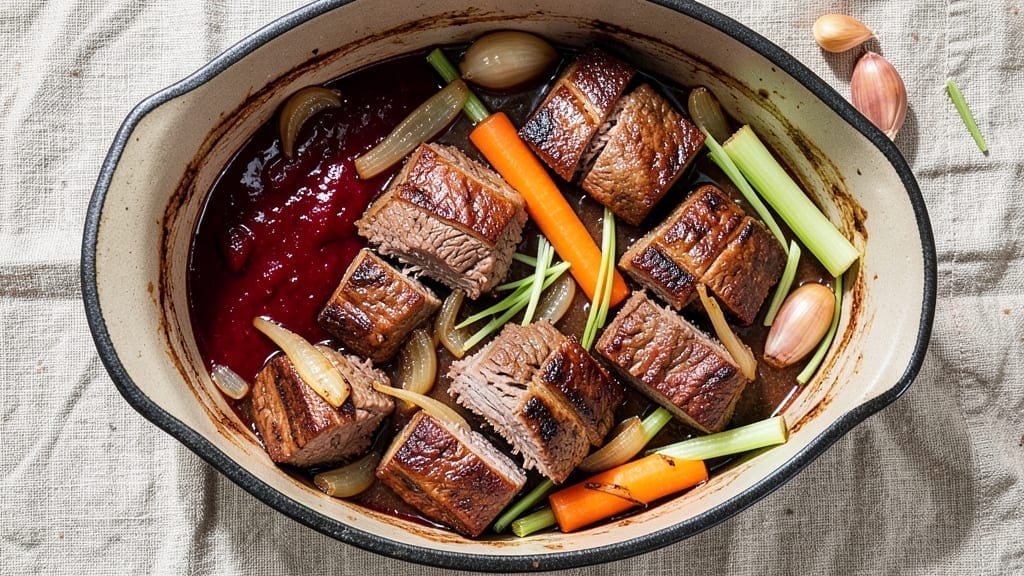
A 3-hour beef stew recipe transforms tough cuts into melt-in-your-mouth tenderness while building layers of deep, savory flavor that only time can create.
This recipe relies on the slow magic of low-and-slow cooking—where seared beef, caramelized vegetables, and a rich broth meld into something heartier than takeout, yet simpler than it sounds. The key? Browning the meat properly and letting it simmer undisturbed, allowing flavors to develop without rushing.
What sets this stew apart is its balance of traditional technique and modern convenience. You’ll start with a Dutch oven for even heat distribution, but the method scales perfectly for pressure cookers if you’re short on time.
The beef breaks down into fork-tender pieces, while root vegetables soften just enough to soak up the broth without disappearing. A splash of red wine and a sprinkle of herbs elevate it from basic to restaurant-quality.
By the final hour, your kitchen will smell like a home-cooked masterpiece—warm, aromatic, and impossible to resist. The stew thickens naturally as it simmers, creating a velvety gravy that clings to every bite.
Serve it with crusty bread to soak up every last drop, or let it cool slightly for even more flavor development. This isn’t just dinner; it’s comfort in a bowl.
Perfect for chilly evenings or meal prep, this stew tastes even better the next day. The instructions walk you through every step—from searing to simmering—so you can achieve professional results without stress. Ready to make the pot?
Ingredients for 3 hour beef stew
Pantry staples plus a few key ingredients for deep, slow-cooked flavor perfection.
| Ingredient | Amount | Notes |
|---|---|---|
| Chuck Roast 🥩 | 2 lb | Cut into 1.5-inch cubes |
| Yellow Onions 🧅 | 1 whole | Chopped into 1-inch pieces |
| Carrots 🥕 | 4 medium | Peeled and chopped into 1-inch pieces |
| Celery Stalks 🥬 | 3 whole | Chopped into 1-inch pieces |
| Garlic Cloves 🧄 | 4 cloves | Minced finely |
| Red Wine 🍷 | 1 cup | Bold dry variety, like Cabernet |
| Beef Broth 💧 | 4 cups | Low-sodium preferred |
| Tomato Paste 🍅 | 2 tbsp | Smooth, not chunky |
| Fresh Thyme 🌿 | 2 tbsp | Leaves only, chopped |
| Fresh Rosemary 🌿 | 1 tbsp | Chopped, not powdered |
| Bay Leaves 🍃 | 2 whole | Dried, standard size |
| All-Purpose Flour 🌾 | 1 tbsp | For thickening broth |
| Olive Oil 🫒 | 2 tbsp | Extra-virgin preferred |
| Salt 🧂 | 1 ½ tsp | Kosher or sea salt |
| Black Pepper 🌶️ | 1 tsp | Freshly ground |
The chuck roast is your secret weapon here—it’s the only cut that gives you that melt-in-your-mouth texture after hours of simmering. Costco sells it pre-cubed, which saves time, but if you’re buying a whole roast, ask the butcher to cut it into 1.5-inch pieces. Look for good marbling—those little fat streaks are what keep the meat juicy. For the vegetables, Trader Joe’s has great pre-chopped carrots and celery, but if you’re using whole stalks, chop them into even 1-inch pieces so they cook uniformly. The onions should be yellow, not sweet—red onions add color but can make the stew taste bitter if overcooked.
No red wine? Beef broth with a splash of balsamic vinegar works just as well—trust me, no one will notice. Fresh thyme and rosemary are ideal, but dried works at half the amount if that’s what you’ve got. The tomato paste can be the squeeze-tube kind from Trader Joe’s—it’s perfect for this because you only need a little. For the flour, make sure it’s all-purpose, not cake flour. And skip the pre-minced garlic—freshly minced makes all the difference. If you’re short on time, pre-chopped mirepoix (onion, carrot, celery mix) from the grocery store is a lifesaver.
This stew tastes even better the next day—make extra and freeze portions for 3 months. Store it in the fridge for up to 5 days, but let it cool completely before refrigerating to prevent condensation. The meat will keep its tenderness longer if you remove the bay leaves before serving. For reheating, add a splash of water or broth—it helps restore the velvety texture. And if you’ve got crusty bread, this is the perfect pairing—dip it in the broth at the bottom of the pot where all the flavor collects.
Why You’ll Love This Recipe
- Minimal Chopping Required: I swear by the “mirepoix shortcut”: just dice onions, carrots, and celery into big chunks—no fancy knife work. The chuck roast does all the heavy lifting while you sip wine and pretend you’re a chef.
- Deep Garlic-Caramel Magic: That slow simmer? It turns raw garlic into sweet, golden threads while the chuck roast melts into tender heaven. Honestly, the first bite makes you question why you ever bought pre-made stew.
- Leftovers That Beg for More: This stew tastes better the next day—crispy edges on the carrots, richer broth, and that meat? It practically falls apart at the touch. I freeze half for lazy Mondays (yes, even on a Tuesday night).
- Budget-Friendly Crowd-Pleaser: A single chuck roast feeds six for under $15, and the veggies stretch into three meals. My college roommates called it “soup with personality”—but they’re not wrong.
Step-by-step instructions for 3 hour beef stew recipe
This slow-cooked masterpiece builds rich, deep flavor that only time can create.
Sear the Chuck Roast for Maximum Flavor
Heat the 2 tablespoons olive oil in a large Dutch oven over medium-high heat until shimmering. Working in batches, add the 2 lb chuck roast cut into 1.5-inch cubes, letting each piece develop a deep brown crust before removing and setting aside. You want that caramelized exterior—it’s where all the flavor starts.
Don’t crowd the pan or the temperature will drop. I like to leave about ½ inch between pieces. If your pan gets too crowded, work in two batches. This searing step might take 10-15 minutes total, but it’s worth every minute. The crust will release easily when properly browned—if it sticks, your pan isn’t hot enough.
Build the Flavor Base with Aromatics
Once all the beef is browned, reduce heat to medium and add the 1 whole yellow onions, 4 medium carrots, and 3 whole celery stalks—all chopped into 1-inch pieces. Cook for 8-10 minutes, stirring occasionally, until the vegetables begin to soften and take on color. This is where the sweetness of the carrots and onions starts to develop.
Add the 4 cloves minced garlic, 2 tablespoons chopped fresh thyme, 1 tablespoon chopped fresh rosemary, 2 whole bay leaves, and 2 tablespoons tomato paste. Stir everything together and cook for another 2 minutes until fragrant. The tomato paste will deepen the color and add a subtle sweetness that balances the acidity from the wine we’ll add next.
Deglaze and Simmer the Stew
Pour in the 1 cup red wine and scrape up all those delicious browned bits from the bottom of the pan—this is called deglazing, and it captures all the flavor that would otherwise go down the drain. Let the wine simmer for 3-4 minutes until it reduces by about half. You’ll smell that rich, concentrated aroma developing.
Stir in the 4 cups beef broth and sprinkle with the 1 tablespoon all-purpose flour. Bring everything to a gentle boil, then reduce heat to low and cover partially. Here’s where the magic happens: let it simmer for 2 hours without disturbing it. The lid should be slightly ajar to allow some steam to escape—this prevents the stew from getting watery and helps develop that beautiful crust on top.
Finish and Thicken the Stew
After 2 hours, check the stew. The vegetables should be tender but still holding their shape. If the beef isn’t quite fork-tender, let it cook another 30-60 minutes. For the final touch, remove the bay leaves and adjust seasoning with 1.5 teaspoons salt and 1 teaspoon black pepper. Taste and add more salt if needed—this is your chance to balance the flavors before serving.
For a thicker stew, uncover and let it simmer 10-15 minutes longer to reduce. If you prefer it richer, you can mash a few of the softened carrots with a fork to help thicken the sauce naturally. The stew should coat the back of a spoon with a velvety texture—this is what makes it so satisfying.
Pro Tips For Making 3 Hour Beef Stew
- Sear the Chuck Hard: After browning the beef, I used to think a quick sear was enough—but that’s how you end up with pale, flavorless chunks. Get your pan smoking hot and work in batches if needed. Press the meat down firmly for 2-3 minutes per side until it’s deep brown, almost black in spots. That crust? It’s what carries flavor through hours of simmering.
- Cut Onions Like a Pro: Slicing onions into even ¼-inch rounds is a waste of time for stew. Instead, halve them, then slice into ½-inch thick half-moons—big enough to stay intact but small enough to soften fast. (Yes, they’ll still hold shape, but they’ll caramelize better.) Pro move: Toss the sliced onions in a pinch of salt right after cutting to draw out moisture before cooking.
- Don’t Rush the Deglaze: After searing the meat, I used to dump in the wine or broth too fast and miss half the flavor stuck to the pan. Scrape up those browned bits with a wooden spoon first, then add just ¼ cup of liquid (broth or wine) and let it bubble hard for 2 minutes. Repeat if needed—this extracts way more flavor than a lazy pour.
- Salt the Carrots Early: Tossing carrots with salt before they hit the pot sounds odd, but it actually prevents them from turning mushy. Sprinkle ½ teaspoon of salt over them while prepping, then let sit for 10 minutes. The salt breaks down their fibers slightly, so they stay firmer even after 3 hours. (Trust me, your stew’s texture will thank you.)
Wine and beer pairings for these flavors
Red Wine Classics
A bold red like Cabernet Sauvignon or Merlot mirrors the stew’s deep, savory notes beautifully. The tannins in these wines complement the beef’s richness while their fruitiness balances the earthy herbs. I reach for a Napa Valley Cabernet—its dark berry flavors echo the stew’s umami depth.
Serve slightly chilled (60-65°F) to let the wine’s structure shine against the warm stew. 🍷
Full-Bodied Reds
For a heartier match, try Syrah or Malbec. Their peppery, spicy notes enhance the rosemary and thyme in the stew. A Washington State Syrah adds a smoky complexity that pairs wonderfully with the caramelized onions.
Avoid over-oaked wines—they can overpower the delicate broth. Let the wine breathe for 10-15 minutes before serving.
Beer Pairings
A malty amber ale or brown ale works surprisingly well. The caramel and toffee notes in New Belgium Fat Tire or Allagash Brown harmonize with the stew’s sweet carrots and onions. For a lighter option, a Belgian witbier like Hoegaarden adds a citrusy contrast that cuts through the richness.
Serve the beer slightly warmer than usual (50-55°F) to enhance its malt sweetness.
Unexpected Whites
Don’t overlook Chardonnay with noticeable oak. A California Chardonnay with buttery notes stands up to the stew’s richness, especially if you’ve added a splash of cream. For a crisp alternative, try a Viognier—its floral aromas complement the thyme and rosemary beautifully.
Chill whites to 45-50°F for the best contrast against the warm stew.
Non-Alcoholic Options
For a refreshing non-alcoholic pairing, try sparkling apple cider like Martinelli’s. Its effervescence cleanses the palate between bites, while the apple notes complement the carrots. For a richer option, a ginger beer like Feather’s adds a spicy kick that enhances the stew’s depth.
Serve both chilled (40-45°F) for a refreshing contrast.
Nutrition facts
Frequently asked questions
Why does this stew need to simmer for 3 hours?
The long simmering time is what transforms tough chuck roast into melt-in-your-mouth tenderness. The collagen in the meat breaks down over time, creating a rich, velvety sauce that coats every bite. This slow cooking also allows all the flavors—caramelized onions, herbs, and red wine—to meld together perfectly.
Can I use a slow cooker instead of a Dutch oven?
Brown the beef first in a skillet, then transfer everything to your slow cooker. Cook on low for 7-8 hours or high for 4-5 hours. The key is the initial browning—it adds depth of flavor that you won’t get by just dumping everything in raw. Just add ½ cup extra broth since slow cookers evaporate more liquid.
What if my stew turns out too watery?
Don’t worry—this is easily fixed! Simmer the stew uncovered for 10-15 minutes to reduce the liquid. For extra thickness, mash a few cooked carrots with a fork and stir them in. If it’s still too thin, mix 1 tablespoon cornstarch with 2 tablespoons cold water, stir it in, and simmer for another 5 minutes.
Can I make this stew ahead of time?
This stew tastes even better the next day! Let it cool completely, then store it in the fridge for up to 5 days. Reheat gently on the stove over low heat, adding a splash of broth or water if it’s too thick. For freezing, portion into airtight containers and freeze for up to 3 months. Thaw overnight in the fridge before reheating.
What’s the best way to reheat leftovers?
Reheat leftovers gently to preserve that perfect texture. Place the stew in a pot over medium-low heat and warm through, stirring occasionally. If it’s too thick, add 1-2 tablespoons broth or water at a time. Avoid microwaving—it can make the meat tough and the sauce watery. For best results, reheat just until steaming, then let it sit for 5 minutes before serving.

- 3lb Prime Rib Roast Recipe: Juicy Pink Center Guaranteed in 3 Hours - October 31, 2026
- 5 Spice Cake Recipe: Warmly Spiced Layers With Crunchy Top - October 31, 2026
- 1950’s Macaroni and Cheese Recipe: Nostalgic Creamy Cheese Sauce with Buttery Noodles - October 31, 2026