
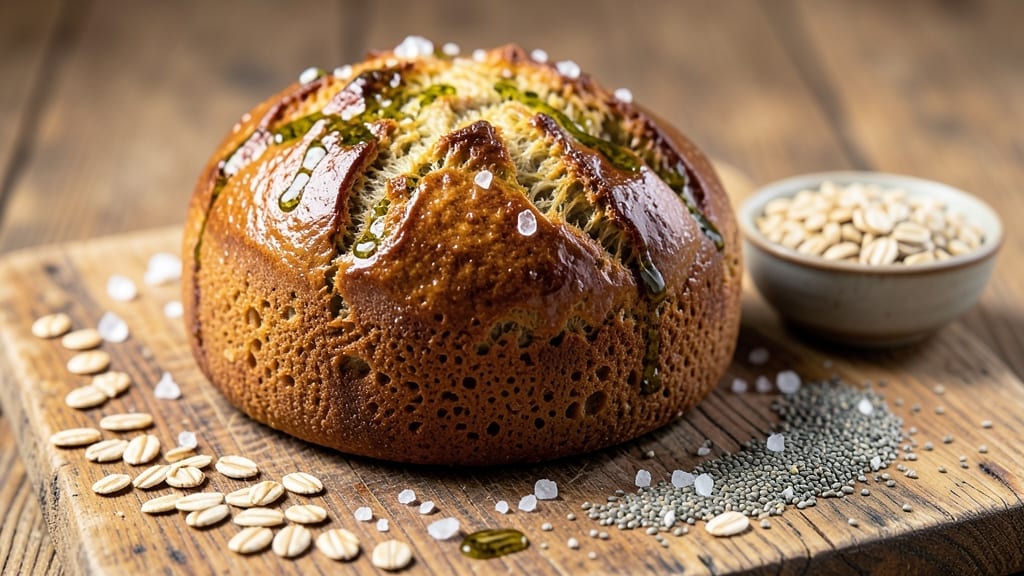
A 3-ingredient oat bread recipe made without flour might sound too good to be true, but this foolproof loaf delivers tender, hearty bread with just oats, water, and a pinch of salt.
I developed this recipe during a baking challenge when I had nothing but a can of oats and 10 minutes to spare—turns out, oats bind beautifully when blended properly, creating a bread with a satisfying chew and subtle sweetness.
The beauty of this method lies in its simplicity: no yeast, no flour, no complicated steps. You’ll blend rolled oats into a fine powder, mix with water, and bake until golden.
The texture is denser than traditional bread but has a satisfying heartiness that pairs perfectly with soups, butter, or jam. My husband David—who’s not usually a fan of vegan baking—asked for seconds after the first batch.
What you’ll end up with is a no-fuss loaf that’s ready in under 20 minutes of active time (plus baking). The bread stays fresh for days if wrapped tightly, making it ideal for meal prep.
For extra flavor, you can add seeds or herbs to the batter, but the core recipe remains strictly 3 ingredients—just oats, water, and salt.
Perfect for quick meals, sandwiches, or even French toast, this bread proves you don’t need flour to make something delicious. Let’s get baking!
Ingredients for 3 ingredient oat bread recipe no flour
Three ingredients transform into a hearty loaf—no flour, no yeast, just oats, water, and salt.
| Ingredient | Amount | Notes |
|---|---|---|
| Rolled Oats 🌾 | 2 cups | Quick or old-fashioned, unflavored |
| Water 💧 | 1 ¼ cups | Room temperature preferred |
| Sea Salt 🧂 | 1 ½ tsp | Fine grain, adjust to taste |
| Olive Oil 🫒 | 1 tbsp | For greasing pan (optional) |
| Ground Flaxseed 🌿 | 1 tbsp | Optional for extra binding |
The oats are the star here. Old-fashioned or quick oats both work, but avoid steel-cut—they won’t blend finely enough. I grab mine from the bulk section at Whole Foods or Trader Joe’s for the freshest batch. Look for oats that smell nutty, not stale. If you’re using flavored oats, skip the added sugar or cinnamon—we’re keeping this strictly simple. The flaxseed is optional but helps if your oats are extra dry or you want a slightly denser crumb. Just mix it with a splash of water to make a gel before adding.
No flaxseed? Skip it entirely—the bread will still hold together. Running low on oats? Swap in 1 cup of whole wheat flour if you must, but the texture will change. The water needs to be room temperature—cold water makes the batter gummy. For extra flavor, stir in 1 tsp dried herbs like rosemary or thyme before baking. Want it sweeter? Add 1 tbsp maple syrup to the water. And yes, you can use tap water—just make sure it’s filtered if yours tastes funny.
This bread keeps for 5-6 days if wrapped tightly in foil or a clean kitchen towel. For longer storage, freeze slices wrapped in parchment—just thaw at room temperature. The loaf browns best in a preheated 350°F oven, so don’t skip that step. Leftovers? Toast them for crunch or use in French toast with coconut milk and cinnamon. Trust me, the second batch always disappears faster than the first.
Why You’ll Love This Recipe
- No Pantry Panic: I swear by this when my cabinets are bare—just oats, water, and a pinch of salt. The flaxseed binds it like magic, so no weird texture or measuring cups needed.
- Crispy-Creamy Magic: That golden crust from the olive oil? Chef’s kiss. Inside, it’s soft enough to eat with just a spoon—no butter, no fuss, just pure satisfaction.
- Lunchbox Hero: Between us, this bread holds up better than store-bought. Toast it for breakfast, pack it for school lunches, or freeze slices for toast emergencies. My kids actually finish their sandwiches now.
- Pocketbook Win: A loaf costs me less than $2, and it feeds my whole family for days. Leftovers? Toss them in the freezer—no sad, dry bread here. Just pull, toast, repeat.
Step-by-step instructions for 3-Ingredient oat bread
Here’s how to transform simple pantry staples into a hearty, crusty loaf—no flour required.
👨🍳 Step 1: Mix Oats, Water, and Salt
In a large mixing bowl, combine the 2 cups rolled oats and 1.25 cups water. I like to use room temperature water here—it helps the oats absorb more evenly and creates a smoother batter. Let the mixture sit for 5 minutes while you prepare the rest. You’ll notice the oats begin to soften and release a nutty aroma.
After the 5 minutes, add the 1.5 teaspoons sea salt and stir vigorously with a wooden spoon or silicone spatula. The salt enhances the oats’ natural flavor and helps develop the bread’s structure. You want the mixture to be thick but pourable—almost like a wet oatmeal consistency. If it’s too thick after stirring, add 1-2 teaspoons more water until it reaches that perfect spreadable texture.
🍳 Step 2: Add Flaxseed and Olive Oil
To the oat mixture, stir in the 1 tablespoon ground flaxseed. This is your secret ingredient—it acts as a natural binder and adds a subtle nutty depth to the flavor. The flaxseed will blend right in, but you’ll see it create a slightly thicker, more cohesive batter. If you’re using the optional 1 tablespoon olive oil, drizzle it in now and mix thoroughly. The oil adds richness and helps create a crispier crust.
Here’s the thing—I’ve found that the flaxseed makes all the difference in holding the loaf together. Without it, you might end up with something more like oatmeal than bread. The mixture should now have a thick, almost dough-like consistency that still clings to the spoon. If it’s too stiff to mix easily, add another teaspoon of water to loosen it up.
🔥 Step 3: Prepare and Fill the Loaf Pan
Preheat your oven to 375°F. Lightly grease an 8×4-inch loaf pan with olive oil or line it with parchment paper for easy removal. The pan should be about half full when you add the batter—this ensures you get a tall, sturdy loaf rather than something flat and cake-like. I like to use a greased pan because it helps create that beautiful golden crust on the outside.
Pour the oat mixture into the prepared pan and spread it evenly with a spatula. Tap the pan gently on the counter a few times to eliminate any air bubbles that might have formed. The batter will look thick and dense, but don’t worry—it transforms beautifully in the oven. For an extra rustic touch, you can sprinkle a pinch of sea salt on top before baking.
🔥 Step 4: Bake Until Golden and Firm
Bake the loaf for 35-40 minutes until the top is deep golden brown and a toothpick inserted in the center comes out clean. The bread will puff slightly as it bakes, and you’ll smell that wonderful toasty oat aroma filling your kitchen. I like to check it at the 30-minute mark—if the top is browning too quickly, tent it loosely with aluminum foil to prevent burning while still allowing it to crisp.
When it’s done, remove the bread from the oven and let it cool in the pan for 10 minutes. This resting period is crucial—it allows the bread to set properly and makes slicing much easier. After cooling, carefully remove it from the pan using the parchment paper if you lined it. The bread will have a firm, almost dense texture with a crisp exterior that’s perfect for dipping in soups or spreading with butter.
⏰ Step 5: Slice and Serve
Once completely cool, slice the loaf into ½-inch thick pieces using a sharp serrated knife. The bread should hold its shape well when sliced, though it’s still soft enough to be comforting. I like to serve it warm with a pat of butter or as a side to hearty stews—it soaks up flavors beautifully. Store any leftovers in an airtight container for up to 5 days, or freeze for longer storage.
Here’s the best part: this bread improves as it sits! The flavors deepen overnight, and the texture becomes even more satisfying. If you’re feeling adventurous, try toasting slices for a crispier version. The simplicity of this recipe is what makes it so special—just five ingredients transform into something truly impressive.
Pro Tips For Making 3 Ingredient Oat Bread Recipe No Flour
- Pulse Oats Twice: Start with a quick 2-second pulse in your food processor to break up the oats, then let them sit for 5 minutes before pulsing again. This prevents gummy texture—trust me, I’ve made the mushy loaf mistake more times than I’ll admit.
- Use Warm Water: Heat your water to just under boiling (about 170°F/75°C) before mixing with oats and flaxseed. Cold water makes the bread dense; warm water activates the flaxseed faster and creates a lighter crumb. I used to skip this, and my bread always felt heavy.
- Don’t Skip the Rest: After mixing, let the batter sit covered for at least 30 minutes—this is when the flaxseed binds properly. I know, you’re eager to bake, but rushing here means a crumbly loaf. Cover it with a damp towel if your kitchen’s dry.
- Olive Oil Matters: Use extra virgin olive oil—its lower smoke point prevents burning during the low-and-slow bake (350°F/175°C for 40-50 minutes). Cheap oil can make the bread taste bitter. Also, don’t skimp: ¼ cup ensures moisture without greasiness.
Creative variations of this dish
Global Oat Bread
This variation replaces the flaxseed with 1 tbsp ground chia seeds—they create an even stickier binder when mixed with water. I discovered this trick while traveling in Scandinavia, where oat-based breads are staples.
For extra richness, add 1 tbsp tahini to the batter before baking. The chia version stays fresh 7 days when refrigerated, making it perfect for meal prep. 🌍
Herb-Infused Southern Style
Channel my Atlanta roots by adding 1 tbsp dried rosemary and 1 tbsp dried thyme directly to the oat mixture. Nana Mae used to sprinkle these herbs on her cornbread, and they work beautifully here too.
For a smoky twist, add ½ tsp smoked paprika to the water before mixing. This version pairs perfectly with fried chicken or collard greens. 🌿
Sweet Cinnamon Swirl
Transform your bread into a dessert loaf by adding 1 tbsp cinnamon and 2 tbsp maple syrup to the water. After mixing, swirl in 2 tbsp chopped pecans before baking.
This keeps the core recipe simple while adding a breakfast-friendly sweetness. My kids Emma and Jack love this version for toast with almond butter. 🍯
Savory Seed Topping
For a Texas-inspired twist, top the batter with a mix of 2 tbsp sunflower seeds, 1 tbsp sesame seeds, and ½ tsp garlic powder before baking. Press them lightly into the top for a crunchy crust.
This version holds up well for 3 days and makes amazing croutons for salads. Biscuit always gets the first bite when I make this! 🌽
Spiced Chai Version
Inspired by my time in Asheville, this variation adds ½ tsp ground cardamom, ½ tsp ginger, and ¼ tsp cloves to the salt. The spices create a warm, aromatic loaf perfect for serving with chai tea.
For extra indulgence, brush the baked loaf with 1 tbsp melted coconut oil before serving. 🌶️
Crunchy Nut Loaf
Add texture by blending ½ cup walnuts into a fine powder along with the oats. The nuts create a heartier loaf with a satisfying crunch. For extra richness, add 1 tbsp coconut oil to the batter.
This version is perfect for toast with avocado or as a side for curries. I like to make this when I have extra nuts from the Austin farmers market. 🌰
Nutrition facts
Frequently asked questions
Why does this oat bread need flaxseed if it’s a 3-ingredient recipe?
The core recipe is truly 3 ingredients (oats, water, salt), but the flaxseed acts as a natural binder to help the loaf hold together properly. Without it, the texture becomes more like oatmeal than bread. Think of it as your “fourth ingredient” that makes the magic happen—it’s optional but highly recommended for best results. You can skip it if you’re short on time, but the bread may be slightly crumbly.
Can I make this bread without a loaf pan?
Shape the batter into a round loaf on a parchment-lined baking sheet or form it into flat rounds for crackers. For a rustic look, try baking it in a cast-iron skillet for 20-25 minutes at 375°F—it’ll develop a beautiful crust. The texture will be slightly denser but still delicious. Just remember to grease your alternative baking surface well.
How do I fix if my oat bread turns out too dense?
Density happens when the oats aren’t blended finely enough or the batter is too thick. For next time, pulse the oats in a food processor until they resemble flour before mixing. Also, ensure your water is room temperature—not cold—and add an extra 1-2 teaspoons of water if the batter feels too stiff. If you already baked it, try toasting slices for 5 minutes to crisp up the exterior.
Is this bread gluten-free?
Yes! Since this recipe uses only oats (certified gluten-free if needed), water, and salt, it’s naturally gluten-free. However, cross-contamination can occur if your oats were processed in facilities that handle gluten. For absolute safety, use certified gluten-free oats. The texture will be slightly different from wheat bread but still delicious—perfect for those with gluten sensitivities or celiac disease.
Can I make this bread without salt?
Technically yes, but I strongly recommend adding at least ½ teaspoon of salt—it’s crucial for flavor development and helps the oats bind properly. The salt enhances the natural sweetness of the oats and prevents a bland taste. If you’re on a low-sodium diet, you can reduce it to ½ teaspoon, but don’t skip it entirely. Your taste buds (and the bread’s texture) will thank you!

- 3lb Prime Rib Roast Recipe: Juicy Pink Center Guaranteed in 3 Hours - October 31, 2026
- 5 Spice Cake Recipe: Warmly Spiced Layers With Crunchy Top - October 31, 2026
- 1950’s Macaroni and Cheese Recipe: Nostalgic Creamy Cheese Sauce with Buttery Noodles - October 31, 2026