
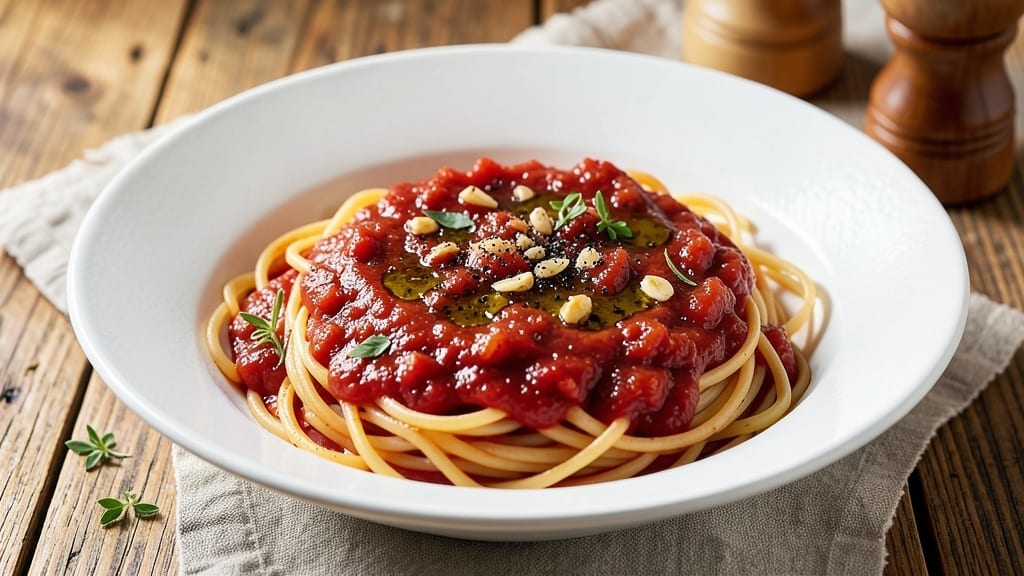
This 3-ingredient spaghetti sauce recipe delivers restaurant-quality pasta magic with just canned tomatoes, garlic, and olive oil—no fancy ingredients, no complicated steps. The secret lies in simmering those three components until they transform into a rich, flavorful sauce that clings perfectly to al dente noodles.
I developed this recipe during a particularly busy week when I needed dinner on the table in 20 minutes without sacrificing taste, and it’s been my go-to ever since.
The beauty of this sauce is its simplicity: no blending, no peeling, and no special techniques required. Just chop fresh garlic, open a can of crushed tomatoes, and let the flavors meld together over medium heat.
The result is a sauce that’s deeply savory with just the right balance of acidity and sweetness—no overpowering spices or complicated flavor profiles. It’s the kind of dish that proves good food doesn’t need to be complicated.
What you’ll end up with is a perfect weeknight dinner: tender spaghetti tossed in a velvety tomato sauce that’s rich enough to satisfy but simple enough to make any night feel special.
The sauce develops a beautiful depth of flavor as it simmers, creating a texture that’s neither too watery nor too thick. This is comfort food at its finest—warm, hearty, and ready in less time than it takes to order takeout.
Serve with a sprinkle of fresh basil or grated parmesan for extra brightness, and pair with garlic bread or a simple green salad to round out the meal. The best part? This recipe scales effortlessly—double the sauce for leftovers, or keep it simple for two. Let’s get cooking!
Ingredients for 3 ingredient spaghetti sauce
Three ingredients transform into restaurant-quality pasta sauce in minutes—no fancy skills needed.
| Ingredient | Amount | Notes |
|---|---|---|
| Crushed Tomatoes (46 oz can) 🍅 | 1 can | San Marzano preferred for sweetness |
| Garlic Cloves 🧄 | 4 cloves | Fresh, minced for bold flavor |
| Extra-Virgin Olive Oil 🫒 | ½ cup | High quality, fruity variety |
| Spaghetti 🍝 | 12 oz | Al dente preferred, dried |
| Salt 🧂 | 1 tsp | Kosher or sea salt |
| Black Pepper 🌶️ | ¼ tsp | Freshly ground preferred |
| Fresh Basil Leaves 🌿 | ¼ cup | Chopped, for garnish (optional) |
| Parmesan Cheese 🧀 | ¼ cup | Freshly grated from block |
The tomatoes are everything here. San Marzano is my go-to—sweeter and less acidic than regular canned tomatoes, which means less sugar needed to balance. If you can’t find it, Muir Glen is the next best thing. Grab the crushed variety for convenience (no draining needed), but whole peeled tomatoes work too—just crush them by hand. The garlic? Fresh is non-negotiable—jarred minced garlic has a weird aftertaste. Look for plump, firm cloves at the store, and don’t peel them until you’re ready to cook. Olive oil should be extra-virgin, the kind you’d drizzle on bread—none of that cheap cooking oil. Trader Joe’s or Whole Foods have great options, but even your basic grocery store usually carries a decent one.
No San Marzano? Any good-quality canned tomatoes will work—just add a pinch of sugar to balance the acidity. Garlic powder in a pinch? One-third the amount of fresh, but it won’t be the same. The olive oil can be light or extra-virgin, but avoid vegetable oil—it lacks the fruity depth. For the pasta, any dried spaghetti works, but De Cecco or Barilla are my favorites. Want to skip the optional garnishes? No problem—just enjoy the sauce as-is. The sauce thickens as it cooks, so if it seems too thin after simmering, let it reduce longer—don’t add flour or cornstarch. And if you’re feeling fancy, toasted breadcrumbs make an amazing topping.
This sauce tastes even better the next day once all the flavors meld together. Store leftovers in an airtight container in the fridge for up to 5 days. For freezing, portion into 1-cup servings—it reheats perfectly without getting watery. I always make extra because it disappears fast. The sauce reheats beautifully on the stove with a splash of water or pasta water to loosen it up. And if you’re serving it immediately? Fresh basil and grated Parmesan on top take it from good to amazing—worth the extra 30 seconds.
Why You’ll Love This Recipe
- Pantry Magic: This sauce lives in my cupboard—no shopping lists, no forgotten spices. One can of tomatoes, a few garlic cloves, and olive oil? That’s it. When I forget to meal prep, this is my backup plan.
- Garlic Kiss: That first bite of al dente spaghetti coated in sauce with roasted garlic cloves? It’s the kind of flavor that makes you pause mid-chew. The olive oil ties it all together—rich but never heavy.
- Leftovers That Last: Make a double batch and freeze half. My freezer’s always stocked with this sauce because it reheats like a dream—no soggy noodles, just that same bold, simple taste days later.
- Budget Night Hero: I swear, this is my go-to when I’m broke but still want to eat well. A single can of tomatoes stretches across three meals, and the garlic adds depth without costing a fortune. Dinner solved.
Step-by-step instructions for 3-Ingredient spaghetti sauce
Here’s how to transform pantry staples into restaurant-quality sauce in minutes.
Bloom the Garlic in Olive Oil
Heat the 0.5 cup extra-virgin olive oil in a large saucepan over medium heat until shimmering but not smoking. Add the 4 minced garlic cloves and cook for 1-2 minutes until fragrant and just beginning to turn golden. This step builds flavor – don’t let it burn!
I always use fresh garlic here because it releases more aroma than powdered. If you prefer milder flavor, reduce to 3 cloves. Watch the pan closely – garlic burns quickly and turns bitter. Once golden, you’re ready for the tomatoes.
Simmer the Tomato Base
Pour in the entire 46 oz can of crushed tomatoes and add 1 teaspoon salt and ¼ teaspoon black pepper. Stir well to combine, then increase heat to medium-high until the mixture reaches a gentle boil. Once boiling, reduce to low heat and let it simmer uncovered for 15-20 minutes.
The sauce will thicken as it cooks – you want it to reduce until it coats the back of a spoon. Stir occasionally to prevent sticking. If the sauce looks too thick, add ¼ cup water to loosen it. The acidity in the tomatoes will mellow as it cooks, creating a balanced flavor.
Cook the Spaghetti Al Dente
While the sauce simmers, bring a large pot of water to a rolling boil. Add 12 oz spaghetti and 1 teaspoon salt (yes, another teaspoon – pasta water needs extra salt). Cook until 1 minute before the package’s recommended al dente time. Reserve ½ cup pasta water before draining.
Al dente pasta is crucial – it should have a slight bite in the center. Overcooked pasta becomes mushy when mixed with sauce. The reserved pasta water is liquid gold – it helps emulsify the sauce for a silky texture. Drain the pasta directly into the saucepan with the sauce.
Finish and Serve
Toss the drained spaghetti into the saucepan with the simmering tomato mixture. Add ¼ cup freshly grated Parmesan cheese and stir until melted and combined. If the sauce is too thick, add 2-3 tablespoons of the reserved pasta water to reach your desired consistency.
For that fresh finish, stir in ¼ cup chopped fresh basil leaves just before serving. The basil should be added at the end to preserve its vibrant color and fresh flavor. Taste and adjust seasoning – you might need a pinch more salt or black pepper. Serve immediately with extra Parmesan on the side.
Pro Tips For Making 3 Ingredient Spaghetti Sauce
- Sear the Garlic: Toss in whole garlic cloves unpeeled with the olive oil first—let them sizzle until golden brown (about 2 minutes) before adding tomatoes. I used to skip this, and the sauce always tasted flat; now it’s got that deep, nutty punch that makes the whole dish sing.
- Simmer Low and Slow: After adding the crushed tomatoes, drop the heat to lowest possible and let it bubble gently for at least 30 minutes. I learned this the hard way—rushing it leaves a thin, watery sauce. The longer it simmers, the richer and more concentrated the flavor becomes.
- Salt the Tomatoes: Add a generous pinch of salt (about 1 teaspoon) directly to the crushed tomatoes before cooking. The canned tomatoes are usually bland, and this step makes a real difference—no need to over-salt later. (Yes, even if the label says it’s “low-sodium.”)
- Use the Garlic Oil: After searing the garlic, strain out the cloves (they’ll burn) but save the golden oil from the pan—it’s packed with flavor. Swirl it back into the sauce at the end for extra depth. (I know it sounds like a hassle, but it’s worth it.)
Wine and beer pairings for this dish
Italian White Wine Pairings
This simple tomato sauce pairs beautifully with crisp Italian whites that complement its bright acidity. I always reach for a Pinot Grigio from Alto Adige—its citrus notes and mineral finish cut through the richness of the olive oil beautifully.
For something with more body, try a Vermentino from Sardinia, which offers a touch of saltiness that enhances the garlic’s sweetness. 🍷
Avoid heavy, oaked whites like Chardonnay—they’ll clash with the sauce’s lightness. Instead, opt for wines with 12-13% alcohol to balance the dish without overpowering it. If you’re serving with garlic bread, the wine’s crispness will cleanse your palate between bites.
Light Red Wine Options
For red wine lovers, a Chianti or Sangiovese works surprisingly well despite the sauce’s simplicity. Look for one with moderate tannins and bright acidity—these wines mirror the sauce’s natural flavors. I prefer Chianti Classico for its earthy notes that pair with the garlic’s depth. 🍷
Serve the wine slightly chilled (around 55°F) to enhance its freshness against the warm pasta. A 2018-2020 vintage offers great value without being too heavy. Avoid bold reds like Cabernet Sauvignon—they’ll dominate the dish.
Craft Beer Pairings
For beer enthusiasts, a Belgian Witbier like Hoegaarden is my go-to—its coriander and citrus notes contrast perfectly with the garlic and tomato. The effervescence also helps cut through the richness of the olive oil. 🍺
Alternatively, try a light Italian lager like Peroni or Moretti. Their crisp, clean profiles won’t compete with the sauce but will complement its simplicity. Avoid hoppy IPAs or malty stouts—they’ll overpower the dish.
Non-Alcoholic Options
For a refreshing non-alcoholic pairing, serve sparkling water with lemon—the bubbles and citrus enhance the sauce’s brightness. I also love Italian blood orange soda (like San Pellegrino Aranciata Rossa) for a sweet-tart contrast. 🍊
Herbal teas like peppermint or chamomile (chilled) add a soothing contrast to the warm pasta. For something more substantial, try a tomato juice cocktail with a splash of vodka (if you want to keep it alcoholic).
Nutrition facts
Frequently asked questions
Can I use fresh tomatoes instead of canned?
Fresh tomatoes work but require extra prep. Use about 1.5 lbs of ripe tomatoes (peeled, seeded, and chopped) to match the volume of a 46 oz can. Simmer them for 25-30 minutes to break down their texture. For best results, add 1 teaspoon sugar to balance acidity and 1 teaspoon balsamic vinegar to enhance depth.
What if my sauce is too thin or too thick?
For thin sauce, simmer uncovered for 5-10 more minutes to reduce. If it’s too thick, add 2-3 tablespoons of reserved pasta water or water while stirring. The sauce should coat the back of a spoon but remain smooth—never add flour or cornstarch, which can make it gummy.
Can I make this sauce ahead of time?
This sauce tastes even better the next day. Store in an airtight container in the fridge for up to 5 days. For freezing, portion into 1-cup servings—thaw overnight in the fridge. Reheat gently on the stove with a splash of water to restore texture. The flavors meld beautifully overnight!
What other pasta shapes work with this sauce?
While spaghetti is classic, this sauce works perfectly with linguine, fettuccine, or penne. For heartier options, try rigatoni or farfalle. Just adjust cooking times—thicker pasta shapes like penne may need 1-2 extra minutes in boiling water. The sauce’s simplicity makes it versatile for any shape!
Why does my garlic taste bitter?
Bitterness means your garlic burned! Fresh garlic should cook for just 1-2 minutes until golden—no longer. For milder flavor, reduce to 3 cloves or use jarred minced garlic (though fresh is always better). If you miss the burn, stir in ½ teaspoon sugar to balance the bitterness in the sauce.

- 3lb Prime Rib Roast Recipe: Juicy Pink Center Guaranteed in 3 Hours - October 31, 2026
- 5 Spice Cake Recipe: Warmly Spiced Layers With Crunchy Top - October 31, 2026
- 1950’s Macaroni and Cheese Recipe: Nostalgic Creamy Cheese Sauce with Buttery Noodles - October 31, 2026