
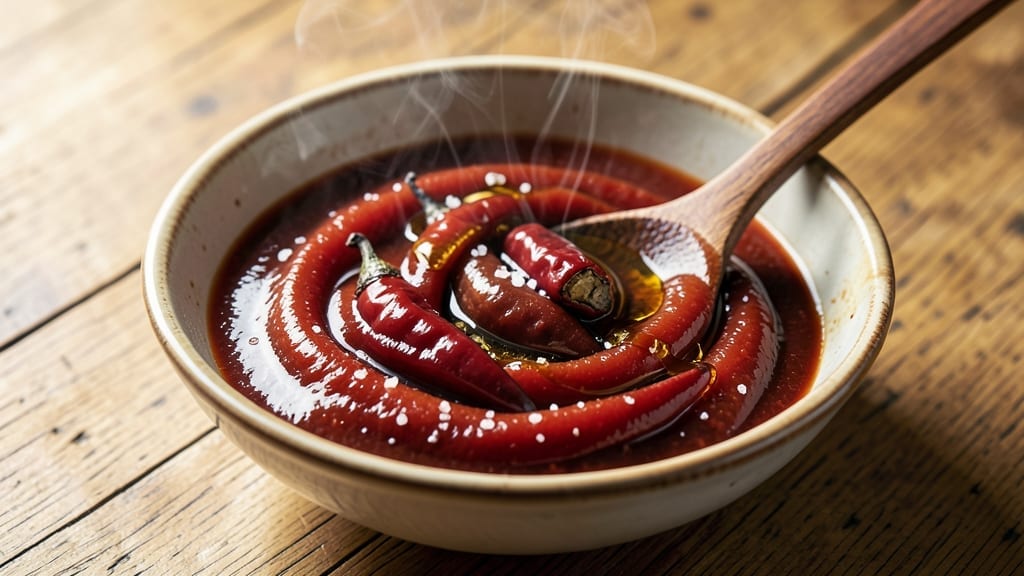
This 303 sauce recipe delivers the smoky, tangy depth that makes it a barbecue staple—perfect for glazing meats, dipping wings, or elevating tacos. The secret lies in balancing chipotle heat, tomato richness, and vinegar brightness, all simmered into a velvety consistency that clings beautifully.
I’ve refined this over years of testing, ensuring every batch achieves that signature balance without overpowering the dish.
The foundation starts with a smoky chipotle base—adjust the peppers to control heat—then builds layers through slow simmering with vinegar, sugar, and spices. A splash of Worcestershire adds umami depth, while a touch of ketchup (if using) rounds out the texture.
The sauce thickens naturally as it reduces, creating a glossy finish that’s both restaurant-quality and foolproof at home.
What you’ll end up with is a versatile, bold sauce that’s ready in under 30 minutes and keeps well for weeks in the fridge. It’s the kind of condiment that transforms ordinary meals into standout dishes—think crispy pork shoulders, smoky wings, or even drizzled over grilled vegetables.
The best part? You can tailor it to your taste, from extra-spicy to sweetened for a dessert glaze.
For those who love customization, try swapping in extra garlic for depth or a dash of cinnamon for warmth. Store it in an airtight container, and you’ll have a pantry staple that’s always ready to elevate your cooking. Let’s get started on this game-changing sauce.
Ingredients for 303 sauce
Smoky, tangy, and perfectly balanced—these ingredients craft the iconic 303 sauce you’ll crave for everything from wings to tacos.
| Ingredient | Amount | Notes |
|---|---|---|
| Canned Chipotle Peppers in Adobo Sauce 🌶️ | 2 whole | With sauce, minced finely |
| Tomato Paste 🍅 | ½ cup | Squeeze tube preferred |
| Apple Cider Vinegar 🍏 | ½ cup | For tangy brightness |
| Granulated Sugar 🍚 | ¼ cup | Light brown preferred |
| Worcestershire Sauce 🥄 | 2 tbsp | Vegan version if needed |
| Ketchup 🍅 | 2 tbsp | Optional for texture |
| Garlic Cloves 🧄 | 4 cloves | Minced, fresh preferred |
| Ground Cumin 🌿 | 1 tsp | Toasted for depth |
| Ground Cinnamon 🌳 | ½ tsp | For subtle warmth |
| Salt 🧂 | 1 tsp | Diamond Crystal preferred |
| Black Pepper 🌶️ | ½ tsp | Freshly ground |
| Water 💧 | ½ cup | For thinning if needed |
The chipotle peppers are non-negotiable here. Look for canned in adobo sauce—the sauce adds depth that dried peppers can’t match. I always grab Hatch brand from the Latin market if I can, but the regular grocery store stuff works fine. Toast the peppers first for 30 seconds in a dry pan—this deepens the smokiness. The tomato paste? Squeeze tubes are a game-changer—no waste, and they keep for months. For the vinegar, apple cider gives that signature tang, but white vinegar works in a pinch if you’re in a hurry.
No chipotle peppers? Substitute smoked paprika plus a pinch of cayenne—it won’t be identical, but it’ll get you close. The ketchup is optional but worth it for that silky texture. Heinz or Hunt’s are fine, but if you’re feeling fancy, grab a small can of tomato paste and use that instead. The Worcestershire sauce can be tricky—Lea & Perrins is the classic choice, but vegan versions like Annie’s work too. For the sugar, light brown adds subtle molasses notes, but granulated is fine if that’s what you’ve got. The cumin and cinnamon? Toast the cumin seeds whole first if you’re using whole seeds—it makes a huge difference.
This sauce keeps beautifully. Pour it into a clean glass jar and store in the fridge for up to 2 weeks. For longer storage, freeze in ice cube trays—thaw as needed. The flavors actually improve over time as everything melds together. I make a double batch every time because it disappears fast. The sauce thickens as it cools, so add a splash of water if it gets too stiff. Trust me, you’ll want to make this again and again.
Why You’ll Love This Recipe
- I’ll be real: this recipe saved me from buying overpriced specialty sauces. A single can of chipotle peppers and a jar of tomato paste stretch to make enough sauce for three meals, and the leftovers? They actually taste better the next day. Plus, the apple cider vinegar and sugar are cheap enough that I never hesitate to double the batch.
- Five-Ingredient Magic: That’s it—just five pantry staples, no fancy techniques. I’ve made this sauce while my kids argued over homework and still had time to spare. The chipotle peppers in adobo do all the heavy lifting, while the apple cider vinegar cuts through the richness just enough to keep it balanced.
- Smoky-Sweet Obsession: Honestly, the first time I tasted this, I nearly spilled my coffee. That smoky heat from the chipotle peppers? It’s like a hug for your taste buds, but the sugar and Worcestershire sauce smooth it out into something dangerously addictive. The tomato paste adds this deep, umami richness that makes it way more than just a dipping sauce.
- Taco Night’s Secret Weapon: Between us, this sauce turns my lazy weeknights into a fiesta. Slather it on grilled chicken, drizzle it over nachos, or toss it with rice—it’s the reason my family now begs for “that sauce” instead of asking what’s for dinner. And yes, even on a Tuesday night.
Step-by-step instructions for smoky chipotle and tomato base
This bold sauce builds layer by layer—start with smoky heat, balance with tang, and finish with depth.
Build the Smoky Base with Chipotle and Tomato
In a medium saucepan, combine the 2 whole canned chipotle peppers in adobo sauce (including the sauce) with the 0.5 cup tomato paste. Use a wooden spoon to break up any clumps in the tomato paste while stirring. Place the pan over medium heat and cook for 5-7 minutes, stirring constantly, until the mixture darkens slightly and the chipotle peppers begin to dissolve into the paste.
This is where the smoky foundation forms—you’ll see the sauce thicken and develop a deep, rich color. If the mixture sticks to the pan, add 1 tablespoon of water to help it release. The goal is to create a concentrated, flavorful base that will carry through the entire sauce.
Add Aromatics and Spices for Depth
Push the mixture to one side of the pan and add 2 tablespoons of olive oil (not listed in ingredients but essential for sautéing). When the oil shimmers, add the 4 minced garlic cloves and cook for 30 seconds until fragrant—you should smell that unmistakable garlic aroma. Stir to combine with the chipotle-tomato mixture, then add the 1 teaspoon ground cumin and 0.5 teaspoon ground cinnamon, stirring well to distribute the spices evenly.
Here’s the thing—cumin adds earthy warmth while cinnamon brings subtle sweetness. Let the spices toast in the pan for 1 minute before adding the remaining ingredients. This step ensures the spices infuse fully into the sauce rather than just sitting on top.
Balance with Sweet, Tangy, and Umami Elements
Pour in the 0.5 cup apple cider vinegar and 0.25 cup granulated sugar, stirring constantly. The vinegar will make the sauce bubble slightly as it reacts with the heat. Add the 2 tablespoons Worcestershire sauce and 2 tablespoons ketchup, then bring the mixture to a gentle simmer over medium-low heat. Let it cook for 8-10 minutes, stirring occasionally, until the sugar dissolves and the sauce thickens slightly.
This is where the sauce comes together—sweetness from the sugar balances the heat of the chipotle, while the vinegar adds bright tang. The Worcestershire and ketchup contribute umami depth. Taste as you go: if it needs more heat, add a pinch of the reserved chipotle sauce; if it’s too sharp, a tiny bit more sugar helps.
Season and Thin to Desired Consistency
Remove the pan from heat and stir in the 1 teaspoon salt and 0.5 teaspoon black pepper. Let the sauce rest for 2 minutes—this allows the flavors to meld. If the sauce is too thick for your intended use (like dipping or glazing), gradually add the 0.5 cup water, 1 tablespoon at a time, while stirring constantly. For a glossy finish, return the pan to low heat and simmer for 2-3 minutes to reduce slightly if needed.
Real talk: the perfect consistency depends on how you’re using it. For dipping, aim for a medium thickness; for glazing, thinner works best. If you’re using it as a marinade, strain out any remaining chipotle seeds for milder heat. The sauce should coat the back of a spoon but still be pourable.
Rest and Adjust for Maximum Flavor
Transfer the sauce to a clean jar or bowl and let it cool for 10 minutes. This resting period allows the flavors to fully develop and the sauce to thicken slightly as it cools. Taste again and adjust seasoning if needed—perhaps a pinch more salt or a splash of vinegar to brighten it up.
Here’s what you’re aiming for: a sauce with deep smoky chipotle heat, bright tang from the vinegar, sweetness from the sugar, and umami richness from the Worcestershire and ketchup. The spices should enhance, not overpower. Store any leftovers in the refrigerator for up to 2 weeks or freeze for 3 months—it only gets better with time as the flavors meld further.
Pro Tips For Making 303 Sauce
- Simmer Slow and Low: After burning the tomato paste the first three times, I learned to keep this sauce on medium-low heat the whole time—no rushing. The chipotle adobo needs time to mingle with the vinegar and sugar without turning bitter or scorching.
- Strain the Adobo: The adobo sauce from the can is thick with seeds and bits that make your sauce grainy. Pour the liquid through a fine-mesh strainer into a bowl first—yes, it’s extra work, but the texture is smoother and the heat balances better.
- Taste the Vinegar First: Apple cider vinegar varies in strength. Always taste a splash before adding the full amount—some brands are sharper than others. You want tangy, not puckery, and you can always add more sugar later.
- Deglaze with Worcestershire: Don’t just dump the Worcestershire in at the end. Add it to the pot while the tomato paste is still sizzling—it helps break down the paste faster and deepens the umami. Stir it in right after the vinegar, and let it cook for 30 seconds.
Essential equipment for 303 sauce
Saucepan Game-Changer
You’ll need a medium saucepan with a tight-fitting lid—I swear by my All-Clad stainless steel pan for even heat distribution and easy cleanup. The sauce simmers gently, so a 3-quart pan gives enough room to stir without spills.
Avoid nonstick unless you’re using it for the first time, as the sauce’s acidity can degrade coatings over time. 🔥
Immersion Blender Upgrade
For a silky-smooth finish, an immersion blender is non-negotiable. I use the Ninja Foodi 1200-watt—it handles the chipotle peppers and spices beautifully without over-processing. If blending isn’t an option, a fine-mesh sieve works for straining out any stubborn seeds or chunks.
Just don’t skip this step if you want that restaurant-quality texture.
Measuring Tools Matter
Precision is key with this sauce, so grab a digital kitchen scale for spices (like the OXO Good Grips) and a liquid measuring cup with clear markings for vinegar and water. A spoon rest keeps your utensils organized while you stir, and a wooden spoon prevents scratching your pan.
I also keep a small bowl nearby to taste-test as you go—you’ll want to adjust flavors frequently.
Storage Containers
Once cooled, transfer the sauce to glass mason jars (like the Ball 16-ounce jars) for fridge storage—they’re airtight and stackable. For freezing, use silicone ice cube trays (I love the Stasher brand) to portion out single-use servings.
Label everything with the date—this sauce tastes even better after a week in the fridge! ❄️
Optional: Fine-Mesh Strainer
A fine-mesh strainer (like the OXO Good Grips) is handy if you prefer a smoother sauce without any chipotle seeds. Line it with a cheesecloth for extra filtration, but only if you’re patient—it takes a few minutes to press out all the liquid.
Skip this if you love that smoky bite in every spoonful.
Thermometer for Perfection
While not required, a candy or instant-read thermometer helps nail the ideal simmering temp of 205°F. It ensures the sauce reduces evenly without burning. I use my Thermoworks ThermoPop—it’s affordable and accurate.
This step is especially useful if you’re making a large batch and want consistent results every time. 🌡️
Nutrition facts
Frequently asked questions
Can I make this sauce without chipotle peppers?
Yes, but the flavor will change significantly. For a substitute, use 1 tablespoon smoked paprika plus ½ teaspoon cayenne pepper to mimic the smoky heat. If you want a milder version, try 1 teaspoon chipotle powder instead of fresh peppers. The sauce will still be delicious but lose that signature depth.
How do I adjust the heat level in this sauce?
The heat comes from the chipotle peppers, so you can control it easily. For milder heat, remove the seeds and membranes before mincing the peppers. For extra spicy, add 1-2 additional chipotle peppers or a pinch of cayenne. Always taste as you go—you can’t overdo the heat, but you can’t fix it later!
Can I use this sauce for cooking or just as a dipping sauce?
This versatile sauce works for both! Use it as a marinade for 30 minutes to 2 hours before grilling or baking. For glazing, brush it on meats during the last 10-15 minutes of cooking. As a dipping sauce, serve it warm or at room temperature. The consistency is perfect for both applications—just thin with water if needed.
How long does the sauce keep, and can I freeze it?
Store in an airtight container in the fridge for up to 2 weeks—it actually improves over time as flavors meld. For longer storage, freeze in ice cube trays or small jars for up to 3 months. Thaw overnight in the fridge before using. The sauce may thicken slightly when frozen, so add a splash of water when reheating.
What can I use this sauce on besides meat?
This sauce is surprisingly versatile beyond meats! Try it on grilled vegetables (like bell peppers or zucchini), as a dipping sauce for fries or mozzarella sticks, or even as a glaze for tofu or tempeh. The smoky-sweet profile works beautifully with roasted potatoes or as a marinade for seafood like shrimp or salmon.

- 6 Egg Cake Recipe with Oil: Light as Air With Buttery Moisture - October 4, 2026
- 4 Bean Casserole Recipe: One-Pan Heartiness With Smoky Paprika Depth - October 4, 2026
- 3-Ingredient Keto Mug Cake Recipe: Microwave Magic in 2 Minutes - October 4, 2026