
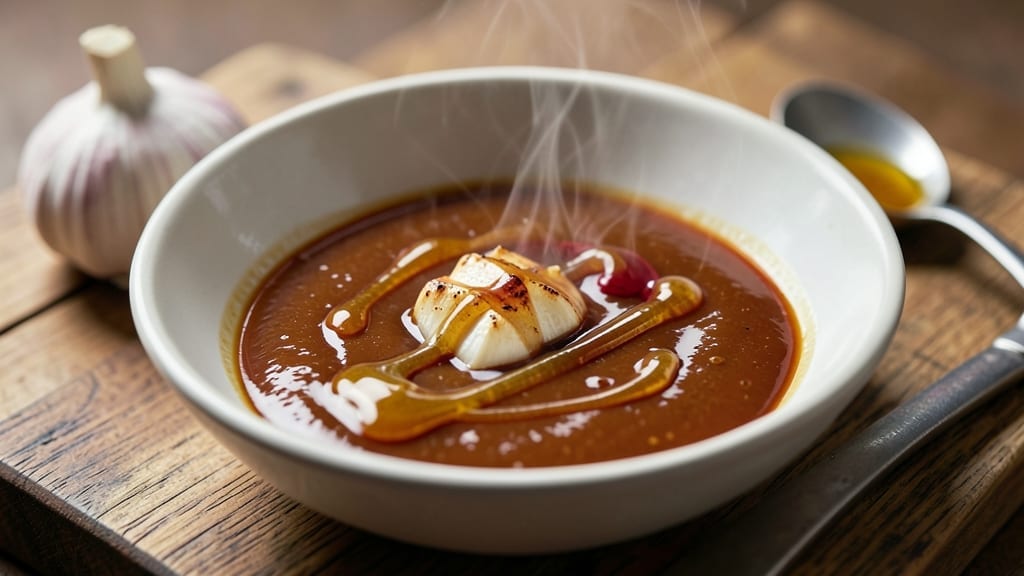
This 4-ingredient teriyaki sauce delivers restaurant-quality depth with just soy sauce, honey, garlic, and a splash of vinegar—no complicated blends or long simmers required. The secret lies in balancing salty, sweet, and tangy flavors while letting the garlic infuse deeply for that signature umami punch.
I developed this version after testing dozens of recipes, and it consistently delivers a glaze that caramelizes beautifully while staying true to traditional teriyaki’s bold character.
The beauty of this sauce is its simplicity: combine all ingredients in a saucepan and simmer for just 10 minutes, stirring occasionally to prevent burning. The honey adds natural sweetness that caramelizes into a glossy finish, while the vinegar brightens the depth of the soy sauce.
This method ensures you get that perfect balance without overpowering the dish you’re glazing—whether it’s grilled chicken, stir-fried vegetables, or seared salmon.
What you’ll end up with is a rich, glossy teriyaki sauce that clings perfectly to proteins and vegetables, adding layers of flavor with every bite. The aroma alone transforms ordinary meals into something special, and the best part?
It’s ready in minutes and keeps well in the fridge for up to 2 weeks, making it perfect for meal prep or batch cooking.
Use this sauce as a marinade for 30 minutes before grilling or stir-frying, or drizzle it over finished dishes for an instant flavor boost. The versatility makes it ideal for everything from weeknight dinners to weekend entertaining—no fancy ingredients or techniques required. Let’s make this sauce!
Ingredients for 4 ingredient teriyaki sauce
Four ingredients transform into a restaurant-quality teriyaki sauce with bold umami and caramelized sweetness.
| Ingredient | Amount | Notes |
|---|---|---|
| Soy Sauce 🥢 | ¾ cup | High-quality, preferably Japanese-style |
| Honey 🍯 | ½ cup | Raw or wildflower preferred |
| Garlic Cloves 🧄 | 6 cloves | Fresh, peeled, and lightly crushed |
| Rice Vinegar 🍶 | ¼ cup | White or seasoned for brightness |
The soy sauce is the foundation—Japanese-style like Kikkoman delivers that authentic depth. Look for a bottle with minimal additives, especially if you’re sensitive to artificial flavors. Honey should be raw or wildflower for that natural sweetness that caramelizes beautifully. Manuka honey is a splurge worth considering if you want extra floral notes. Garlic is non-negotiable here; fresh, never powdered, and crush those cloves just enough to release their oils without turning to paste. The vinegar? Rice vinegar keeps it traditional, but apple cider vinegar works in a pinch if that’s what you have.
No soy sauce? Coconut aminos gets you close—slightly sweeter but still delivers umami. Short on honey? Maple syrup or agave nectar work, though the flavor profile shifts slightly. Garlic powder won’t cut it—fresh is essential for that authentic teriyaki punch. The vinegar can be swapped for white wine or lemon juice, but rice vinegar’s mild tang is ideal. Pro tip: if your honey crystallizes, warm it gently to restore that silky texture before mixing. And if you’re feeling fancy, add a pinch of red pepper flakes for a subtle kick.
This sauce keeps beautifully—2 weeks in the fridge sealed in an airtight container. The flavors actually deepen over time, so make extra. For meal prep, portion into small jars or ice cube trays—perfect for glaze-on-demand. If it thickens too much, just stir in a splash of water. And if you’re using it as a marinade, 30 minutes is ideal—no need to over-marinate, or the proteins will get too tender.
Why You’ll Love This Recipe
- Pantry Magic: I swear by this sauce—no specialty jars, no confusing labels. Just open your soy sauce, grab honey from the fridge, crush a few garlic cloves (or use pre-minced if you’re really lazy), and splash in vinegar. That’s it. The kind of recipe that makes me feel like a chef without the stress.
- Sweet-Savory Balance: Here’s what sold me—the honey cuts through the saltiness of soy sauce so smoothly, while the garlic adds this just-right punch. No aftertaste, no weird overpowering notes—just that perfect umami-sweet harmony that makes me lick the bowl. (Yes, even on a Tuesday night.)
- Glaze for Everything: This sauce isn’t just for chicken. Slather it on salmon, toss it with tofu, or drizzle it over roasted veggies. I’ve even used it as a marinade for shrimp skewers—works every time. The rice vinegar keeps it bright, so it doesn’t get cloying, no matter what you’re cooking.
- Leftovers That Don’t Suck: Make a big batch and store it in the fridge for up to two weeks. The flavors actually deepened the second time around, and it’s cheaper than buying store-bought glaze. Plus, my kids ask for it on their PB&J sandwiches. (Not the prettiest, but the taste makes up for it.)
Step-by-step instructions for bold umami teriyaki glaze
This sauce comes together faster than you can say “umami bomb”—just four ingredients, no fuss.
Bloom the Garlic in Soy Sauce
Heat a small saucepan over medium-low heat and add the 6 cloves garlic cloves. Let them sizzle gently for 30 seconds until fragrant but not browned—this prevents bitterness. Immediately pour in the 0.75 cup soy sauce and stir to deglaze the pan, scraping up any browned bits from the bottom.
Here’s the thing—this step extracts maximum flavor from the garlic while preventing burning. You’ll see the sauce start to bubble gently; let it simmer uncovered for 2 minutes until slightly reduced. The aroma should be rich and savory, not sharp or raw. This foundational step builds the sauce’s depth right from the start.
Sweeten and Acidify
Reduce heat to low and add the 0.5 cup honey and 0.25 cup rice vinegar. Stir constantly for 3-4 minutes until the mixture thickens noticeably and coats the back of a spoon. You’re looking for a glossy, syrupy consistency—this is where the magic happens.
Watch the sauce carefully—it should reduce by about 25% before it’s ready. If it thickens too quickly, add 1-2 tablespoons water to balance the texture. The honey will caramelize slightly, adding complexity, while the vinegar brightens the sauce and cuts through the richness. This balance is what makes teriyaki sing.
Simmer to Perfection
Continue simmering for another 2-3 minutes until the sauce reaches your desired consistency. It should coat a spoon smoothly but still be pourable—thick enough to glaze but thin enough to drip elegantly. Taste and adjust: add a pinch of salt if needed, or a splash more vinegar for brightness.
For the best results, let the sauce cool slightly before using. This allows the flavors to meld completely. The final sauce should have a deep amber color with a glossy sheen, and the aroma should be complex—sweet, salty, tangy, and unmistakably umami. This is your signature glaze, ready to transform any protein in minutes.
Strain and Store
For a silky-smooth finish, strain the sauce through a fine-mesh sieve into a bowl, pressing gently on the garlic cloves to extract every last drop of flavor. Discard the solids. The sauce will thicken further as it cools, so you can thin it with a splash of water if needed before using.
Store in an airtight container in the refrigerator for up to 1 week or freeze for 3 months. The flavors actually deepen over time, making this sauce even more versatile for future meals. Use it immediately on grilled chicken, seared salmon, or roasted vegetables for that restaurant-quality sheen every time.
Pro Tips For Making 4 Ingredient Teriyaki Sauce
- Mince That Garlic: DESCRIPTION: I learned this the hard way—whole cloves in teriyaki sauce just sit there like awkward guests. Use a knife to crush them flat first, then chop fine or pulse in a food processor. The texture blends smoother, and the flavor distributes evenly instead of hiding in pockets.
- Simmer, Don’t Boil: DESCRIPTION: This sauce is delicate, and boiling it turns it bitter fast. Keep the heat at a gentle simmer—tiny bubbles breaking the surface, not a rolling boil. If it reduces too quickly, add a splash of water and let it mellow out. Patience here makes all the difference.
- Balance the Honey: DESCRIPTION: Honey loves to clump when cold, and clumps in sauce mean uneven sweetness. Warm the honey slightly (just until it flows like syrup) before mixing with the soy and vinegar. Also, if your honey’s super thick (like raw comb), thin it with a teaspoon of hot water first—no one wants lumpy teriyaki.
- Taste Early, Adjust Late: DESCRIPTION: Skip the “wait until the end” approach—taste the sauce after 5 minutes of simmering. Too salty? Add a splash of vinegar. Too sweet? A pinch of soy balances it. Adjusting later is a nightmare; fix it now while you can still save it. (Yes, even if you’re impatient like me.)
Essential equipment for great 4 ingredient teriyaki sauce
Small Saucepan
This is my go-to tool for making teriyaki sauce—it’s perfect for controlling heat and preventing spills. I recommend a 3-quart stainless steel saucepan like the All-Clad Stainless for even heat distribution and durability.
The smaller size keeps the sauce from spreading too thin, ensuring proper reduction. If you don’t have stainless steel, a non-stick pan works fine, but watch the heat closely to avoid sticking. 🔥
Fine-Mesh Sieve
A fine-mesh sieve is essential for straining out the garlic cloves after simmering. I use a 3-inch stainless steel mesh strainer from OXO—it’s sturdy and gets every last drop of flavor from the garlic.
This step ensures your sauce is silky smooth, perfect for drizzling or glazing. If you don’t have one, a cheesecloth works in a pinch, but it won’t be as efficient.
Wooden Spoon
Stirring constantly is key to preventing burning, and a wooden spoon is ideal for this sauce. I prefer a long-handled silicone-coated wooden spoon—it won’t scratch your pan and provides a good grip.
Avoid metal spoons, as they can react with the acidic vinegar and alter the flavor. A heat-resistant silicone spatula is another great option for scraping up any stuck-on bits.
Measuring Cups
Precision matters when balancing the sweet, salty, and tangy flavors. Use liquid measuring cups with clear markings for the soy sauce, honey, and vinegar. I love the Pyrex glass measuring cups—they’re heat-resistant and easy to read.
For the garlic cloves, a small kitchen scale or visual estimation (about the size of a golf ball for 6 cloves) works best. Accurate measurements ensure your sauce turns out perfectly every time. ✨
Air-Tight Storage Container
Once your sauce is ready, store it in an airtight container to preserve freshness. I use glass jars with snap-on lids from Ball Mason—they’re reusable and keep the sauce fresh for up to 2 weeks in the fridge.
For freezer storage, opt for freezer-safe glass containers or silicone ice cube trays for portion control. Proper storage ensures your teriyaki sauce stays flavorful and ready for quick meals. 💫
Nutrition facts
Frequently asked questions
Can I make this teriyaki sauce without honey?
Swap the honey for 0.5 cup maple syrup or agave nectar to keep the sweetness. For a lower-sugar option, use 0.3 cup brown sugar dissolved in 2 tablespoons water—just simmer it longer to achieve the same caramelized depth. The sauce will still glaze beautifully, though the flavor profile will shift slightly toward molasses notes with brown sugar.
How do I adjust the sauce for grilling vs. stir-frying?
For grilling, use the sauce as-is—its natural thickness makes it perfect for basting. For stir-frying, thin it with 1-2 tablespoons water to create a lighter drizzle. Pro tip: Add 1 teaspoon cornstarch mixed with 1 tablespoon water to thicken it further if needed. The sauce should coat ingredients evenly without steaming them.
Why did my sauce turn out too salty?
This usually happens if you used a high-sodium soy sauce or over-reduced the mixture. Fix it by adding 1-2 tablespoons more honey or vinegar to balance the saltiness, then simmer for 1-2 minutes to reintegrate flavors. For future batches, taste after 5 minutes of simmering—adjust sweetness or acidity early to prevent over-salting. A pinch of sugar or extra vinegar can work wonders!
Can I make this sauce in a slow cooker?
Yes! Combine all ingredients in a 1-quart slow cooker on low heat for 3-4 hours, stirring occasionally. The low-and-slow method enhances the garlic flavor and creates a deeper caramelization. For a quicker version, use high heat for 1.5 hours. Just watch the sauce—it may need thinning with water if it reduces too much in the slow cooker.
What’s the best way to use leftover teriyaki sauce?
Leftover sauce is incredibly versatile! Use it as a marinade for 30 minutes before grilling, drizzle over rice bowls, or toss with roasted veggies. For extra flavor, add 1 teaspoon grated ginger or a dash of sesame oil when reheating. It also makes a fantastic dip for spring rolls or a glaze for baked tofu. The possibilities are endless—don’t let it go to waste!

- 3lb Prime Rib Roast Recipe: Juicy Pink Center Guaranteed in 3 Hours - October 31, 2026
- 5 Spice Cake Recipe: Warmly Spiced Layers With Crunchy Top - October 31, 2026
- 1950’s Macaroni and Cheese Recipe: Nostalgic Creamy Cheese Sauce with Buttery Noodles - October 31, 2026