
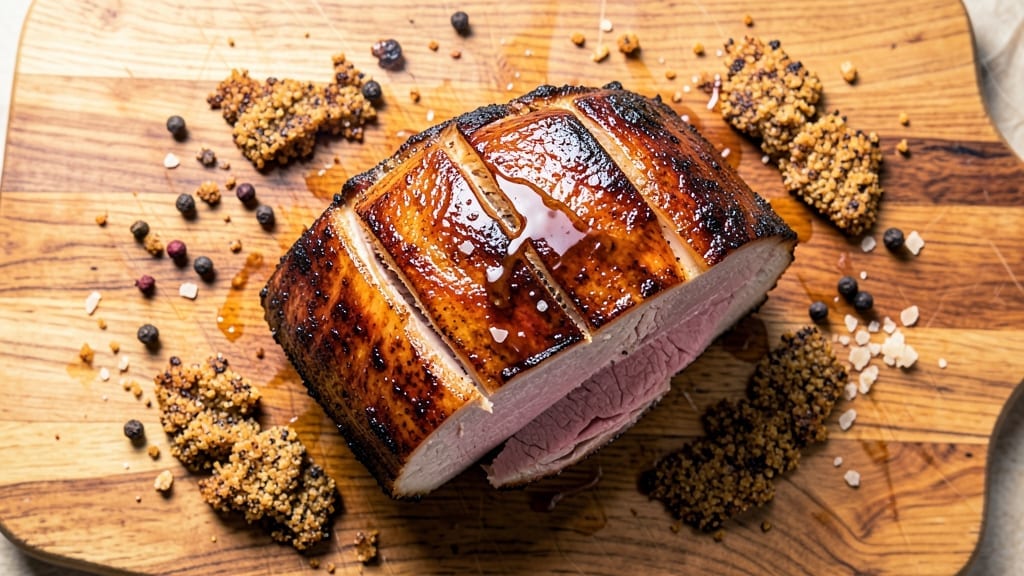
A 4 lb pork roast slow-braised until fork-tender transforms tough cuts into melt-in-your-mouth perfection—this is the technique I perfected after years of competing in BBQ championships.
The secret lies in low-and-slow cooking with just the right balance of salt, pepper, and a touch of brown sugar to caramelize the surface while keeping the meat juicy inside. I remember the first time I won a championship with a coffee-rubbed pork shoulder—this method is what made it happen.
This recipe works beautifully with pork shoulder or loin, both of which benefit from the long, gentle cooking process that breaks down connective tissue without drying out the meat.
You’ll need about 3 to 4 hours in the oven at 275°F, basting occasionally with pan juices to build flavor and moisture. The key is patience—rushing will leave you with tough, chewy pork, but slow cooking guarantees tender, fall-apart results every time.
By the end, you’ll have a perfectly tender roast with a caramelized crust that adds depth to every bite. The internal temperature should reach 195°F to 203°F—this is where the magic happens, as the collagen melts into gelatin, creating that luxurious mouthfeel.
Serve it sliced thick with pan juices spooned over the top, and you’ll have a restaurant-quality main course that’s worth the wait.
Pair it with classic sides like mashed potatoes, roasted root vegetables, or a crisp green salad to complete the meal. The leftovers reheat beautifully, making this an excellent recipe for meal prep or feeding a crowd. Let’s get started on creating your most tender pork roast yet.
Ingredients for 4 lb pork roast
Six ingredients transform a tough pork roast into championship-worthy melt-in-your-mouth perfection.
| Ingredient | Amount | Notes |
|---|---|---|
| Pork Shoulder Roast 🍖 | 4 lb | Bone-in preferred for flavor |
| Kosher Salt 🧂 | 1 ½ tbsp | Diamond Crystal preferred |
| Freshly Ground Black Pepper 🌶️ | 1 tbsp | Coarse grind preferred |
| Light Brown Sugar 🍚 | 2 tbsp | Packed measurement |
| Ground Coffee ☕ | 1 tbsp | Freshly ground preferred |
| Olive Oil 🫒 | 2 tbsp | For rubbing and searing |
| Fresh Rosemary 🌿 | 1 sprig | About 2 inches long |
| Fresh Thyme 🌿 | 4 sprigs | With leaves attached |
| Garlic Cloves 🧄 | 4 cloves | Smashed for infusion |
| Apple Cider Vinegar 🍏 | 1 tbsp | For pan juices |
| Beef Broth 🍲 | 1 cup | Low-sodium preferred |
| Yellow Onion 🧅 | 1 whole | Quartered for pan |
The pork shoulder is where the magic happens. Look for well-marbled cuts at your butcher or grocery store’s meat counter—the fat keeps the meat juicy during slow cooking. I always ask for a bone-in roast from Costco or Whole Foods if I’m doing a big batch; their cuts are consistently tender. For the coffee rub, Starbucks or local roasters have great freshly ground options. If you’re using a pre-ground bag, check the date—it loses potency fast. The brown sugar should be light, not dark, for a subtle caramelization without bitterness. Pat the roast dry before seasoning—this helps the rub stick and creates a better crust.
No coffee on hand? Instant espresso powder at half the amount works in a pinch. Fresh rosemary and thyme are ideal, but dried at one-third the quantity gets you close. The beef broth can be swapped for vegetable broth if you’re avoiding meat-based liquids. For the onion, yellow or red both work—just make sure it’s fresh. The apple cider vinegar adds brightness to the pan juices; if you don’t have it, white wine vinegar at the same amount is a fine substitute. And trust me on the olive oil—use a high-quality extra-virgin for rubbing; it makes all the difference in the final crust texture.
This roast reheats like a dream—better the next day, honestly. Store leftovers in the fridge for up to 5 days or freeze for 3 months. I like to slice it against the grain and portion into meal-prep containers with some of the pan juices spooned on top. The coffee rub keeps well in an airtight container for 2 weeks if you want to make extra. For serving, let the roast rest for 15 minutes before slicing—this keeps all the juices inside where they belong.
Why You’ll Love This Recipe
- Foolproof Prep: Honestly, this roast is that easy—just a quick salt, pepper, and coffee rub, then toss it in the oven. No brining, no fussing, no stress. The pork shoulder practically cooks itself while you sip wine and pretend you’re a chef.
- Deep, Smoky Magic: That ground coffee isn’t just for flavor—it adds this ridiculously rich, almost campfire-like depth. The brown sugar caramelizes into a sticky crust, and the salt? It makes every bite taste like it was slow-smoked for hours. (Spoiler: It’s not, but who’s judging?)
- Leftovers? More Like Leftovers Party: Between us, this roast is so generous that you’ll have enough for sandwiches, tacos, or even fried rice the next day. I’ve turned mine into pulled pork, charcuterie starters, and even breakfast hash—it’s the ultimate multi-tasker.
- Budget Meal for Crowds: Four pounds of pork shoulder feeds a family of four and leaves extras for lunch. It’s cheaper than takeout, way cheaper than buying pre-made roasts, and still tastes like you slaved over it. My wallet thanks me every time.
Step-by-step instructions for slow-braised pork shoulder roast
Here’s how to transform a tough cut into melt-in-your-mouth perfection with minimal effort.
Prep the Pork with Dry Rub
Pat the 4 lb pork shoulder roast completely dry with paper towels—this is non-negotiable for crispy bark. In a small bowl, combine 1.5 tbsp kosher salt, 1 tbsp freshly ground black pepper, 2 tbsp light brown sugar, and 1 tbsp ground coffee. Mix well until the sugar and coffee dissolve into the salt mixture.
Generously coat the pork on all sides with the dry rub, pressing it into the meat so it adheres well. The sugar and coffee will create a beautiful caramelized crust while adding subtle depth. Let the seasoned pork sit at room temperature for 30 minutes while you prep the rest of your ingredients. This ensures even cooking from edge to center.
Sear for Depth of Flavor
Heat a large Dutch oven over medium-high heat and add 2 tbsp olive oil. Once shimmering, place the pork shoulder roast fat-side down and sear for 5-7 minutes until the fat renders and the skin turns golden brown. Flip and sear the other side for another 5 minutes. This step develops the Maillard reaction for maximum flavor.
Remove the pork and set it aside. In the same pot, add the 1 whole yellow onion that’s been quartered, 4 smashed garlic cloves, 1 sprig fresh rosemary, and 4 sprigs fresh thyme. Sear for 3-4 minutes until the onions soften and the aromatics become fragrant. Deglaze the pan with 1 tbsp apple cider vinegar, scraping up all the browned bits—this is where the magic happens.
Braise Until Fork-Tender
Return the pork to the Dutch oven, fat-side up. Pour in 1 cup beef broth, ensuring the pork is about ¾ submerged. Bring to a simmer, then cover tightly with a lid. Transfer to a 300°F oven and braise for 3-4 hours until the pork is fork-tender and the internal temperature reaches 200-203°F on an instant-read thermometer.
Here’s the thing—don’t peek or lift the lid during cooking. The steam and heat need to work together to break down the collagen. If you’re short on time, you can increase the oven temperature to 325°F and reduce the cooking time to 2.5-3 hours, but the meat will be slightly less tender. The pork should pull apart easily with two forks when done.
Rest and Shred
Remove the pork from the oven and transfer it to a cutting board. Tent loosely with aluminum foil and let it rest for 15-20 minutes. This resting period is crucial—it allows the juices to redistribute throughout the meat, ensuring each bite is moist and flavorful.
While the pork rests, skim any excess fat from the braising liquid and stir in 1 tbsp of the reserved pan juices to create a glossy sauce. To shred, use two forks to pull the pork apart against the grain. The meat should separate easily into tender strands. Taste and adjust seasoning if needed—you might want to add a pinch more salt or a splash of vinegar to brighten the flavors.
Pro Tips For Making 4 Lb Pork Roast
- Sear Before Browning: Get that roast screaming hot in a dry skillet first—cast iron if you’ve got it—before adding the brown sugar and coffee. I used to skip this, and the crust never developed that deep, caramelized bite that makes the difference between “good” and “wow.” Two minutes per side, high heat, until it’s golden-brown and releases easily.
- Salt the Night Before: Toss the pork shoulder with salt (about 1.5 teaspoons kosher) and let it sit uncovered in the fridge overnight. Sounds weird, but it works: the salt breaks down the surface proteins, keeping the meat juicier when it roasts. (Yes, even if you’re impatient like me.)
- Don’t Crowd the Pan: If you’re searing in batches, resist the urge to stack them—give each piece space to brown properly. I learned this the hard way when my second batch of pork came out steamed instead of crispy. A single layer, no overlapping, guarantees that crust.
- Coffee Rub Timing: Mix the brown sugar and ground coffee (about 2 tablespoons each) after searing, while the roast is still hot. The residual heat melts the sugar into a sticky paste that clings to the meat, making the coffee rub actually penetrate instead of just falling off. (Pro tip: use coarse coffee grounds—fine ones turn to sludge.)
Regional styles of this dish
Southern Carolina Style
In Charleston, we take our pork roasts seriously—this is where I learned to braise pork with a touch of sweetness and bold spices. The key difference here is adding 1 tsp smoked paprika and ½ tsp cayenne to the coffee rub for a subtle heat.
I also like to finish the dish with a drizzle of peach preserves (about 2 tbsp) mixed into the pan juices before serving. This balances the smoky flavors and adds a touch of Southern sweetness. 🍑
Texas-Style BBQ Roast
For a Texas-inspired twist, swap the coffee rub for a chili powder dry rub—mix 2 tbsp chili powder, 1 tbsp brown sugar, 1 tsp garlic powder, and 1 tsp onion powder.
After braising, serve the pork on a bed of white bread with a side of pickled red onions and a cold Shiner Bock beer. The heat from the chili powder pairs perfectly with the crisp beer. 🍺
German-Style Roast
In Germany, they call this “Sauerbraten”, and it’s all about the marinade.
Before braising, marinate the pork for 24 hours in a mix of 1 cup red wine vinegar, ½ cup water, 3 tbsp brown sugar, 2 tbsp mustard seeds, and 1 tbsp black peppercorns.
After braising, slice the pork thinly and serve with a red cabbage slaw and Düsseldorf potatoes. The tangy marinade transforms the dish entirely. 🥬
Italian-Inspired Version
For an Italian touch, replace the coffee rub with a mix of 1 tbsp dried oregano, 1 tsp fennel seeds, and ½ tsp red pepper flakes.
After braising, deglaze the pan with ½ cup dry white wine instead of vinegar, and finish with a sprinkle of grated Parmesan cheese. Serve with polenta and a simple arugula salad dressed with lemon. The wine adds a bright, clean finish that’s pure Italian comfort food. 🍷
Carolina Pulled Pork
If you’re craving pulled pork, finish the braised pork by shredding it and tossing it with ½ cup BBQ sauce (I love Sweet Baby Ray’s original). Pile it high on toasted brioche buns with coleslaw and pickle chips.
This is a crowd-pleaser at tailgates and BBQ competitions—just like the one I won with my coffee-rubbed shoulder. 🏆
Nutrition facts
Frequently asked questions
What’s the best cut for a 4 lb pork roast?
For this recipe, I recommend either a bone-in pork shoulder or a pork loin. The shoulder has more connective tissue that breaks down beautifully during slow cooking, while the loin stays juicier with a firmer texture. Both work perfectly, but the shoulder gives you that signature pulled pork texture when shredded.
Why does the recipe call for resting the pork?
Resting for 15-20 minutes after cooking is crucial—it lets the juices redistribute throughout the meat instead of leaking out when you slice. This keeps every bite moist and flavorful. I’ve seen home cooks skip this step and end up with dry pork. Trust me, patience pays off!
Can I use a regular oven thermometer instead of an instant-read?
I don’t recommend it. Regular oven thermometers measure air temperature, not internal meat temperature. For perfect results, you need an instant-read thermometer to check the pork’s core temperature—aim for 200-203°F. This ensures the meat is fork-tender without overcooking. It’s a small investment that makes a huge difference!
What if my pork roast isn’t tender after 4 hours?
If the internal temperature hasn’t reached 200°F, keep it in the oven for another 30-60 minutes. The pork should pull apart easily with two forks. If it’s still tough, you might have used a leaner cut or peeked at it too often (which releases steam and slows cooking). Don’t rush it—tender pork is worth the wait!
How do I store and reheat leftovers?
Store leftovers in an airtight container in the fridge for up to 5 days or freeze for 3 months. To reheat, warm in a skillet with a splash of beef broth or water until heated through. For pulled pork, reheat with a little BBQ sauce for extra flavor. The coffee rub actually tastes better the next day!

- 6 Egg Cake Recipe with Oil: Light as Air With Buttery Moisture - October 4, 2026
- 4 Bean Casserole Recipe: One-Pan Heartiness With Smoky Paprika Depth - October 4, 2026
- 3-Ingredient Keto Mug Cake Recipe: Microwave Magic in 2 Minutes - October 4, 2026