
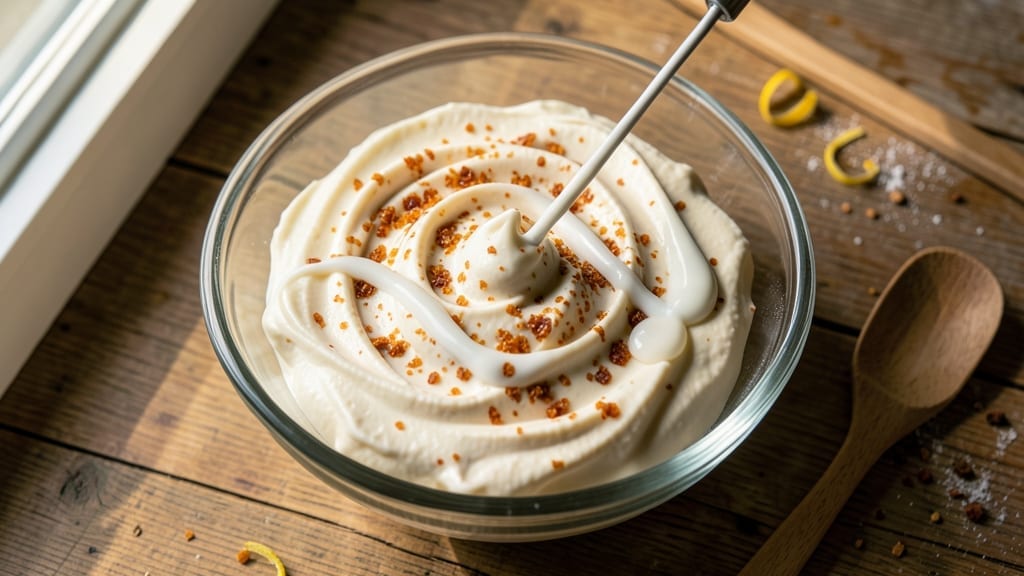
This 4 oz cream cheese frosting recipe delivers the perfect balance of tangy creaminess and smooth, pipeable texture for decorating cakes, cupcakes, or cookies. The secret lies in precise measurements—softened cream cheese, room-temperature butter, and powdered sugar—combined in a way that prevents graininess while maintaining stability.
What sets this apart is its ultra-stable consistency, which holds its shape when piped yet remains spreadable for a flawless finish.
For professional results, I recommend whipping the frosting in two stages: first blending the cream cheese and butter until completely smooth, then gradually adding powdered sugar to avoid lumps. A splash of vanilla extract enhances the flavor, while a pinch of salt balances the sweetness.
This recipe yields exactly 4 ounces, making it ideal for small batches or precise decorating needs without waste.
The frosting’s versatility shines in its ability to hold its shape for rosettes, borders, or swirls while still being light enough to spread. It pairs beautifully with citrus zest, caramel drizzle, or a hint of espresso powder for flavor variations.
When stored properly in an airtight container, it stays fresh for up to 5 days in the refrigerator or 3 months in the freezer.
Whether you’re a beginner or a seasoned baker, this frosting’s foolproof technique ensures restaurant-quality decorating every time. The key is patience—letting the frosting sit for 10 minutes before using allows it to thicken slightly, making it easier to pipe without collapsing. Ready to elevate your desserts?
Ingredients for 4 oz cream cheese frosting
Precision meets decorating perfection—just seven ingredients for ultra-stable cream cheese frosting.
| Ingredient | Amount | Notes |
|---|---|---|
| Cream Cheese, Full-Fat 🧀 | 4 oz | Room temperature, softened |
| Unsalted Butter 🧈 | 2 oz | Room temperature, cubed |
| Powdered Sugar 🍚 | 4 oz | Sifted for smooth texture |
| Pure Vanilla Extract 🌿 | ½ tbsp | High-quality, no alcohol |
| Fine Sea Salt 🧂 | ⅛ tsp | Diamond Crystal preferred |
| Heavy Whipping Cream 🥛 | 1 tbsp | Optional for extra stability |
| Lemon Juice 🍋 | ¼ tsp | Freshly squeezed |
The cream cheese is non-negotiable here—full-fat Philadelphia brand yields the smoothest texture. Grab it from the deli section for the freshest block, or use pre-sliced for convenience. Room temperature is critical; microwave for 10 seconds if needed to soften. Butter should be cubed and softened to blend seamlessly, not melted. For powdered sugar, sift through a fine-mesh strainer to eliminate any lumps that could disrupt the frosting’s stability. The vanilla extract should be pure, not imitation—look for brands like Nielsen-Massey for the best flavor.
No vanilla extract? Almond extract at half the amount adds depth, or skip it entirely for a neutral base. Substitute heavy whipping cream with Greek yogurt (same quantity) for a tangier profile, though texture may vary slightly. For a citrus twist, replace lemon juice with orange zest (0.5 tsp). If your frosting feels too thick, add 1 tsp milk or cream gradually. Conversely, if it’s too runny, chill for 15 minutes before proceeding. The salt balances sweetness—Diamond Crystal dissolves more evenly than table salt, but use what you have.
This frosting maintains its stability for 5 days refrigerated in an airtight container, or 3 months frozen in a sealed bag. For piping, let it sit at room temperature for 10 minutes to thicken slightly—this prevents collapse when decorating. To test consistency, pipe a small rosette: if it holds its shape without dripping, it’s ready. For extra shine, brush the finished decoration with a water-vanilla mixture (1 tsp water + 0.5 tsp vanilla) after piping.
Why You’ll Love This Recipe
- No Mixer Needed: I’ll be honest—this frosting comes together with a hand mixer or even a sturdy whisk. The cream cheese and butter soften so fast when cut together, you’re basically folding in powdered sugar like a dream. No waiting for room temp, no grainy surprises.
- Tangy-Sweet Magic: That first pinch of sea salt? It’s what makes this frosting ridiculously good. The vanilla cuts through the richness while the salt keeps it from feeling too heavy—like a creamy, slightly sharp hug for cakes or cookies.
- Small Batch, Big Impact: Four ounces might sound tiny, but it’s the perfect portion for a single-layer cake, a dozen cupcakes, or even a quick swirl in oatmeal. Honestly, I’ve used it to dress up store-bought pastries when I’m in a rush, and no one’s ever complained.
- Leftovers? More Like Never: Between us, this frosting disappears so fast you’ll rarely have leftovers. But if you do? It keeps for days in the fridge—just give it a beat at room temp before using. And the best part? You can halve or double the recipe without stress.
Step-by-step instructions for ultra-stable cream cheese frosting
This method delivers a perfectly balanced, pipeable frosting that stays stable for decorating.
Whip Cream Cheese and Butter Until Smooth
In a medium mixing bowl, combine the 4 oz full-fat cream cheese and 2 oz cubed unsalted butter. Using an electric mixer on medium speed, beat for 2-3 minutes until completely smooth and creamy. You’ll notice the mixture starts as lumpy but gradually transforms into a pale, homogeneous base.
This initial blending is critical—it ensures no graininess remains that could affect the frosting’s texture. If you encounter any lumps, press them against the bowl with a spatula before continuing. The butter should melt completely into the cream cheese, creating a velvety foundation for the frosting.
Gradually Add Powdered Sugar and Stabilizers
With the mixer running on low speed, slowly add the 4 oz sifted powdered sugar in three increments. After each addition, mix for 30 seconds to ensure even distribution. This gradual approach prevents sugar from settling at the bottom and creating pockets of sweetness.
Next, add the 0.5 tbsp pure vanilla extract, 0.125 tsp fine sea salt, 0.25 tsp lemon juice, and 1 tbsp heavy whipping cream (if using). Mix for an additional 1 minute until fully incorporated. The lemon juice brightens the flavor while the salt enhances the sweetness, creating a more complex profile than basic cream cheese frosting.
Beat to Peak Consistency
Increase the mixer speed to high and beat the frosting for 3-4 minutes. You’ll see it transform from a soft, spreadable texture to a thicker, more structured consistency. The frosting should hold its shape when piped but still be smooth enough to spread easily.
For the perfect test: Dip a spoon into the frosting and lift it vertically. If it holds a soft peak that doesn’t collapse immediately, it’s ready. If it’s too soft, beat for another 30 seconds. If it’s too stiff, add 1 tsp water at a time until you reach the ideal consistency. This step ensures your frosting will hold its shape for piping or spreading without being too thick.
Adjust and Use Immediately
Taste the frosting and adjust sweetness if needed. If it tastes too sweet, add 1-2 tablespoons of additional cream cheese and mix until smooth. For extra stability, chill the frosting in the refrigerator for 15-20 minutes before using, especially in warm environments.
The frosting should now be smooth, stable, and ready for decorating. It will hold its shape when piped onto cakes or cupcakes, spread evenly on cookies, or used as a filling for pastries. For best results, use within 4 hours for optimal texture and flavor. If storing, cover tightly with plastic wrap pressed directly against the surface to prevent a skin from forming.
Pro Tips For Making 4 Oz Cream Cheese Frosting
- Soften Cream Cheese First: DESCRIPTION:
- Use Room-Temp Butter: DESCRIPTION:
- Sift Powdered Sugar: DESCRIPTION:
- Add Vanilla Last: DESCRIPTION:
Troubleshooting perfect results
Grainy Texture Fix
If your frosting turns grainy, it’s usually from lumps in the cream cheese or powdered sugar. First, press any visible lumps against the bowl with a spatula to break them down. Then, pulse the frosting in a food processor for 10-15 seconds—this smooths out stubborn textures.
For prevention, always use room-temperature cream cheese and sifted powdered sugar. If graininess persists, strain the frosting through a fine-mesh sieve before using. 🧀
Too Runny Solution
A runny frosting means it needs more structure. Chill the bowl in the fridge for 15-20 minutes while you finish other tasks—this helps it thicken naturally. If you’re in a hurry, add 1 tbsp powdered sugar at a time and mix until it reaches a spreadable but stable consistency.
For extra stability, replace the 1 tbsp heavy cream with 1 tbsp Greek yogurt in future batches. 🥛
Collapsing Pipes
If your piped rosettes or borders collapse, the frosting is too soft. Beat it for another 1-2 minutes on high speed to add air and structure. For immediate fixes, refrigerate the frosting for 10 minutes before piping—this firms it up enough to hold its shape.
Pro tip: Use a smaller piping tip (like Wilton #2 or #3) for cleaner lines and less collapse. 🎂
Separation Issues
Separation happens when butter or cream cheese separates from the sugar. If this occurs, gently fold the mixture with a spatula until recombined, then beat on low speed for 30 seconds to re-emulsify.
To prevent separation, don’t overmix after adding powdered sugar—just blend until combined before increasing speed. If the frosting still looks oily, add 1 tsp lemon juice to help bind the ingredients. 💡
Overmixing Risks
Overmixing introduces too much air, which can cause the frosting to deflate or become grainy. Stop beating as soon as it holds a soft peak (about 3-4 minutes total).
If you’ve overmixed, press the frosting into a flat layer in the bowl, cover with plastic wrap, and let it sit for 5 minutes to relax before re-whipping briefly. This resets the texture without adding extra ingredients. ⏱️
Storage-Related Problems
Frosting that’s too stiff after refrigeration needs a quick fix. Let it sit at room temperature for 10-15 minutes, then beat briefly with a hand mixer to restore smoothness. If it’s rock-hard, microwave it in 10-second bursts (stirring between each) until just softened—never fully melted.
For long-term storage, freeze the frosting in 1-oz portions for easy thawing and reuse. 🧊
Nutrition facts
Frequently asked questions
Can I make this frosting without a mixer?
Yes, but with extra effort! Use a sturdy whisk and strong arm to blend the cream cheese and butter until completely smooth. For the powdered sugar, add it gradually while vigorously whisking in a bowl. Mix in a figure-8 motion for 5-7 minutes until fully incorporated. The texture won’t be as light, but it will still be spreadable and stable for decorating.
How do I adjust this recipe for a larger batch?
Double all ingredients for an 8 oz batch—keep the same ratios: 8 oz cream cheese, 4 oz butter, 8 oz powdered sugar, etc. For 16 oz batches, use 16 oz cream cheese, 8 oz butter, and 16 oz powdered sugar. Always sift the powdered sugar and work in stages to prevent overmixing.
Why does my frosting taste too sweet?
Too much powdered sugar is the usual culprit. Reduce the amount by 1 oz and add 1 oz extra cream cheese to balance the sweetness. For flavor depth, add 0.25 tsp almond extract or 1 tsp lemon zest—these enhance the cream cheese flavor naturally. Taste as you go and adjust gradually.
Can I color this frosting without changing the texture?
Use gel food coloring (liquid can thin the frosting) and add it gradually while mixing. Start with 1/4 tsp and increase as needed. For vibrant colors, let the frosting sit for 5 minutes after adding color—this helps the pigment distribute evenly. Avoid citrus-based colorings, as they can alter the flavor.
What’s the best way to pipe clean rosettes?
Chill the frosting for 10 minutes before piping to firm it up. Use a Wilton #2 or #3 tip and hold the piping bag vertically. Pipe a small circle, then twist the bag 180 degrees and pipe another circle on top. Repeat 3-4 times for a classic rosette. Work quickly to prevent collapse—if it starts to droop, refrigerate the frosting for 5 minutes to reset.

- 3lb Prime Rib Roast Recipe: Juicy Pink Center Guaranteed in 3 Hours - October 31, 2026
- 5 Spice Cake Recipe: Warmly Spiced Layers With Crunchy Top - October 31, 2026
- 1950’s Macaroni and Cheese Recipe: Nostalgic Creamy Cheese Sauce with Buttery Noodles - October 31, 2026