
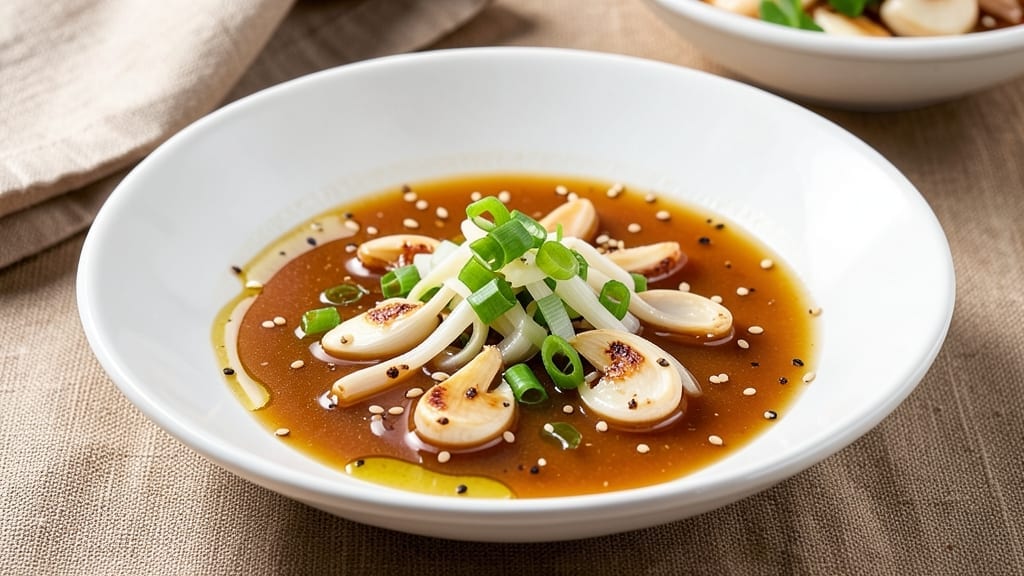
This 4-season scallion sauce recipe transforms simple ingredients into a bold umami base that elevates every dish from stir-fries to noodles. The secret lies in balancing fresh scallions, garlic, and aromatic spices with a touch of soy sauce for depth—no complicated techniques required.
What starts as a fragrant paste thickens into a versatile glaze that adds layers of flavor with just a drizzle.
The sauce’s magic comes from its simplicity: scallions provide freshness, garlic delivers savory punch, and a blend of spices—like star anise or Sichuan peppercorn—adds complexity. It keeps well in the fridge for up to a week, making it perfect for meal prep or last-minute flavor boosts.
The texture adjusts effortlessly from a thick paste to a silky drizzle, depending on how you use it.
Use it as a finishing touch for grilled meats, a dip for spring rolls, or a stir-fry base that sticks to every ingredient. The umami richness cuts through rich dishes while enhancing lighter ones, proving that a few pantry staples can create restaurant-quality depth.
Ready to transform your cooking with this game-changer?
Best of all, the recipe scales easily—double the batch for entertaining or halve it for small portions. Storage is a breeze, and the flavors only deepen over time.
Whether you’re a home cook or a seasoned chef, this sauce will become your secret weapon for adding professional-level flavor with minimal effort.
Ingredients for 4 season scallion sauce
Nine simple ingredients for a sauce that turns any dish into a flavor powerhouse.
| Ingredient | Amount | Notes |
|---|---|---|
| Scallions (Green Onions) 🧅 | 1 ½ cups | White and green parts, chopped |
| Garlic Cloves 🧄 | 6 cloves | Minced or finely chopped |
| Soy Sauce 🥢 | ½ cup | Light or dark variety |
| Sesame Oil 🫒 | 2 tbsp | Toasted for nutty aroma |
| Rice Vinegar 🍶 | 2 tbsp | White or seasoned |
| Sugar 🍚 | 1 tbsp | White or brown |
| Star Anise 🌟 | 1 whole | Crushed for release |
| Sichuan Peppercorns 🌶️ | ½ tsp | Lightly toasted |
| Ground Ginger 🌿 | ½ tsp | Freshly grated preferred |
| Sesame Seeds 🌰 | 1 tbsp | Toasted for garnish |
Scallions are the heart of this sauce—fresh is non-negotiable. Grab the greenest bunch you can find (the white parts pack the most flavor). Asian markets usually have the freshest, but any grocery store works. For the Sichuan peppercorns, toast them in a dry pan for 30 seconds—this releases their signature tingling heat. Star anise? Don’t skip it—it adds that deep, aromatic complexity that makes this sauce special. If you can’t find it, a pinch of cinnamon plus a dash of clove gets you close.
No sesame oil? Toasted peanut oil works in a pinch, though it’ll taste different. Running low on rice vinegar? Apple cider vinegar or lemon juice adds brightness, though the flavor shifts slightly. Sugar substitute? Maple syrup or agave at the same amount. The spices are where this sauce gets its magic—if you’re feeling adventurous, add a pinch of white pepper for extra depth. And if you can’t find Sichuan peppercorns, red pepper flakes (half the amount) will give you heat without the unique tingling.
This sauce keeps like a dream—up to 2 weeks in the fridge if you store it in a sealed jar. For longer storage, freeze it in ice cube trays—just thaw and stir. The flavors actually improve over time, so make a big batch. To use it, start with a drizzle and adjust to taste—it’s that versatile. Garnish with toasted sesame seeds right before serving for that restaurant-quality finish. And trust me, you’ll want to make extra—this stuff disappears fast.
Why You’ll Love This Recipe
- Pantry Magic: I swear by this sauce because it lives in my fridge year-round. No special shopping trips—just scallions, garlic, and a few pantry staples you already own. That first time I made it, I stared at my ingredients thinking, How did I not do this sooner?
- Umami Bomb: The garlic and soy sauce combo hits different—deep, savory, with that bright sesame oil finish. Honestly, the rice vinegar cuts through the richness just enough to make it dangerously good on everything from noodles to grilled chicken.
- Sauce for Days: Between us, this is my meal prep secret weapon. A jar lasts me a week, and I toss it on eggs, rice, or even popcorn. (Yes, I’ve done it.) The best part? It tastes fresh every time, no matter how many days it’s been sitting.
- Budget Flex: I make this when I’m broke or when I’m not. Scallions are cheap, garlic’s a staple, and a little sesame oil goes a long way. Three bucks’ worth of ingredients turns into enough sauce to feed my family for days—no guilt, just flavor.
Step-by-step instructions for 4 season scallion sauce
This bold umami sauce comes together in minutes with simple ingredients you likely already have.
Toast the Aromatics for Deep Flavor
Heat a small skillet over medium heat and add the 6 cloves garlic cloves and 1 whole star anise. Toast for 1-2 minutes until the garlic turns golden and fragrant—you’ll smell that nutty aroma wafting through your kitchen. This step builds the sauce’s depth right from the start.
While the garlic toasts, lightly toast the 0.5 tsp Sichuan peppercorns in a dry pan for 30 seconds until they release their signature tingling warmth. The star anise will darken slightly but shouldn’t burn. Remove both from heat immediately and set aside—their flavors are potent, so don’t over-toast.
Build the Sauce Base
In a clean saucepan, combine the toasted garlic and star anise with the 1.5 cups chopped scallions (white and green parts). Add the 0.5 cup soy sauce and 2 tbsp rice vinegar, then bring to a gentle simmer over medium-low heat. You want the mixture to bubble softly—not vigorously—so it doesn’t lose its delicate flavors.
Stir in the 1 tbsp sugar and 0.5 tsp ground ginger, letting everything cook together for 3-4 minutes. The sugar will help balance the sauce’s acidity while the ginger adds subtle warmth. Keep an eye on the pan—the sauce should reduce slightly but not dry out completely.
Finish with Oil and Spice
Remove the pan from heat and stir in the 2 tbsp toasted sesame oil and 0.5 tsp toasted Sichuan peppercorns. The oil should coat the back of a spoon, giving the sauce that signature glossy finish. Taste and adjust seasoning—you might want to add a pinch more soy sauce for saltiness or rice vinegar for brightness.
For the final touch, let the sauce sit for 5 minutes off heat. This resting period allows all the flavors to meld together. The sauce should be smooth, slightly thick, and packed with layers of umami, tang, and spice. If it’s too thick, thin with a splash of warm water.
Garnish and Serve
Transfer the sauce to a serving dish and sprinkle with 1 tbsp toasted sesame seeds. The seeds add texture and visual appeal, while their nutty flavor complements the sauce perfectly. This sauce keeps well in the refrigerator for up to 5 days, making it a great pantry staple for quick meals.
Use it as a dipping sauce for dumplings, a marinade for proteins, or a finishing touch for noodles. The balance of sweet, salty, tangy, and spicy makes it incredibly versatile—trust me, you’ll reach for this sauce more than you think!
Pro Tips For Making 4 Season Scallion Sauce
- STOP CHOPPING GARLIC TOO SMALL: The sauce will taste like garlic paste if you mince it into oblivion. Roughly chop the cloves into 3mm pieces—big enough to see but small enough to melt into the oil. I learned this the hard way when my sauce tasted like a garlic factory exploded.
- SWAP SESAME OIL LAST: Add that golden sesame oil at the very end, right when you’re pulling the pan off heat. Drizzle it in while stirring like you’re trying to win a race—it burns faster than you think. My grandmother swore by this, and she was right: the aroma hits you like a wave when you do it right.
- USE WHITE VINEGAR ONLY: Rice vinegar’s mild tang works, but white vinegar’s sharp bite cuts through the richness better. If you’re stuck with rice vinegar, add an extra teaspoon of sugar to balance the sweetness. I was skeptical until I tried it—now I never go back.
- SWEAT THE SCALLIONS LOW: Don’t rush the scallions—cook them on medium-low for 3-4 minutes until they’re soft and translucent. High heat turns them bitter, and nobody wants that. Sounds weird, but it works: the flavors meld instead of fighting each other. (Yes, even if you’re impatient like me.)
Dietary considerations for this dish
Gluten-Free Adaptation
Swapping out regular soy sauce for tamari (a naturally gluten-free soy sauce alternative) keeps the sauce’s umami depth while making it safe for gluten-sensitive diets. I recommend San-J Tamari—it has a richer, slightly sweeter profile that complements the scallions beautifully.
Just use the same ½ cup measurement as the original recipe. 🥢
Low-Sodium Option
For those watching sodium intake, reduce the soy sauce to ¼ cup and boost flavor with an extra ½ tsp ground ginger and 1 tsp toasted sesame oil.
Add 1 tsp honey to compensate for the lost saltiness while maintaining balance. The Sichuan peppercorns and star anise will still provide that signature aromatic punch.
Vegetarian & Vegan
This sauce is already plant-based, but if you’re concerned about umami depth, add 1 tbsp miso paste (white or red) when combining the scallions and soy sauce.
The miso adds fermented richness that elevates the dish. For extra protein, serve with tofu stir-fry or mushroom dumplings—the sauce clings perfectly to both. 🌱
Spice-Free Version
Skip the Sichuan peppercorns entirely and replace them with ¼ tsp ground white pepper for a milder kick. The star anise and ginger still provide complexity without heat.
For extra depth, add ½ tsp toasted cumin seeds (lightly toasted in the same pan as the garlic) to give a warm, earthy note that works beautifully with the scallions.
Allergy-Friendly Notes
If sesame allergies are a concern, substitute sesame oil with avocado oil (neutral flavor) or toasted walnut oil (for nutty depth). For nut-free kitchens, walnut oil is a great alternative.
Always check labels on rice vinegar and soy sauce for cross-contamination warnings if allergies are severe. The sauce remains just as versatile with these swaps! ✨
Nutrition facts
Frequently asked questions
Can I make this sauce without Sichuan peppercorns?
If you can’t find Sichuan peppercorns, replace them with ½ tsp red pepper flakes for heat or ¼ tsp ground white pepper for a milder kick. The star anise and ginger will still provide that warm, aromatic depth. For extra complexity, add ½ tsp toasted cumin seeds—they give a nutty, earthy note that pairs perfectly with scallions.
How do I adjust the thickness of the sauce?
The sauce should be slightly thick but pourable. If it’s too thick after cooking, thin it with 1-2 tsp warm water and stir until smooth. For a thicker consistency (like a glaze), simmer it uncovered for 2-3 extra minutes to reduce further. The texture adjusts easily, so don’t worry if it’s not perfect—just tweak to your preference!
What’s the best way to store and reheat leftover sauce?
Store in an airtight container in the fridge for up to 2 weeks. For longer storage, freeze in ice cube trays—thaw and stir to use. To reheat, warm gently in a small saucepan over low heat for 1-2 minutes, stirring constantly. Never microwave—it can break down the delicate flavors. The sauce tastes even better after a few days as the flavors meld!
Can I use this sauce in cold dishes?
Yes! This sauce works beautifully in cold dishes like summer noodle salads or cucumber wraps. Its bright, tangy-sweet profile cuts through cold ingredients perfectly. For extra freshness, chill the sauce for 30 minutes before serving to let the flavors settle. It also makes a fantastic dipping sauce for chilled dumplings or spring rolls—just drizzle lightly for best results.
Why does my sauce taste too salty?
If the sauce tastes overly salty, balance it with 1 tsp rice vinegar or lemon juice to brighten the flavors. For a sweeter touch, add ½ tsp honey or maple syrup to mellow the saltiness. If you’re using low-sodium soy sauce, reduce the amount to ¼ cup and boost other flavors like ginger or sesame oil. Taste as you go—small adjustments make a big difference!

- 3lb Prime Rib Roast Recipe: Juicy Pink Center Guaranteed in 3 Hours - October 31, 2026
- 5 Spice Cake Recipe: Warmly Spiced Layers With Crunchy Top - October 31, 2026
- 1950’s Macaroni and Cheese Recipe: Nostalgic Creamy Cheese Sauce with Buttery Noodles - October 31, 2026