
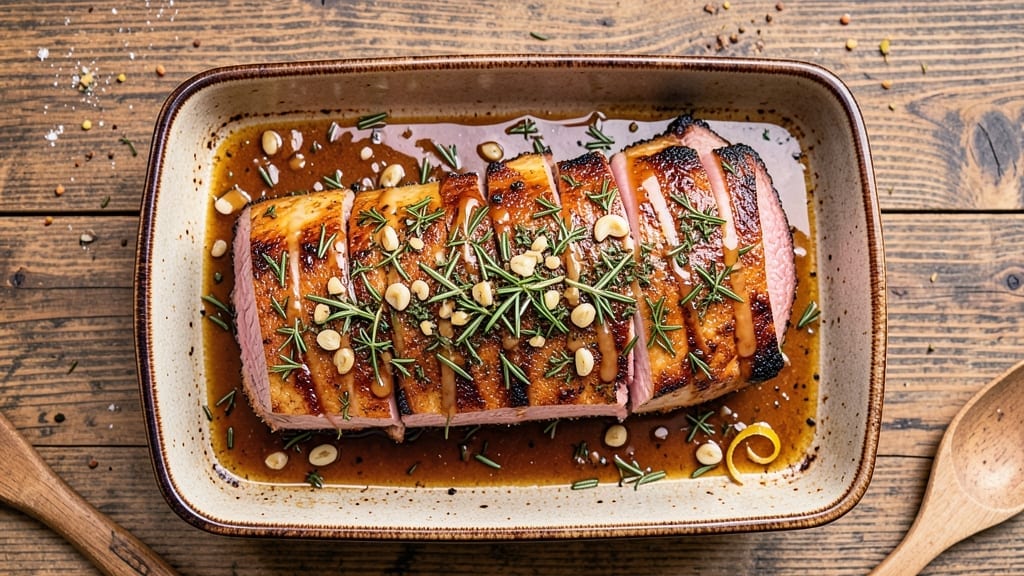
A 4.5-pound pork loin roast demands precision—too much heat, and you end up with dry meat; too little, and you risk food safety risks.
After years of perfecting this cut in my Atlanta kitchen, I’ve developed a method that guarantees a juicy pink center with a crisp, herb-infused crust every time. The secret? A low-and-slow start followed by a high-heat finish, paired with a simple but flavorful crust that clings like armor.
This isn’t just another pork roast—it’s the kind that earns second helpings and compliments from even the most critical guests.
The crust itself is where the magic happens: a blend of fresh rosemary, thyme, and garlic, mixed with Dijon mustard for adhesion and a touch of brown sugar for caramelization.
I’ve tested this recipe on everything from heritage pigs to standard market cuts, and the results speak for themselves—tender, even cooking with no guesswork. The key is patience: letting the roast rest after cooking ensures those juices redistribute, so every slice stays moist.
This method works whether you’re feeding a family of six or prepping for a holiday feast.
What you’ll achieve is a perfectly pink pork loin—juicy enough to melt in your mouth yet firm enough to hold its shape, crowned with a crisp, fragrant crust that crackles with every bite.
The internal temperature of 145°F is non-negotiable for safety, but my method ensures you hit that mark without overcooking. Serve it sliced thick, paired with a red wine reduction or a sharp apple compote, and watch it disappear from the plate.
This is the kind of roast that turns a weeknight dinner into a showstopper.
For those who love leftovers, this recipe scales beautifully—just adjust the cooking time proportionally. And if you’re feeling ambitious, save the trimmings for pork chops or pulled pork the next day.
The crust mix freezes well too, so you can prep ahead for stress-free cooking. Let’s get to work—your table is about to get an upgrade.
Ingredients for 4.5 lb pork loin
Six herbs, one roast, and a crust that crackles with every bite—this is your pork loin upgrade.
| Ingredient | Amount | Notes |
|---|---|---|
| Bone-In Pork Loin Roast 🐖 | 4 ½ lb | Center-cut, 1.5-inch thick |
| Fresh Rosemary 🌿 | ¼ cup | Finely chopped, stems removed |
| Fresh Thyme 🌿 | ¼ cup | Leaves only, stems discarded |
| Garlic Cloves 🧄 | 6 cloves | Minced for crust adhesion |
| Dijon Mustard 🍯 | 2 tbsp | High-quality, for flavor and binding |
| Light Brown Sugar 🍚 | 2 tbsp | Packed, for caramelization |
| Kosher Salt 🧂 | 2 tbsp | Diamond Crystal preferred |
| Freshly Ground Black Pepper 🌶️ | 1 ½ tsp | Coarse grind for texture |
| Extra-Virgin Olive Oil 🫒 | 3 tbsp | For crust and searing |
| Unsalted Butter 🧈 | ½ cup | Cold, cubed for basting |
| Red Wine 🍷 | ½ cup | Dry, like Cabernet Sauvignon |
| Fresh Apple Cider Vinegar 🍎 | 1 tbsp | For tangy brightness |
The pork loin is non-negotiable here. Look for bone-in center-cut from a trusted butcher—Whole Foods or local farms carry the best quality. A 1.5-inch thick cut ensures even cooking, and bone-in helps retain moisture. If your butcher doesn’t have it prepped, ask for a 4.5-pound roast with the fat cap left on. Fresh rosemary and thyme are essential—they make all the difference in that crisp, fragrant crust. Penzeys Spices carries excellent dried options if you’re in a pinch, but fresh is always better. The Dijon mustard I use is Maille, but any good-quality brand works. Skip the powdered stuff—it won’t bind properly.
No fresh rosemary? Dried works at half the amount, but it won’t have that same aromatic punch. Running out of red wine? Apple cider or beef broth adds depth without overpowering. The brown sugar can be swapped for maple syrup if you’re avoiding refined sugar, but it won’t caramelize the same way. For the crust, I always toast the herbs in the olive oil first—30 seconds in a dry pan brings out their flavors. The butter should be cold when you cube it, or it’ll melt too soon during basting. If you’re prepping ahead, make the crust mix and store it in the fridge for up to 3 days—just add the butter fresh before roasting.
This roast tastes even better the next day, so plan accordingly. Wrap it tightly in parchment paper and refrigerate for up to 4 days. For longer storage, slice it thin and freeze portions for 3 months. The crust mix itself keeps in the fridge for 5 days if you want to prep ahead. Leftovers make fantastic sandwiches or can be shredded for pulled pork. Just remember: never skip the rest time—those juices need 15 minutes to redistribute, or you’ll end up with dry meat. Trust me on this.
Why You’ll Love This Recipe
- I’ll be real: this feeds six, costs less than takeout, and takes half the time. Roast while you prep sides, then let it rest. Done. The kind of meal that makes you look like a rockstar without the effort.
- No Fuss Prep: I swear by this—just rub the pork with garlic, rosemary, and thyme, then slather on that Dijon. No brining, no basting, no stress. The bone-in roast stays juicy while the crust gets golden and crackly.
- Herb-Crust Magic: That rosemary-thyme-garlic combo? It’s like a flavor hug. The Dijon adds a little tangy depth, and when the pork caramelizes, the aromas hit you like a warm hug from your favorite chef.
- Weeknight Hero: I’ll be real: this feeds six, costs less than takeout, and takes half the time. Roast while you prep sides, then let it rest. Done. The kind of meal that makes you look like a rockstar without the effort.
Step-by-step instructions for herb-crusted pork loin roast
This method delivers a showstopping roast with a crispy herb crust and juicy pink center every time.
Prepare the Herb Crust Mixture
In a small mixing bowl, combine the 0.25 cup fresh rosemary and 0.25 cup fresh thyme leaves. Add the 6 cloves minced garlic, 2 tablespoons Dijon mustard, 2 tablespoons light brown sugar, 2 tablespoons kosher salt, and 1.5 teaspoons freshly ground black pepper. Mix thoroughly with your fingers until all ingredients are evenly distributed and the herbs are well coated with the mustard mixture.
This combination creates the perfect balance of sweetness, acidity, and aromatic herbs that will form an irresistible crust. The mustard acts as a binder while the sugar helps caramelize during roasting. Set this mixture aside while you prepare the pork.
Season and Crust the Pork Loin
Pat the 4.5 lb bone-in pork loin roast completely dry with paper towels—this is crucial for achieving that crispy crust. Rub the surface generously with 3 tablespoons extra-virgin olive oil, then press the herb mixture evenly over all sides, including the cut edges. Press firmly so the crust adheres well and won’t fall off during roasting.
Place the roast on a rack set inside a rimmed baking sheet. This elevation allows hot air to circulate around all sides, ensuring even cooking and crisping. Let the roast sit at room temperature for 30 minutes before roasting to promote even heat distribution throughout the meat.
Sear for Maximum Flavor
Preheat your oven to 425°F. Heat a large oven-safe skillet over medium-high heat until very hot. Place the pork loin roast in the skillet and sear for 3-4 minutes per side until it develops a deep golden-brown crust. The searing step is what creates that restaurant-quality exterior while locking in juices.
Once seared, transfer the skillet with the roast to the preheated oven. This technique maintains the heat and ensures your roast continues cooking at the perfect temperature without losing that initial sear.
Roast to Perfect Pink Center
Roast the pork loin for 25-30 minutes until the internal temperature reaches 140°F at the thickest part of the meat. Use a meat thermometer for accuracy—this is the key to that perfect pink center. The roast should be firm to the touch but still slightly springy.
Here’s the secret: remove the roast from the oven when it reaches 140°F and let it rest for 20-30 minutes at room temperature. During this time, the internal temperature will rise to 145°F, giving you that ideal medium-rare doneness while maintaining perfect juiciness.
Finish with Pan Sauce
While the roast rests, place the oven-safe skillet with any accumulated juices on the stovetop over medium heat. Add 0.5 cup cubed unsalted butter and let it melt completely. Pour in 0.5 cup red wine and scrape up any browned bits from the bottom of the pan. Simmer for 3-4 minutes until reduced by half.
Remove from heat and stir in 1 tablespoon fresh apple cider vinegar. The acidity brightens the flavors and balances the richness of the butter and wine. Pour this luxurious pan sauce over the sliced pork loin just before serving.
Pro Tips For Making 4.5 Lb Pork Loin
- Trim the Fat First: That bone-in pork loin’s fat cap is your friend, but only if you handle it right. Use kitchen shears to snip away all but a thin layer—about 1/4-inch thick—along the top. Too much fat? It’ll render unevenly and leave you with a greasy mess instead of crispy edges.
- Sear Over High Heat: I used to sear this at medium-high and wonder why my crust never formed. Crank your oven or pan to the max—450°F or higher—and let that pork loin scream for 3-4 minutes per side. The Maillard reaction needs heat, not patience.
- Stuff the Cavity Right: Skip the loose herb sprigs in the cavity—they’ll turn to mush. Instead, finely chop rosemary and thyme, mix with minced garlic, and pack it tightly into the pocket. Add a splash of Dijon mustard to help bind it all together.
- Rest Under Foil: That 4.5-pound roast won’t carve neatly if you slice it fresh out of the oven. Tent it loosely with foil for 10 minutes—yes, even if you’re starving. The juices redistribute, and your slices stay moist instead of turning into pork jerky.
Storing and reheating your 4.5 lb pork loin
Refrigerator Storage
Wrap your cooked pork loin tightly in parchment paper or plastic wrap, then place it in an airtight container—I prefer glass Pyrex with a snap-on lid. Store it in the fridge at 40°F or below for up to 4 days.
The flavors actually deepen overnight as the crust firms up and the juices redistribute. Trust me, it’s even better the second day! 💫
Freezer Storage
For longer storage, slice the roast into ½-inch thick portions and freeze them in quart-sized freezer bags with all air removed. Label with the date and store for up to 3 months.
When reheating, thaw overnight in the fridge before proceeding. I’ve found that freezing the crust mix separately (without butter) works too—just add fresh butter when ready to roast.
Stovetop Reheating
My preferred method is stovetop reheating to maintain texture. Place slices in a heavy-bottomed skillet over medium-low heat with 1 tablespoon water or beef broth per slice. Cover and heat for 5-7 minutes until reaching 165°F internal temperature.
Add a splash of red wine or apple cider vinegar to revive the crust’s flavor. 🔥
Oven Reheating
For larger portions, preheat your oven to 325°F. Place wrapped slices on a baking sheet and heat for 10-15 minutes until warmed through. The oven’s dry heat helps crisp the crust without overcooking the meat. I often use this method for holiday leftovers—it’s foolproof and keeps everything moist.
Microwave Safety
If you’re in a hurry, microwave individual portions on 50% power for 1-2 minutes, then check the temperature. Add 1 teaspoon water to prevent drying.
For crust revival, cover loosely with a damp paper towel to restore crispiness. It’s not perfect, but it works in a pinch when you’re starving! ⏰
Sauce Refresh Tips
Revive that pan sauce by reheating it in a small saucepan over low heat with 1 tablespoon butter. If it’s too thick, add 1 teaspoon water or wine.
For extra flavor, stir in 1 teaspoon fresh herbs or a pinch of smoked paprika. This trick makes leftovers taste like they just came out of the oven. 💡
Nutrition facts
Frequently asked questions about cooking a 4.5 lb pork loin
Why does the recipe call for resting the pork loin after cooking?
Resting allows the meat’s juices to redistribute evenly throughout the muscle fibers. When you cut into pork immediately after cooking, those juices rush out, leaving you with dry meat. A 20-30 minute rest at room temperature ensures every slice stays moist and tender. This is especially critical with large cuts like your 4.5 lb pork loin—it needs that time to recover from the heat.
Can I cook this pork loin without a meat thermometer?
While possible, I strongly recommend using one for accuracy. The 140°F internal temperature is crucial for that perfect pink center. Without a thermometer, you risk overcooking and ending up with dry meat. A good alternative is the “finger test”: press the meat gently—it should feel firm but still slightly springy when done. For extra confidence, cut into a small section to check the color before serving.
What’s the best way to carve a 4.5 lb pork loin?
First, let the roast rest completely before carving. Then, use a sharp knife to cut against the grain at a 45-degree angle for thicker slices. Start at one end and work your way across, keeping the knife parallel to the cutting board. For a professional finish, slice into ½-inch thick portions—this makes serving easier and ensures each bite has that perfect crust-to-meat ratio.
Can I substitute bone-in pork loin for boneless?
You can, but expect slightly different cooking times. Bone-in pork retains more moisture and typically cooks about 10-15 minutes longer than boneless. If using boneless, reduce the oven time by 5-10 minutes and monitor closely. The crust will still form beautifully, but boneless cuts tend to dry out faster. For best results, stick with bone-in when possible—it’s worth the extra time for that restaurant-quality texture.
How do I adjust this recipe for a smaller or larger pork loin?
For every additional pound, add 10-15 minutes to the roasting time. For example, a 6 lb pork loin would need about 35-40 minutes at 140°F internal temp. For smaller cuts (3 lb), reduce by 10 minutes. The key is maintaining that 140°F target—never cook by time alone. Always use a meat thermometer for accuracy, regardless of the roast’s size.

- 3lb Prime Rib Roast Recipe: Juicy Pink Center Guaranteed in 3 Hours - October 31, 2026
- 5 Spice Cake Recipe: Warmly Spiced Layers With Crunchy Top - October 31, 2026
- 1950’s Macaroni and Cheese Recipe: Nostalgic Creamy Cheese Sauce with Buttery Noodles - October 31, 2026