
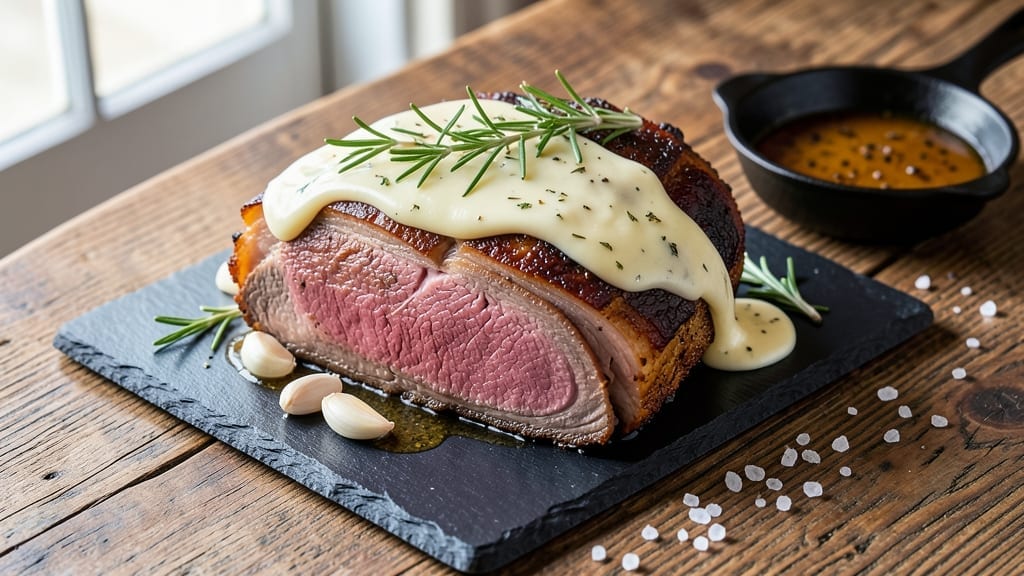
A 4lb prime rib roast recipe transforms a holiday centerpiece into a restaurant-quality meal with a crispy crust and au jus that poaches the meat to perfection. The secret lies in proper searing—high heat creates that coveted caramelized crust while keeping the interior juicy.
This isn’t just dinner; it’s an experience that turns ordinary weeknights into special occasions with minimal effort.
What sets this recipe apart is the foolproof technique for achieving medium-rare consistency every time. We’ll use a meat thermometer to monitor internal temperatures precisely, ensuring your prime rib reaches 125°F for medium-rare (or adjust to preference) before resting.
The au jus isn’t an afterthought—it’s a flavor-packed bath that keeps the meat moist and creates a rich gravy for serving.
By the time you carve into this golden-brown crust, you’ll uncover tender, melt-in-your-mouth beef with a pink center that’s impossible to resist. The au jus reduces to a velvety consistency, perfect for drizzling over each slice or using as a sauce for roasted vegetables.
This is the kind of meal that makes guests ask for seconds—and leaves your kitchen smelling like a high-end steakhouse.
The best part? This recipe scales perfectly for gatherings, and leftovers reheat beautifully when warmed gently in the au jus. Whether you’re celebrating a birthday, hosting Thanksgiving, or simply treating yourself, prime rib delivers restaurant-quality results at home.
Let’s get started with the ingredients and techniques that make this dish shine.
Ingredients for 4lb prime rib roast
Four pounds of prime rib and a handful of bold flavors create a showstopper dinner.
| Ingredient | Amount | Notes |
|---|---|---|
| Prime Rib Roast (bone-in) 🥩 | 4 lb | Center-cut, 1-1.5 inches thick |
| Kosher Salt 🧂 | 2 tbsp | Diamond Crystal preferred |
| Freshly Ground Black Pepper 🌶️ | 1 ½ tbsp | Coarse grind for texture |
| Unsalted Butter 🧈 | ½ cup | Cold, cut into 1-inch cubes |
| Garlic Cloves 🧄 | 8 cloves | Smashed, skin-on |
| Fresh Rosemary 🌿 | ¼ cup | Chopped, stems removed |
| Fresh Thyme 🌿 | 1 tbsp | Leaves only, stems discarded |
| Beef Bone Broth 💧 | 2 cups | Homemade or high-quality store-bought |
| Red Wine 🍷 | 1 cup | Bold Cabernet Sauvignon |
| Balsamic Vinegar 🍶 | 1 tbsp | Aged, for depth |
| Worcestershire Sauce 🍶 | 1 tbsp | Vegetarian if needed |
| Dijon Mustard 🥫 | 1 tsp | For au jus richness |
| Yellow Onion 🧅 | 1 whole | Quartered, skin-on |
The prime rib is non-negotiable here—center-cut, bone-in delivers the best marbling and flavor. Costco or high-end butchers like D’Artagnan carry excellent options, but your local grocery store’s prime rib works too. Look for a roast that’s 1-1.5 inches thick—thinner cuts dry out during searing. The bone-in version stays juicier, and the bone adds flavor to the au jus. If you’re feeling fancy, ask for a frenched end (where the bone is exposed) for easier carving. For the herbs, fresh is essential—dried won’t give you that aromatic punch.
No red wine? Beef broth plus 1 tbsp balsamic works perfectly. Worcestershire sauce has anchovies, so use vegetarian if needed—Lea & Perrins makes a great veg version. The butter must be cold and cubed for that perfect crust. If you’re short on time, Trader Joe’s sells pre-smashed garlic cloves in a jar—no chopping required. For the onion, leave the skin on during cooking for extra flavor, then peel before serving. The mustard adds depth to the au jus, but if you’re avoiding it, 1 tsp soy sauce works as a substitute. Salt matters too—Diamond Crystal dissolves better than table salt, so use that if you can.
The roast reheats beautifully—warm gently in the au jus for 10 minutes to restore moisture. Store leftovers in the fridge for 3-4 days, covered with the au jus to keep it juicy. For longer storage, freeze portions for up to 3 months. The au jus freezes well too—just thaw and reheat gently. I always make extra au jus—it’s perfect for drizzling over mashed potatoes or roasted veggies. The herbs can be prepped a day ahead and stored in the fridge, but the roast should rest at room temperature for 30 minutes before cooking for even searing.
Why You’ll Love This Recipe
- Foolproof Timing: I swear by this method—just salt, pepper, and butter, then let the oven do the work. Thirty minutes of hands-off roasting means I’m free to set the table, open wine, or even take a quick nap.
- Buttery-Garlic Magic: That crispy crust? Pure gold. The garlic cloves roasted right into the butter melt into the meat, turning every bite into something luxurious—no fancy rubs or marinades needed.
- Leftovers for Days: Between us, this roast is too good to eat all at once. The slices reheat beautifully in the oven or air fryer, and I’ve fed my family for three meals without breaking a sweat.
- Weeknight Luxury: Honestly, this is my go-to when I want to impress but don’t have hours to spend. The bone-in version adds richness, and the prep is simpler than ordering takeout—yet somehow feels like a restaurant-worthy splurge.
Step-by-step instructions for prime rib roast with au jus
Here’s how to achieve that signature combination of crispy crust and velvety au jus.
Prepare and Season the Prime Rib
Remove the prime rib roast from the refrigerator and let it sit at room temperature for 1 hour before cooking. This ensures even cooking throughout. Pat the roast dry with paper towels—this step is crucial for developing that crispy crust. You want the surface completely dry so the seasoning adheres properly and the exterior can brown beautifully.
In a small bowl, combine the 2 tablespoons kosher salt and 1.5 tablespoons freshly ground black pepper. Generously coat the entire surface of the roast with this mixture, pressing it into the meat so it penetrates slightly. Don’t forget the fat cap—seasoning it helps render the fat and adds flavor. Let the seasoned roast rest uncovered on a wire rack set over a baking sheet for 30 minutes before roasting. This final rest allows the seasoning to meld with the meat.
Sear the Roast for Maximum Flavor
Preheat your oven to 450°F for the initial sear. Place the prime rib roast fat-side up on a rack in a roasting pan. The rack elevates the meat, allowing hot air to circulate underneath for even cooking. Roast for 20 minutes until the exterior develops a deep golden-brown crust. Here’s the thing—don’t peek or move the roast during this time. The crust forms through direct, uninterrupted contact with the hot air.
After the initial sear, reduce the oven temperature to 325°F. This lower temperature will allow the roast to cook through gently while maintaining that crispy exterior. The roast should cook for approximately 1.5 to 2 hours total, depending on your oven, until the internal temperature reaches 125°F for medium-rare. Use a meat thermometer inserted into the thickest part of the roast to check the temperature—this is the only reliable way to ensure perfect doneness.
Prepare the Au Jus Base
While the roast is cooking, prepare the au jus components. In a small saucepan, melt the ½ cup unsalted butter over medium heat. Add the 8 smashed garlic cloves, ¼ cup chopped fresh rosemary, and 1 tablespoon fresh thyme leaves. Cook for 2-3 minutes until the garlic is fragrant but not browned. Remove from heat and set aside.
In the same roasting pan (after removing the prime rib), add the 1 quartered yellow onion (skin-on), 2 cups beef bone broth, 1 cup red wine, 1 tablespoon balsamic vinegar, 1 tablespoon Worcestershire sauce, and 1 teaspoon Dijon mustard. Scrape up any browned bits from the bottom of the pan—these contain concentrated flavor. Bring to a simmer over medium heat and let it reduce by half, about 15-20 minutes. This reduction will create a rich, flavorful base for your au jus.
Finish the Roast and Make the Au Jus
Once the prime rib reaches 125°F internally, remove it from the oven and let it rest for 15-20 minutes before carving. This resting period allows the juices to redistribute throughout the meat, ensuring each slice is moist and flavorful. While the roast rests, strain the reduced au jus mixture through a fine-mesh sieve into a clean saucepan. Discard the solids.
Return the melted butter-garlic-herb mixture to the saucepan with the strained au jus. Bring to a gentle simmer over medium-low heat and cook for 5-7 minutes until the sauce thickens slightly and coats the back of a spoon. Taste and adjust seasoning with additional salt or pepper if needed. The au jus should be rich, slightly tangy, and perfectly balanced.
Carve and Serve with Au Jus
Slice the prime rib against the grain into ½-inch thick slices. The grain runs horizontally across the roast, so cutting against it ensures each bite is tender. Arrange the slices on a warm platter and drizzle generously with the au jus. The contrast between the crispy exterior, tender interior, and velvety sauce is what makes this dish extraordinary.
Serve immediately with your choice of sides—roasted vegetables, creamy mashed potatoes, or a fresh green salad. The prime rib should be served rare to medium-rare, with a pink center that yields slightly to pressure. Each bite should deliver rich beef flavor, aromatic herbs, and the complex depth of the au jus. This is the kind of dish that makes Sunday dinner feel like a special occasion.
Pro Tips For Making 4lb Prime Rib Roast
- SEAR WITH A HOT PAN: Get that pan screaming hot—like, smoking hot—before adding the prime rib. I used to rush this, and the crust would turn out pale and sad. A bone-in 4lb roast needs that initial shock of heat to lock in juices and build flavor. Let it sit for 3-4 minutes per side until deep brown, even if it feels impatient.
- SALT THE GARLIC: Toss those garlic cloves in a pinch of kosher salt before smashing them into the butter. Sounds weird, but it works—keeps them from burning and adds a subtle depth. I skip this sometimes, and the butter ends up tasting flat. Worth the 10 seconds.
- DON’T CUT THE FAT CAP: That thick layer of fat on top? Leave it. It’s your insurance against dry meat and turns into crispy, buttery magic when roasted. I learned this the hard way—when I trimmed it too aggressively, the roast lost moisture faster. Trust the fat.
- REST UNDER FOIL: After pulling the roast from the oven, tent it loosely with foil and let it sit for 15-20 minutes. I know, you want to slice it immediately, but cutting too soon sends all the juices pooling on the cutting board instead of staying in the meat. Your future self will thank you.
Common mistakes when making perfect results
Over-Searing the Crust
One of the biggest mistakes is searing the prime rib too aggressively at 450°F. While you want that golden-brown crust, exceeding 20 minutes at this temperature can dry out the exterior before the interior cooks through.
I’ve seen roasts turn dark and leathery when left too long—trust your timer and resist the urge to peek! The key is that deep golden-brown color, not blackened char. 🔥
Skipping the Rest Time
Rushing to carve immediately after removing the roast from the oven is a recipe for dry meat. The 15-20 minute rest is non-negotiable—it lets juices redistribute, ensuring each slice stays moist.
I once carved into a prime rib too soon and ended up with slices that were nearly dry. Patience here makes all the difference!
Ignoring Internal Temperature
Guessing doneness by time or appearance leads to disappointment. Always use a meat thermometer to hit 125°F for medium-rare (or your preferred temp). I’ve seen roasts pulled at 130°F that were still slightly pink inside, while others pulled at 120°F were dangerously undercooked.
The ThermoWorks Smoke thermometer is my go-to for accuracy.
Using the Wrong Pan
A standard baking sheet won’t elevate the roast properly, leading to uneven cooking. Use a roasting pan with a rack—this allows hot air to circulate underneath, preventing steam buildup that can make the crust soggy.
I keep a Calphalon stainless steel roasting pan in my kitchen for this exact purpose. 💡
Over-Reducing the Au Jus
Simmering the au jus too aggressively turns it from velvety to gluey. Keep the heat at medium-low and aim for a 30% reduction (half the original volume). I’ve ruined a perfectly good au jus by boiling it down too much—now I taste it frequently to check consistency.
A proper au jus should coat the back of a spoon but still be pourable.
Not Seasoning the Fat Cap
Many cooks forget to season the fat cap, missing out on extra flavor and helping render the fat properly. Generously coat the entire surface, including the fat, with the salt-pepper mix.
This step adds depth to the au jus and ensures even cooking. Trust me, your roast (and guests) will thank you for this small but crucial detail. ✨
Nutrition facts
Frequently asked questions about 4lb prime rib roast
What’s the best doneness temperature for prime rib?
For medium-rare (the most popular choice), aim for an internal temperature of 125°F—this ensures a pink center that’s tender but still firm. For medium, 135°F works perfectly, while well-done reaches 150°F. Always use a meat thermometer in the thickest part of the roast for accuracy.
Can I cook prime rib without a meat thermometer?
While challenging, you can estimate timing: 15-20 minutes per pound for medium-rare (about 1-1.5 hours total for a 4lb roast). However, ovens vary—your roast could end up overcooked or underdone. For foolproof results, invest in a $20 instant-read thermometer. The difference in texture is worth it!
How do I keep prime rib from drying out?
Three key techniques: 1) Don’t overcook—pull it at 125°F for medium-rare, 2) Rest for 15-20 minutes before carving (this redistributes juices), and 3) Use a roasting rack to allow air circulation. The au jus also helps keep slices moist when reheating. Never skip the rest time—this is where most dry-roast mistakes happen!
What’s the best way to reheat leftover prime rib?
Slice the roast and warm gently in the au jus over low heat for 10-15 minutes—this prevents drying. For whole leftovers, wrap tightly in foil and bake at 300°F for 20-30 minutes with a splash of beef broth. Avoid microwaving—it turns prime rib into shoe leather. The au jus is your secret weapon for reheating!
Can I substitute red wine in the au jus?
Use 1 cup beef broth + 1 tbsp balsamic vinegar for similar depth, or 1 cup apple cider + 1 tbsp soy sauce for a sweeter profile. The key is balancing acidity—skip the wine if you’re avoiding alcohol, but don’t skip the reduction step. The au jus needs to reduce by half to develop flavor.

- 3lb Prime Rib Roast Recipe: Juicy Pink Center Guaranteed in 3 Hours - October 31, 2026
- 5 Spice Cake Recipe: Warmly Spiced Layers With Crunchy Top - October 31, 2026
- 1950’s Macaroni and Cheese Recipe: Nostalgic Creamy Cheese Sauce with Buttery Noodles - October 31, 2026