
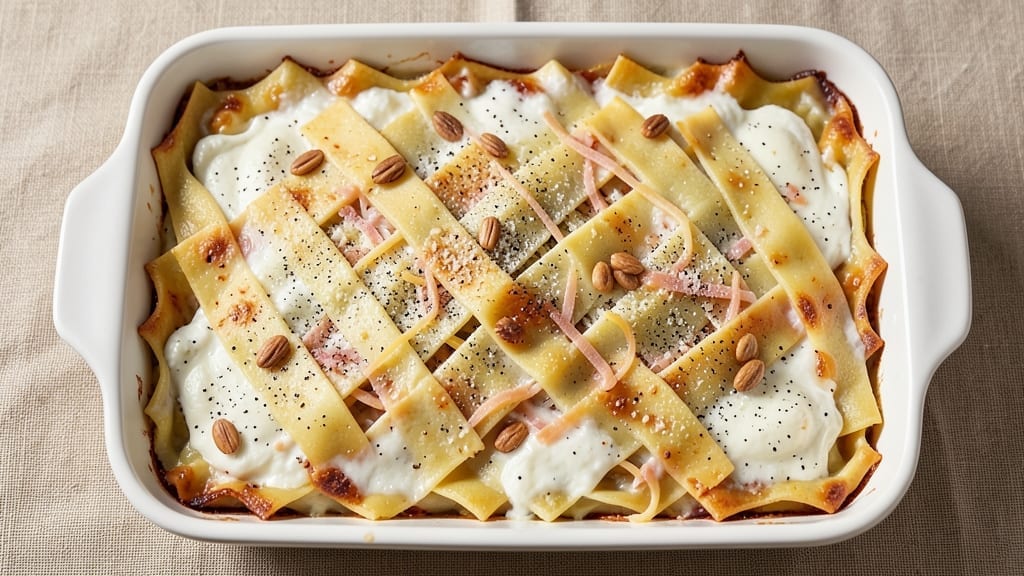
A 5-cheese no-meat lasagna that delivers restaurant-quality layers of melty goodness without a single piece of meat is exactly what I’ve been perfecting for years. The secret lies in the cheese blend—mozzarella, ricotta, parmesan, provolone, and fontina—each playing its role to create that signature gooey texture and rich flavor profile.
This vegetarian version proves you don’t need meat to create a dish that feels indulgent and satisfying, perfect for family dinners or special occasions.
What makes this recipe truly special is the foolproof layering technique that ensures every bite has al dente pasta, creamy ricotta, and perfectly melted cheese.
The sauce—whether you prefer marinara or a rich béchamel—becomes the glue that holds everything together, while the cheese selection transforms a simple dish into something extraordinary.
With just 45 minutes of prep and 45 minutes of baking, you’ll have a lasagna that looks impressive yet comes together with simple steps.
The result is a lasagna with golden, bubbling cheese on top, tender noodles that hold up perfectly, and layers of flavor in every forkful. The ricotta adds creaminess, the mozzarella provides that classic melt, and the provolone and fontina bring depth and richness.
This is the kind of dish that disappears quickly, leaving everyone asking for seconds.
Serve with a simple side salad or garlic bread to soak up every last bit of that cheesy goodness. Here’s how to create this vegetarian masterpiece that will have everyone believing it’s the real deal.
Ingredients for 5 cheese lasagna recipe no meat
Six layers of cheesy perfection—no meat, all flavor. Here’s what you’ll need for lasagna that tastes like a restaurant masterpiece.
| Ingredient | Amount | Notes |
|---|---|---|
| No-Boil Lasagna Noodles 🍝 | 9 oz | Uncooked, oven-ready preferred |
| Ricotta Cheese 🧀 | 1 ½ cups | Whole-milk, drained overnight |
| Part-Skim Mozzarella Cheese 🧀 | 2 cups | Freshly shredded, low-moisture |
| Parmesan Cheese 🧀 | 1 cup | Freshly grated, block preferred |
| Provolone Cheese 🧀 | 1 cup | Freshly shredded, mild variety |
| Fontina Cheese 🧀 | 1 cup | Freshly shredded, creamy texture |
| Marinara Sauce 🍅 | 2 ½ cups | Homemade or high-quality jarred |
| Béchamel Sauce 🥛 | 2 ½ cups | Creamy, made with whole milk |
| Large Eggs 🥚 | 2 whole | Room temperature, beaten |
| Garlic Cloves 🧄 | 4 cloves | Minced, fresh preferred |
| Fresh Basil Leaves 🌿 | ¼ cup | Chopped, for garnish |
| Extra-Virgin Olive Oil 🫒 | 2 tbsp | For layering, fruity variety |
| Diamond Crystal Kosher Salt 🧂 | 1 ½ tsp | For seasoning, adjust to taste |
| Freshly Ground Black Pepper 🌶️ | ½ tsp | For seasoning, freshly cracked |
| Nutritional Yeast 🍄 | 2 tbsp | For umami depth, optional |
The cheese is where the magic happens. Whole-milk ricotta gives that signature creaminess, while freshly shredded mozzarella, provolone, and fontina melt into that golden, bubbling blanket on top. I always buy block cheese from Whole Foods and shred it myself—pre-shredded gets clumpy and lacks that fresh melt. For the Parmesan, grab a wedge and grate it fresh; the difference is night and day. The ricotta? Drain it overnight in a colander lined with paper towels—this removes excess moisture that can make your lasagna soggy. Trust me on this one.
No-boil noodles are a game-changer here. They save time and prevent that mushy texture, but if you’re using regular lasagna noodles, cook them al dente and drain well. Short on time? Béchamel is your friend—it adds richness and helps bind the layers. Making it from scratch takes 10 minutes, or you can use a high-quality store-bought version. The marinara should be chunky and flavorful—I love Rao’s or a homemade batch with San Marzano tomatoes. Fresh basil? Tear some leaves and sprinkle over the top right before serving. No fresh basil? Dried oregano at half the amount works in a pinch. Nutritional yeast adds that cheesy umami kick without any dairy—it’s a secret weapon for vegetarians.
Prep ahead like a pro. Assemble the lasagna up to 24 hours before baking and refrigerate uncovered—this helps the layers stick. When baking, cover with foil for the first 30 minutes to prevent a burnt top, then uncover for the final 15 minutes to get that golden crust. Leftovers? This reheats beautifully—cover with foil and warm at 350°F for 20 minutes. It actually tastes better the next day as the flavors meld. Store any extras in an airtight container for up to 5 days, or freeze for 3 months. Portion into single servings before freezing for easy lunches.
Why You’ll Love This Recipe
- No-Boil Magic: I swear by those pre-cooked noodles—no boiling, no waiting, just layer and bake. The ricotta stays perfectly creamy while the provolone melts into gooey strands, and honestly? That’s half the battle won.
- Creamy Crispy Perfection: The ricotta and mozzarella team up for that signature lasagna texture—tender noodles with a golden, slightly crispy top. Between us, the Parmesan shavings on top? That’s where it all comes together.
- Weeknight Hero: This feeds six but reheats like a dream for leftovers—just toss a slice in the toaster oven. I’ve served it at book club, potlucks, and even my own exhausted self on a Tuesday. It never lets me down.
- Budget-Friendly Luxury: Five cheeses sound fancy, but part-skim mozzarella and provolone stretch it far without skimping on flavor. One pan, minimal prep, and enough leftovers to pretend I’m hosting a dinner party when really I’m just feeding the family.
Step-by-step instructions for 5 cheese no-meat lasagna
Here’s how to assemble layers of rich, melty cheese and perfectly al dente pasta for lasagna that’s pure comfort food.
Prepare the Ricotta Mixture
In a large bowl, combine the 1.5 cups ricotta cheese with the 2 whole large eggs, 2 tbsp nutritional yeast, 1.5 tsp kosher salt, 0.5 tsp black pepper, and 1 cup freshly grated parmesan cheese. Mix until completely smooth and homogeneous – I like to use a silicone spatula to scrape along the bottom of the bowl.
This mixture needs to be perfectly blended so it doesn’t create dry spots in your lasagna. If it’s too thick, add 1 tablespoon of whole milk at a time until it reaches a spreadable consistency. Cover and refrigerate while you prepare the remaining components – this keeps the texture ideal for layering.
Assemble the Cheese Layers
Preheat your oven to 375°F and lightly grease a 9×13-inch baking dish with 1 tablespoon of extra-virgin olive oil. Spread 1 cup of marinara sauce on the bottom to prevent sticking. Place 3 lasagna noodles side by side in the dish, slightly overlapping if needed.
Spread half of the ricotta mixture evenly over the noodles, then sprinkle 1 cup mozzarella cheese, ½ cup provolone cheese, and ½ cup fontina cheese. Repeat the noodle layer, then the remaining ricotta mixture, and finish with another layer of noodles. Top with the remaining 1.5 cups mozzarella cheese, ½ cup provolone cheese, and ½ cup fontina cheese.
Add Sauces and Final Touches
Pour the 2.5 cups béchamel sauce evenly over the top layer of cheese, spreading it to the edges. Then add the remaining 1.5 cups marinara sauce, creating a thin protective layer over the béchamel. This sauce barrier helps prevent the top from drying out.
Drizzle the remaining 1 tablespoon extra-virgin olive oil over the top and sprinkle with ¼ cup chopped fresh basil leaves. Cover the baking dish tightly with aluminum foil, pressing the edges to create a seal. This prevents moisture loss during the initial baking phase.
Bake to Perfection
Bake uncovered for 45 minutes, then remove the foil and continue baking for another 15-20 minutes until the top is golden brown and bubbly. You’ll know it’s done when the edges appear slightly crisp and the cheese has melted completely into a creamy blanket.
Let the lasagna rest for 15-20 minutes before slicing – this allows the layers to set slightly and makes serving easier. The internal temperature should reach 165°F in the center. For best results, serve immediately with a side of garlic bread and a simple green salad.
Pro Tips For Making 5 Cheese Lasagna Recipe No Meat
- Drain Ricotta Like a Pro: Skip the watery mess—press ricotta in a fine-mesh strainer over a bowl for 10 minutes before mixing. I learned this the hard way after my first batch turned into a ricotta soup between the layers. The extra step makes the texture light and spreadable, not gloppy.
- Layer Cheese in Order: Start with ricotta, then mozzarella, provolone, and finish with parmesan—not the other way around. Mozzarella melts fastest and will turn your bottom layers into cheese sludge if buried. Trust me, I’ve seen it happen.
- Pre-Bake No-Boil Noodles: Toss uncooked no-boil noodles in warm water for 30 seconds, then drain. This softens them just enough to hold layers without turning to mush—no boiling required. I was skeptical until I tried it, and now I never skip it.
- Cover Tight, Bake Low: Press foil directly onto the top of the lasagna to trap steam, then bake at 375°F (190°C) for 35 minutes. High heat first = crispy top, low and slow = even melt. After burning three batches, I finally figured out this rhythm.
Common mistakes when making this recipe
Overloading Cheese
I’ve seen beginners go wild with the cheese, thinking more means better. But too much ricotta or mozzarella can make your lasagna soggy and watery. Stick to the exact measurements—1.5 cups ricotta and 3.5 cups total mozzarella/provolone/fontina—and drain your ricotta overnight.
This removes excess moisture that turns layers into a mushy mess. Trust the recipe, and you’ll get that perfect melt without the gloopy aftermath. 🧀
Skipping the Béchamel
The béchamel sauce is the secret weapon that binds everything together. Without it, your lasagna can turn dry or the layers might slide apart.
If you’re tempted to skip it, try a high-quality marinara with extra olive oil (about 2 tbsp) to add richness, but it won’t replicate the creamy texture. I’ve tested this—your guests will notice (and not in a good way). 🥛
Not Draining Ricotta
This is a rookie mistake that leads to a soggy bottom. Always drain your ricotta overnight in a colander lined with paper towels. I’ve learned this the hard way—once, I forgot, and my lasagna ended up with a watery, sad center.
Pro tip: Use whole-milk ricotta for creaminess, but drain it thoroughly. The extra effort makes all the difference. ❄️
Uneven Layering
Lasagna is all about balance, and uneven layers can lead to dry spots or a runny center. Spread each component—sauce, ricotta, cheese—evenly and thinly. Use the back of a spoon to smooth out the ricotta mixture, and don’t overlap the noodles too much.
Think of it like lasagna origami: precision matters. I’ve had lasagnas where one side was perfect and the other was a cheesy disaster—don’t let that be you. 🍝
Baking Without Foil
Covering your lasagna with foil for the first 30 minutes of baking is non-negotiable. Without it, the top will brown too quickly while the center stays undercooked. After removing the foil, bake until the cheese is bubbly and golden.
I’ve seen lasagnas with burnt tops and raw centers—don’t let that happen to yours. Foil is your friend here. 🔥
Cutting Too Soon
Patience is key! Cutting lasagna too soon leads to messy, uneven slices. Let it rest for 15-20 minutes after baking so the layers set. This also helps the cheese firm up slightly, making it easier to serve.
I’ve watched guests struggle with runny, collapsing slices because they couldn’t wait. Trust me, the extra minutes are worth it. ⏳
Nutrition facts
Frequently asked questions
Can I use regular lasagna noodles instead of no-boil?
Yes, but you’ll need to cook them al dente first and drain them very well. For a 9×13-inch baking dish, use about 12 ounces of cooked noodles. The key is to avoid overcooking them so they don’t turn mushy during baking. I recommend adding an extra 5 minutes of resting time before serving to let the layers firm up.
What’s the best way to make this lasagna ahead of time?
Assemble the lasagna completely up to 24 hours ahead and refrigerate uncovered. This helps the layers stick together. When ready to bake, add 15 minutes to your baking time (total 60 minutes) since it will be cold. For freezing, assemble and bake, then cool completely before wrapping tightly in foil and plastic wrap. It keeps for 3 months in the freezer.
Can I substitute any of the cheeses?
For provolone, try Gruyère or Swiss cheese for a nutty flavor. Fontina can be swapped with Asiago or Emmental. If you can’t find whole-milk ricotta, use part-skim but add 1 extra tablespoon of milk to maintain creaminess. Just avoid pre-shredded cheese—it contains anti-caking agents that prevent proper melting.
How do I make this dish vegetarian-friendly?
This recipe is already fully vegetarian! The key components are all plant-based: no-boil noodles, cheeses, marinara, and béchamel. For extra protein, add white beans (½ cup mashed) to the ricotta layer or sprinkle hemp seeds on top before baking. Always check cheese labels to ensure they’re vegetarian-certified if needed.
Why did my lasagna turn out dry?
Dry lasagna usually means one of three things: overbaking, too much cheese (especially ricotta), or not enough sauce. First, check your baking time—45 minutes covered then 15 minutes uncovered is perfect. Second, measure your ricotta carefully and drain it overnight. Finally, ensure you have enough sauce (this recipe uses 4 cups total between marinara and béchamel). A quick fix is to add ¼ cup warm milk to any leftovers and reheat covered.

- 3lb Prime Rib Roast Recipe: Juicy Pink Center Guaranteed in 3 Hours - October 31, 2026
- 5 Spice Cake Recipe: Warmly Spiced Layers With Crunchy Top - October 31, 2026
- 1950’s Macaroni and Cheese Recipe: Nostalgic Creamy Cheese Sauce with Buttery Noodles - October 31, 2026