
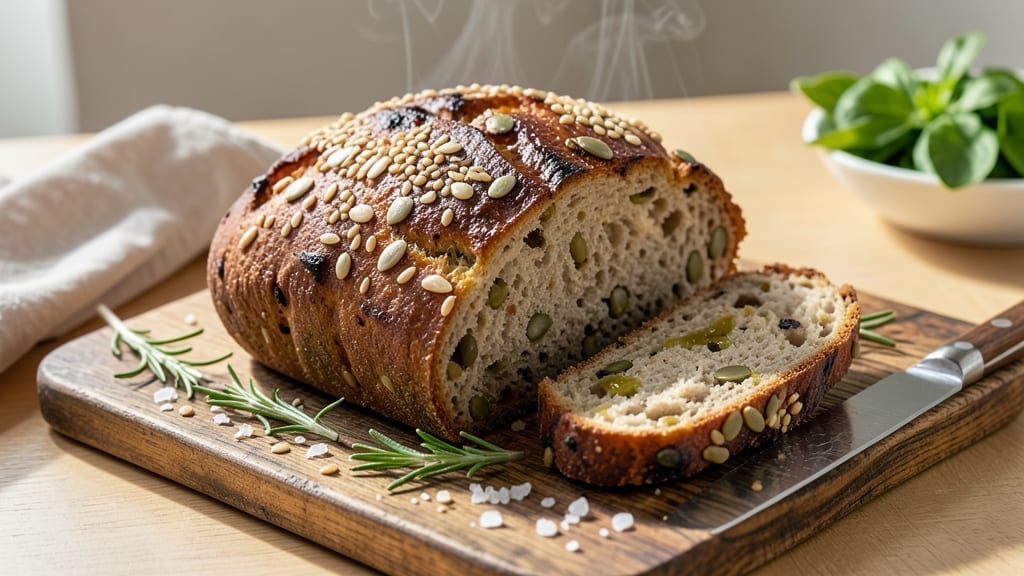
This 5 seed bread recipe delivers a perfect balance of hearty texture and nutty crunch that transforms ordinary toast into something extraordinary. 🌟 The secret lies in the seed blend—sunflower, sesame, flax, pumpkin, and chia—each contributing fiber, omega-3s, and a satisfying bite that keeps every slice interesting.
I developed this recipe after years of experimenting with whole-grain loaves, and the result is a bread that bakes up golden, stays fresh for days, and pairs beautifully with soups or butter.
The process is straightforward but requires patience, especially during the kneading and proofing stages. You’ll mix a simple dough of flour, yeast, and water, then fold in the seeds for maximum flavor distribution.
A 375°F oven for 35–40 minutes yields a loaf with a crisp crust and a tender crumb, while the seeds add a delightful contrast in every bite. The bread’s nutty aroma alone makes it worth the effort, and it’s perfect for those who love texture in their bread.
What sets this recipe apart is how the seeds enhance both nutrition and taste—no bland, heavy loaf here. The sunflower seeds add a mild nuttiness, while the sesame and flax contribute earthy depth.
Once baked, the bread stays fresh for 5–7 days when stored properly, making it ideal for meal prep. The crust is ideal for dipping, and the interior holds up perfectly to toast or sandwiches.
For best results, let the dough rise overnight in the fridge for deeper flavor development. If you’re new to seed breads, start with this ratio—1 cup total seeds per loaf—and adjust based on your preference for crunch.
The bread’s versatility makes it a staple for any kitchen, whether you’re serving it with jam, cheese, or simply enjoying it on its own.
Ingredients for 5 seed bread
Twelve ingredients, one nutty masterpiece—your kitchen’s new favorite loaf awaits.
| Ingredient | Amount | Notes |
|---|---|---|
| All-Purpose Flour 🌾 | 4 cups | Plus 1 tbsp for dusting |
| Whole Wheat Flour 🌾 | 1 cup | For added texture and nutrition |
| Active Dry Yeast 🍞 | 2 ¼ tsp | 1 packet or 7g |
| Granulated Sugar 🍚 | 1 tbsp | Feeds the yeast |
| Salt 🧂 | 1 ½ tsp | Diamond Crystal preferred |
| Sunflower Seeds 🥜 | ¼ cup | Unsalted, lightly toasted |
| Sesame Seeds 🌿 | ¼ cup | White or black, toasted |
| Flaxseeds 🌱 | 0.2 cup | Ground or whole, toasted |
| Pumpkin Seeds 🎃 | 0.15 cup | Pepitas, toasted |
| Chia Seeds 🌿 | 0.1 cup | Whole, toasted |
| Warm Water 💧 | 1 ¼ cups | 110°F for yeast activation |
| Olive Oil 🫒 | 2 tbsp | Extra-virgin for richness |
| Honey 🍯 | 1 tbsp | Optional for extra sweetness |
The seeds are the star, so grab the best quality you can find—Bob’s Red Mill or King Arthur flours and seeds work perfectly. Toasting the seeds (10 minutes at 350°F) brings out their flavor—don’t skip this step. For the yeast, check the expiration date (it’s good for about 6 months after opening). The flaxseeds should be ground if you want extra omega-3s, but whole works too. Pro tip: buy seeds in bulk bins at Whole Foods or Trader Joe’s for the freshest taste and best prices. The honey adds a subtle sweetness that balances the seeds’ earthiness—skip it if you prefer a more neutral flavor.
No sunflower seeds? Pumpkin seeds alone work, but you’ll lose that mild nuttiness. Short on flax? Chia seeds at the same amount are a great swap—they’re even higher in fiber. The whole wheat flour can be swapped for more all-purpose if you prefer a lighter texture, but the seeds need that hearty base. If your yeast isn’t fresh, proof it first in warm water with a pinch of sugar to make sure it’s active. The olive oil can be swapped for melted coconut oil if you’re avoiding dairy, but stick with extra-virgin for the best flavor. Toasting the seeds? 10 minutes at 350°F is perfect—they’ll smell amazing and taste even better.
This dough is a dream to store—5-7 days in a bread bag at room temperature or 3 months frozen for freshness. Wrap it in a clean kitchen towel to keep the crust soft. For extra crunch, toast the seeds separately and sprinkle them on top before baking. The bread reheats beautifully—5 minutes at 350°F in foil brings back that fresh-from-the-oven warmth. Make a double batch and freeze half—perfect for lazy mornings. The seeds stay crisp for days, making every slice satisfyingly textured.
Why You’ll Love This Recipe
- No-Knead, No-Fuss Rise: I swear by this dough—just mix, let it sit, and forget it. The yeast does all the work while you sip coffee or scroll; honestly, the hardest part is waiting.
- Nutty Crunch Perfection: Those five seeds (sunflower, sesame, flax, pumpkin, poppy) pack a punch—crunchy, toasty, and just salty enough to make every bite irresistible. The whole wheat gives it depth, but the seeds? They steal the show.
- Breakfast to Picnics: I make a loaf on Sundays and it’s still fresh by Friday—perfect for toast, sandwiches, or even charcuterie boards. (Yes, even on a Tuesday night, it’s the star of my lunch.)
- Pantry Magic on a Budget: All-purpose and whole wheat flour are staples, sugar balances the seeds, and salt ties it all together—no specialty ingredients needed. One loaf feeds my family for days, and the leftovers? Even better the next day.
Step-by-step instructions for 5 seed bread
Here’s how to create that perfect nutty crunch and hearty texture in every slice!
👨🍳 Step 1: Toast the Seeds for Maximum Flavor
Preheat your oven to 325°F and spread all the seeds—0.25 cup sunflower seeds, 0.25 cup sesame seeds, 0.2 cup flaxseeds, 0.15 cup pumpkin seeds, and 0.1 cup chia seeds—on a baking sheet in a single layer. Toast them for 8-10 minutes until they’re fragrant and just beginning to turn golden brown, stirring halfway through. This step unlocks their full nutty flavor and prevents them from becoming mushy during baking.
Watch them carefully—they’ll darken quickly. When you pull them out, they should smell incredible and have a subtle crunch. Let them cool completely before adding to your dough. I like to spread them on a wire rack to cool faster. This prevents them from releasing moisture into your dough, which could make it gummy.
👨🍳 Step 2: Activate the Yeast with Warm Water
While the seeds toast, combine the 1.25 cups warm water (about 110°F—it should feel warm to your wrist but not hot), 1 tbsp granulated sugar, and 2.25 tsp active dry yeast in a small bowl. Let it sit for 5-10 minutes until foamy. You’ll see bubbles forming and the mixture expanding—this tells you your yeast is alive and ready to work its magic.
If the mixture doesn’t bubble after 10 minutes, your yeast might be dead. Start fresh with a new packet—this is the foundation of your bread, and skipping this step can result in dense, flat loaves. Once it’s foamy, stir in the 2 tbsp olive oil and 1 tbsp honey to create your wet ingredients mixture. This blend adds richness and helps create that perfect crumb structure.
🥘 Step 3: Mix the Dough with Perfect Texture
In a large mixing bowl, combine the 4 cups all-purpose flour and 1 cup whole wheat flour. Make a well in the center and pour in the yeast mixture. Add the 1.5 tsp salt and the toasted seeds. Using a wooden spoon or dough whisk, stir until a shaggy dough forms—it’ll look messy, but that’s okay!
Turn the dough out onto a lightly floured surface and knead for 8-10 minutes until smooth and elastic. You’ll know it’s ready when it springs back slowly when poked. This kneading develops gluten, which gives your bread that chewy texture we love. If the dough feels too sticky, add 1 tbsp flour at a time until it’s manageable, but don’t overdo it—too much flour can make the bread dry.
⏰ Step 4: Let the Dough Rise Until Doubled
Lightly grease a large bowl with olive oil, place the dough inside, and cover it with a damp kitchen towel or plastic wrap. Let it rise in a warm spot for 1-1.5 hours until it has doubled in size. You’ll see it puff up noticeably and feel light when pressed gently with one finger—it should leave a slight indentation but not flatten completely.
I like to place my dough bowl on top of my oven with the light on (this creates a warm, moist environment) or near a warm spot in my kitchen. The goal is to create an environment that’s about 80°F—this helps the yeast work efficiently. If your kitchen is cold, a warm spot by the oven is perfect. Don’t rush this step—proper rising time is crucial for that light, airy texture.
🔥 Step 5: Shape, Proof, and Bake to Golden Perfection
Punch down the risen dough to release air, then shape it into a loaf. Place it seam-side down in a greased 9×5-inch loaf pan. Cover it again and let it proof for another 30-45 minutes until it rises just above the pan’s rim. This final rise ensures your bread will be light and airy.
Preheat your oven to 375°F with a baking stone or inverted baking sheet on the middle rack. Bake the bread for 35-40 minutes until it’s golden brown and sounds hollow when tapped on the bottom. The internal temperature should reach 190-200°F. For that perfect crust, I like to brush the top with a little water right before baking—it creates a beautiful, crispy finish.
Let the bread cool in the pan for 10 minutes, then transfer it to a wire rack. The cooling process is important—it allows the steam inside to escape, preventing a gummy texture. Once cooled, slice and enjoy the perfect balance of nutty crunch and hearty texture in every bite!
Pro Tips For Making 5 Seed Bread
- Bloom the Yeast First: Skip mixing yeast into dry ingredients—it’s more reliable to proof it in warm water with sugar first. After 5–10 minutes, you’ll see bubbles (if not, your yeast is dead, and you’ve got time to troubleshoot). This ensures your whole wheat flour doesn’t steal too much moisture before fermentation kicks in.
- Mix Seeds Last: Add the 5 seeds (sunflower, pumpkin, etc.) right before shaping the dough, not when you’re mixing everything. They’re heavy and can weigh down the gluten network early, making your bread dense instead of light and airy. Toss them in a dry bowl first, then sprinkle them in like confetti.
- Don’t Over-Knead: Whole wheat flour is stubborn—it needs less kneading than all-purpose. Stop when the dough springs back slowly (not instantly) when poked, and resist the urge to punch it more. Overworking it turns your bread gummy, especially with the seeds’ extra bulk. Two minutes of extra kneading is enough.
- Preheat Pan with Lid: Place your baking pan in the oven with the lid on for 10 minutes before adding the dough. The extra heat helps the crust set faster and prevents a flat, sad loaf—critical when whole wheat’s moisture fights against rise. No lid? Use foil instead, but don’t skip this step.
Regional styles of this 5 seed bread
German Seed Bread
In Germany, seed breads like this one are a staple, often called Kornbrot or Kräuterbrot. The classic version uses a mix of rye and whole wheat flour for a denser texture, but I’ve adapted it with all-purpose flour to keep it lighter.
German bakers often add caraway seeds (about 1 tsp) for a distinctive anise-like flavor—try it if you love that subtle kick. The bread is traditionally baked in a cloche for a crispy crust, but a loaf pan works perfectly too. 🌱
For an authentic touch, brush the baked loaf with buttermilk instead of water before baking—this creates that signature German crust. Serve it with apple butter or smoked salmon for a breakfast that feels like a vacation.
The Germans also love their bread with mustard and cheese, so don’t be afraid to get creative with toppings.
Italian Focaccia Twist
In Italy, seed breads are often baked as focaccia, with a dimpled top and olive oil finish. To make this recipe Italian-style, shape the dough into a 9×13-inch rectangle on a baking sheet, dimple it with your fingers, and drizzle with 2 tbsp extra-virgin olive oil before baking.
Add rosemary sprigs and flaky sea salt for a Tuscan-inspired touch. The seeds become even more prominent in this flatbread form, making every bite satisfyingly textured. 🍃
For extra flavor, mix 1 tsp dried oregano into the dough before shaping. After baking, sprinkle with coarse sea salt and let it cool slightly before slicing. This version is perfect with balsamic glaze or as a base for bruschetta.
The Italians love their focaccia with provolone cheese and hot pepper flakes—don’t skip the spice!
Swedish Crispbread
Sweden’s knäckebröd (crispbread) takes seed bread to another level with its ultra-thin, crispy slices. To adapt this recipe, reduce the flour to 3 cups total and increase the seeds to ½ cup total.
Shape the dough into ¼-inch-thick rounds and bake at 350°F for 20-25 minutes until golden and crisp. Let them cool completely—they’ll crisp up even more as they cool. 🥖
Serve these crispbreads with smoked trout, herbed cream cheese, or as open-faced sandwiches with cucumber and dill. The Swedes often eat them with lunch meats or as a snack with pickled herring.
For extra crunch, sprinkle the dough with poppy seeds before baking. These crispbreads stay fresh for weeks in an airtight container, making them perfect for meal prep.
American Hearty Loaf
In the US, seed breads are often baked as hearty loaves for sandwiches and toast. This recipe already fits the American style, but you can make it even more popular by adding 1 tbsp molasses to the dough for a deeper, caramelized flavor.
The molasses balances the seeds’ nuttiness and adds a touch of sweetness that kids (and adults!) love. 🍞
For a Southern twist, serve this bread with peanut butter and honey or as a side to chicken and waffles. The American version often includes sliced almonds (about ¼ cup) for extra crunch.
You can also bake it in a pull-apart loaf pan** for a family-style bread that’s perfect for sharing. The seeds stay crisp for days, making every slice satisfyingly textured—ideal for busy mornings.
Nutrition facts
Frequently asked questions
Can I substitute any of the seeds in this recipe?
If you’re missing a seed, swap it with another nutty variety like pine nuts or walnuts (chopped). For extra crunch, try poppy seeds or hemp seeds. Just maintain the same total volume (1 cup total seeds) to keep the texture balanced. Toasting is key—always dry-toast your substitutes for 8-10 minutes at 325°F to enhance flavor.
Why does my dough feel too sticky?
Sticky dough often means the humidity is high or you added too much water. Knead for 2-3 extra minutes to develop gluten, then add 1 tbsp flour at a time until it becomes manageable. Avoid over-flouring, though—this can make the bread dry. If your kitchen is humid, try kneading on a lightly floured surface and use a dough scraper to keep everything contained.
Can I make this bread without a loaf pan?
Yes! Shape the dough into a free-form loaf or a 9×13-inch rectangle for a focaccia-style bread. Place it on a parchment-lined baking sheet and bake at 375°F for 30-35 minutes, brushing with water halfway through for a crispy crust. For extra flavor, sprinkle with coarse sea salt or garlic powder before baking.
How do I store this bread to keep the seeds crisp?
Wrap the cooled loaf in a clean kitchen towel or beeswax wrap to retain moisture while keeping the seeds crunchy. Store at room temperature for 5-7 days or freeze for 3 months. To revive stale bread, warm slices in a 350°F oven for 5 minutes—the seeds will crisp right up! Avoid plastic bags, as they trap moisture and soften the texture.
What’s the best way to reheat sliced bread?
For toasty, crispy slices, pop them in a toaster or toaster oven at 375°F for 3-5 minutes until golden. For a softer texture, wrap slices in aluminum foil and warm in the oven for 8-10 minutes. Microwaving works in a pinch, but it can make the seeds soggy—always cover the plate with a damp paper towel to retain moisture.

- 3lb Prime Rib Roast Recipe: Juicy Pink Center Guaranteed in 3 Hours - October 31, 2026
- 5 Spice Cake Recipe: Warmly Spiced Layers With Crunchy Top - October 31, 2026
- 1950’s Macaroni and Cheese Recipe: Nostalgic Creamy Cheese Sauce with Buttery Noodles - October 31, 2026