
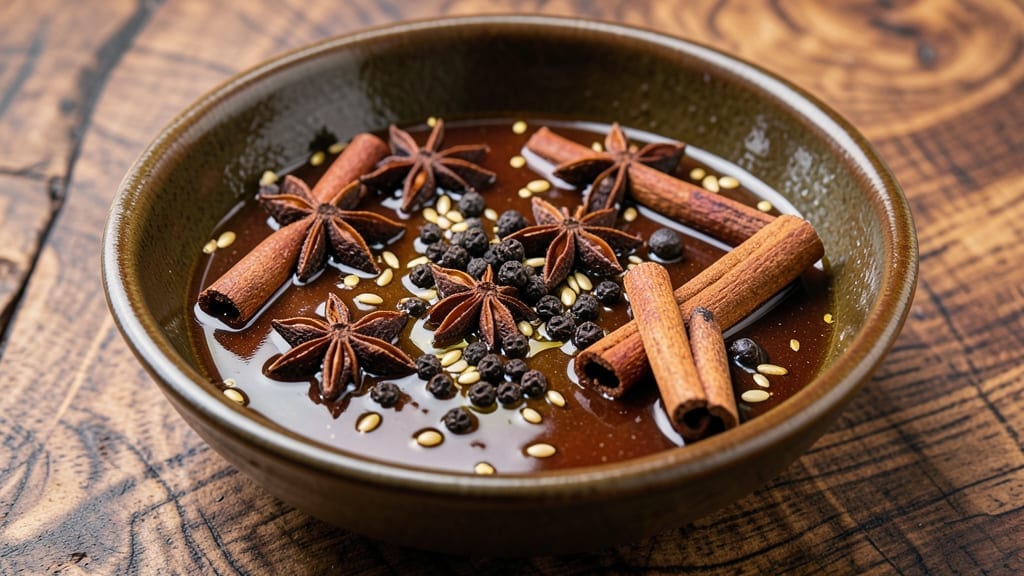
This 5-spice sauce recipe transforms simple dishes into bold, aromatic masterpieces with just a few ingredients and a little patience. The secret lies in toasting whole spices until fragrant—star anise, cinnamon, and Szechuan peppercorn—before blending them into a rich oil base.
I developed this sauce after years of experimenting with Chinese stir-fry techniques, and it’s now my go-to for adding depth to everything from marinades to noodle bowls.
The sauce’s complexity comes from balancing sweet, spicy, and umami notes, all while keeping it versatile enough for multiple uses. A touch of soy sauce and honey rounds out the flavors, while a splash of rice vinegar brightens the finish.
Unlike dry spice blends, this sauce infuses dishes with layers of warmth and complexity that you simply can’t achieve with pre-mixed powders.
What makes this recipe stand out is its long shelf life—up to three months in the fridge—so you can make a big batch and keep it on hand for quick flavor boosts.
Whether you’re marinating chicken for stir-fry, tossing it with noodles, or drizzling it over rice, this sauce elevates every dish with its rich, aromatic depth. The best part? It’s easier to make than you think.
For best results, let the sauce sit for at least 30 minutes before using—this allows the spices to fully infuse the oil. Store it in an airtight jar, and you’ll always have restaurant-quality flavor at your fingertips. Ready to transform your cooking? Let’s make it.
Ingredients for 5 spice sauce
Nine ingredients, endless flavor—this aromatic sauce transforms stir-fries and marinades instantly.
| Ingredient | Amount | Notes |
|---|---|---|
| Star Anise Pods 🌿 | 2 whole | Lightly toasted for aroma |
| Cinnamon Sticks 🌿 | 2 whole | 1-inch pieces preferred |
| Szechuan Peppercorns 🌶️ | 1 tsp | Crushed for texture |
| Cloves 🌿 | 4 whole | Lightly crushed |
| Fennel Seeds 🌿 | 1 tsp | Toasted for warmth |
| Extra-Virgin Olive Oil 🫒 | 1 cup | High-quality for infusion |
| Light Soy Sauce 🍶 | 2 tbsp | Or tamari for gluten-free |
| Honey 🍯 | 1 tbsp | Or maple syrup for vegan |
| Rice Vinegar 🍶 | 1 tbsp | For brightness |
| Garlic Cloves 🧄 | 2 whole | Minced after toasting |
The spices are everything here. Whole spices toast best—hit them in a dry pan until fragrant (about 2 minutes). Penzeys or bulk bins are my go-tos for quality, but any grocery store will have these. Look for star anise pods that smell sweet and resinous, not dusty. Szechuan peppercorns? They’re the secret weapon—they add that signature tingling heat. Toast them separately so they don’t overpower the other spices. The garlic should be fresh (no jarred minced) and toasted with the spices for deeper flavor. Pro tip: crush the cloves and fennel seeds lightly with the side of your knife before toasting.
No star anise? 1/2 tsp anise extract works in a pinch, but it won’t have the same depth. Swap cinnamon for cassia bark if you’re feeling fancy—it’s sweeter and more aromatic. Running low on Szechuan peppercorns? Black peppercorns at double the amount add heat, though they won’t give that signature numbing sensation. The honey can be swapped for maple syrup or agave if you’re avoiding it, and the rice vinegar? Apple cider vinegar is a perfect stand-in. For extra umami, add 1 tsp fish sauce (if not vegetarian) or 1/2 tsp mushroom powder to the blend.
This sauce keeps 3 months in the fridge, sealed tightly in a jar. The flavors actually improve over time as the spices infuse deeper. For long-term storage, freeze in 1-tbsp portions—perfect for quick marinades. Shake well before each use, as the spices settle. I always make a double batch—one for the fridge, one to freeze. The oil base makes it stable, so no need for preservatives. If you notice the spices losing punch after a few weeks, just toast fresh ones and blend them in.
Why You’ll Love This Recipe
- Pantry Magic: I swear by this sauce because it’s made from spices I already had. No extra shopping trips—just star anise, cinnamon, and a few others you’ve probably forgotten about. The whole thing simmers down to a few minutes of stirring while you wait for your rice to cook.
- Warmth in a Bottle: That first taste? It’s like a hug for your taste buds. The star anise and cinnamon give it a deep, cozy sweetness, while the Szechuan peppercorns add a faint, tingling kick that lingers just enough to make you reach for more. Honestly, it’s the kind of flavor that turns a simple stir-fry into something special.
- Game for Any Meal: Between us, this sauce works on everything. Drizzle it over roasted chicken, toss it with noodles, or use it to glaze a steak—it’s the unsung hero of weeknight dinners. I’ve even used it in marinades, and the meat comes out tender and packed with layers of flavor.
- Lasts Long, Costs Little: A little goes a long way, and since it’s mostly spices, it’s dirt cheap to make. I’ve had a jar of this sauce sitting in my fridge for weeks, and it only gets better with time. Plus, the spices themselves are so affordable that you’ll end up with extra to experiment with. (Yes, even on a Tuesday night.)
Step-by-step instructions for 5 spice sauce
Here’s how to infuse bold, aromatic depth into your dishes with this versatile sauce.
Toast the Whole Spices for Maximum Flavor
Heat a dry skillet over medium-low heat and add the 2 whole star anise pods, 2 whole cinnamon sticks, 4 whole cloves, and 1 tsp fennel seeds. Toast for 2-3 minutes until you can smell their warm, earthy aromas filling your kitchen. The spices should turn slightly darker but not burn—watch closely as they can go from perfect to bitter in seconds.
Here’s the thing—this toasting step unlocks the full potential of these spices. When they’re lightly toasted, their flavors become more complex and aromatic. I like to give them a gentle shake of the pan every 30 seconds to ensure even toasting. Once they’re fragrant and just beginning to darken, remove them from heat immediately and let them cool for 5 minutes—this prevents them from releasing bitterness into the oil.
Infuse the Olive Oil with Spice Depth
Pour the 1 cup extra-virgin olive oil into a small saucepan and place it over low heat. Add the toasted spices and the 1 tsp crushed Szechuan peppercorns. Let the mixture simmer gently for 10-12 minutes, stirring occasionally. You’ll notice the oil turning a beautiful golden hue and developing a rich, spiced aroma.
This slow infusion process is where the magic happens. The heat gently extracts the essential oils from the spices, creating a fragrant base. I like to stir every 2-3 minutes to ensure all the spices are properly infused. Don’t let the oil get too hot—keep it at a gentle simmer where you can see tiny bubbles forming but not a vigorous boil. If it gets too hot, the spices can burn and impart bitterness.
Add Garlic and Simmer Until Fragrant
While the oil is still warm, peel and add the 2 whole garlic cloves to the saucepan. Let them sit in the oil for 2 minutes to absorb some of the spice flavors, then remove them and set aside. You’ll use them later for mincing.
Now, carefully strain the infused oil through a fine-mesh sieve into a clean bowl, pressing gently on the spices to extract every last bit of flavor. Discard the used spices—they’ve done their job. The oil should now be deeply aromatic with a beautiful golden color. Let it cool completely before using, as the flavors will continue to develop as it sits.
Combine Wet Ingredients for Balance
In a small bowl, whisk together the 2 tbsp light soy sauce, 1 tbsp honey, and 1 tbsp rice vinegar until fully combined. The honey will help balance the heat from the Szechuan peppercorns while the vinegar adds a bright, tangy note that cuts through the richness.
While you’re whisking, mince the garlic cloves you set aside earlier. Add them to the wet ingredients and give everything one final stir. The minced garlic will add a fresh, pungent note that complements the deep, infused oil. Taste the mixture—it should be sweet, tangy, and slightly salty with a hint of heat. If you want more depth, you can add a pinch of salt or a splash more vinegar.
Blend and Rest for Perfect Texture
Pour the infused oil into the bowl with the wet ingredients and whisk vigorously to combine. The sauce should take on a beautiful golden hue with a glossy sheen. Let it sit at room temperature for 10-15 minutes—this resting period allows all the flavors to meld together perfectly.
After resting, give the sauce one final taste and adjust the seasoning if needed. This sauce is incredibly versatile—use it as a marinade for meats, a stir-fry sauce, or a dipping sauce for spring rolls. When stored in an airtight container in the refrigerator, it’ll keep for up to 2 weeks, with the flavors actually improving over time. The key is to let it come to room temperature before using it again, as cold oil can make the sauce separate slightly.
Pro Tips For Making 5 Spice Sauce
- CRUSH THE SPICES: Whole spices like star anise and cinnamon sticks won’t release their flavor unless you rough them up first. Lightly crush them with the flat side of a knife or roll them under a heavy pan—just enough to break the hard outer shell, not turn them into dust. I learned this the hard way when my first batch tasted like nothing but warm oil.
- TOAST THE PEPPERCORNS: Szechuan peppercorns need a quick dry toast in a hot pan before hitting the sauce. Toss them in for 20 seconds until fragrant—they’ll turn a deeper red and wake up that numbing, citrusy kick. Skip this, and your sauce will taste flat, like someone forgot the spice entirely.
- STRAIN TWICE: After simmering, strain the sauce through a fine-mesh sieve first, then a cheesecloth or coffee filter for a silky finish. The first pass catches cloves and fennel seeds; the second removes the last of the gummy residue that makes your sauce look like mud. Yes, it’s extra work, but the difference is noticeable.
- DILUTE GRADUALLY: Don’t dump all your liquid in at once—add it in thin streams while stirring constantly. This prevents the spices from seizing up and turning your sauce into a clumpy mess. I was skeptical until I tried it: the texture stays smooth, and the flavors meld better. (And no, you won’t ruin it if you do it wrong—just stir like your life depends on it.)
Serving suggestions for this recipe
Stir-Fry Sauce Base
Use this sauce as your go-to stir-fry sauce for dishes like chicken and broccoli or beef with bok choy. Toss 2 tbsp of sauce with 1 tbsp cornstarch and 1 tbsp water to thicken, then pour over hot proteins and veggies.
The aromatic spices will infuse the wok with layers of warmth, while the honey balances the heat. I love adding 1 tsp sesame oil at the end for extra depth. 🌶️
Marinade for Meats
This sauce is a game-changer for marinades—especially for chicken thighs or pork chops. Coat your protein in 3 tbsp of sauce and marinate for 2-4 hours (or overnight for deeper flavor).
The Szechuan peppercorns add a subtle tingling heat, while the star anise gives a sweet, licorice-like depth. Grill or pan-sear for best results. 🔥
Dipping Sauce for Spring Rolls
Thin the sauce with 1 tbsp hot water and a splash of chili oil for a vibrant dipping sauce. The balance of sweet, spicy, and umami makes it perfect for spring rolls, dumplings, or fried tofu.
Serve it warm for extra aroma—just heat the sauce gently in a small pan for 1-2 minutes. Garnish with chopped scallions for freshness. ✨
Rice Bowl Elevator
Drizzle 1 tbsp of sauce over steamed rice before adding your protein and veggies. The spices mingle beautifully with teriyaki-glazed salmon or charred mushrooms. For extra richness, top with a soft-boiled egg and sesame seeds. This turns a simple bowl into a restaurant-worthy meal. 💛
Garnish for Noodles
Add a drizzle of this sauce to ramen, udon, or lo mein just before serving. The oil base coats the noodles perfectly, while the garlic and soy add umami. Sprinkle with crushed peanuts or cilantro for texture contrast. It’s like a flavor bomb in every bite. 🍜
Sauce for Dumplings
Mix 1 tbsp of sauce with 1 tsp hoisin sauce and use it as a dipping sauce for pork or shrimp dumplings. The sweetness of the honey complements the dumpling fillings, while the spices add complexity. Serve warm with a side of pickled veggies for balance. 💫
Nutrition facts
Frequently asked questions
Can I substitute any of the spices in this 5-spice sauce?
The key is maintaining the flavor balance. For star anise, use ½ tsp anise extract (though it won’t be as aromatic). Swap cinnamon for cassia bark (sweeter) or omit it entirely if you dislike warmth. For Szechuan peppercorns, double the black peppercorns for heat (though you’ll lose the tingling effect). Fennel seeds can be replaced with ½ tsp ground fennel if needed.
How do I adjust the heat level in this sauce?
The Szechuan peppercorns provide the signature tingling heat. For milder flavor, reduce them to ½ tsp or omit entirely. If you want more heat, add ¼ tsp chili flakes or a splash of chili oil when using. The honey naturally balances any spiciness, so adjust the ratio if needed—try 1 tbsp honey to 1 tsp vinegar for extra sweetness to counter heat.
Can I make this sauce without olive oil?
Yes! Use avocado oil (neutral flavor) or sesame oil (adds nutty depth). For a lighter version, replace half the oil with low-sodium chicken broth (simmer it first to reduce). Just note that oil-based sauces have longer shelf life. If using broth, store the sauce in the fridge and use within 5 days for best quality.
Why does my sauce look cloudy after refrigerating?
This is normal! The spices settle and can make the sauce appear separated when cold. Simply shake or whisk vigorously before using—it’ll return to its glossy texture. For extra insurance, store it in a glass jar (not plastic) and avoid filling it completely (leave ½ inch headspace). The sauce will always look clearer when warmed up.
What’s the best way to use this sauce with vegetarian dishes?
This sauce shines with tofu, tempeh, or mushrooms. Marinate extra-firm tofu for 30 minutes before pan-frying, or toss with sautéed king oyster mushrooms and serve over rice. For dipping, mix 1 tbsp sauce with 1 tsp maple syrup and a pinch of smoked paprika. The umami from soy sauce makes it perfect for veggie stir-fries too—just add 1 tsp nutritional yeast for extra depth.

- 6 Egg Cake Recipe with Oil: Light as Air With Buttery Moisture - October 4, 2026
- 4 Bean Casserole Recipe: One-Pan Heartiness With Smoky Paprika Depth - October 4, 2026
- 3-Ingredient Keto Mug Cake Recipe: Microwave Magic in 2 Minutes - October 4, 2026