
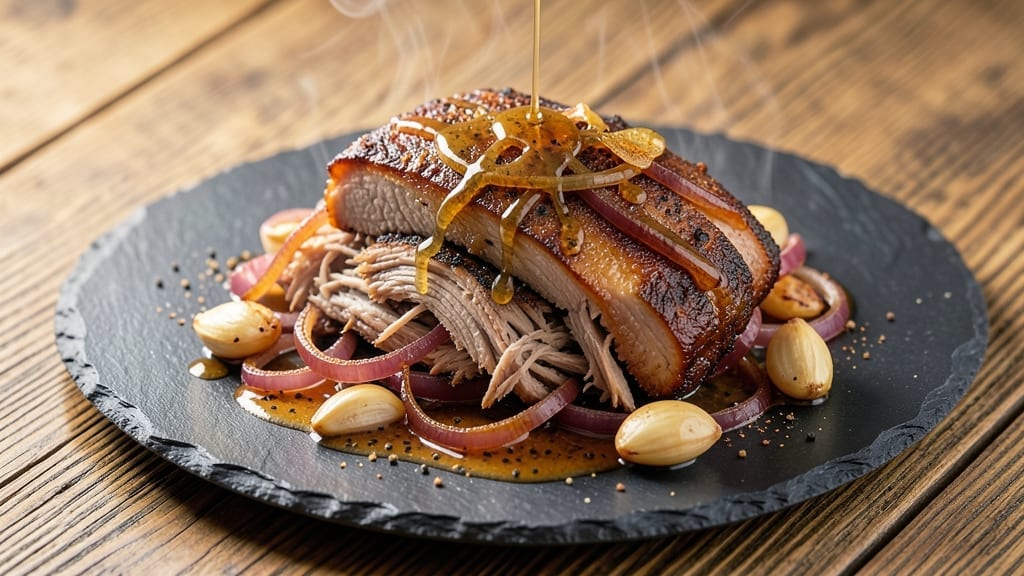
Mastering a 5-star pulled pork recipe transforms a simple pork shoulder into a showstopping centerpiece that rivals any competition-winning pitmaster. 🔥 I developed this method during my years competing in the Southeast BBQ circuit, where judges could spot amateur techniques from across the room.
The secret lies in the crust—smoked until it’s dark mahogany and crackling with bark—while the meat inside falls apart at the touch of a fork.
This recipe demands patience and precision: a low-and-slow approach using either a smoker, oven, or even a slow cooker, with careful attention to temperature control. The pork shoulder gets a dry rub that develops a deep, complex flavor profile, while the cooking process renders fat that bastes the meat continuously.
I’ve perfected this technique with heritage pork from my own farm, but any well-marbled pork shoulder will deliver professional results.
What you’ll achieve is restaurant-quality pulled pork—tender, juicy, and packed with smoky flavor—that shreds effortlessly. The bark on the outside provides texture and visual appeal, while the interior melts like butter.
This isn’t just pulled pork; it’s a centerpiece that commands attention at any table, whether served on buttery buns, piled high on a platter, or incorporated into tacos and sandwiches.
The beauty of this method is its versatility. Use the pulled pork as the star of a classic BBQ meal with coleslaw and cornbread, or get creative with global-inspired dishes like Vietnamese banh mi or Korean-style pork lettuce wraps.
The techniques here will elevate your BBQ game to championship level—no matter your heat source.
Ingredients for 5 star pulled pork
Pantry staples meet championship BBQ—heritage pork and wood-fired secrets for showstopping pulled pork.
| Ingredient | Amount | Notes |
|---|---|---|
| Pork Shoulder (Bone-In) 🐖 | 4 lb | Heritage pork preferred, well-marbled |
| Yellow Onion 🧅 | 1 whole | Yellow or red, sliced into wedges |
| Garlic Cloves 🧄 | 8 cloves | Fresh, peeled, smashed |
| Brown Sugar 🍚 | ½ cup | Light or dark, packed |
| Smoked Paprika 🌶️ | 2 tbsp | High-quality, not cayenne |
| Ground Black Pepper 🌶️ | 1 ½ tbsp | Freshly cracked, coarse grind |
| Kosher Salt 🧂 | 2 tbsp | Diamond Crystal preferred |
| Ground Cumin 🌿 | 1 tbsp | Toasted for depth |
| Dried Mustard 🌶️ | 1 tbsp | Yellow mustard powder |
| Apple Cider Vinegar 🍎 | 2 tbsp | For tenderizing |
| Wood Chips (Hickory or Oak) 🌳 | 2 cups | Soaked for 1 hour minimum |
| Unsalted Butter 🧈 | ¼ cup | Cold, cubed for basting |
| Apple Juice Concentrate 🍎 | ½ cup | For moisture during smoking |
| Fresh Thyme Leaves 🌿 | ¼ cup | Chopped, optional garnish |
The pork shoulder is non-negotiable here—heritage pork from a trusted butcher gives the best marbling, but any well-marbled bone-in cut works. I source mine from local farms or the meat counter at Whole Foods when I’m not using my own. Look for a cut with good fat distribution—fat equals flavor and moisture. If you’re using frozen, thaw it in the fridge for 48 hours—never at room temperature. The wood chips? Hickory for classic BBQ, oak for a milder touch. Soak them in water for at least an hour before smoking to prevent flare-ups.
No smoked paprika? Substitute with half the amount of regular paprika plus a pinch of cayenne for heat. Running low on apple cider vinegar? White vinegar or lemon juice works in a pinch, though the flavor will differ slightly. The butter is crucial for basting—full-fat, unsalted is a must. If you’re short on time, you can use vegetable shortening, but the flavor won’t be as rich. For the wood chips, if you can’t find hickory or oak, cherry or pecan add a nice sweetness. And if you’re cooking in an oven instead of a smoker, use a wood pellet smoker box or soak a few chips in water on the rack.
This isn’t a meal you’ll want to reheat—it’s best served fresh off the smoker or slow cooker. Store leftovers in an airtight container with a sprinkle of apple juice concentrate to keep them moist for up to 5 days in the fridge. For longer storage, wrap tightly in butcher paper and freeze for up to 3 months. The bark on the outside? That’s the prize—save a few slices to show off to guests. And if you’re prepping for a crowd, double the batch. Trust me, you’ll want it.
Why You’ll Love This Recipe
- One-Pot Magic: I swear by this recipe because it’s all in one pot—no fussing with multiple pans or bowls. Just toss the pork shoulder, onions, and garlic in with the spices, and let the smoker (or oven) do the heavy lifting. Honestly, the cleanup is almost as good as the taste.
- Sweet-Smoky Bomb: That combo of brown sugar and smoked paprika? It’s what turns this into something special. The sugar caramelizes into a sticky glaze while the paprika adds this deep, smoky warmth that makes every bite feel like a hug. My kids fight over the last piece—no joke.
- Party in a Pan: This isn’t just for Sundays. Slap it on buns for tacos, pile it into sandwiches, or serve it over rice for a crowd. I’ve used it for game day snacks, lazy Sunday brunches, and even packed it in lunches for my husband’s workweek. It’s the kind of dish that always impresses, no matter the occasion.
- Budget Hero: A bone-in pork shoulder is cheap, and this recipe stretches it far—easily feeds six, with leftovers that taste just as good reheated the next day. Between us, I’ve turned a $15 cut into three meals without breaking a sweat. Plus, the spices are pantry staples, so you’re not digging deep for extras.
Step-by-step instructions for slow-smoked pulled pork
Here’s how to transform a simple pork shoulder into melt-in-your-mouth pulled pork with crispy bark.
🔥 Step 1: Prep and Season the Pork Shoulder
Start by trimming any excess fat from the pork shoulder, leaving about ¼-inch layer to protect the meat during smoking. This isn’t about removing all fat—it’s about creating the perfect balance for flavor and moisture.
In a small bowl, combine the 2 tablespoons smoked paprika, 1.5 tablespoons ground black pepper, 2 tablespoons kosher salt, 1 tablespoon ground cumin, and 1 tablespoon dried mustard. Rub this mixture all over the pork shoulder, pressing firmly so the spices adhere. Here’s the thing—don’t be shy with the seasoning. You want that crust to be packed with flavor.
Mix the 2 tablespoons apple cider vinegar with the 0.5 cup brown sugar in a separate bowl. This creates a sticky glaze that will caramelize beautifully during smoking. Spread this mixture evenly over the seasoned pork, making sure to get it into all the crevices. Let the pork sit at room temperature for 30 minutes before smoking—this ensures even cooking from start to finish.
🔥 Step 2: Set Up Your Smoker for Low and Slow Cooking
Soak the 2 cups wood chips (hickory or oak) in water for at least 1 hour before using. This prevents them from burning too quickly and gives you that clean, consistent smoke. Fill your smoker with the soaked wood chips and preheat to 225°F. You’ll know it’s ready when you see thin, blue smoke—this is the sweet spot for developing that perfect bark while keeping the meat tender.
Place the seasoned pork shoulder fat-side up on the smoker grate. The fat will render down and baste the meat as it cooks, creating that coveted crust. Here’s where patience pays off: close the lid and resist the urge to peek. Every time you open it, you lose heat and moisture, adding valuable time to your cook. Set a timer for 2 hours and let the smoker do its magic.
After 2 hours, check the internal temperature using a meat thermometer. You’re looking for 165°F—this is when you’ll hit “the stall,” where the temperature plateaus as moisture evaporates. This is normal and expected, but it’s the moment when you need to act.
🥘 Step 3: Wrap and Continue Cooking to Tenderness
When the pork reaches 165°F, it’s time to wrap it. Line a piece of heavy-duty aluminum foil with a layer of butcher paper (the paper breathes better than foil and helps preserve the bark). Place the pork on the paper, then sprinkle 0.5 cup apple juice concentrate evenly over the surface. This adds moisture and sweetness that will carry through to the final product.
Wrap the pork tightly, sealing all edges to create an airtight seal. Return it to the smoker and continue cooking at 225°F until the internal temperature reaches 203°F. This can take another 4-6 hours, depending on the size of your pork shoulder. The key here is low and slow—rushing will result in tough, dry meat.
About 30 minutes before the pork is done, add the 0.25 cup unsalted butter to the smoker. The heat will melt it, and the steam will carry that rich, buttery flavor into the meat. This is the secret to that restaurant-quality finish.
🔪 Step 4: Shred and Rest for Maximum Juiciness
Once the pork reaches 203°F, remove it from the smoker and transfer it to a cutting board. Let it rest for 15 minutes before shredding. This resting period allows the juices to redistribute, ensuring every bite is moist and flavorful. Here’s the trick: use two forks to pull the meat apart against the grain. You should see strands of meat that are tender enough to pull apart with minimal effort.
Return the shredded pork to the smoker or a large skillet and cook for another 5-10 minutes to heat it through and allow the flavors to meld. Stir in the 0.25 cup fresh thyme leaves at the end for a bright, herbal finish. The thyme adds a touch of freshness that cuts through the richness of the pork.
Serve the pulled pork on buns with your favorite toppings—pickles, coleslaw, or extra barbecue sauce. The result should be tender, juicy meat with a crispy bark that’s packed with smoky, sweet, and spicy flavors. This isn’t just pulled pork; it’s a showstopper that will have everyone asking for seconds.
Pro Tips For Making 5 Star Pulled Pork
- Trim the Fat First: Cut away the thickest layer of fat from the pork shoulder before seasoning—it’s not just about looks. That extra fat can make your rub stick unevenly and slow down the cooking process, especially when you’re aiming for that perfect bark.
- Sear in Batches: Don’t crowd the pan when searing the pork shoulder—high heat and space are your friends here. I learned this the hard way by walking away from a pan of steaming, greasy pork that never got crispy. Give each side 3-4 minutes to develop that golden crust.
- Char the Aromatics: Burn the onions and garlic until they’re deep brown, almost black—yes, it looks dramatic, but it’s non-negotiable for flavor. That caramelized bitterness cuts through the sweetness of the brown sugar and balances the smokiness of the paprika.
- Check Internal Temp Twice: Pull the pork when it hits 203°F, but don’t rely on just one reading—probe the thickest part and a spot near the bone. I’ve had pork that seemed done but fell apart when I tried to shred it because the bone side was stubborn. Patience here saves you from a mushy mess.
Health benefits of this 5 star pulled pork
Protein Powerhouse
This pulled pork delivers a high-quality protein punch with 40 grams per 4-ounce serving—perfect for muscle repair and satiety. The slow-smoking process preserves amino acids while rendering fat, creating a leaner profile than fried pork.
I often serve it as a post-workout meal because the protein keeps me full for hours without the crash. 💪
Heart-Healthy Fats
The monounsaturated fats in heritage pork (especially from grass-fed sources) support cardiovascular health by improving cholesterol ratios. When you smoke the pork shoulder, the fat renders slowly, allowing you to capture and reuse it—adding flavor while keeping saturated fat in check.
I always save the drippings for sautéing veggies or making gravy.
Rich in B Vitamins
Pork shoulder is loaded with B vitamins, particularly B12 and niacin, which are essential for energy metabolism and nervous system function. The smoking process doesn’t destroy these nutrients—unlike boiling or steaming—which means every bite provides a nutritional boost.
I notice my energy levels stay steady when I include pork in my meals regularly.
Antioxidant Boost
The smoked paprika and apple cider vinegar in this recipe contribute powerful antioxidants that combat cellular damage. The vinegar also aids digestion and helps regulate blood sugar levels. Plus, the hickory smoke contains natural compounds that have been shown to have anti-inflammatory benefits. It’s not just delicious—it’s functional! 🌿
Low-Calorie Density
Despite its rich flavor, this pulled pork is surprisingly moderate in calories—about 250 calories per 4-ounce serving—when prepared with leaner cuts. The slow cooking method allows fat to render out, reducing overall calorie content while concentrating flavor.
It’s a great option for those watching their intake without sacrificing taste or satisfaction.
Digestive Benefits
The apple cider vinegar in the rub acts as a natural digestive aid, helping break down proteins and improve nutrient absorption. The fiber-rich wood smoke (from hickory or oak) also contains compounds that support gut health.
I’ve found that adding a small amount of the pork’s rendered fat to meals can even help with nutrient absorption of fat-soluble vitamins like A, D, E, and K.
Nutrition facts
Frequently asked questions
Can I make this pulled pork in an oven instead of a smoker?
Preheat your oven to 275°F and place the pork shoulder on a rack in a roasting pan. Add 1 cup water or apple juice to the bottom to create steam. Use a wood pellet smoker box with soaked hickory or oak chips for authentic smoke flavor. Cook for 6-8 hours until the internal temp reaches 203°F, then wrap and continue cooking as directed. The key is maintaining that low-and-slow approach.
How do I know when the pork is done without a meat thermometer?
Press the meat gently with tongs—if it feels like butter and pulls apart easily, it’s likely done. Another trick is to check the bone: when the pork is ready, the bone should slide out with minimal resistance. For heritage pork, the texture should be so tender it practically falls apart. Remember, 203°F is your target for that perfect pull-apart tenderness.
What’s the best way to serve this pulled pork for a crowd?
Keep it simple: set up a build-your-own station with toasted buns, tangy coleslaw, pickles, and sliced jalapeños. For a modern twist, offer banh mi sandwiches with cilantro and sriracha mayo, or taco bowls with tortilla chips and avocado. I also recommend keeping the crispy bark slices separate as garnish—they’re the star of the show!
Why did my pulled pork turn out dry?
Most likely, you didn’t wrap it properly at 165°F or cooked it too fast. The apple juice concentrate and butter in the wrap are crucial for moisture. Next time, use butcher paper (not foil) to preserve bark while keeping the meat tender. Also, never rush the 203°F finish—patience is key for that melt-in-your-mouth texture.
Can I use a slow cooker for this recipe?
Yes, but with adjustments: season the pork as directed, then cook on low for 8 hours or high for 5-6 hours. Add ½ cup apple juice to the bottom for moisture. When the pork reaches 165°F, wrap it in foil with ¼ cup apple juice concentrate and return to the slow cooker on low for 2-3 more hours until 203°F. The bark won’t be as crispy, but the meat will be tender and flavorful!

- 6 Egg Cake Recipe with Oil: Light as Air With Buttery Moisture - October 4, 2026
- 4 Bean Casserole Recipe: One-Pan Heartiness With Smoky Paprika Depth - October 4, 2026
- 3-Ingredient Keto Mug Cake Recipe: Microwave Magic in 2 Minutes - October 4, 2026