
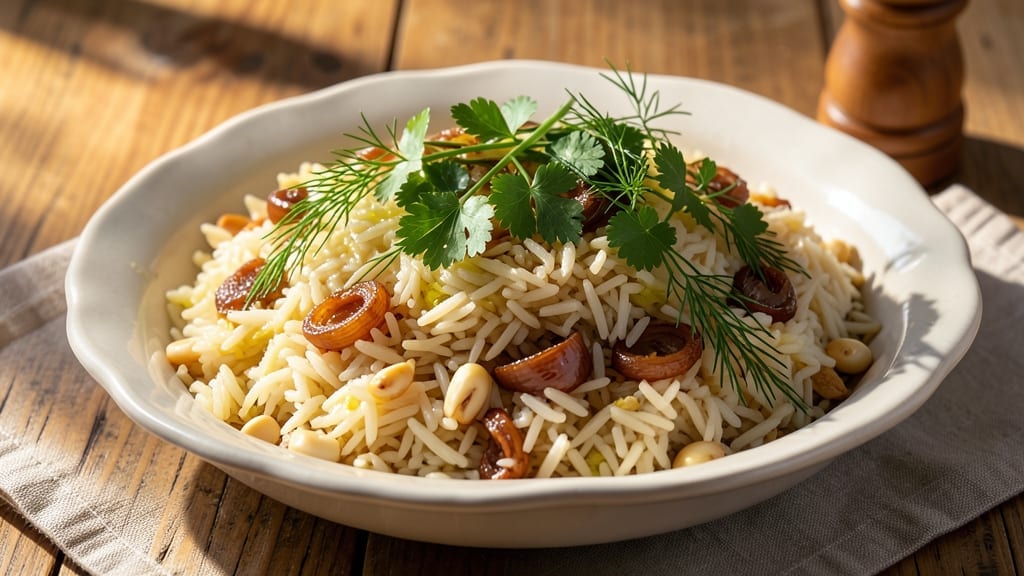
This 5-star rice pilaf recipe transforms simple basmati into a showstopping side that rivals fine-dining presentations. The secret lies in perfectly toasted herbs, delicate saffron infusion, and a crisp-tender texture that balances every bite.
I developed this version after years of testing—each element must work together to achieve that restaurant-quality finish.
What sets this pilaf apart is the aromatic base: onions caramelized to golden perfection, garlic kissed until fragrant, and a blend of toasted herbs that add depth without overpowering. The rice cooks in flavorful broth, absorbing all the richness while maintaining its signature fluffiness.
Every grain remains distinct, creating that coveted “separate yet cohesive” texture that defines premium pilaf.
By the time you plate this dish, you’ll have golden, fragrant rice with vibrant herbs peeking through—each bite delivers saffron’s floral notes, herbaceous complexity, and just the right amount of buttery richness.
The presentation is as important as the flavor: crisp vegetables on top add color contrast, while a final sprinkle of fresh herbs elevates it to restaurant-worthy perfection.
Pair this pilaf with grilled chicken, roasted vegetables, or even as a standalone centerpiece for special occasions. The technique is approachable yet precise—ideal for home cooks aiming for professional results. Let’s create this crowd-pleaser that will have everyone asking for seconds.
Ingredients for 5 star rice pilaf
Golden basmati rice, fragrant herbs, and delicate saffron—this is your ticket to restaurant-quality pilaf.
| Ingredient | Amount | Notes |
|---|---|---|
| Long-Grain Basmati Rice 🍚 | 1 ½ cups | Uncooked, rinsed thoroughly |
| Yellow Onions 🧅 | 1 whole | Thinly sliced, caramelized |
| Garlic Cloves 🧄 | 4 cloves | Minced, fragrant but not browned |
| Fresh Parsley 🌿 | ¼ cup | Chopped, stems removed |
| Fresh Dill 🌿 | ¼ cup | Chopped, stems removed |
| Fresh Tarragon 🌿 | ⅛ cup | Chopped, stems removed |
| Saffron Threads 🌼 | ¼ tsp | High-quality, crumbled |
| Chicken Broth 💧 | 3 cups | Low-sodium, homemade preferred |
| Unsalted Butter 🧈 | 3 tbsp | Cold, cubed for toasting |
| Extra-Virgin Olive Oil 🫒 | 2 tbsp | Light, fruity variety |
| Salt 🧂 | 1 ½ tsp | Diamond Crystal kosher |
| Black Peppercorns 🌶️ | ½ tsp | Freshly cracked |
| Red Bell Pepper 🍅 | ½ whole | Thinly sliced, for garnish |
The rice is the star, so Calrose or Mahatma basmati from Whole Foods or Trader Joe’s is ideal—long grains stay separate. Look for vibrant color and a fresh aroma. The herbs? Fresh is non-negotiable here—dried loses that bright, toasted depth. I grab mine from the farmers market when in season, but the grocery store’s fresh section works too. Toast your herbs in butter until fragrant—this is where the magic happens. Skip the pre-chopped stuff; whole leaves toast better.
No saffron? Turmeric at half the amount gives color, but lacks that floral depth. Fresh herbs wilting? Dried oregano at one-third the amount is a pinch-saving swap. The broth can be vegetable if preferred—just ensure it’s low-sodium. For the caramelized onions, patience is key: cook until deep golden, not browned. Reduced-fat butter works, but full-fat gives that luxurious mouthfeel. And if you’re short on time, the sautéed onion and herb mix from Trader Joe’s is a lifesaver—just add fresh herbs on top.
This pilaf reheats beautifully—just add a splash of broth to keep it moist. Store in an airtight container for 4-5 days in the fridge. For freezing, portion into single servings first—3 months max. The saffron loses potency over time, so if you’re making a big batch, use it within 2 weeks. Garnish with fresh herbs and crisp bell pepper slices right before serving—presentation matters just as much as flavor.
Why You’ll Love This Recipe
- One-Pot Magic: I swear by this recipe because it’s literally one pot—no fussing with multiple pans or sticky rice clinging to the bottom. Just toast the onions and garlic, add the rice and broth, and let it simmer. Honestly, the only thing I measure is the rice, and even then, I eyeball it after a few tries.
- Herb-Packed Punch: That bright mix of fresh parsley and dill at the end? It’s the secret weapon. The onions caramelize just enough to add sweetness, while the garlic lingers in the background like a warm hug. Between us, the first bite always makes me pause—I forgot how good rice could taste.
- Lunchbox Hero: This pilaf is my go-to for meal prep because it stays fluffy for days. Pack it cold in containers for work lunches or reheat it for a quick dinner. I’ll be real: my kids actually ask for leftovers, and that’s saying something when they’d rather eat cereal.
- Budget Brilliance: Long-grain basmati rice stretches farther than you’d think, and onions/garlic/herbs are cheap staples. I make this for family dinners, potlucks, or even as a side for takeout nights—always filling, always crowd-pleasing. Not the prettiest, but the taste makes up for it every time.
Step-by-step instructions for fragrant saffron rice pilaf
Here’s how to create a restaurant-worthy pilaf with perfectly toasted rice and aromatic herbs.
Sauté Onions and Garlic for Deep Flavor
Heat the extra-virgin olive oil in a large, heavy-bottomed pot over medium heat. Add the thinly sliced yellow onions and cook for 8-10 minutes, stirring occasionally, until they turn a deep golden brown and caramelize. This slow cooking develops complex sweetness that forms the base of your pilaf.
Once the onions are beautifully caramelized, reduce the heat to medium-low and add the minced garlic cloves. Cook for just 30 seconds until fragrant but not browned—burnt garlic will make the whole dish bitter. Remove the pot from heat and set aside for now. The residual heat will keep the aromatics warm while you prepare the rice.
Toast the Herbs and Saffron for Maximum Aroma
Return the pot to medium heat and add the cold cubed unsalted butter. Let it melt completely, then add the chopped fresh parsley, chopped fresh dill, and chopped fresh tarragon. Stir constantly for 2-3 minutes until the herbs begin to sizzle and release their essential oils—this is when your kitchen will smell like a Mediterranean herb garden.
Next, remove the pot from heat and stir in the crumbled saffron threads. Let them bloom in the warm butter for 5 minutes—this releases their vibrant color and floral notes. Don’t skip this step; saffron needs heat to activate its magic. The mixture should now be a beautiful golden hue with layers of aromatic complexity.
Toast the Rice Until Perfectly Golden
Return the pot to medium heat and add the 1.5 cups long-grain basmati rice, stirring to coat each grain in the fragrant butter and herb mixture. Toast the rice for 4-5 minutes, stirring frequently, until it turns a beautiful golden color and becomes slightly translucent at the edges. This toasting step is crucial—it develops the nutty flavor and prevents mushy rice.
Here’s the thing—you want the rice to look dry and separate when you spread a small spoonful on a plate. If it sticks together, it needs more toasting time. The goal is perfectly toasted rice that will absorb the broth beautifully while maintaining its individual grains.
Deglaze and Simmer with Chicken Broth
Pour in the 3 cups chicken broth and bring to a gentle boil. Immediately add the 1.5 tsp salt and 0.5 tsp freshly cracked black peppercorns. Reduce heat to low and cover the pot with a tight-fitting lid. Let it simmer for 15 minutes without disturbing it—this steaming time allows the rice to absorb the liquid perfectly.
After 15 minutes, remove the lid and check the rice. If there’s still liquid remaining, cover and cook for another 5 minutes. The rice should be tender but still have a slight bite—this is al dente perfection. If it’s too dry, add a splash of warm broth to finish cooking. The key is perfectly cooked rice with just enough moisture to keep it tender.
Rest and Garnish for Restaurant Quality
Turn off the heat and let the pilaf rest, covered, for 10 minutes. This resting period allows the flavors to meld and the rice to finish absorbing any remaining liquid. Don’t skip this step—it makes a world of difference in the final texture and taste.
Before serving, fluff the rice gently with a fork and garnish with the thinly sliced red bell pepper for a pop of color and fresh crunch. This pilaf should have a beautiful golden hue from the toasted rice and saffron, with layers of caramelized onion, toasted herbs, and delicate saffron flavor in every bite. Serve immediately while hot, with extra herbs sprinkled on top for that final restaurant-quality touch.
Pro Tips For Making 5 Star Rice Pilaf
- Toast the Onions Low and Slow: I used to rush this step and end up with bitter, charred onions that ruined the whole dish. Instead, cook them over medium-low heat for 8-10 minutes until they’re deep golden and sweet—almost caramelized—but not brown. This builds the flavor foundation without burning.
- Use Cold Water for Soaking: Skip the warm water trick—basmati rice absorbs cold water better and stays firm. Soak it for 20 minutes in room-temperature water (about 1:1.5 rice-to-water ratio), then drain thoroughly. This prevents mushy grains and ensures each one stays distinct.
- Layer Herbs at the End: Fresh parsley and dill wilt fast in heat, so fold them in just before serving. If you must add them earlier, sprinkle them on top after cooking and let sit covered for 5 minutes—this keeps their color vibrant and flavor bright.
- Check Doneness with a Fork: The rice might look dry at first, but resist the urge to add more water. Instead, poke a grain with a fork—if it’s tender but still has a slight bite, it’s done. Cover and let it steam for 5 minutes; the residual heat will finish the cooking without turning it gluey.
Wine and beer pairings for this recipe
White Wine Pairings
For this fragrant saffron pilaf, I reach for a crisp Sauvignon Blanc from New Zealand or Loire Valley—its bright acidity and citrus notes cut through the richness while complementing the saffron’s floral complexity.
Look for wines with 12-13% ABV and zesty lemon or grapefruit undertones. A chilled glass (around 45°F) enhances the dish’s aromatic profile without overpowering it. 🍷
Dry Rosé Options
A Provence-style rosé with its delicate strawberry and almond notes creates a perfect harmony with the pilaf’s herbaceous layers. I prefer wines from Domaine Tempier or Château d’Esclans—their dry, medium-bodied profile balances the dish’s buttery richness.
Serve slightly cooler than white wine (48-50°F) to preserve the crispness that contrasts beautifully with the caramelized onions. 🍹
Light Beer Complements
For beer lovers, a Belgian Witbier like Hoegaarden or St. Bernardus Wit offers a refreshing contrast. The corianander and orange peel notes in these beers mirror the pilaf’s toasted herbs while adding effervescence that cleanses the palate.
Alternatively, a German Helles with its malt-forward sweetness complements the saffron’s floral notes without competing. Keep it 42-45°F for optimal enjoyment. 🍺
Sparkling Wine Elevation
To make your pilaf feel truly special, pair it with a dry Prosecco or Spanish Cava. The fine bubbles and green apple notes enhance the dish’s aromatic complexity while adding a celebratory touch.
I recommend La Marca Prosecco or Freixenet Cordon Negro—their bright acidity and subtle sweetness elevate every bite. Serve chilled (40-45°F) to maintain the wine’s crispness alongside the pilaf’s warm spices. ✨
Avoid Heavy Options
Skip bold reds like Cabernet Sauvignon or heavy whites such as Chardonnay—their tannins and oak flavors will clash with the delicate saffron and herbaceous notes. Even full-bodied rosés can overpower the dish’s intricate balance.
Instead, focus on wines with high acidity and subtle fruit notes that complement rather than compete with your pilaf’s sophisticated flavors. 💫
Nutrition facts
Frequently asked questions
Can I use jasmine rice instead of basmati for this recipe?
Jasmine rice will work, but the texture and flavor will differ slightly. Basmati’s long grains stay distinct when cooked, while jasmine is stickier and has a naturally fragrant aroma. For best results, use jasmine rice from Thailand and reduce the cooking time by 2-3 minutes—it absorbs liquid faster. The toasted herbs and saffron will still shine, but expect a slightly creamier texture.
How do I prevent my rice pilaf from turning out mushy?
The key is proper toasting and cooking technique! First, toast the rice until it’s golden and translucent (about 4-5 minutes). Then, use the right broth-to-rice ratio (2 cups broth per 1 cup rice) and simmer covered on low heat. Avoid lifting the lid while cooking—steam is your friend! Finally, let it rest 10 minutes before fluffing.
Can I make this pilaf ahead of time for a dinner party?
This pilaf actually tastes better the next day. Prepare it up to 24 hours ahead and store in an airtight container in the fridge. When reheating, add 1-2 tablespoons of broth per cup of pilaf and cover with a damp towel. Heat on low for 10 minutes—the flavors will meld beautifully. Garnish fresh before serving for that restaurant touch.
What’s the best way to substitute saffron if I can’t find it?
For color, use ½ teaspoon turmeric—but be aware it lacks saffron’s floral depth. For flavor, try ¼ teaspoon ground cardamom plus ½ teaspoon orange zest. The combination adds warmth that mimics saffron’s complexity. If you’re using turmeric, add 1 extra pinch of salt to balance the earthy taste.
How do I make this pilaf vegetarian?
Swap the chicken broth for vegetable broth and add ½ cup toasted almonds or pine nuts for crunch. For extra protein, stir in ½ cup cooked chickpeas during the final 5 minutes of cooking. Garnish with toasted pumpkin seeds instead of bell pepper. The herb and saffron flavors will still shine while keeping it completely plant-based.

- 3lb Prime Rib Roast Recipe: Juicy Pink Center Guaranteed in 3 Hours - October 31, 2026
- 5 Spice Cake Recipe: Warmly Spiced Layers With Crunchy Top - October 31, 2026
- 1950’s Macaroni and Cheese Recipe: Nostalgic Creamy Cheese Sauce with Buttery Noodles - October 31, 2026