
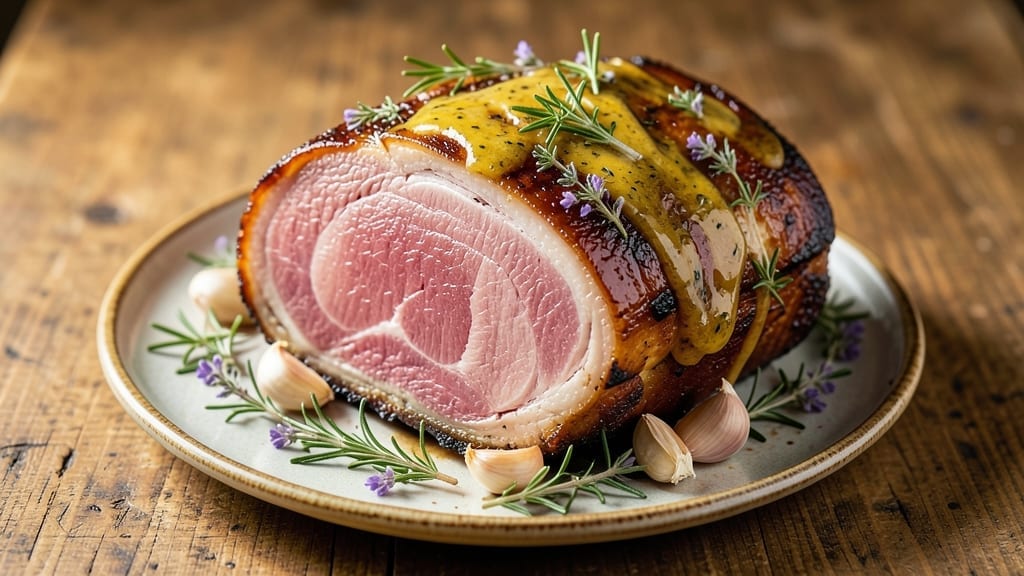
A 5.5 lb standing rib roast cooked to juicy pink perfection transforms Sunday dinner from ordinary to extraordinary.
After years of perfecting this technique—starting with my father’s handwritten notes from Pittsburgh butcher shops—I’ve refined a method that delivers tender, flavorful meat with a crisp herb crust and that coveted pink center. The secret lies in precise temperature control and patience; rushing this cut ruins everything.
This recipe focuses on two critical elements: a dry-brine overnight for unmatched tenderness and a high-heat sear that locks in juices while developing a flavorful crust.
You’ll work with a prime cut that rewards careful handling, and the herb crust (rosemary, thyme, garlic, and Dijon) adds aromatic depth without overpowering the natural beef flavor. The standing position during cooking ensures even heat distribution, eliminating the risk of dry edges or uneven doneness.
What you’ll achieve is a roast with juicy pink centers (120–130°F internal temperature) surrounded by a golden-brown crust, all while maintaining that melt-in-your-mouth texture that makes every bite worth the effort.
The aroma alone—herbs, roasted meat, and caramelizing crust—will have your kitchen smelling like a high-end steakhouse. This isn’t just dinner; it’s an experience that makes guests ask for seconds before dessert.
Serve with classic accompaniments like roasted garlic mashed potatoes, a bold red wine reduction, or simply sliced with extra herb butter. The leftovers reheat beautifully for sandwiches the next day, though I’ve never been known to let them last that long.
Let’s get started on creating your best roast yet—one that’ll have you questioning why you ever bought pre-packaged roasts from the grocery store.
Ingredients for 5.5 lb standing rib roast
Six aromatic ingredients transform a simple roast into a showstopping centerpiece.
| Ingredient | Amount | Notes |
|---|---|---|
| Standing Rib Roast (Prime Cut) 🥩 | 5 ½ lb | Bone-in, center-cut preferred |
| Kosher Salt 🧂 | 1 ½ tbsp | Diamond Crystal preferred |
| Fresh Rosemary 🌿 | ½ cup | Needles finely chopped |
| Fresh Thyme 🌿 | ¼ cup | Leaves only, stems removed |
| Garlic Cloves 🧄 | 6 cloves | Smashed but not minced |
| Dijon Mustard 🍯 | 2 tbsp | High-quality, no additives |
| Extra-Virgin Olive Oil 🫒 | ¼ cup | For crust and searing |
| Black Peppercorns 🌶️ | 1 tbsp | Freshly cracked |
| Unsalted Butter 🧈 | ½ cup | Cold, cubed for basting |
| Red Wine 🍷 | ½ cup | Bold dry variety (Cabernet Sauvignon) |
| Fresh Parsley 🌿 | ¼ cup | Chopped, for garnish |
| Beef Tallow or Duck Fat 🧊 | 2 tbsp | For high-heat sear |
The roast itself is non-negotiable—prime cut with good marbling is essential for that melt-in-your-mouth texture. Pittsburgh butcher shops or high-end grocery stores like Whole Foods carry the best quality. Look for a roast with a thick layer of fat cap—this protects the meat during cooking. If you’re buying online, Snake River Farms delivers dry-aged rib roasts that are absolutely worth the splurge. The herb crust relies on fresh rosemary and thyme, so skip the dried stuff here—farmers markets often have the freshest bunches. For the garlic, elephant garlic adds a milder, sweeter flavor if you prefer.
No fresh rosemary? Dried at one-quarter the amount works in a pinch, but the flavor won’t be as bright. Substituting Dijon mustard? Yellow mustard with a splash of apple cider vinegar mimics the tang. The red wine is non-negotiable for basting—Cabernet Sauvignon or Merlot both work beautifully. For the fat, if tallow isn’t available, duck fat or high-smoke-point oil like avocado oil does the job. The beef tallow adds incredible richness, but don’t skip it if you’re short on time—just use extra butter. The parsley is purely for presentation, so dried works fine if you’re in a bind, though fresh leaves give that pop of color.
This roast is a 24-hour project—start with the dry brine overnight. The roast itself keeps beautifully for 3-4 days in the fridge, but the herb crust loses its crispness after 2 days. For leftovers, slice thinly and reheat in a 350°F oven for 20 minutes with a splash of beef broth to keep it moist. Freeze portions for up to 3 months, though I’ve never had leftovers last that long. The herb butter? Make extra—it’s perfect for sandwiches or slathering on fresh bread. Store the roast wrapped tightly in butcher paper, not plastic, to prevent drying.
Why You’ll Love This Recipe
- Hands-Off Roast: I swear by this method—just salt, herbs, and garlic rubbed in exactly 20 minutes before roasting. No basting, no fuss, and the crust forms like magic while you sip wine (or coffee, no judgment).
- Crispy-Creamy Magic: That prime cut? It delivers—juicy, melt-in-your-mouth center with a rosemary-thyme crust so fragrant it’ll make your kitchen smell like a French bistro. The garlic cloves roasted into the fat? Chef’s kiss.
- Weeknight Wonder: Between us, this is my “I have no idea what I’m doing but it’ll work” roast. Feed a crowd for Sunday dinner, or slice leftovers into sandwiches all week. (Yes, even on a Tuesday night.)
- Leftovers That Win: Honestly, I make this specifically for the leftovers—shredded into pasta, mashed into potatoes, or tossed in eggs. A 5.5 lb roast means dinner for days without the stress of daily cooking.
Step-by-step instructions for herb-crusted standing rib roast
Here’s how to transform that prime cut into the most tender, flavorful roast you’ve ever made.
Prepare the Herb Crust and Season the Roast
In a food processor, combine the 0.5 cup fresh rosemary, 0.25 cup fresh thyme, 6 cloves garlic cloves, 2 tbsp Dijon mustard, 1 tbsp freshly cracked black peppercorns, and 1.5 tbsp kosher salt. Pulse until finely chopped but not pasty—you want visible texture. With the processor running, slowly add the 0.25 cup extra-virgin olive oil until the mixture forms a coarse paste. This will become your flavor-packed crust.
Pat the 5.5 lb standing rib roast dry with paper towels—this is critical for crispy skin. Spread the herb paste evenly over all surfaces, pressing it firmly into the meat. Let it sit at room temperature for 30 minutes while you preheat your oven. Here’s the thing—this resting period lets the seasoning penetrate and the meat cook more evenly from the start.
Sear the Roast for Maximum Flavor
Preheat your oven to 450°F with a rack positioned in the lower third. Heat a heavy oven-safe skillet over high heat until smoking. Add the 2 tbsp beef tallow or duck fat and swirl to coat the pan completely. Place the roast in the skillet, fat-side down, and sear for 4-5 minutes until the crust is deeply golden brown. Flip and sear the other side for another 4-5 minutes. Don’t rush this step—the Maillard reaction happening here creates that incredible depth of flavor.
Transfer the skillet to the preheated oven. Roast for 15 minutes at 450°F to blister the crust further. Then reduce the heat to 325°F and continue roasting for 2-2.5 hours, or until the internal temperature reaches 125°F at the thickest part of the roast. I know it seems counterintuitive to stop at medium-rare, but this standing rib roast has so much natural fat that it’ll carry through to perfect medium-rare with a juicy pink heart.
Baste and Finish with Wine Butter
About 30 minutes before the roast is done, prepare the basting butter. In a small saucepan, melt the 0.5 cup unsalted butter over low heat, then whisk in the 0.5 cup red wine and simmer until reduced by half—about 3-4 minutes. The butter should be glossy and fragrant. Remove from heat and set aside.
When the roast reaches 125°F, remove it from the oven and brush generously with the wine butter. Return to the oven for 10 minutes at 325°F to let the basting butter caramelize slightly. This step adds another layer of richness and helps create that beautiful glossy finish. The roast is done when the internal temperature reaches 130-135°F—this gives you that perfect medium-rare center.
Rest and Garnish for Presentation
Transfer the roast to a cutting board and tent loosely with foil. Let it rest for 20-30 minutes—this is absolutely crucial for juicy slices. During this time, the juices redistribute throughout the meat instead of pooling in the center. I know it’s hard to wait, but trust me on this. While it rests, finely chop the 0.25 cup fresh parsley for garnish.
Slice between the ribs, cutting through the bone to create elegant portions. Arrange on a warm platter, drizzle with any accumulated pan juices, and sprinkle with the chopped parsley. Each slice should reveal that beautiful pink center surrounded by perfectly browned crust. Serve immediately with roasted vegetables or creamy mashed potatoes to soak up all those delicious juices.
Pro Tips For Making 5.5 Lb Standing Rib Roast
- Start with a Hot Pan: Get that roast screaming hot for the first 3 minutes—no gentle warming. I used to low-and-slow from the start, and my crust was always sad and pale. Prime rib needs that initial shock to the surface to lock in juices and build flavor.
- Salt the Night Before: Toss the roast with a generous coat of kosher salt (about 2 tablespoons) and let it sit uncovered in the fridge for 12–24 hours. Sounds weird, but it works: the salt penetrates deeper, and the crust forms faster. (Yes, even if you’re impatient like me.)
- Skip the Overcrowded Pan: If you’re searing in a cast-iron skillet, do not add garlic or herbs until the roast is browned and removed. I learned this the hard way—crowding steams the garlic and turns the herbs to mush before they even hit the heat.
- Rest Under Foil: Give it a solid 5–10 minutes under foil before slicing—no peeking. I used to cut into it too soon, and the juices pooled on my plate instead of on the meat. (Your future self will thank you.)
Regional styles of these flavors
Classic Texas Style
In Texas, rib roasts are all about bold flavors and slow cooking—think of it as a cross between a pot roast and a prime cut.
The Lone Star approach focuses on a dry rub with smoked paprika, brown sugar, and cayenne pepper (about 1 tbsp each) mixed with the herb crust. Cook the roast at 275°F for 4-5 hours until it reaches 130°F internal temperature.
The low-and-slow method creates tender meat that practically falls apart, perfect for sandwiches. I’ve done this version at backyard BBQs in Denver, and it’s a crowd-pleaser every time. 🌶️
French Bistro Technique
French chefs take rib roasts to another level with a red wine reduction and herb butter basting every 30 minutes. Start by searing the roast in a Dutch oven with 2 tbsp duck fat, then deglaze with 1 cup red wine and reduce to a glossy sauce.
Baste continuously while roasting at 300°F until reaching 125°F internal temperature. The French method emphasizes elegance—serve with a béarnaise sauce and roasted shallots. This version feels fancy but is surprisingly approachable for home cooks.
Italian Sunday Roast
For an Italian twist, swap the Dijon mustard for 1 tbsp grated Parmesan and add 1 tsp dried oregano to the herb crust. Cook the roast at 325°F until 130°F internal temperature, then slice and serve with a rosemary-infused white wine sauce.
The Italians focus on family-style dining—this roast becomes the centerpiece of a feast with polenta, roasted vegetables, and a simple green salad. I first tried this version at a friend’s home in Pittsburgh, and it’s become a staple at our holiday gatherings.
The Parmesan adds a nutty depth that pairs beautifully with the herbs.
Denver Mountain Style
Here in the Rockies, we love adding local touches—like wild garlic from nearby forests and a splash of local honey in the basting butter. Cook the roast at 300°F until 125°F internal temperature, then baste with a mix of melted butter, honey, and a pinch of smoked salt.
The honey adds a subtle sweetness that balances the savory herbs. Serve with roasted root vegetables and a crisp white wine. This version is perfect for chilly mountain evenings and feels like a cozy hug on a plate. 🏔️
Caribbean Jerk-Inspired
For a bold twist, add 1 tbsp jerk seasoning (store-bought or homemade with allspice, Scotch bonnet, and thyme) to the herb crust. Sear the roast in a cast-iron skillet, then roast at 325°F until 130°F internal temperature.
The jerk seasoning brings heat and tropical notes that pair surprisingly well with the beef. Serve with grilled pineapple and coconut rice for a fusion feast. This version is a hit at summer cookouts and brings a taste of the islands to your Denver kitchen.
Nutrition facts
Frequently asked questions
Why does the recipe call for resting the roast for 20-30 minutes?
Resting allows the juices to redistribute throughout the meat instead of pooling in the center. When you slice immediately, those juices escape, leaving you with dry meat. The 20-30 minute window is ideal for a 5.5 lb roast—this size benefits from the extra time to ensure every slice stays moist and tender.
Can I cook this roast without a meat thermometer?
While possible, it’s risky. The 125-130°F internal temperature is critical for perfect medium-rare. A visual guide: the crust should be deep golden brown, and the roast should feel slightly springy when pressed. For extra safety, cut into a small section—the center should look juicy with a pink hue, not gray.
How do I adjust cooking time if my oven runs hot or cold?
Oven temperature variations are common. If your oven runs hot, reduce the temperature by 25°F (e.g., cook at 300°F instead of 325°F). For cold ovens, increase by 25°F. Always use an oven thermometer to check accuracy. The key is maintaining 125-130°F internal temp—adjust time as needed, but never exceed 3 hours at 325°F for this size roast.
What’s the best way to reheat leftovers?
Slice thinly and reheat in a 350°F oven for 20 minutes with a splash of beef broth to retain moisture. For sandwiches, warm slices in a skillet over medium heat for 1-2 minutes per side. Microwaving dries out the meat—always avoid it. Leftovers keep well for 3-4 days in the fridge, but the herb crust loses crispness after 2 days.
Can I substitute beef tallow with regular butter?
Yes, but expect less crispy crust and slightly different flavor. Use 4 tbsp cold butter instead of 2 tbsp tallow—the higher fat content helps mimic the searing effect. For best results, use duck fat or high-smoke-point oil (like avocado oil) if you’re avoiding tallow. The fat choice affects texture more than flavor in this recipe.

- 3lb Prime Rib Roast Recipe: Juicy Pink Center Guaranteed in 3 Hours - October 31, 2026
- 5 Spice Cake Recipe: Warmly Spiced Layers With Crunchy Top - October 31, 2026
- 1950’s Macaroni and Cheese Recipe: Nostalgic Creamy Cheese Sauce with Buttery Noodles - October 31, 2026