
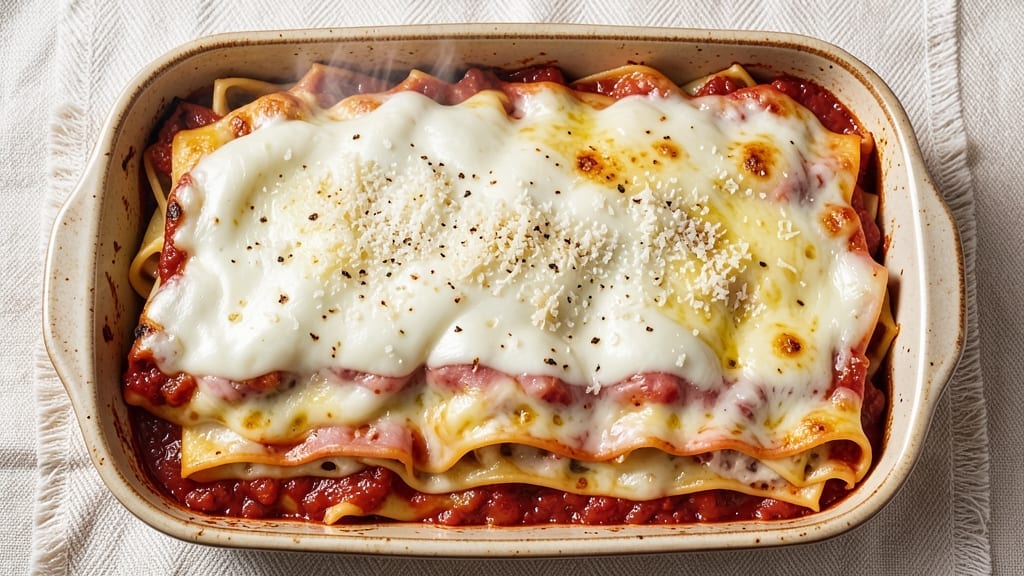
This 6 cheese lasagna recipe delivers the ultimate comfort food experience with layers of creamy ricotta, gooey mozzarella, and perfectly melted parmesan—every bite is a symphony of textures and flavors.
The secret lies in balancing six distinct cheeses (mozzarella, ricotta, parmesan, provolone, fontina, and asiago) to create a rich, complex sauce that clings to each tender lasagna noodle.
After years of perfecting this dish, I’ve developed a foolproof method that ensures your lasagna comes out with crispy edges, bubbling cheese, and layers that hold together beautifully.
What sets this recipe apart is the 30-minute prep time followed by a 45-minute bake, making it perfect for a Sunday dinner that feels special without requiring all day in the kitchen. The key technique?
Layering the cheese mixture between cooked lasagna noodles and marinara sauce, then finishing with a final blanket of mozzarella to create that signature golden crust. Even beginners will achieve restaurant-quality results with this method—no overcooking or soggy noodles here.
By the time it emerges from the oven, you’ll have a lasagna so rich and flavorful that it becomes the centerpiece of any meal.
The combination of creamy ricotta, sharp parmesan, and melty mozzarella creates a texture that’s impossible to resist—each forkful delivers layers of cheesy goodness with just the right balance of tangy tomato sauce. Serve with a simple arugula salad or garlic bread to round out the meal.
This lasagna reheats beautifully for leftovers, making it ideal for meal prep or feeding a crowd. The recipe scales easily, so you can double or triple the ingredients without sacrificing texture or flavor.
Whether you’re hosting a family gathering or simply craving a comforting classic, this six-cheese masterpiece delivers every time.
Ingredients for 6 cheese lasagna
Six cheeses, one perfect lasagna—where creamy ricotta meets sharp asiago in every layer.
| Ingredient | Amount | Notes |
|---|---|---|
| Lasagna Noodles 🍝 | 12 pieces | No-boil preferred for texture |
| Marinara Sauce 🍅 | 2 ½ cups | Homemade or high-quality jarred |
| Ricotta Cheese 🧀 | 1 ½ cups | Whole-milk, part-skim preferred |
| Mozzarella Cheese 🧀 | 1 ½ cups | Fresh, shredded (low-moisture) |
| Parmesan Cheese 🧀 | 1 cup | Freshly grated, block preferred |
| Provolone Cheese 🧀 | ¾ cup | Shredded, mild variety |
| Fontina Cheese 🧀 | ½ cup | Shredded, creamy texture |
| Asiago Cheese 🧀 | ½ cup | Shredded, aged variety |
| Large Eggs 🥚 | 2 whole | Room temperature for binding |
| Garlic Cloves 🧄 | 4 cloves | Minced for flavor base |
| Fresh Basil Leaves 🌿 | ¼ cup | Chopped, for fresh aroma |
| Extra-Virgin Olive Oil 🫒 | 2 tbsp | For sautéing garlic |
| Diamond Crystal Kosher Salt 🧂 | 1 ½ tsp | Adjust to taste |
| Freshly Ground Black Pepper 🌶️ | ½ tsp | For seasoning |
The cheese selection is non-negotiable here. Whole-milk ricotta creates the signature creaminess, while aged asiago and provolone bring depth. For the best results, grate your own Parmesan—pre-shredded contains anti-caking agents that prevent proper melting. Whole Foods and Trader Joe’s carry excellent imported cheeses, but any reputable grocery store’s deli section will have quality options. Fontina’s creamy texture is key—look for blocks, not pre-shredded. The ricotta should be smooth with minimal water content; drain it for 15 minutes if needed. For the lasagna noodles, no-boil varieties save time and prevent sogginess, though traditional noodles work if cooked al dente.
No ricotta? Cottage cheese blended until smooth works in a pinch, though texture differs. Substituting cheeses? Gouda can replace provolone, and Gruyère swaps fontina for a nuttier profile. Fresh basil is ideal, but dried oregano at half the amount suffices. The marinara can be homemade (simmer crushed tomatoes, garlic, and olive oil) or a high-quality jarred sauce like Rao’s. Avoid chunky sauces—they disrupt layering. For a richer flavor base, sauté the garlic in extra-virgin olive oil until fragrant but not browned. Pre-shredded cheese contains additives that prevent proper melting, so grating your own is worth the extra minute.
Assemble the lasagna up to 24 hours ahead and refrigerate—it develops deeper flavors. Bake just before serving to maintain crisp edges. Leftovers reheat beautifully in the oven at 375°F for 15-20 minutes, covered with foil. For make-ahead convenience, freeze unbaked lasagna (without cheese topping) for up to 3 months1 day ahead and stored in an airtight container. When reheating, cover loosely with foil to prevent over-browning.
Why You’ll Love This Recipe
- No-Bake Layers: I swear by this trick—just spread the ricotta and marinara between noodles, then top with cheese. No boiling, no waiting. Honestly, my kids think it’s a magic trick when I pull it out of the oven.
- Melty Magic Combo: That first bite? Crispy edges from the mozzarella, creamy ricotta pull, and parmesan dusting on top. It’s the kind of lasagna where every layer feels like a hug—especially when I’m too tired to stand.
- Reheats Like a Dream: Leftovers? No problem. The cheeses stay gooey, not rubbery, and it’s my go-to for lunches all week. I’ll be real: I’ve microwaved this straight from the fridge, and no one’s ever complained.
- Budget Crowd-Pleaser: Six cheeses sound fancy, but I use store-brand ricotta and shredded mozzarella—still tastes ridiculous. Feeds six for under $15, and my picky eaters actually finish their plates. (Yes, even on a Tuesday night.)
Step-by-step instructions for 6 cheese lasagna
Here’s how to assemble layers of rich cheeses and tender noodles for lasagna that melts in your mouth.
Prepare the Cheese Mixture
In a large bowl, combine the 1.5 cups ricotta cheese, 2 whole large eggs, 0.5 tsp freshly ground black pepper, and 1 tsp diamond crystal kosher salt. Mix thoroughly until smooth and well incorporated. This mixture forms the creamy, velvety layer that binds your lasagna together.
Next, fold in 0.5 cup asiago cheese and 0.5 cup fontina cheese using a rubber spatula. These cheeses add depth of flavor and a luxurious meltiness that sets this lasagna apart. The combination of ricotta’s creaminess with the aged, nutty asiago and buttery fontina creates the perfect balance of textures and tastes.
Sauté the Garlic and Basil
Heat 2 tbsp extra-virgin olive oil in a small skillet over medium-low heat. Add the 4 cloves minced garlic and sauté for 1-2 minutes until fragrant but not browned. Immediately remove from heat and stir in the 0.25 cup chopped fresh basil leaves. Let this mixture cool slightly before using.
This aromatic base enhances the entire lasagna with bright, fresh flavors that cut through the richness of the cheeses. The garlic should be cooked just until its sharp edge softens, while the basil adds a vibrant freshness that makes each bite feel like a garden party in your mouth.
Assemble the Lasagna Layers
In a 9×13-inch baking dish, spread 1 cup marinara sauce evenly on the bottom. This creates a flavorful foundation for your first layer of 4 lasagna noodles. I prefer using no-boil noodles for convenience, but if using regular noodles, cook them al dente and drain well before layering.
Spread half of the ricotta mixture over the noodles, followed by 0.5 cup mozzarella cheese, 0.25 cup provolone cheese, and 0.25 cup parmesan cheese. Repeat with another layer of noodles, remaining marinara sauce, and the remaining cheese mixture. Top with the final layer of noodles and remaining cheeses.
Bake to Perfection
Cover the baking dish tightly with aluminum foil and bake at 375°F for 30 minutes. Remove the foil and bake for an additional 15-20 minutes until the top is golden brown and bubbly. The edges should be slightly crisp while the center remains creamy.
This baking process creates the ideal texture contrast—crispy edges that give way to tender, gooey layers. The foil helps steam the lasagna initially, preventing the top from drying out, while the uncovered finish creates that beautiful browned crust we all crave.
Rest and Serve
Remove from the oven and let the lasagna rest for 10-15 minutes before slicing. This resting period allows the layers to set and the juices to redistribute, ensuring each forkful is rich and flavorful. The cheese mixture will have thickened slightly, creating that perfect pull-apart texture.
Slice into 6 equal portions and serve immediately. Each bite should deliver a symphony of textures—tender noodles, creamy ricotta, melty mozzarella, and the nutty depth of parmesan, provolone, fontina, and asiago. The garlic and basil infuse every layer with their bright, aromatic presence, making this lasagna truly exceptional.
Pro Tips For Making 6 Cheese Lasagna
- Preheat That Pan: I learned this the hard way—skipping this step means your bottom layer of marinara will turn into a sad, watery glop instead of a rich, caramelized base. Get your 9×13-inch dish in the oven (375°F) for at least 10 minutes before adding sauce—it’s the difference between a lasagna that holds together and one that slides apart.
- Drain Ricotta Dry: Ricotta’s got way more moisture than you’d think, and that’s why your lasagna layers end up soggy. Spread it on a paper towel, sprinkle with a pinch of salt, and let it sit for 15 minutes while you prep the rest. Trust me, your noodles will stay firm, and the texture won’t turn into a cheese sludge.
- Layer Like a Pro: Don’t just dump everything in—this isn’t a dump truck. Spread a thin, even layer of marinara first (about ¼ cup), then noodles, ricotta mix, and cheese. Overfilling means the top gets rubbery before the bottom cooks. I aim for ½-inch layers max—tight enough to hold, loose enough to bake through.
- Skip the Foil Trap: Covering the whole lasagna with foil? Big mistake. Let the top 2 inches breathe uncovered for the first 20 minutes so the mozzarella gets that golden, bubbly crust. Only foil the edges after that to trap steam—otherwise, you’ll end up with a sad, pale lid. (Yes, even if you’re impatient like me.)
Creative variations of this recipe
Italian Grandma Style
For an authentic Italian touch, replace ½ cup fontina with ½ cup taleggio and add ¼ cup grated pecorino romano to the ricotta mixture. Taleggio’s creamy, tangy flavor mirrors traditional Italian lasagnas, while pecorino adds a sharp, salty contrast.
I like to finish with a sprinkle of freshly cracked black pepper and a drizzle of extra-virgin olive oil before serving—just like Nonna used to do. 🧀
Spicy Cajun Twist
Add 1 tbsp Cajun seasoning (like Tony Chachere’s) to the ricotta mixture and swap ½ cup mozzarella for sharp cheddar. Top with a layer of andouille sausage slices between noodles for a Louisiana-inspired fusion.
Finish with green onions and a dash of hot sauce for extra kick. This version is perfect for game day or spicy food lovers! 🌶️
Vegetarian Protein Boost
Replace half the ricotta with 1 cup mashed white beans (like cannellini) for extra fiber and plant-based protein. Add 1 cup sautéed mushrooms and ½ cup spinach to the ricotta mixture for a hearty, meat-free version.
Top with nutritional yeast for a cheesy, umami-rich finish. This keeps the lasagna rich and satisfying without meat. 🌱
Breakfast Lasagna
Swap marinara for alfredo sauce and add ½ cup cooked bacon bits or crumbled sausage to the ricotta mixture. Top with a layer of fried eggs before baking—crack them directly onto the lasagna in the final 5 minutes.
Serve with a side of garlic toast for a decadent brunch. The runny yolks add a luxurious touch! 🍳
White Wine & Herb Infusion
Deglaze the baking dish with ½ cup dry white wine after spreading the first sauce layer. Stir in 1 tbsp chopped thyme and 1 tbsp chopped rosemary with the garlic and basil.
The wine adds brightness, while the herbs elevate the dish to restaurant-quality. Pair with a crisp Sauvignon Blanc for a sophisticated meal. 🍷
Make-Ahead Freezer Hack
Assemble the lasagna up to 24 hours ahead and freeze it unbaked (skip the top cheese layer). When ready to bake, thaw in the fridge overnight, add the cheese topping, and bake as directed.
The flavors deepen after freezing, making it ideal for busy weeks. Label with the date—it keeps for 3 months in the freezer! ❄️
Nutrition facts
Frequently asked questions
Can I use pre-cooked lasagna noodles?
Yes! No-boil lasagna noodles are perfect for this recipe—they save time and prevent soggy layers. If using regular noodles, cook them al dente (1 minute less than package instructions) and drain well. The key is to layer them immediately after draining to avoid absorbing excess moisture from the sauce.
Why does my lasagna get watery?
Overcooked noodles or too much ricotta moisture are usually the culprits. Drain noodles thoroughly and pat ricotta dry for 15 minutes before using. Also, reduce marinara sauce slightly if it’s too thin—simmer it uncovered for 5-10 minutes to thicken before assembling.
How do I make this lasagna ahead of time?
Assemble the lasagna (without the final cheese topping) up to 24 hours ahead and refrigerate. Bake as directed when ready. For freezing, assemble completely (with topping), cover tightly with foil, and freeze for up to 3 months. Thaw overnight in the fridge before baking.
Can I substitute any of the cheeses?
For a sharp flavor, swap provolone with pepper jack. Need something milder? Replace asiago with Gruyère. The ricotta is non-negotiable for creaminess, but you could use mashed cottage cheese in a pinch. Just maintain the 6-cheese total for that signature depth.
What’s the best way to reheat leftovers?
Slice and reheat in a 350°F oven for 15-20 minutes covered with foil, then uncover for the last 5 minutes to crisp the top. For microwave reheating, cover with a damp paper towel and heat in 30-second intervals to avoid drying out the layers.

- 3lb Prime Rib Roast Recipe: Juicy Pink Center Guaranteed in 3 Hours - October 31, 2026
- 5 Spice Cake Recipe: Warmly Spiced Layers With Crunchy Top - October 31, 2026
- 1950’s Macaroni and Cheese Recipe: Nostalgic Creamy Cheese Sauce with Buttery Noodles - October 31, 2026