
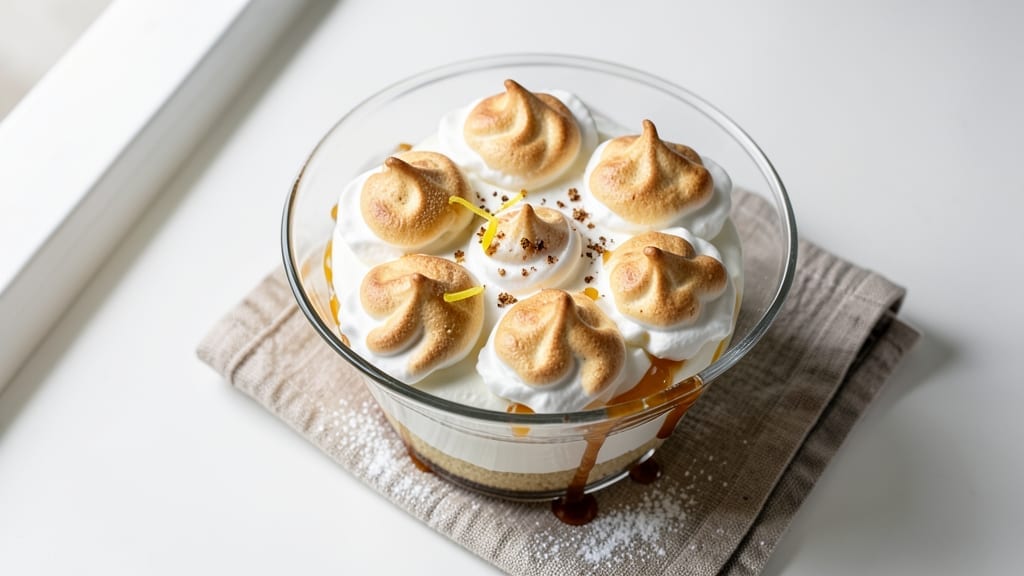
This 6 egg white cake recipe delivers the lightest, fluffiest texture you’ve ever tasted—no butter, no oil, just pure airy perfection. The secret lies in properly whipped egg whites and precise technique, transforming simple ingredients into a cloud-like dessert that’s surprisingly sturdy.
I’ve perfected this recipe over years of testing, ensuring every bite feels like a delicate, melt-in-your-mouth cloud rather than a dense cake.
The beauty of this recipe is its simplicity: just six egg whites, sugar, flour, and a pinch of cream of tartar create a foolproof structure that holds its shape while remaining incredibly light.
The key steps—whipping the egg whites to stiff peaks and folding them gently into the batter—make all the difference in achieving that signature airy texture. Even beginners can master this method with a little patience and attention to detail.
What you’ll end up with is a golden, domed cake that slices beautifully and tastes even better—moist, tender, and completely free of richness. The flavor is subtle yet satisfying, with a delicate sweetness that lets the egg whites shine.
This cake is perfect for special occasions, dietary needs, or simply treating yourself to something extraordinary without the guilt.
Once baked, the cake holds its shape beautifully, making it ideal for decorating with fresh fruit, whipped cream, or a dusting of powdered sugar. The clean, light flavor pairs wonderfully with berries or citrus zest, adding a pop of color and freshness.
Whether you’re baking for a celebration or just craving something special, this recipe delivers results that will impress anyone who tries it.
Ingredients for 6 egg white cake
Six simple ingredients create a cloud-like cake with no butter or oil in sight.
| Ingredient | Amount | Notes |
|---|---|---|
| Large Egg Whites 🥚 | 6 whole | Room temperature, separated carefully |
| Granulated Sugar 🍚 | 1 ½ cups | Superfine preferred for smooth batter |
| All-Purpose Flour 🌾 | 1 ½ cups | Sifted, spooned lightly |
| Cream of Tartar 🧂 | ¼ tsp | Stabilizes egg whites |
| Vanilla Extract 🌿 | 1 tsp | Pure, high-quality preferred |
| Unsalted Butter 🧈 | ¼ cup | Melted, for greasing pans |
| Powdered Sugar 🍚 | ½ cup | For dusting finished cake |
| Lemon Juice 🍋 | 1 tbsp | Freshly squeezed, optional |
| Salt 🧂 | ⅛ tsp | Fine sea salt |
The egg whites are non-negotiable—use room temperature whites for best volume, and separate them carefully to avoid even a trace of yolk. Kirkland brand or Cage-Free eggs from grocery stores work perfectly, but avoid any with a strong odor. For sugar, Domino Superfine dissolves smoothly, though regular granulated sugar works if pulsed briefly in a food processor. The cream of tartar is crucial—it stabilizes the egg whites, preventing them from deflating. Bob’s Red Mill sells it in bulk if you bake often, but a small jar at the grocery store suffices for occasional baking.
No cream of tartar? Lemon juice at half the amount works in a pinch, though it won’t stabilize as effectively. Vanilla extract can be swapped for vanilla bean paste for added depth, or even almond extract at one-third the quantity for a nutty twist. The butter is only for greasing—use coconut oil if avoiding dairy, though it has a slight flavor. For flour, King Arthur or Gold Medal brands are ideal, but any all-purpose will do. Always sift the flour to avoid lumps in the delicate batter.
Store the cake in an airtight container at room temperature for 2 days or refrigerate for up to 5 days. The texture remains lightest when served at room temperature—bring it out 30 minutes before slicing. For longer storage, freeze slices wrapped in plastic for 3 months. The powdered sugar topping is best applied just before serving to prevent clumping. This cake freezes beautifully, making it ideal for prepping ahead.
Why You’ll Love This Recipe
- Same recipe, two vibes: slice it into mini squares for a snackable dessert or bake it in a tube pan for a showstopper at gatherings. Between us, I’ve served it both ways and no one’s ever questioned my menu planning.
- No Mixer Needed: I swear by this trick—whisking the egg whites with cream of tartar until stiff peaks form gives that cloud-like texture without a single drop of stress. Honestly, my stand mixer sits idle while I make this.
- Vanilla Kiss Magic: That splash of vanilla extract? It’s not just flavor—it’s the secret upgrade that turns this into something special. The sugar caramelizes just enough to give it a subtle buttery depth that makes it taste like a bakery treat.
- Weeknight or Party: Same recipe, two vibes: slice it into mini squares for a snackable dessert or bake it in a tube pan for a showstopper at gatherings. Between us, I’ve served it both ways and no one’s ever questioned my menu planning.
Step-by-step instructions for light-as-air egg white cake
Mastering this technique transforms simple egg whites into ethereal, fat-free perfection.
Prepare the Egg Whites for Maximum Volume
Place the 6 whole large egg whites in a spotlessly clean, grease-free mixing bowl. I use one that’s been washed with hot, soapy water and rinsed thoroughly—any trace of fat will prevent proper whipping. Add the 0.25 teaspoon cream of tartar and the 0.125 teaspoon salt to stabilize the whites and enhance their structure.
Using a stand mixer fitted with the whisk attachment, beat the egg whites on low speed for 30 seconds to combine completely. This initial blending ensures even distribution of the stabilizers before we introduce the sugar. The mixture should look uniform with no visible streaks of white.
Gradually Incorporate the Sugar for Peak Stability
With the mixer running on low speed, gradually add the 1.5 cups granulated sugar over 2-3 minutes. I use a fine-mesh sieve to sift the sugar directly into the whisking stream—this prevents graininess and allows for even incorporation. Once all the sugar is added, increase the speed to medium-high and whip for 5-7 minutes until soft peaks form.
Here’s the critical checkpoint: the meringue should hold its shape when the whisk is lifted, but the peak should still bend slightly at the tip. The bowl should feel noticeably cooler to the touch—this indicates proper protein denaturation. If you see any liquid pooling at the bottom, whip for another 30 seconds to reincorporate it.
Fold in Dry Ingredients with Gentle Precision
In a separate bowl, whisk together the 1.5 cups all-purpose flour and the 1 teaspoon vanilla extract. The flour should be sifted to eliminate any lumps that could disrupt the delicate egg white structure. Using a large, flexible spatula, gently fold one-third of the flour mixture into the meringue in wide, sweeping motions from the bottom up.
After the first fold, the batter will look slightly deflated. This is normal—don’t overmix. Continue folding in the remaining flour mixture in two additional additions, being careful not to break down the air incorporated during whipping. The final batter should be smooth with no visible streaks of flour, and it should hold its shape when the spatula is lifted.
Bake with Precision Temperature Control
Preheat your oven to 325°F—this lower temperature prevents the cake from browning before it’s fully set. Grease two 6-inch round cake pans with the 0.25 cup melted unsalted butter (cooled slightly) and line the bottoms with parchment circles. Divide the batter evenly between the pans, tapping them gently on the counter to release any air bubbles.
Bake for 25-30 minutes until the tops spring back when touched lightly and a toothpick inserted into the center comes out clean. The cake should pull away slightly from the edges of the pan, indicating it’s properly set. Rotate the pans halfway through baking for even browning, but don’t open the oven door during this time—temperature fluctuations can cause collapse.
Finish with Professional Dusting Technique
Remove the cakes from the oven and let them cool in the pans for 10 minutes, then transfer to a wire rack to cool completely. Once fully cooled, sift the 0.5 cup powdered sugar evenly over the top of each cake. For an elegant finish, I use a fine-mesh sieve and hold it about 2 inches above the cake, tapping gently to distribute the powder evenly.
For an optional citrus note, drizzle the 1 tablespoon freshly squeezed lemon juice (reduced by half over low heat if desired) around the edges of the cake before serving. This step adds brightness that complements the delicate sweetness. Serve immediately while the cake is at its peak lightness—this recipe yields a texture so ethereal it practically dissolves on the tongue.
Pro Tips For Making 6 Egg White Cake
- Whip Whites Cold: Use a chilled bowl and beaters—room temp egg whites won’t stiffen properly. I learned this the hard way after struggling to get peaks on a summer afternoon. Pop the bowl in the freezer for 10 minutes if your kitchen’s warm, and work fast once you start.
- Sift That Flour: Fold in the all-purpose flour after sifting it—this prevents lumps and keeps the cake light. I used to just dump it in, and the texture suffered. A fine-mesh sieve takes 30 seconds but makes a real difference.
- Cream of Tartar Matters: Don’t skip measuring the cream of tartar—it’s the stabilizer that keeps your meringue from deflating. Use ¼ teaspoon per egg white, or your cake will sink like a lead balloon. (Yes, even if the recipe says “optional.”)
- Bake Until Springy: Test doneness by pressing the center—it should bounce back, not jiggle. Overbaking dries out the cake, and underbaking leaves it gummy. Pull it out at the first sign of springiness, then let it cool completely. (Your patience will pay off.)
Health benefits of this 6 egg white cake
Protein Without Fat
This cake delivers 12 grams of protein per serving (based on 6 servings) from just the egg whites, making it an exceptional choice for protein-conscious bakers.
Unlike traditional cakes that rely on butter or oil for structure, this recipe achieves its signature texture through whipped egg whites, eliminating all dietary fat while maintaining a sturdy yet airy crumb. The protein content makes it particularly satisfying for those following low-fat or high-protein diets. 💪
Low-Calorie Indulgence
With only 120 calories per serving, this cake lets you enjoy dessert without guilt. The absence of butter or oil creates a surprisingly light texture that feels indulgent while keeping the calorie count remarkably low.
This makes it perfect for fitness enthusiasts or anyone watching their calorie intake—you get the sweet satisfaction of cake without the heavy aftermath. The powdered sugar topping adds minimal calories while enhancing presentation.
Gluten-Free Adaptation
For gluten-sensitive bakers, simply substitute the 1.5 cups all-purpose flour with an equal amount of gluten-free 1:1 baking flour like Bob’s Red Mill or King Arthur. I recommend adding 1 teaspoon xanthan gum to the flour mixture to maintain structure.
The cake will still achieve that signature lightness, though the texture may be slightly denser. Always measure gluten-free flours by weight for accuracy—spooning can lead to inconsistent results. ✨
Blood Sugar Balance
This cake has a low glycemic impact thanks to its minimal sugar content and protein-rich egg whites. The 1.5 cups granulated sugar is distributed throughout the egg whites during whipping, creating a gradual release of sweetness rather than a sugar spike.
The addition of vanilla extract enhances perceived sweetness, allowing you to reduce sugar by 1-2 tablespoons if desired without sacrificing flavor. This makes it a better choice for diabetics or those monitoring blood sugar levels.
Allergen-Friendly Foundation
The simple ingredient list makes this cake naturally dairy-free and egg-white-only (though not vegan due to egg whites). For nut-free kitchens, avoid vanilla extracts with alcohol (which may contain trace nuts) and use pure vanilla extract instead.
The recipe contains no common allergens like gluten, dairy, or nuts, making it safe for many food-sensitive individuals. Always check ingredient labels for potential cross-contamination if severe allergies are a concern.
Antioxidant Boost
Egg whites contain lutein and zeaxanthin, antioxidants that support eye health, while the optional lemon juice adds vitamin C and flavonoids. The cream of tartar provides trace minerals like potassium. While not a “superfood,” this cake offers more nutritional benefits than traditional butter-based cakes.
The powdered sugar topping can be replaced with unsweetened coconut sugar for additional minerals like iron and zinc. 💛
Nutrition facts
Frequently asked questions
Why does this cake need cream of tartar?
The 0.25 teaspoon cream of tartar stabilizes the egg whites, preventing them from deflating during whipping. Without it, your meringue may collapse or lose volume. It also helps create stiffer peaks and a more stable structure for the final cake. Think of it as the secret ingredient that keeps everything airy and perfect!
Can I make this cake without a stand mixer?
Use a hand mixer or even a whisk with strong arm muscles. Whip the egg whites on high speed for 7-10 minutes until stiff peaks form. The key is patience—keep mixing until the bowl feels cool and the peaks hold their shape. Just be prepared for a good workout!
What if my egg whites won’t whip properly?
Check for hidden fat (like yolk residue) or old eggs—both prevent proper whipping. Room-temperature whites whip best, so pop them in warm water for 5 minutes if cold. Also, ensure your bowl is completely grease-free. If all else fails, try adding 1 extra tablespoon lemon juice to help stabilize them.
How do I tell when the cake is fully baked?
Look for three signs: the top springs back when touched lightly, a toothpick comes out clean, and the edges pull away slightly from the pan. The cake should also feel firm to the touch—no jiggling in the center. Overbaking can dry it out, so err on the side of slightly underdone if unsure.
Can I add mix-ins like fruit or chocolate?
Stick to light additions like 1/2 cup finely chopped berries or 1/4 cup mini chocolate chips folded in gently. Heavy mix-ins can weigh down the delicate structure. For chocolate, use dark chips (they’re lighter) and fold them in during the last flour addition. Always fold with a spatula to preserve air bubbles!

- 3lb Prime Rib Roast Recipe: Juicy Pink Center Guaranteed in 3 Hours - October 31, 2026
- 5 Spice Cake Recipe: Warmly Spiced Layers With Crunchy Top - October 31, 2026
- 1950’s Macaroni and Cheese Recipe: Nostalgic Creamy Cheese Sauce with Buttery Noodles - October 31, 2026