
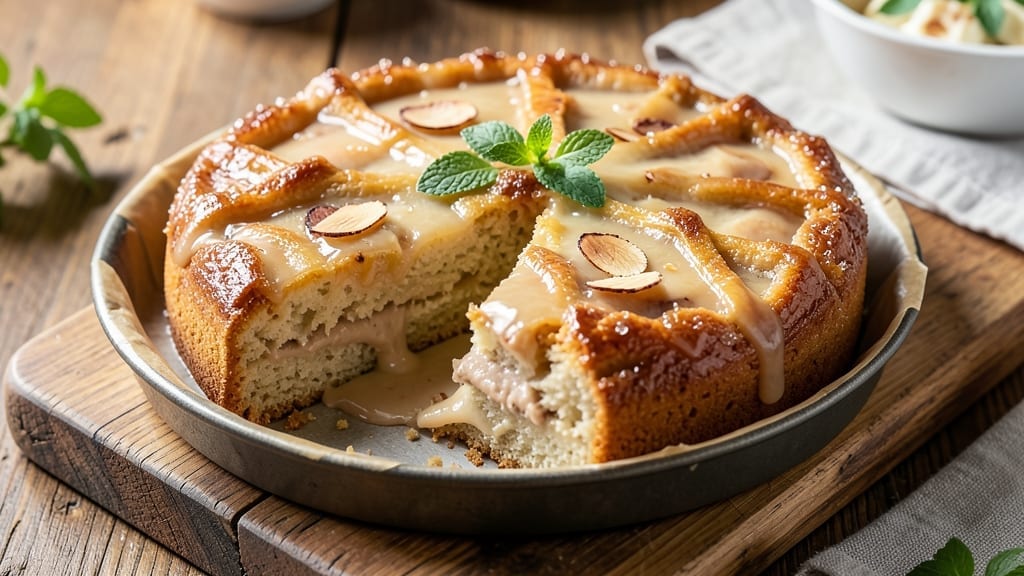
This 6-inch almond cake recipe delivers the perfect balance of nutty flavor and ultra-moist crumb that keeps slices tender for hours. The secret lies in finely ground almonds and a precise ratio of butter to eggs, creating a dense yet delicate texture that defies dryness.
I developed this recipe after years of testing—because almond cakes can easily turn out crumbly or greasy, and neither is acceptable for a dessert this elegant.
The cake features a subtle swirl of almond paste through the batter, giving each slice a marbled effect that’s both visually stunning and packed with flavor. Unlike traditional almond cakes that rely on heavy flour, this version uses almond flour for depth while keeping the structure light.
A 350°F oven ensures even baking, and the cake is finished with a dusting of powdered sugar that adds a professional touch without overpowering the natural almond taste.
What you’ll achieve is a cake with a rich, nutty aroma that fills your kitchen, a tender crumb that melts in your mouth, and just enough sweetness to complement coffee or tea.
The almond flavor shines through without being overpowering, making it versatile enough for breakfast or dessert. This recipe also makes two 6-inch cakes, perfect for gifting or entertaining.
Pair it with a strong espresso for contrast, or serve with fresh berries to cut through the richness. The key to success is precise measuring and patience—no rushing the baking process. Here’s everything you need to create a showstopping almond cake that tastes like it came from a patisserie.
Ingredients for 6 inch almond cake
Here’s what you need to bake two elegant 6-inch almond cakes with perfect moist crumb and nutty swirls.
| Ingredient | Amount | Notes |
|---|---|---|
| Superfine Almond Flour 🌰 | 1 ½ cups | Finely ground for smooth texture |
| Unsalted Butter 🧈 | 1 cup | Room temperature, full-fat preferred |
| Granulated Sugar 🍚 | 1 cup | White or light brown |
| Large Eggs 🥚 | 3 whole | Room temperature, separated |
| Vanilla Extract 🌿 | 1 tbsp | Pure vanilla preferred |
| Almond Paste 🌰 | ½ cup | High-quality, smooth texture |
| Powdered Sugar 🍚 | ¼ cup | For dusting and swirl |
| Baking Powder 🌶️ | ½ tsp | Aluminum-free preferred |
| Salt 🧂 | ¼ tsp | Fine sea salt |
| Lemon Zest 🍋 | 1 tsp | Freshly grated for brightness |
| Almond Extract 🌰 | ½ tsp | Pure almond flavor |
| Unbleached All-Purpose Flour 🌾 | ¼ cup | Lightens texture slightly |
| Heavy Cream 🥛 | ¼ cup | Whisked lightly for swirl |
Almond flour is the heart of this cake, so don’t skimp on quality. Bob’s Red Mill or King Arthur make excellent fine-ground versions—check the label for ‘superfine’ if you can find it. The almond paste should be smooth like marzipan, not grainy. Trader Joe’s carries a good brand, but if you’re making this often, buy a block and grind your own. Room-temperature butter is non-negotiable—cold butter creates dense cakes. I always measure mine by weight (8 oz = 1 cup) for consistency, but volume works too if you’re using a kitchen scale isn’t handy.
No almond extract? Vanilla extract at half the amount works in a pinch, though the flavor won’t be identical. Running out of almond paste? Mix 0.25 cup almond flour with 1 tbsp apricot jam for a quick substitute. The lemon zest can be zested from 1 small lemon—just avoid the bitter white pith. For the swirl, heavy cream should be cold when folded in, or it’ll melt too quickly. If you’re nervous about the almond flavor being too strong, reduce the almond extract to 0.25 tsp and add 0.25 tsp vanilla instead. The powdered sugar dusting is optional but adds that patisserie finish.
Butter and eggs should be at room temperature before mixing—about 1 hour out of the fridge. The batter keeps in the fridge for 2 days covered, but bake within 48 hours for best texture. For the almond flour, store it in an airtight container in a cool, dark place—it goes rancid fast if left exposed. The finished cakes freeze beautifully for 3 months if wrapped tightly in plastic. I always bake one cake immediately and freeze the other—perfect for gifting or last-minute entertaining.
Why You’ll Love This Recipe
- No-Fuss Mixing: I just fold the almond flour, melted butter, sugar, and eggs—no sifting, no overworking. The batter comes together smoother than I expected, and the eggs bind it perfectly without needing extra tricks.
- Rich, Nutty Magic: That first bite? Buttery, lightly sweet, with almond flour’s natural depth—like a cross between a shortbread cookie and a delicate cake. The vanilla ties it all together without overpowering.
- Portion-Perfect Slices: A 6-inch pan means single servings or easy sharing—great for brunch, dessert after dinner, or even a quick office treat. I’ve used it for everything from coffee pairings to gifting.
- Budget-Friendly Luxury: Superfine almond flour might sound fancy, but it uses less than you’d think. The butter and eggs stretch the richness, so one cake feels indulgent without breaking the bank. Leftovers? They disappear fast.
Step-by-step instructions for 6-Inch almond cake
Here’s how to bake a tender, nutty almond cake with perfect swirls and ultra-moist crumb.
Prepare the Almond Cake Batter
Preheat your oven to 350°F and grease a 6-inch round cake pan with butter or baking spray, then line the bottom with parchment paper. In a stand mixer fitted with the paddle attachment, cream together the 1 cup unsalted butter and 1 cup granulated sugar on medium speed for 3-4 minutes until light and fluffy. This step incorporates air, which helps create that tender crumb you’re after.
Add the 3 whole large eggs, one at a time, mixing well after each addition. Then stir in the 1 tbsp vanilla extract, 0.5 tsp almond extract, 1 tsp lemon zest, 0.5 tsp baking powder, and 0.25 tsp salt. Mix until just combined—you should still see some streaks of flour. Here’s the thing—overmixing develops gluten, which can make the cake tough. You want a smooth but slightly thick batter at this stage.
Fold in Dry Ingredients and Almond Paste
In a separate bowl, whisk together the 1.5 cups superfine almond flour and 0.25 cup unbleached all-purpose flour. Gradually add this dry mixture to the wet ingredients, mixing on low speed just until combined. The batter will be thick and slightly sticky—this is normal for almond cakes. Here’s where it gets fun: fold in the 0.5 cup almond paste using a spatula, mixing gently to avoid deflating the batter.
I like to press the almond paste against the sides of the bowl first to break it up, then fold it in completely. The almond paste adds that rich, nutty depth of flavor and helps create those beautiful swirls later. If the batter seems too thick, you can add 1-2 tablespoons of heavy cream to loosen it slightly, but don’t add too much or the cake may be too dense.
Create the Swirl Pattern
Pour about half of the batter into your prepared cake pan and spread it evenly. Here’s the moment that matters: take the remaining batter and spread it over the top, then immediately use a knife to create swirls by cutting through the batter in a circular motion. Don’t worry if it looks messy—this is what creates those gorgeous marbled patterns. Tap the pan gently on the counter to help the batter settle and eliminate air bubbles.
Sprinkle the top evenly with 0.25 cup powdered sugar for a beautiful finish and to help create that signature almond cake crust. The powdered sugar will caramelize slightly during baking, adding a subtle sweetness and a delicate sheen to the finished cake. Place the pan on a baking sheet to catch any potential drips.
Bake to Golden Perfection
Bake the cake in the preheated oven for 35-40 minutes, or until a toothpick inserted into the center comes out clean. I know it seems weird, but trust me—almond cakes can sometimes look underbaked on the outside but be fully cooked inside. The cake is done when it’s golden brown on top and springs back slightly when gently pressed in the center.
Real talk: your oven might run hot, so start checking at the 30-minute mark. If the top starts to brown too quickly, tent the cake with aluminum foil to prevent overbrowning. Once the cake is done, let it cool in the pan for 10 minutes before transferring it to a wire rack to cool completely. This resting period helps the cake set and prevents it from falling apart when you slice it.
Whip the Cream and Assemble
While the cake cools, prepare the 0.25 cup heavy cream by whipping it with a hand mixer or stand mixer until it forms soft peaks. You want it light and fluffy but not overly stiff. In a small bowl, mix together 2 tablespoons powdered sugar, 0.5 tsp almond extract, and a pinch of salt. Fold this mixture into the whipped cream until fully combined.
Once the cake is completely cool, use a serrated knife to level the top if needed, then slice it horizontally into two equal layers. Spread the whipped cream evenly between the layers and on the top of the cake. For a more professional look, you can also spread a thin layer of almond paste between the cake layers before adding the cream. Dust the top and sides of the cake with additional powdered sugar for that final touch of elegance.
Pro Tips For Making 6 Inch Almond Cake
- Whisk Eggs Like Mad: I used to beat eggs gently, and my cakes turned out dense—like almond-flour pancakes. Crank up that mixer to medium-high for 3-4 minutes until the yolks and whites are fully emulsified and pale. This lightens the texture more than you’d expect, especially with superfine almond flour.
- Measure Butter Cold: Softened butter is a gamble in this recipe—it can make the batter too loose and lead to a cake that collapses. Scoop it straight from the fridge (or chill it 10 minutes) and measure it packed into the cup. The butter should hold its shape but still press easily with a spoon.
- Skip the Overmixing: Almond flour is forgiving, but don’t treat it like cake flour. Once you’ve folded in the dry ingredients, stop when just combined—no streaks, no extra mixing. Overworking the batter introduces air pockets that disappear in the oven, leaving you with a cake that’s heavy at the center.
- Rotate the Pan Early: The first 15 minutes in the oven are critical—this is when the edges set fastest. After that time, rotate your 6-inch pan 180 degrees (front to back) so the cake bakes evenly. I learned this the hard way when my first batch had a ridge down the middle from uneven heat.
Troubleshooting this dish
Dense Instead of Light
If your cake turns out dense rather than tender, it’s likely from overmixing the batter or using cold ingredients. Almond flour absorbs liquid differently than wheat flour, so avoid overworking it once the dry ingredients are added.
I recommend using a stand mixer on low speed for just 30 seconds after combining the dry ingredients. Also, ensure your butter and eggs are at room temperature—cold fats create dense cakes.
For extra moisture, try adding 1 tablespoon of heavy cream to the batter if it feels too thick. 🌰
Dry or Crumbly Texture
A dry or crumbly almond cake usually means the batter was too dry or the cake was overbaked. Double-check your measurements—almond flour is not a 1:1 substitute for all-purpose flour and absorbs more liquid. If your batter feels dry, add 1-2 tablespoons of milk or heavy cream before baking.
For the oven, start checking at 30 minutes—almond cakes bake faster than wheat-based cakes. Remove it when a toothpick comes out clean, even if the top still looks slightly underdone. 💧
Uneven Swirls or Cracks
If the almond paste swirls don’t form properly or the cake cracks, the batter may have been too thick or the oven temperature too high. For smoother swirls, spread the batter evenly in the pan and use a long knife or offset spatula to create clean lines.
If the cake cracks, it could mean the oven was too hot or the cake cooled too quickly. To prevent this, let the cake cool in the pan for 10 minutes before transferring to a rack.
For extra insurance, bake at 325°F instead of 350°F if your kitchen tends to run hot. 🔥
Pale or Underbaked Cake
A pale or underbaked almond cake often results from an oven that’s too cool or insufficient baking time. Since almond cakes lack gluten, they don’t brown as dramatically as wheat-based cakes.
If your cake looks pale after 35 minutes, tent it with aluminum foil and bake for 5-10 more minutes. For even browning, place a baking sheet on the lower rack to reflect heat upward.
If your oven runs cool, increase the temperature to 375°F for the last 5 minutes of baking to help the top color. 🌡️
Almond Flavor Too Strong
If the almond flavor overpowers the cake, you may have used too much almond extract or paste. Start by reducing the almond extract to 0.25 teaspoon and the paste to 0.375 cup. For a more balanced flavor, add 0.5 teaspoon of vanilla extract to complement the almond notes.
If you’re using store-bought almond paste, check the label—some brands are more concentrated than others. For a subtle twist, fold in 1 teaspoon of lemon zest to brighten the flavor profile. 🍋
Cake Sticks to the Pan
If your cake sticks to the pan, it’s likely due to insufficient greasing or parchment paper. Always grease your 6-inch round pan with butter or baking spray, then line the bottom with parchment paper.
For extra insurance, dust the pan with powdered sugar before adding the batter—this creates a nonstick barrier. Avoid using nonstick pans for almond cakes, as they can react with the almond flour and cause sticking.
If the cake still sticks, let it cool in the pan for 15 minutes before gently loosening the edges with a knife. 🧈
Nutrition facts
Frequently asked questions
Why does this almond cake recipe use both almond flour and almond paste?
The combination creates a perfect texture and flavor balance. Almond flour gives the cake its signature nutty taste and dense yet tender crumb, while almond paste adds richness and helps create those beautiful swirls. The paste also provides extra moisture that prevents dryness. Think of it as the secret weapon for that professional patisserie finish!
Can I make this cake gluten-free?
Yes, but you’ll need to substitute the all-purpose flour with a 1:1 gluten-free baking flour blend (like Bob’s Red Mill 1-to-1). For best results, also add 0.5 teaspoon xanthan gum to help bind the cake. Keep in mind the texture might be slightly different, but still delicious. Always check your gluten-free flour blend’s instructions for specific measurements.
How do I store or freeze the finished cake?
Keep the cake at room temperature in an airtight container for up to 3 days. For longer storage, wrap each layer tightly in plastic wrap, then place in a freezer bag. Frozen cakes maintain quality for 3 months. Thaw overnight in the fridge before serving. Never freeze the cake with whipped cream filling—make that fresh when you’re ready to serve.
What’s the best way to slice this cake without it falling apart?
Let the cake cool completely before slicing—at least 2 hours at room temperature. Use a serrated knife and dip it in hot water between slices to create clean cuts. For extra stability, chill the cake in the fridge for 30 minutes before serving. Warm slices slightly before serving if you prefer them soft.
Can I make this cake without almond extract?
Yes, but the flavor will be subtly different. Replace the 0.5 teaspoon almond extract with 0.25 teaspoon vanilla extract plus 0.25 teaspoon lemon zest for brightness. For a stronger almond flavor, increase the almond paste to 0.625 cup and reduce the vanilla to 0.5 teaspoon. The cake will still taste delicious—just with a more balanced flavor profile.

- 3lb Prime Rib Roast Recipe: Juicy Pink Center Guaranteed in 3 Hours - October 31, 2026
- 5 Spice Cake Recipe: Warmly Spiced Layers With Crunchy Top - October 31, 2026
- 1950’s Macaroni and Cheese Recipe: Nostalgic Creamy Cheese Sauce with Buttery Noodles - October 31, 2026