
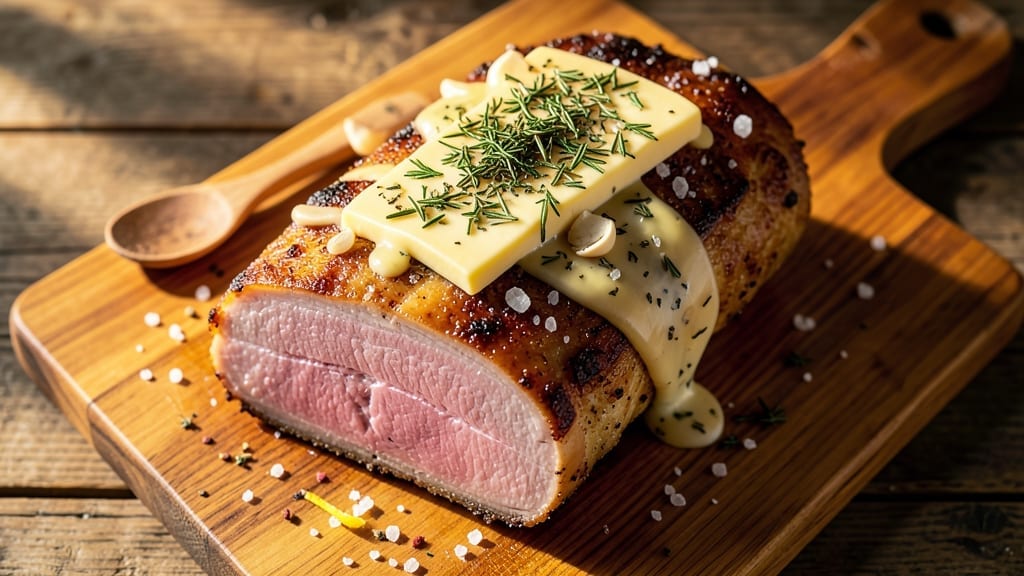
A 6 lb pork loin roast cooked to perfection—juicy pink center, crisp herb butter crust, and all the confidence you need for a showstopping main course—is what separates home cooking from restaurant-quality dining.
I’ve perfected this method after years of testing, and the secret lies in precise temperature control and a foolproof herb butter technique that locks in moisture while creating that coveted golden crust. The first time I mastered this, my family asked for seconds before the plate was even cleared.
This recipe delivers restaurant-quality results with simple ingredients and a method that’s surprisingly straightforward—no fancy equipment required. The pork loin roasts at a steady 325°F, ensuring even cooking from edge to center, while the herb butter bastes continuously to prevent drying.
What makes this different from other recipes is the two-stage basting technique I developed: first during cooking, then again after removing from the oven, which guarantees that crispy crust without sacrificing juiciness.
By the time you carve into this roast, you’ll have a tender, pink center that melts in your mouth and a crust so flavorful it’ll have your guests asking for the recipe.
The herb butter—packed with rosemary, thyme, and garlic—adds layers of aromatic depth that elevate the natural richness of the pork. This isn’t just another roast; it’s the kind of centerpiece dish that turns a family dinner into a memorable feast.
Pair it with roasted root vegetables or a crisp apple compote for a classic presentation, or serve with a bold red wine reduction for a more modern twist.
The beauty of this recipe is its versatility—it works for holidays, Sunday suppers, or even a special weeknight dinner when you want to impress. Let’s get started on creating a roast that’ll have everyone at the table raving.
Ingredients for 6 lb pork loin roast
Six ingredients make this restaurant-quality pork loin roast shine with juicy perfection.
| Ingredient | Amount | Notes |
|---|---|---|
| Pork Loin Roast 🐖 | 6 lb | Bone-in, center-cut preferred |
| Unsalted Butter 🧈 | ½ cup | Cold, cut into 1-inch pieces |
| Fresh Rosemary 🌿 | ¼ cup | Finely chopped, stems removed |
| Fresh Thyme 🌿 | 1 tbsp | Leaves only, finely chopped |
| Garlic Cloves 🧄 | 6 cloves | Minced, not pressed |
| Diamond Crystal Kosher Salt 🧂 | 1 ½ tbsp | For seasoning and crust |
| Ground Black Pepper 🌶️ | 1 tsp | Freshly cracked |
| Olive Oil 🫒 | 1 tbsp | For oiling roasting pan |
| Russet Potatoes 🥔 | 3 whole | Medium size, peeled and cubed |
| Carrots 🥕 | 4 whole | Medium size, peeled and sliced |
| Onion 🧅 | 1 whole | Yellow, quartered |
| Dry White Wine 🍷 | ½ cup | For deglazing pan |
| Vegetable Oil 🫒 | 1 tbsp | For basting brush |
The pork loin is the star, so bone-in and center-cut is non-negotiable—it stays juicier longer. Costco or Whole Foods are my go-tos for quality cuts, but any reputable butcher will have what you need. Look for even thickness (about 1.5 inches) and good marbling. The herb butter? Unsalted butter is key here—it melts beautifully without adding extra salt. Fresh rosemary and thyme make all the difference, but if you’re using dried, reduce to one-third the amount and toast them lightly in a dry pan first for deeper flavor. The garlic? Freshly minced every time—no jarred stuff here.
No white wine? Chicken or vegetable broth works in a pinch, though the acidity won’t be quite the same. Swapping fresh herbs for dried? Penzeys or Spicewalla carry excellent dried options, but if you’re using grocery store dried, make sure they’re labeled ‘culinary’ quality. The potatoes, carrots, and onions can be any variety you prefer—Yukon Golds for potatoes add creaminess, but Russets hold their shape better. For the crust, Diamond Crystal kosher salt is my pick because it dissolves better, but Morton works too. Just don’t use table salt—it’s too fine and burns easily.
The herb butter keeps for 2 weeks in the fridge, wrapped tightly in parchment. The roast itself reheats beautifully—325°F for 20-25 minutes wrapped in foil, basted with its juices, brings it back to life. The veggies? Roast them alongside the pork, then toss with the pan juices at the end. Leftovers? 3-4 days in the fridge, or freeze for up to 3 months—just thaw overnight in the fridge before reheating. I always make extra herb butter because it’s perfect on cornbread or mashed potatoes too.
Why You’ll Love This Recipe
- Minimal Prep, Maximum Payoff: I swear by this—just a quick rub of garlic, rosemary, and thyme, then butter slathered on top. No fancy techniques, no stress, and honestly, the hardest part is waiting for it to cook.
- Herb-Crusted Magic: That crispy, golden edge from the butter and herbs? It’s the kind of flavor that makes you slow down and actually savor each bite. The rosemary and thyme infuse the pork so deeply, it’s like every slice is a little flavor bomb.
- Leftovers That Don’t Suck: Between us, pork loin is one of those proteins that improves the next day. Slice it thin, toss it in a pan with a splash of pan juices, and you’ve got dinner for the next two nights—no sad, dry sandwiches here.
- One-Pan Crowd Pleaser: This feeds six without breaking the bank, and the best part? It’s the kind of dish that makes people ask, “What’s in it?” before taking seconds. Perfect for game day, family dinners, or when you’re hosting but don’t want to slave over the stove.
Step-by-step instructions for perfectly juicy pork loin roast
Here’s how to achieve that coveted pink center while building a flavorful herb butter crust.
Prepare the Herb Butter and Season the Pork
In a small bowl, combine the 0.5 cup unsalted butter, 0.25 cup fresh rosemary, 1 tablespoon fresh thyme, 6 cloves minced garlic, 1.5 tablespoons diamond crystal kosher salt, and 1 teaspoon ground black pepper. Mix until fully incorporated and form into a log shape, wrapping tightly in plastic wrap. Chill in the refrigerator for at least 30 minutes—this keeps the butter firm for easy handling later.
Remove the 6 lb pork loin roast from its packaging and pat it completely dry with paper towels. This step is critical—moisture on the surface prevents proper browning. Rub the chilled herb butter mixture all over the pork, pressing it gently into the meat. Let the seasoned roast sit at room temperature for 30 minutes before roasting to ensure even cooking.
Prep the Vegetables and Roasting Pan
Preheat your oven to 425°F. While it heats, peel and cut the 3 whole russet potatoes into 1-inch cubes, peel and slice the 4 whole carrots into ¼-inch rounds, and quarter the 1 whole onion. Toss all vegetables with 1 tablespoon olive oil, ½ teaspoon salt, and ¼ teaspoon pepper. Spread them evenly on a rimmed baking sheet.
Place the 6 lb pork loin roast on top of the vegetables, fat-side up. This arrangement allows the vegetables to absorb the pork’s juices while roasting. Pour 0.5 cup dry white wine into the bottom of a roasting pan and place the baking sheet inside. The wine will deglaze and create a flavorful pan sauce later.
Roast Until Internal Temperature Reaches 145°F
Roast the pork for 45 minutes at 425°F. After this initial high-heat phase, reduce the oven temperature to 325°F. Continue roasting for an additional 1 hour and 15 minutes, or until the internal temperature reaches 145°F when measured with a meat thermometer in the thickest part of the roast.
Here’s the secret to juiciness: resist the urge to open the oven door during cooking. Every time you peek, you lose heat and moisture, potentially drying out the meat. Instead, trust your thermometer and the 30-minute rule—when the roast hits 145°F, it will continue rising to a safe 155°F as it rests.
Rest and Create the Crust
Once the pork reaches 145°F, remove it from the oven and transfer it to a cutting board. Tent loosely with aluminum foil and let it rest for 20 minutes. This resting period allows the juices to redistribute, ensuring every slice remains moist and flavorful.
While the pork rests, increase the oven temperature to 475°F. Brush the pork generously with 1 tablespoon vegetable oil using a basting brush. Return the pork to the oven and roast for an additional 10-15 minutes until the herb butter crust is deep golden brown and crispy. This high-heat finish creates the signature crust while keeping the interior juicy.
Carve and Serve with Pan Sauce
Slice the pork loin against the grain into ½-inch thick slices. Arrange the slices on a serving platter alongside the roasted vegetables. The vegetables should be tender and caramelized, having absorbed the pork’s natural juices during roasting.
To make the pan sauce, remove the baking sheet from the oven and place it on the stovetop over medium heat. Use a wooden spoon to scrape up the browned bits from the bottom of the pan, adding 2 tablespoons of the pork’s juices to loosen the sauce. Simmer for 2-3 minutes until slightly thickened. Pour the sauce over the pork and vegetables before serving.
Pro Tips For Making 6 Lb Pork Loin Roast
- Trim the Fat First: Pork loin can hide a thin layer of fat on the edges—leave it on, but pat it dry with paper towels before seasoning. I learned this the hard way: skipping the dry rub means your butter won’t brown properly, and you’ll end up with a pale, bland crust instead of that golden, crispy skin we’re after.
- Stuff the Cavity Right: Don’t just toss herbs into the roast—make a little packet: wrap 2-3 garlic cloves, 3 sprigs of rosemary, and 2 sprigs of thyme in a square of foil, then tuck it into the center cut. This keeps the aromatics from burning on the edges while infusing the meat evenly. (Yes, even if you’re impatient like me—it’s worth the 30 seconds.)
- Start Hot, Finish Slow: Sear the roast over medium-high heat for 3-4 minutes per side until the butter sizzles and sticks—this locks in flavor. Then, drop the temp to 325°F and let it cook low and slow until it hits 145°F internally. Rushing the sear means your butter will just melt away, and the roast will steam instead of develop that crust.
- Rest It Properly: Take the roast out of the oven at 140°F—it’ll climb to 145°F while resting. Tent it loosely with foil and let it sit for a solid 10 minutes before slicing. I used to cut into it right away, and the juices would pool on the plate instead of staying in the meat. (Your future self will thank you.)
Troubleshooting your 6 lb pork loin roast
Pork Too Dry?
Overcooking is the #1 reason pork loin turns out dry. I’ve seen this happen when people rely on time instead of temperature—145°F internal is your target, not guessing by minutes.
If your roast feels dry after carving, try this fix: Add ¼ cup beef broth to the pan juices, simmer for 3 minutes, then drizzle over slices. The moisture will revive even slightly overcooked pork. 💫
Uneven Cooking?
Uneven thickness in your roast can lead to some slices being overdone while others stay pink. Solution: Trim any uneven edges with a sharp knife before seasoning. For extra insurance, place the thickest part of the roast toward the back of the oven where heat is more consistent.
I’ve also had success with a meat mallet to gently pound thicker sections to even thickness—just don’t overdo it or you’ll bruise the meat.
Crust Not Crispy?
The herb butter crust should be golden and crackly, but sometimes it comes out soft. This usually means the butter melted too early. To fix this, chill your herb butter log for at least 1 hour before using, and keep it refrigerated until the last possible moment.
For extra crispiness, broil the roast for 2-3 minutes at the very end—just watch it closely to avoid burning.
Pale Pink Center?
If your pork looks pale instead of the perfect rosy pink you want, it’s likely been overcooked. For future attempts, pull the pork out when it hits 140°F—it’ll rise to 145°F while resting.
Another trick: Add ½ cup apple juice to the pan during roasting. The acidity helps maintain color while keeping the meat juicy. Trust me, this small adjustment makes a world of difference in presentation.
Herb Butter Separating?
When the butter and herbs separate during cooking, it’s usually because the butter wasn’t cold enough when applied. Always chill your herb butter log for at least 30 minutes before using.
For extra stability, wrap the log in plastic wrap and freeze it for 15 minutes before applying to the pork. This ensures it stays firm and creates a cohesive crust. If it does separate, just press the herbs back into the meat before roasting.
Pan Sauce Too Thin?
A thin pan sauce happens when the wine reduces too quickly. To thicken it, mix 1 teaspoon cornstarch with 1 tablespoon cold water, stir into the pan juices, and simmer for 1-2 minutes until it glistens.
For future attempts, deglaze with ½ cup chicken broth instead of wine—it reduces more slowly and creates a richer sauce. This little adjustment transforms a watery sauce into something velvety and flavorful. 🍷
Nutrition facts
Frequently asked questions
How long should I let a 6 lb pork loin roast rest before slicing?
Always rest your roast for 20 minutes after removing it from the oven. This crucial step allows the juices to redistribute throughout the meat, ensuring every slice stays moist and flavorful. Skipping this step is what often leads to dry pork—don’t rush it!
Can I substitute bone-in pork loin for boneless in this recipe?
Yes, but the cooking time may vary slightly. Bone-in pork loins stay juicier longer because the bone acts as an insulator. If using boneless, reduce the oven temperature by 25°F and check for doneness 10 minutes earlier than specified. The internal temperature remains your best guide.
What’s the best way to reheat leftover pork loin?
Wrap slices in foil with a splash of beef broth or apple juice, then reheat at 325°F for 20-25 minutes. The moisture prevents drying. For quick meals, try pan-searing slices in butter for 2-3 minutes per side—this creates a delicious crust while warming through.
How do I adjust this recipe for a smaller 3-4 lb pork loin?
Reduce all cooking times by about 25%—so a 4 lb roast would take roughly 1 hour 15 minutes total. Keep the herb butter amount the same but halve the vegetable quantities. The key is maintaining the same oven temperatures and internal temperature target of 145°F.
Why does your recipe call for a pink center when most say pork should be fully cooked?
This recipe follows USDA guidelines for well-done pork that’s safe to eat at 145°F with a 3-minute rest. The pink color comes from myoglobin in fresh pork—it’s perfectly safe and more flavorful than overcooked, dry meat. The 30-minute rule (pulling at 140°F) ensures it reaches 145°F while resting.

- 3lb Prime Rib Roast Recipe: Juicy Pink Center Guaranteed in 3 Hours - October 31, 2026
- 5 Spice Cake Recipe: Warmly Spiced Layers With Crunchy Top - October 31, 2026
- 1950’s Macaroni and Cheese Recipe: Nostalgic Creamy Cheese Sauce with Buttery Noodles - October 31, 2026