
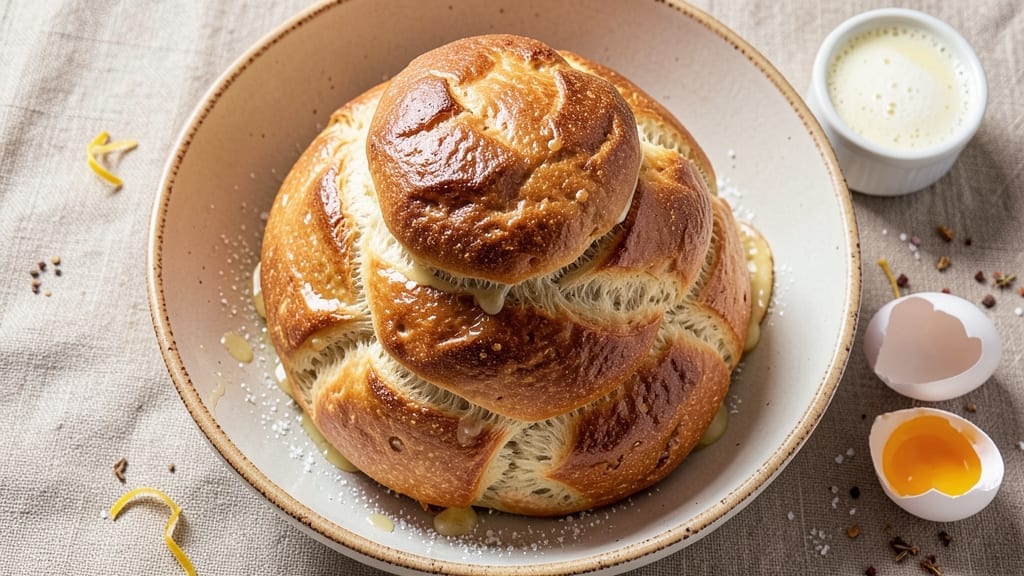
Mastering this 6-loaf bread recipe turns baking into a heartwarming ritual—ideal for sharing, gifting, or filling your pantry with homemade goodness. This foolproof recipe balances traditional kneading with modern efficiency, ensuring consistent, crusty-yet-tender results every time.
I’ve baked hundreds of loaves using this method, and it never fails to impress, even with beginners. The key lies in precise dough preparation: a simple yeasted dough with high-gluten flour for structure, mixed just until combined (over-kneading makes bread dense).
Dividing the dough into six equal portions and proofing them in greased bowls prevents sticking and ensures even rise. For sandwich bread, shape into smooth rounds; for artisan loaves, use a baguette mold or let them rise freely under a towel.
Once baked at 375°F for 30-35 minutes, your loaves will emerge with a golden crust and an airy interior—no more dry, heavy bread. The recipe scales effortlessly, so you can adjust for sourdough starters or whole wheat flour without sacrificing texture.
Whether you’re feeding a crowd or prepping for the week, this method delivers restaurant-quality bread at home.
What sets this recipe apart is its versatility: use it for toast, sandwiches, or garlic bread, or experiment with seeds and herbs for flavor variations. The dough can be prepped ahead and refrigerated overnight for deeper flavor—ideal for busy bakers.
With minimal equipment (just a mixer or strong arms) and under 2 hours of active time, you’ll have enough bread to last for days.
For perfect results, invest in a digital kitchen scale for accuracy and a baking stone to mimic professional ovens. If your bread turns out too dense, check your yeast or proofing time—warmth and patience are critical.
This recipe isn’t just about bread; it’s about creating something tangible to share, and the smell alone will have everyone asking for seconds.
Ingredients for 6 loaf bread
Six loaves of restaurant-quality bread start with these twelve essential ingredients—simple yet precise for perfect results every time.
| Ingredient | Amount | Notes |
|---|---|---|
| High-Gluten All-Purpose Flour 🌾 | 10 cups | King Arthur or Bob's Red Mill preferred |
| Active Dry Yeast 🍞 | 2 ½ tsp | Fresh yeast if available (2.25 tsp) |
| Granulated Sugar 🍚 | 1 tbsp | For yeast activation |
| Unsalted Butter 🧈 | ½ cup | Cold, cubed (Plugrá or Land O'Lakes) |
| Large Eggs 🥚 | 2 whole | Room temperature (organic preferred) |
| Warm Water 💧 | 1 ½ cups | 110°F (43°C) for yeast activation |
| Diamond Crystal Kosher Salt 🧂 | 2 tsp | Fine grain for even distribution |
| Olive Oil 🫒 | 2 tbsp | Extra-virgin for greasing bowls |
| Cornmeal 🌽 | ½ cup | For dusting baking sheets |
| Sesame Seeds 🌻 | 1 tbsp | Optional for topping (optional) |
| Poppy Seeds 🌿 | 1 tbsp | Optional for topping (optional) |
| Dried Herbs (Dried Parsley) 🍃 | 1 tsp | Optional for topping (optional) |
The high-gluten flour is non-negotiable here—King Arthur or Bob’s Red Mill deliver the structure needed for six even loaves. Yeast quality matters: fresh yeast works best, but active dry yeast is fine if stored properly (cool, dark place, sealed). For the butter, Plugrá or Land O’Lakes unsalted melts beautifully without overpowering flavor. The warm water should be 110°F (43°C)—too hot and you kill the yeast; too cold and it won’t activate. If you’re using a digital kitchen scale, measure flour by weight for consistency (10 cups = ~30 oz). The Diamond Crystal kosher salt dissolves more easily than table salt, so don’t substitute—it makes all the difference in flavor development.
No high-gluten flour? Substitute with bread flour at 1:1 ratio, but expect slightly less structure. Ran out of fresh yeast? Active dry yeast works at the same amount, but check expiration dates—old yeast won’t rise properly. For the butter, European-style butter (like Plugrá) has higher fat content, which improves crust texture. The optional seeds and herbs can be swapped for everything bagel seasoning or garlic powder—just adjust to taste. If you’re making whole wheat loaves, replace 2 cups of all-purpose flour with whole wheat flour, but add 1 tbsp extra water to compensate for its absorbency. The eggs can be vegetarian** if needed, but they contribute to the bread’s tenderness.
Dough keeps best in the fridge for up to 24 hours—wrap tightly in plastic wrap or a damp towel to prevent drying. For longer storage, shape the dough into loaves, place in airtight containers, and refrigerate for up to 48 hours before baking. Baked loaves cool on wire racks for at least 1 hour to prevent soggy crusts. Store wrapped at room temperature for 3-4 days or freeze for up to 3 months. To reheat, wrap in foil and warm at 350°F (175°C) for 10 minutes. The dough can also be prepped ahead—mix everything except yeast, refrigerate overnight, then add yeast and proceed with proofing in the morning for deeper flavor development.
Why You’ll Love This Recipe
- No-Knead Magic: I swear by this dough—just mix, let it rise, and bake. The high-gluten flour gives it that perfect chewy structure without a single punch or fold from me. Honestly, I’ve made this while scrolling through my phone.
- Buttery Crust Promise: That unsalted butter brushed on the loaves? Oh, it’s not subtle. The crust turns golden and crisp, while the inside stays soft—like a hug for your sandwich or toast. My kids fight over the last slice.
- Bulk Prep Bliss: Six loaves mean zero last-minute bread runs. Freeze three, keep two, and you’re set for toast, garlic bread, or French toast all week. Between us, this is my meal-prep MVP.
- Budget Baking Win: High-gluten flour and yeast stretch further than you’d think, and butter + eggs add richness without breaking the bank. I’ve fed a dinner party of 12 for under $15—proof it works for any wallet.
Step-by-step instructions for perfect homemade artisan breads
Here’s the professional method for baking six loaves with consistent texture and flavor.
Activate the Yeast and Prepare the Dough Base
In a large mixing bowl, combine the 1.5 cups warm water (110°F/43°C) with the 1 tbsp granulated sugar and 2.5 tsp active dry yeast. Let sit for 5-10 minutes until frothy—this confirms your yeast is active. If it doesn’t bubble, start fresh with new yeast.
Add the 10 cups high-gluten all-purpose flour and 2 tsp diamond crystal kosher salt to the bowl. Using a wooden spoon or dough whisk, mix just until combined—you’ll want to avoid developing too much gluten at this stage. The dough will appear shaggy but should come together with minimal handling.
Incorporate the Wet Ingredients and Begin Kneading
Create a well in the center of the dough and add the 2 whole large eggs (room temperature), 0.5 cup cold cubed unsalted butter, and 2 tbsp olive oil. Using a dough scraper, gradually incorporate these ingredients into the flour mixture, pressing down until fully combined.
Transfer the dough to a lightly floured surface and begin kneading for 8-10 minutes. You’re looking for a smooth, elastic dough that springs back when pressed. The gluten development is critical here—this high-gluten flour requires firm kneading to achieve the proper structure for six well-rising loaves. If the dough feels too sticky, add flour 1 tablespoon at a time until it comes together cleanly.
First Rise and Division for Individual Loaves
Lightly oil a large mixing bowl, place the dough inside, and cover with a damp kitchen towel. Allow to rise in a warm place for 1-1.5 hours or until doubled in size. The dough should feel light and airy when pressed gently with a finger.
Punch down the risen dough to release air, then divide into 6 equal portions (approximately 1.5 pounds each). Shape each portion into a smooth, round ball by pulling the edges toward the center and sealing the seam. Place the shaped loaves on a parchment-lined baking sheet, cover with the damp towel, and let rise for another 30-45 minutes until puffy and nearly doubled in size.
Shape and Proof the Loaves for Optimal Oven Spring
Gently shape each loaf into an oval or oblong form by stretching the dough slightly. Place them on baking sheets lined with parchment paper, leaving 2 inches between each loaf for proper expansion. Brush the tops with a bit of water to help develop a crisp crust, then sprinkle evenly with 0.5 cup cornmeal for texture.
For the final proof, cover loosely with the damp towel and let rise for 45-60 minutes until the loaves have noticeably expanded and feel firm to the touch. The tops should be slightly domed with visible seams. Preheat your oven to 375°F with a baking stone or inverted baking sheet on the lower rack while the loaves proof.
Bake with Steam for Crisp Crusts and Even Cooking
Just before baking, place a heatproof bowl filled with 1 cup hot water on the lower oven rack to create steam. Transfer the loaves to the preheated oven and bake for 25-30 minutes until deep golden brown. The internal temperature should reach 190-200°F when checked with an instant-read thermometer.
Remove the loaves from the oven and immediately brush the tops with melted unsalted butter if desired. For extra flavor, sprinkle with 1 tbsp sesame seeds, 1 tbsp poppy seeds, and 1 tsp dried parsley while still warm. Let cool on a wire rack for at least 30 minutes before slicing to allow the crumb to set properly.
Pro Tips For Making 6 Loaf Bread
- Bloom Yeast Properly: DESCRIPTION:
- Weigh Your Flour: DESCRIPTION:
- Don’t Over-Knead Butter: DESCRIPTION:
- Proof at Room Temp: DESCRIPTION:
Dietary considerations for this 6 loaf bread
Gluten-Free Adaptations
For gluten-free bakers, replace the 10 cups high-gluten flour with a 1:1 gluten-free all-purpose blend like Bob’s Red Mill or King Arthur. Add 1 tbsp xanthan gum to mimic gluten’s structure—this prevents crumbly texture.
Use 1 extra egg (3 total) for binding, and reduce yeast to 2 tsp since gluten-free dough rises slower. Proof times may extend to 2-3 hours, so be patient. 🌾
Dairy-Free Substitutions
Skip the butter entirely and use ½ cup melted coconut oil or olive oil for richness. For the eggs, blend 2 flax eggs (2 tbsp ground flaxseed + 6 tbsp water, rested for 5 mins) or use a vegan egg replacer like Bob’s Red Mill.
The dough will be slightly denser, so proof longer—up to 90 minutes—and bake at 350°F to prevent over-browning.
Low-Carb/Keto Options
Transform this into a keto-friendly loaf by swapping flour for 3 cups almond flour and 2 cups coconut flour. Add 1 tsp psyllium husk powder (mixed with ¼ cup water) to bind. Reduce yeast to 1.5 tsp and proof for 1.5 hours—keto dough lacks gluten’s elasticity.
Bake at 325°F for 40-45 minutes to avoid dryness. Expect a denser, cake-like texture but with 5g net carbs per loaf.
Allergen-Free Adjustments
For nut-free kitchens, replace almond flour with sunflower seed flour (1:1 ratio). Egg allergies? Use aquafaba (3 tbsp chickpea brine whipped to stiff peaks) instead of eggs. Soy-free? Ensure your xanthan gum is soy-free (check labels).
Always test small batches first—some gluten-free blends react differently with substitutions. Keep a close eye on proofing times, as they can vary wildly. ✨
Whole Wheat Modifications
Swap 4 cups high-gluten flour for whole wheat flour to retain some lightness. Add 1 extra tbsp olive oil to compensate for whole wheat’s dryness. The dough will be stickier, so knead 2 minutes longer and proof 15-20 minutes longer—whole wheat absorbs moisture differently.
Bake at 375°F for 32-35 minutes to ensure even cooking. The crust will brown faster, so watch closely.
Nutrition facts
Frequently asked questions
Why does this recipe make six loaves instead of one?
This batch size is perfect for sharing, meal prep, or gifting! The dough divides evenly into six 1.5-pound loaves, making it ideal for family gatherings, bake sales, or stocking your freezer. Each loaf uses the same high-gluten flour blend for consistent texture, whether you’re making sandwich bread or artisan rolls.
Can I use a stand mixer instead of kneading by hand?
Use the mixer’s dough hook attachment on medium speed for 6-8 minutes until the dough pulls away from the bowl and forms a smooth ball. For best results, stop mixing 1-2 minutes before it looks fully developed—overmixing creates tough bread. Let the dough rest for 10 minutes after mixing to relax the gluten before shaping.
What if my dough doesn’t rise properly?
Check three things first: yeast freshness, water temperature (110°F), and proofing environment. Place your oven on low heat (200°F) with a bowl of hot water inside to create a warm, humid proofing chamber. If using old yeast, replace it—fresh yeast works best. For slow rises, extend proofing time by 30-60 minutes in a warmer spot (like near the oven).
How do I store or freeze the baked loaves?
Wrap cooled loaves tightly in plastic wrap or foil, then place in airtight containers. Store at room temperature for 3-4 days or freeze for up to 3 months. To reheat, wrap in foil and warm at 350°F for 10 minutes. For longer freshness, slice and toast before freezing—this prevents freezer burn and keeps slices crisp. Label containers with dates to track freshness.
Can I make this recipe without a baking stone?
Yes! Use a lightly oiled baking sheet or invert a second baking sheet on the oven rack below the loaves. This mimics steam retention and prevents burning. For extra crustiness, place a tray of boiling water on the lower rack during baking. If your oven runs hot, reduce temperature to 350°F and bake for 35-40 minutes instead.

- 3lb Prime Rib Roast Recipe: Juicy Pink Center Guaranteed in 3 Hours - October 31, 2026
- 5 Spice Cake Recipe: Warmly Spiced Layers With Crunchy Top - October 31, 2026
- 1950’s Macaroni and Cheese Recipe: Nostalgic Creamy Cheese Sauce with Buttery Noodles - October 31, 2026