
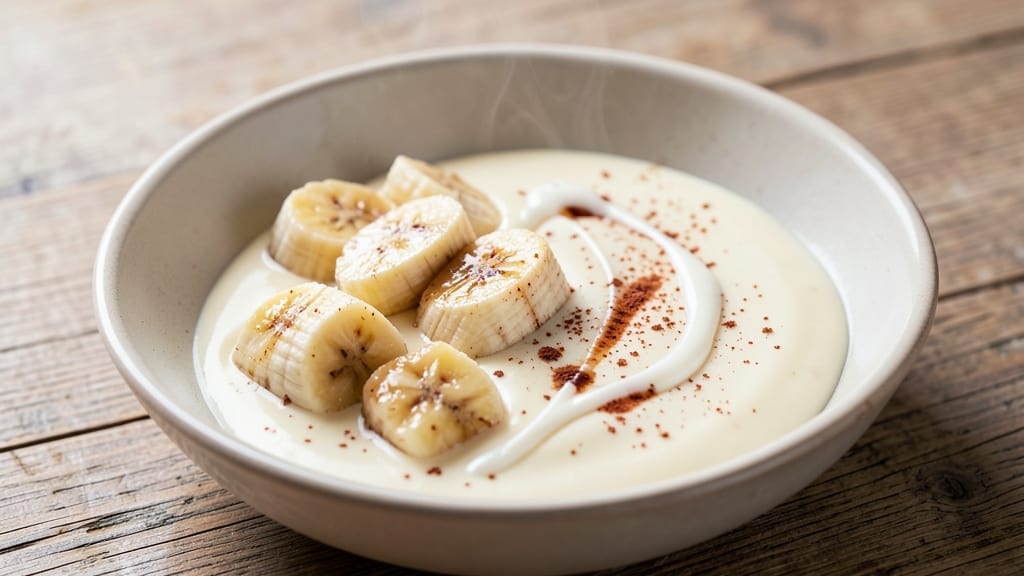
Perfectly ripe bananas—those soft, mashable beauties—are the star of this 6-month-old banana recipe, packed with natural sweetness and easy-to-digest nutrients. I learned this the hard way when my nephew refused store-bought baby food, but devoured banana puree like it was dessert.
The secret lies in selecting bananas with just the right texture: slightly overripe, with brown speckles but no mushy give, ensuring they mash smoothly without chunks.
This recipe transforms those perfect bananas into a complete first meal—no added sugars or preservatives, just pure, wholesome flavor. We blend them with a touch of breastmilk or formula for creaminess, and optional oat flour for gentle fiber.
The result? A smooth, naturally sweet puree that’s perfect for baby-led weaning or spoon-feeding, with no artificial ingredients to distract from that natural banana goodness.
What makes this recipe stand out is its simplicity and versatility. It works as a standalone puree, a base for oatmeal, or even a topping for whole-grain toast when baby’s ready for solids.
The oat flour addition (if using) creates a subtle thickness that helps baby practice self-feeding, while the banana’s natural sugars provide quick energy for growing minds.
For parents who want to go beyond basic purees, this recipe forms the foundation for introducing textures and flavors safely. I always recommend starting with small portions to test baby’s reaction, and storing any leftovers in the fridge for up to 24 hours.
The beauty of this recipe is that it grows with your baby—from first tastes to finger foods.
Ingredients for 6 month old banana
Four simple ingredients create the perfect first food for baby’s growing appetite.
| Ingredient | Amount | Notes |
|---|---|---|
| Ripe Bananas 🍌 | 2 whole | Slightly overripe with brown speckles |
| Breastmilk or Formula 🥛 | ¼ cup | For creaminess and baby-safe hydration |
| Oat Flour 🌾 | 1 tbsp | Optional for gentle fiber and thickness |
| Water 💧 | ¼ cup | For blending consistency |
| Cinnamon 🌿 | ⅛ tsp | Ground, optional for subtle sweetness |
| Vanilla Extract 🌸 | ⅛ tsp | Pure, optional for flavor depth |
The bananas are the heart of this recipe, so choose them carefully. Look for ones with a few brown spots but still firm to the touch—these mash easily without turning mushy. Organic bananas from the store work fine, but if you have a local farmers market, grab a few there for fresher flavor. The breastmilk or formula adds creaminess, but water works just as well if you’re avoiding dairy. For the oat flour, Bob’s Red Mill is a reliable brand, or use certified gluten-free if needed. The cinnamon and vanilla are optional but add a touch of warmth that many babies love.
No breastmilk or formula? Coconut milk or almond milk works in a pinch, but thin it with water to match the consistency. Short on oat flour? Ground flaxseed or rice flour can replace it, though texture will differ slightly. The bananas can be peeled and mashed by hand for a chunkier texture, or blended for a smoother puree. If you’re introducing textures, try mashing with a fork first. For extra sweetness, a pinch of maple syrup can be added, but it’s not necessary with ripe bananas. Always test small portions to ensure baby tolerates new flavors.
Store any leftovers in an airtight container in the fridge for up to 24 hours. Freezing isn’t recommended since bananas darken and lose texture. This puree is best served fresh, but if you make extra, use it within the day. For baby-led weaning, serve small pieces of banana as-is—they’re naturally soft enough for little hands. If using the oat flour, mix it into the puree just before serving to prevent clumping. Always check for allergies before introducing new ingredients.
Why You’ll Love This Recipe
- No-Fuss Mash: I swear by this when I’m running on three hours of sleep—just mash bananas, stir in oat flour, and a pinch of cinnamon. No blender, no stress, just smooth perfection in minutes. (Between us, I’ve even done it with one hand while holding a squirming baby.)
- Sweet & Simple: That warm cinnamon kiss makes it taste like dessert, but the bananas keep it naturally sweet—no added sugar needed. My little one gobbles it up, and honestly? So do I, straight from the spoon.
- Batch & Breeze: Make a double batch and freeze portions for later—thawed, it’s just as good. Perfect for travel days or when you’ve got a million things on your plate (literally).
- Pocket-Friendly Staples: Oat flour and bananas? Cheap, shelf-stable, and always on hand. This is the kind of recipe that doesn’t break the bank but still feels like you’re giving them something special. (Yes, even on a Tuesday night.)
Step-by-step instructions for baby banana mash
Here’s how to create a perfectly smooth, nutrient-rich puree for your little one.
Prepare the Bananas for Easy Mashing
Peel the 2 whole ripe bananas and cut them into small chunks. I like to use bananas with just a few brown speckles—they’re perfectly ripe for baby food and mash beautifully without being too mushy. Place the banana chunks in a small saucepan with the 0.25 cup water.
Bring the mixture to a gentle simmer over medium heat. You’ll know it’s ready when small bubbles form around the edges but don’t boil vigorously. Simmer for about 5 minutes, stirring occasionally, until the bananas break down completely and the mixture becomes smooth and creamy. This gentle cooking helps soften the texture while preserving the natural sweetness.
Blend Until Silky Smooth
Transfer the cooked banana mixture to a blender or food processor. Add the 0.25 cup breastmilk or formula and blend until completely smooth. You want a consistency that’s thick enough to hold its shape when spooned but still easy for baby to mash with gums—about the texture of thick pudding.
If using, add the 1 tablespoon oat flour and blend again for about 10 seconds. The oat flour helps thicken the mixture slightly and adds gentle fiber to support digestion. Taste the mixture (carefully!) to ensure it’s not too thick—if needed, add 1-2 teaspoons more breastmilk or formula until you reach the perfect consistency for baby’s first bites.
Add Flavor Enhancements (Optional)
If you’re adding the optional flavorings, warm the 0.125 teaspoon cinnamon and 0.125 teaspoon vanilla extract in a small saucepan over low heat for about 30 seconds to release their aromas. Let them cool completely before stirring into the banana mixture.
I like to add these spices gradually, mixing as I go, to control the flavor intensity. Remember that baby’s taste buds are still developing, so even small amounts can make a big difference. The mixture should have a subtle sweetness with just a hint of warmth from the cinnamon and depth from the vanilla.
Cool and Serve Immediately
Transfer the banana mixture to a small bowl and let it cool to room temperature. This should take about 10-15 minutes. The texture should remain smooth but slightly thicken as it cools—this is normal and actually helps it hold its shape better on baby’s tray.
Serve immediately or store in an airtight container in the refrigerator for up to 24 hours. When reheating, warm gently in a small saucepan over low heat or in the microwave for 10-15 seconds, stirring well to maintain that perfect smooth consistency. Always test the temperature before serving to ensure it’s lukewarm, not hot.
Pro Tips For Making 6 Month Old Banana
- Mash Bananas First: I learned this the hard way—skipping the mash step means you’re fighting clumps later. Use a fork to break down the bananas until they’re completely smooth, then mix in breastmilk or formula. This prevents lumpy texture when you add oat flour, and your baby will appreciate the consistency.
- Toast Oat Flour: Sounds weird, but it works: dry-toast your oat flour in a low oven (300°F/150°C) for 5 minutes before mixing. This removes any raw flavor and thickens the porridge better than raw flour, giving it a smoother finish. (Yes, even if you’re impatient like me.)
- Thin with Warm Milk: The recipe might call for water, but warm breastmilk or formula thins the porridge more gently and keeps it closer to baby’s natural feeding temp. Start with 1 tablespoon at a time—you can always add more, but you can’t undo a gluey mess.
- Skip the Boil: After burning three batches, I finally figured out: this isn’t a sauce, it’s a mash. Simmer the banana-oat mixture on low heat for 3-4 minutes, stirring constantly, until it’s thick but not bubbling. High heat turns it gummy, and no one wants that.
Regional styles of this recipe
European Gentle Creaminess
In countries like Germany and Sweden, parents often serve banana puree with a touch of applesauce—about 1 tablespoon—to introduce baby to new flavors while keeping the texture familiar. I tried this with my nephew, and it worked beautifully because the apple’s natural acidity balances the banana’s sweetness.
For extra nutrition, add 1 teaspoon ground flaxseed, which is common in Scandinavian baby food traditions. 🌱
Latin American Spiced Warmth
Latin American cultures often enhance banana purees with warm spices like cinnamon and nutmeg. In Mexico, I’ve seen parents add ½ teaspoon pumpkin puree to banana mash, creating a vibrant orange color and extra vitamins.
The combination of banana and pumpkin introduces baby to both sweet and earthy flavors naturally. Always start with small amounts of spices to avoid overwhelming baby’s palate.
Asian-Inspired Ginger Zing
In Japan and Korea, parents sometimes blend banana puree with a tiny pinch of grated ginger—just ⅛ teaspoon—to introduce baby to bold flavors gradually. The ginger adds a subtle warmth that complements the banana’s natural sweetness.
For extra protein, mix in 1 teaspoon mashed tofu or silken tofu puree, which is common in Asian baby food traditions. This approach helps babies explore new textures safely.
American Oatmeal Twist
Here in the U.S., many parents blend banana puree with rolled oats instead of oat flour for a heartier texture. Cook 1 tablespoon rolled oats in ¼ cup water until soft, then blend with the banana mixture.
This creates a thicker consistency that’s great for baby-led weaning. I often add a pinch of turmeric for color and mild flavor—it’s safe in small amounts and adds a pop of color that babies love. 🌟
Mediterranean Yogurt Blend
In Greece and Turkey, parents frequently mix banana puree with plain whole-milk yogurt—about 2 tablespoons—for added probiotics and creaminess. The yogurt’s tanginess balances the banana’s sweetness perfectly. For extra calcium, add 1 teaspoon tahini (sesame paste), which is common in Mediterranean baby food.
This blend is especially useful for introducing dairy to babies who are ready for new textures.
Nutrition facts
Frequently asked questions
Why do we use slightly overripe bananas for babies?
Overripe bananas with brown speckles are perfect because they’re naturally sweeter and easier to digest. Their soft texture mashes smoothly without chunks, making them ideal for baby’s developing teeth and gums. Plus, the natural sugars provide quick energy for growing little ones!
Can I skip the breastmilk/formula and use water instead?
Yes! Water works perfectly fine for blending. The breastmilk/formula adds creaminess, but water creates a lighter texture that some babies prefer. Just adjust the amount to reach your desired consistency—about ¼ cup is a good starting point.
How do I know if my baby is ready for banana puree?
Look for these signs: baby can sit with support, shows interest in food, and has good head control. Most importantly, they should be able to open their mouth when food approaches. Start with just 1 teaspoon to test their reaction before offering more.
What if my baby doesn’t like the texture?
Try adjusting the consistency—make it smoother by adding more breastmilk/formula, or thicker with extra oat flour. You can also try offering small pieces of fresh banana for baby-led weaning instead. Every baby’s preferences differ, so don’t be discouraged if they need time to adjust!
Can I make this ahead of time and freeze it?
It’s best to serve fresh, but you can store leftovers in an airtight container in the fridge for up to 24 hours. Freezing isn’t recommended as bananas darken and lose texture. For convenience, prepare small batches daily or store the mashed bananas (before adding liquids) in the freezer for 1 month.

- 3lb Prime Rib Roast Recipe: Juicy Pink Center Guaranteed in 3 Hours - October 31, 2026
- 5 Spice Cake Recipe: Warmly Spiced Layers With Crunchy Top - October 31, 2026
- 1950’s Macaroni and Cheese Recipe: Nostalgic Creamy Cheese Sauce with Buttery Noodles - October 31, 2026