
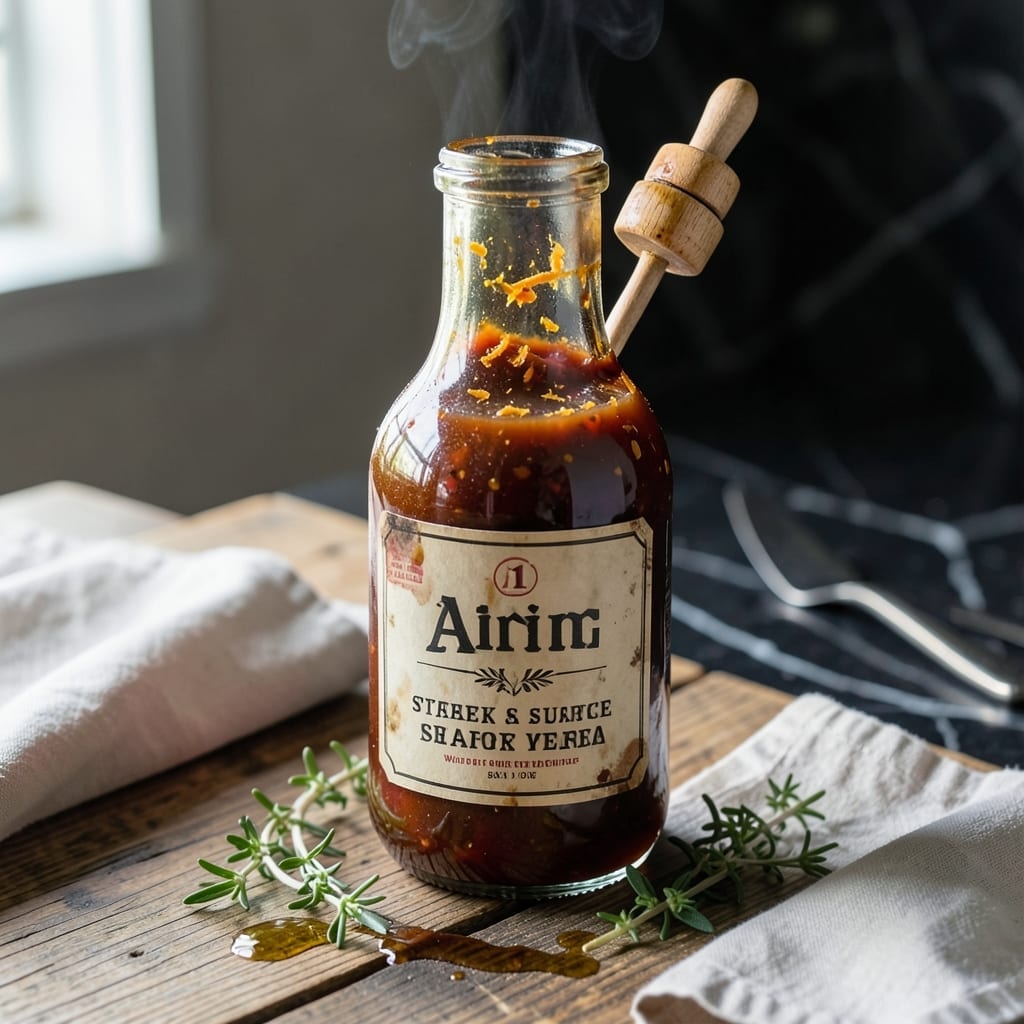
This homemade version of the classic steakhouse condiment delivers the perfect balance of tangy, sweet, and savory flavors. I developed this recipe after years of trying to replicate that signature taste you find in restaurants.
The secret lies in the precise combination of tomato paste, vinegar, and molasses, which creates a complex sauce that elevates any cut of meat. A touch of orange zest adds the bright note that makes this sauce stand out.
What you get is a rich, smooth sauce that’s ready in 15 minutes and stores beautifully in the fridge. It’s the same depth of flavor you love, made with simple pantry staples.
Use it on steaks, burgers, or even as a marinade. This sauce keeps for weeks and tastes even better as it ages.
Ingredients for A1 Steak Sauce Recipe on Bottle
Ten pantry staples blend into that signature tangy-sweet condiment you crave.
| Ingredient | Amount | Notes |
|---|---|---|
| Tomato Paste 🍅 | ½ cup | For deep umami base |
| White Vinegar 💧 | ½ cup | Distilled or apple cider works |
| Molasses 🍯 | ¼ cup | Unsulphured for cleaner taste |
| Worcestershire Sauce 🫒 | 2 tbsp | Anchovy-free if preferred |
| Soy Sauce 🫒 | 2 tbsp | Low-sodium for balance |
| Orange Zest 🍊 | 1 tsp | Freshly grated for brightness |
| Garlic Powder 🧄 | 1 tsp | Not garlic salt |
| Onion Powder 🧅 | 1 tsp | Dried minced onion works too |
| Ground Cloves 🌿 | ¼ tsp | A pinch goes a long way |
| Black Pepper 🌶️ | ½ tsp | Freshly ground preferred |
The molasses is key—Grandma’s or Brer Rabbit brands have the right depth. Tomato paste from a can works fine (I grab Muir Glen for consistency), but those squeeze tubes are perfect for small batches. Vinegar is flexible: distilled white gives the cleanest tang, but apple cider vinegar adds a nice fruitiness. The orange zest? Fresh only—bottled stuff tastes like regret.
No molasses? Dark brown sugar plus a splash of water gets you close. Worried about anchovies in Worcestershire? Annie’s or Edward & Sons make vegan versions. The cloves are subtle but essential—skip them and the sauce tastes flat. Out of garlic powder? Fresh minced at half the amount works, but cook it briefly in a dry pan to mellow the bite.
This keeps for 3-4 weeks in the fridge (flavor deepens over time). For longer storage, freeze in ice cube trays—6 months easy. The oil may separate; just shake before using. Always use a clean spoon to avoid contamination.
Why You’ll Love This Recipe
- Mix and Bottle: Honestly, I just dump everything in a saucepan, simmer, and funnel it into a used A1 bottle—no fancy steps.
- Tangy Depth: That combo of molasses and vinegar gives it a sweet-sharp kick I can’t get enough of.
- Steak Night Hero: I drizzle it on grilled steaks, burgers, even roasted veggies—never met a dish it didn’t improve.
- Pantry Staples: Between us, I always have tomato paste and soy sauce on hand, so this costs me pennies and keeps for weeks.
Step-by-Step Instructions for A1 Steak Sauce
Here’s how to create this classic sauce with just a few simple steps and everyday ingredients.
Step 1: Combine the Liquid Base
In a medium saucepan, add the 0.5 cup Tomato Paste, 0.5 cup White Vinegar, and 0.25 cup Molasses. Stir these together over medium heat until the mixture is smooth and well combined. The tomato paste will start to darken slightly as it warms, which is normal.
This step creates the foundation of the sauce, blending the tangy vinegar with the deep, rich molasses and concentrated tomato flavor. Keep the heat steady to avoid scorching the bottom of the pan.
Step 2: Add Umami and Seasoning
Stir in the 2 tbsp Worcestershire Sauce and 2 tbsp Soy Sauce. These ingredients deepen the umami profile and balance the sweetness from the molasses. The sauce will begin to smell rich and savory as it simmers.
Next, add the 1 tsp Garlic Powder, 1 tsp Onion Powder, 0.25 tsp Ground Cloves, and 0.5 tsp Black Pepper. The cloves add a subtle warmth, while the garlic and onion powders build the aromatic base. Stir well to distribute the spices evenly.
Step 3: Simmer to Perfection
Reduce the heat to low and let the sauce simmer for 10-15 minutes. This gentle cooking time allows the flavors to meld together, and the sauce will thicken slightly as it reduces. Stir occasionally to prevent sticking.
You’ll notice the sauce darken and develop a glossy sheen. The consistency should coat the back of a spoon but still be pourable. If it thickens too much, add a splash of water to loosen it.
Step 4: Finish with Brightness
Remove the saucepan from the heat and stir in the 1 tsp Orange Zest. This final addition brings a bright, citrusy note that cuts through the richness of the sauce. Let it sit for 2-3 minutes to allow the zest to infuse.
The orange zest also adds a subtle freshness that balances the deep, savory flavors. Taste the sauce and adjust the seasoning if needed, though the flavors will continue to develop as it cools.
Step 5: Cool and Store
Allow the sauce to cool completely at room temperature, which takes about 30-45 minutes. As it cools, it will thicken further. Once cooled, transfer it to a clean bottle or airtight container.
Store the sauce in the refrigerator for up to 2 weeks. The flavors will deepen over time, making it even more delicious for drizzling over steaks, burgers, or as a dipping sauce.
Pro Tips For Making A1 Steak Sauce Recipe On Bottle
- Simmer Low and Slow: Cook the mixture on low heat for at least 20 minutes—rushing it with high heat makes the vinegar and molasses separate and taste harsh.
- Use Full-Strength Tomato Paste: I learned this the hard way—watered-down or cheap tomato paste makes the sauce thin and bland; go for the concentrated stuff in the small can.
- Skip the Metal Spoon: Stir with a wooden or silicone spoon—metal can react with the vinegar and give the sauce a metallic twang after a few days in the bottle.
- Add Soy Last: Mix in the soy sauce at the very end so it doesn’t overpower the other flavors during cooking; a tablespoon is plenty for depth without saltiness.
Essential Equipment for This Recipe
Saucepan Selection
I always use a medium stainless steel saucepan for this sauce—2-3 quart capacity is perfect. The All-Clad D3 is my go-to because it heats evenly and won’t react with the acidic ingredients. Avoid nonstick if you can; the sauce’s acidity can degrade the coating over time.
Precision Measuring
A set of stainless steel measuring cups and spoons ensures accuracy with sticky ingredients like molasses. I love my OXO Good Grips set—the handles are comfortable, and the magnets keep them organized. For the orange zest, a Microplane grater gives you fine, fluffy zest without any bitter pith.
Whisk for Smoothness
Use a balloon whisk to combine the tomato paste and vinegar smoothly. A flat whisk works too, but the balloon shape covers more surface area in the pan. I keep a 10-inch whisk from Ateco in my kitchen for sauces like this. It prevents lumps and helps incorporate air for a silky texture.
Storage Bottles
Once cooled, transfer your sauce to a glass bottle with a tight-sealing lid. I reuse 12-ounce condiment bottles from the grocery store—they’re perfect for pouring. For longer storage, amber glass bottles protect the sauce from light, which can degrade flavor over time.
Thermometer for Safety
While not strictly necessary, a candy or instant-read thermometer helps ensure you’re simmering at the right temperature. I use my ThermoWorks Dot to confirm the sauce stays between 180-200°F during simmering. This prevents scorching while allowing proper thickening. 💡
Cleanup Tools
A silicone spatula is essential for scraping every last bit of sauce from the pan. I prefer the one-piece design from GIR—it’s heat-resistant and won’t melt or warp. Keep a damp towel nearby to wipe up spills quickly; molasses is notoriously sticky.
Nutrition Facts
Frequently Asked Questions
Can I use a different vinegar?
Yes, apple cider vinegar works well, adding a subtle fruitiness. Avoid balsamic as it’s too sweet and dark. Distilled white vinegar gives the cleanest tang for that classic taste.
Why does my sauce taste flat?
You likely skipped the cloves—they add essential warmth and depth. Also, fresh orange zest is key for brightness. Let the sauce sit for 24 hours before judging; flavors meld over time.
How long does homemade sauce last?
In the fridge, it stays fresh for 3-4 weeks in an airtight container. For longer storage, freeze in ice cube trays for up to 6 months. Always use a clean spoon to avoid contamination.

- 6 Egg Cake Recipe with Oil: Light as Air With Buttery Moisture - October 4, 2026
- 4 Bean Casserole Recipe: One-Pan Heartiness With Smoky Paprika Depth - October 4, 2026
- 3-Ingredient Keto Mug Cake Recipe: Microwave Magic in 2 Minutes - October 4, 2026