
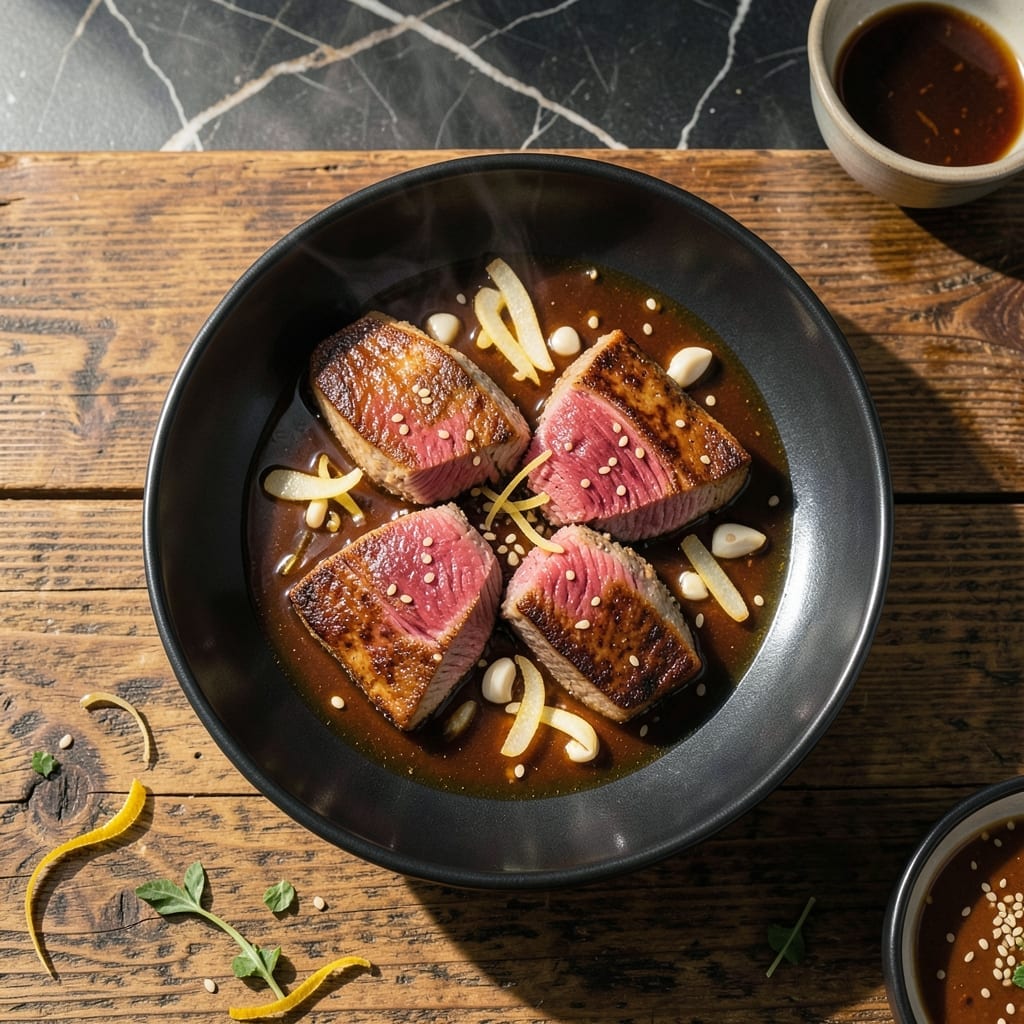
Achieving perfectly seared ahi tuna with a pink center in the oven is simpler than you might think. This method delivers restaurant-quality results without the stovetop splatter.
The key is high heat for a short time, creating a flavorful crust while keeping the inside tender and rare. A quick sear in a screaming hot pan before finishing in the oven ensures every bite has the right texture.
You’ll love how this technique highlights the tuna’s natural richness. The outer layer develops complex, caramelized flavors while the center stays cool and buttery.
Serve with a light soy-ginger glaze or wasabi cream to complement the fish. This dish brings the elegance of a fine dining experience to your home kitchen.
Ingredients for Ahi Tuna Oven
Sushi-grade tuna plus pantry staples create this restaurant-worthy dish at home.
| Ingredient | Amount | Notes |
|---|---|---|
| Ahi Tuna Steaks 🐟 | 1 ½ lb | Sushi-grade, 1-inch thick |
| Soy Sauce 🫙 | ¼ cup | Low-sodium preferred |
| Fresh Ginger Root 🌿 | 1 whole | Peeled and grated |
| Garlic Cloves 🧄 | 3 cloves | Minced finely |
| Sesame Oil 🫒 | 1 tbsp | Toasted variety preferred |
| Olive Oil 🫒 | 2 tbsp | High smoke point |
| Honey 🍯 | 1 tbsp | Or substitute agave |
| Rice Vinegar 🍶 | 1 tbsp | For glaze brightness |
| Black Pepper 🌶️ | 1 tsp | Freshly cracked |
| Kosher Salt 🧂 | 1 tsp | Diamond Crystal preferred |
| Wasabi Paste 🟢 | 1 tbsp | Optional for cream |
| Heavy Cream 🥛 | ½ cup | For wasabi cream |
| Sesame Seeds 🌰 | 1 tbsp | Toasted for garnish |
| Green Onions 🧅 | 2 whole | Thinly sliced |
The tuna is non-negotiable here. Sushi-grade ahi is a must—look for it at Whole Foods or a trusted fishmonger. Ask for center-cut pieces about 1-inch thick (they’ll sear more evenly). Freshness matters most, so if it smells fishy at all, walk away. I get mine from True World Foods when I’m feeling fancy, but most grocery stores carry it frozen too (thaw overnight in the fridge).
No fresh ginger? Ground ginger at half the amount works in the glaze, but fresh is better for texture. Swap honey for maple syrup or agave if you prefer. The soy sauce can be tamari for gluten-free. If you’re skipping the wasabi cream, a simple soy-ginger glaze (just mix the first four ingredients) is delicious. The sesame oil adds depth—don’t skip it unless you’re allergic.
The glaze keeps for 3-4 days in the fridge, but the tuna is best served immediately. Leftovers? Rare tuna doesn’t reheat well—use within 24 hours cold in salads or wraps. Sesame seeds toast in 30 seconds in a dry pan (watch them closely).
Why You’ll Love This Recipe
- Set and Forget: I pop the marinated tuna in the oven and walk away—no babysitting required.
- Umami Bomb: That first bite with soy, ginger, and garlic? Ridiculously good, like your favorite sushi spot but better.
- Dinner to Lunch: Leftovers slice up perfectly for next-day salads or wraps. I’ll be real: I make extra on purpose.
- No Fuss Cleanup: One baking sheet, one bowl for the marinade—dinner’s done before the dishwasher’s even jealous.
Step-by-Step Instructions for Ahi Tuna Oven Recipe
Here’s my tested method for achieving that perfect sear outside with a tender, pink center every time.
Step 1: Prepare the Marinade and Season the Tuna
In a bowl, whisk together the 0.25 cup soy sauce, 1 tablespoon sesame oil, 1 tablespoon honey, 1 tablespoon rice vinegar, 1 tablespoon grated fresh ginger root, and 3 minced garlic cloves until fully combined. This creates a balanced marinade that enhances the natural flavor of the ahi tuna without overpowering it.
Pat the 1.5 lb Ahi Tuna Steaks dry with paper towels, then season both sides with 1 teaspoon kosher salt and 1 teaspoon black pepper. Place the steaks in a shallow dish and pour half the marinade over them, turning to coat evenly. Let them marinate at room temperature for 15-20 minutes—any longer and the acid in the marinade will start to “cook” the fish.
Step 2: Sear the Tuna for Crust Formation
Preheat your oven to 400°F. Heat 2 tablespoons olive oil in an oven-safe skillet over medium-high heat until it shimmers. Remove the tuna steaks from the marinade (reserve the marinade) and place them in the hot skillet.
Sear for 1-2 minutes per side until you achieve a deep golden-brown crust. Don’t move the steaks during searing—this ensures proper crust formation and prevents sticking. The tuna should release easily from the pan when it’s ready to flip. This high-heat sear creates the Maillard reaction that gives the tuna its characteristic flavor and texture.
Step 3: Finish in the Oven for Perfect Doneness
Transfer the skillet with the seared tuna to the preheated oven. Roast for 4-6 minutes until the internal temperature reaches 125°F for medium-rare. The exact time depends on the thickness of your steaks—start checking at 4 minutes.
While the tuna cooks, pour the reserved marinade into a small saucepan and bring to a boil. Reduce heat and simmer for 2-3 minutes until slightly thickened. This kills any bacteria from the raw fish while creating a flavorful sauce to drizzle over the finished dish.
Step 4: Prepare the Wasabi Cream and Garnish
In a small bowl, whisk together the 0.5 cup heavy cream and 1 tablespoon wasabi paste until smooth. The wasabi cream adds a creamy, spicy contrast to the rich tuna. Adjust the wasabi amount to your preferred heat level—start with less and add more to taste.
Remove the tuna from the oven and let it rest for 2-3 minutes before slicing. This allows the juices to redistribute, ensuring moist, tender slices. Drizzle the reduced marinade over the tuna, then spoon the wasabi cream alongside. Garnish with 1 tablespoon toasted sesame seeds and 2 thinly sliced green onions for added texture and freshness.
Pro Tips For Making Ahi Tuna Oven
- Preheat Your Oven: Crank it to 450°F and let it stabilize for 15 minutes—I learned this the hard way after serving undercooked centers twice.
- Pat Steaks Dry: Use paper towels to remove every bit of moisture from the ahi steaks, or the marinade won’t stick and you’ll get steamed fish instead of seared.
- Don’t Over-Marinate: 20-30 minutes max in the soy-ginger-garlic mix; any longer and the acid in the soy sauce starts turning the tuna mushy.
- Use a Wire Rack: Place the steaks on a rack over a baking sheet so heat circulates all around—no soggy bottoms, just even cooking.
Wine and Beer Pairings for This Recipe
White Wine Pairings
A crisp Sauvignon Blanc from New Zealand cuts through the richness beautifully. Its citrus notes and bright acidity complement the soy-ginger glaze perfectly. I love how the grassy undertones enhance the tuna’s natural flavors. 🍷
Red Wine Options
For red lovers, try a light Pinot Noir from Oregon or Burgundy. The earthy notes won’t overpower the delicate fish. Serve slightly chilled at 55-60°F for best results. The red fruit flavors pair wonderfully with the seared crust.
Asian Beer Choices
An Asahi Super Dry or Sapporo provides a clean, crisp contrast to the rich tuna. The light body and subtle sweetness balance the dish’s umami flavors. I always keep a few cold for this exact pairing. 🍺
Cocktail Alternative
A ginger-mint mojito with white rum offers a refreshing counterpoint. The mint brightens while the ginger echoes the glaze. Use 2 oz rum, 3 mint leaves, and 1 oz ginger syrup for perfect balance.
Non-Alcoholic Pairing
For a zero-proof option, try yuzu sparkling water with a lime wedge. The citrus notes mirror the glaze while the bubbles cleanse your palate. I find San Pellegrino works well as a base.
Nutrition Facts
Frequently Asked Questions
Can I use frozen tuna instead of fresh?
Yes, but thaw it overnight in the fridge first. Pat it completely dry before seasoning to ensure a good sear. Never cook from frozen, as it won’t sear properly.
What should the internal temperature be?
For perfect medium-rare, aim for 125°F. Remove from the oven at 120°F—it’ll rise to temp while resting. Overcooking turns it dry and tough.
How do I prevent the marinade from burning?
Boil the reserved marinade for 2-3 minutes before reducing heat. This kills bacteria and thickens it safely. Simmer, don’t let it scorch.
Can I make this ahead of time?
Marinate the tuna up to 2 hours ahead, but cook just before serving. Rare tuna doesn’t reheat well—enjoy it fresh for best texture.

- 6 Egg Cake Recipe with Oil: Light as Air With Buttery Moisture - October 4, 2026
- 4 Bean Casserole Recipe: One-Pan Heartiness With Smoky Paprika Depth - October 4, 2026
- 3-Ingredient Keto Mug Cake Recipe: Microwave Magic in 2 Minutes - October 4, 2026