
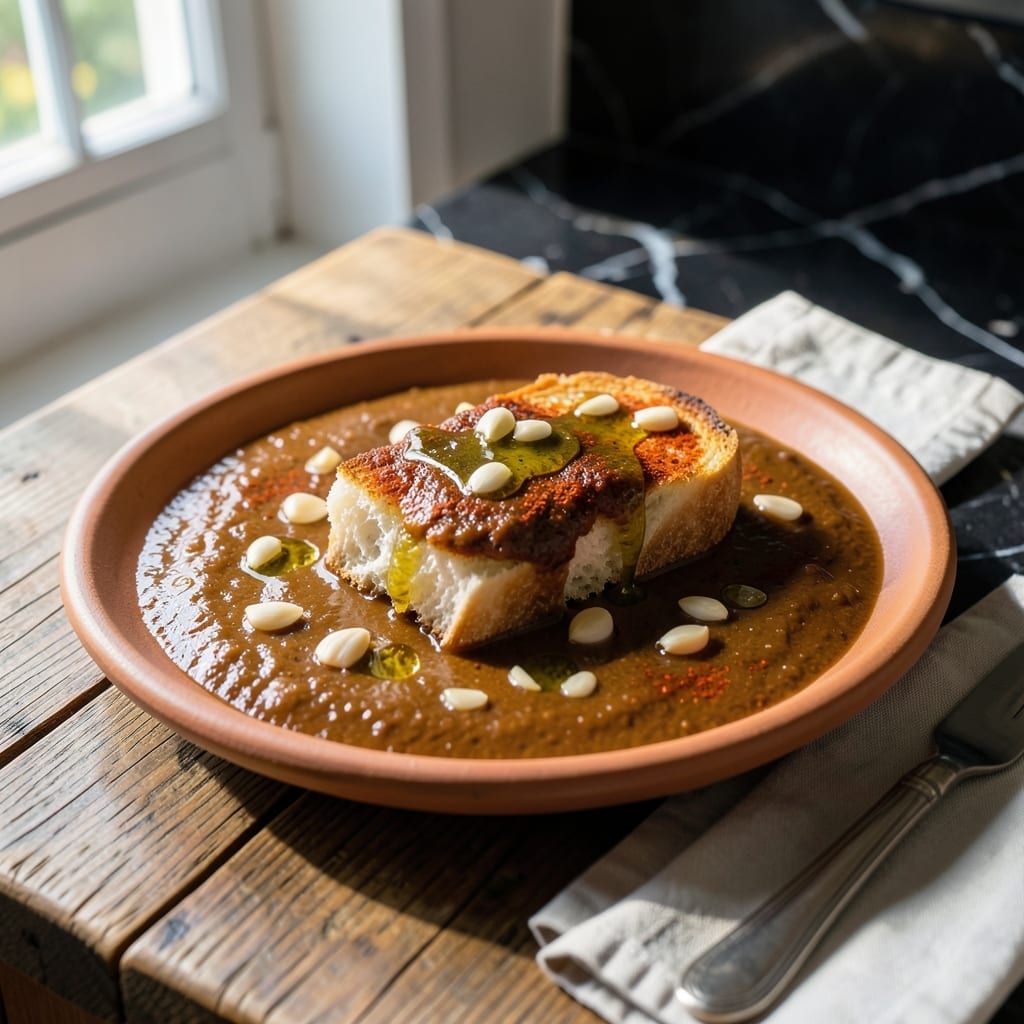
This Spanish emulsion transforms simple ingredients into a rich, velvety sauce that defines traditional Albufera cooking. The combination of garlic, paprika, and olive oil creates a base that’s both aromatic and deeply flavorful.
The technique is straightforward yet precise: slowly whisking in oil to create a stable emulsion that coats the back of a spoon. 5 minutes of active work yields a sauce that’s ready to elevate poached fish, grilled meats, or roasted vegetables.
What makes this version special is its balance—smoky paprika provides warmth without overpowering, while fresh garlic adds a bright, pungent note. The result is a smooth, creamy sauce that clings beautifully to every bite.
Store in the refrigerator for up to 1 week, where the flavors continue to develop. This versatile condiment brings authentic Spanish character to any dish.
Ingredients for Albufera Sauce
Eight ingredients create this rich Spanish emulsion with bold garlic and paprika notes.
| Ingredient | Amount | Notes |
|---|---|---|
| Garlic Cloves 🧄 | 6 cloves | Fresh, peeled, minced |
| Sweet Paprika 🌶️ | 2 tbsp | Smoked or regular variety |
| Extra-Virgin Olive Oil 🫒 | 1 ½ cups | High quality, neutral flavor |
| Sherry Vinegar 💧 | 2 tbsp | Or red wine vinegar |
| Lemon Juice 🍋 | 1 tbsp | Freshly squeezed preferred |
| Sea Salt 🧂 | ½ tsp | Fine grain for even distribution |
| White Bread 🍞 | 1 slice | Stale, crusts removed |
| Saffron Threads 🌼 | ¼ tsp | Optional, for authentic flavor |
The paprika is non-negotiable here. Spanish smoked paprika (pimentón) delivers authentic depth—find it at Whole Foods or specialty stores. The olive oil must be high-quality but neutral in flavor; California Olive Ranch works well. Fresh garlic is essential (no pre-minced, which tastes bitter). For the bread, use stale white sandwich bread—it thickens without adding flavor.
No sherry vinegar? Red wine vinegar works in a pinch, though it’s slightly sharper. Skip the saffron if it’s unavailable—it adds luxury but isn’t critical. The bread can be swapped for 1 tbsp cornstarch mixed with 2 tbsp water if you’re gluten-free. The lemon juice brightens the sauce, but white wine vinegar can substitute if needed.
This keeps for 1 week in the fridge, but the emulsion may separate—just whisk again before using. For longer storage, freeze in ice cube trays for up to 3 months. The flavors deepen overnight, so make it a day ahead if possible.
Why You’ll Love This Recipe
- 5-Minute Whisk: It’s just a quick whisk of olive oil, garlic, and paprika—no simmering, no stress.
- Tangy Punch: The sherry vinegar and lemon juice hit that perfect sweet-sour balance I crave.
- Drizzle Everything: I’ve slathered it on grilled fish, roasted veggies, even toast. Honestly, it works everywhere.
- Pantry Power: All the ingredients live in my cupboard already, so I can make this on a whim without a grocery run.
Step-by-Step Instructions for Albufera Sauce
Master this Spanish emulsion with precise technique and careful temperature control for optimal results.
Step 1: Prepare the Base Components
Begin by mincing the 6 cloves garlic cloves finely until they form a nearly paste-like consistency. This fine texture ensures even distribution throughout the sauce. Remove the crusts from the 1 slice white bread and tear it into small pieces—it will act as both thickener and stabilizer.
In a small bowl, combine the 2 tbsp sweet paprika with 2 tbsp sherry vinegar and 1 tbsp lemon juice. Stir until it forms a smooth, vibrant red paste. This step prevents the paprika from clumping when introduced to the hot oil later.
Step 2: Infuse the Olive Oil with Aromatics
Heat the 1.5 cups extra-virgin olive oil in a heavy saucepan over medium-low heat until it reaches 180°F. Add the minced garlic and bread pieces. Cook for 3-4 minutes, stirring constantly, until the garlic turns light golden and the bread begins to crisp.
At this point, add the paprika paste and 0.25 tsp saffron threads. The oil should sizzle gently but not smoke—if it does, remove from heat immediately. Stir continuously for 1 minute to bloom the spices and develop their full aroma without burning.
Step 3: Emulsify the Sauce
Remove the saucepan from heat and let it cool slightly for 2 minutes. The oil should still be warm but not hot enough to cook the next addition. Whisk in the 0.5 tsp sea salt until fully dissolved. This is where the emulsion begins to form.
Using an immersion blender, blend the mixture in short bursts until completely smooth. The sauce should thicken slightly and take on a rich, creamy texture. If it appears too thick, add a teaspoon of warm water and blend again. The final consistency should coat the back of a spoon.
Step 4: Rest and Finish the Sauce
Transfer the sauce to a clean bowl and let it rest at room temperature for 15 minutes. This allows the flavors to meld and the emulsion to stabilize. The sauce will thicken slightly as it cools.
Before serving, give it a final whisk to restore its creamy texture. Taste and adjust seasoning if needed, though the initial measurements should provide perfect balance. The sauce should have a deep red color with a smooth, velvety mouthfeel and no graininess.
Pro Tips For Making Albufera Sauce
- Toast the Paprika: Heat the sweet paprika in the olive oil for just 10-15 seconds—any longer and it turns bitter. I learned this the hard way after ruining two batches by walking away from the pan.
- Mince Garlic Finely: The garlic should be almost paste-like so it melts into the sauce. After burning three batches, I finally figured out that chunky pieces scorch and leave a harsh taste.
- Balance the Acid: Add the sherry vinegar and lemon juice gradually, tasting as you go. Sounds weird, but it works: too much acid overpowers the garlic and paprika.
- Use Fresh Oil: Skip the old bottle of olive oil sitting in your pantry—fresh, high-quality extra-virgin makes a real difference in the flavor. My grandmother swore by this, and she was right.
Perfect Pairings for This Recipe
Protein Pairings
This sauce shines with poached white fish like cod or halibut. The delicate flavor of the fish lets the garlic and paprika take center stage. I also love it drizzled over grilled shrimp—try 16-20 count for perfect bite-sized pieces. 🍤
Meat Complements
For meat lovers, serve with roast chicken or grilled pork tenderloin. The sauce clings beautifully to the crispy skin of chicken or the juicy slices of pork. I recommend brushing it on during the last 5 minutes of grilling.
Vegetable Sides
Blanched asparagus or roasted cauliflower soak up this emulsion wonderfully. Toss 1 lb asparagus in the sauce before serving, or drizzle over cauliflower florets. The smoky paprika pairs especially well with charred veggies.
Starch Partners
Serve with crusty bread for dipping—baguette slices toasted with olive oil are my go-to. For a heartier option, toss the sauce with 12 oz cooked pasta like linguine or fettuccine for a quick Spanish-inspired dish.
Cheese Pairings
The bold flavors stand up to aged Manchego or smoked Gouda. Create a simple tapas platter with sliced cheese, cured meats, and this sauce for dipping. I use ¼ cup sauce per 4 oz cheese serving. 🧀
Bread Alternatives
For gluten-free options, try endive leaves or cucumber slices as edible scoops. The slight bitterness of endive complements the richness, while cucumber adds a refreshing contrast to the deep, smoky notes.
Nutrition Facts
Frequently Asked Questions
Why does my sauce keep breaking?
This happens if the oil is too hot or added too quickly. Keep the heat at medium-low and whisk constantly. If it separates, blend again with 1 tsp warm water to restore the emulsion.
Can I make this without saffron?
The saffron adds luxury but isn’t essential. Skip it entirely or replace with a pinch of turmeric for color, though the flavor will differ slightly.
What’s the best way to store it?
Keep in an airtight container in the fridge for up to 1 week. The flavors deepen overnight. For longer storage, freeze in ice cube trays for 3 months.
Can I use regular paprika instead of smoked?
Yes, but the flavor will be milder. For a smokier profile, add ½ tsp liquid smoke with regular paprika. Smoked paprika is traditional and recommended.

- 6 Egg Cake Recipe with Oil: Light as Air With Buttery Moisture - October 4, 2026
- 4 Bean Casserole Recipe: One-Pan Heartiness With Smoky Paprika Depth - October 4, 2026
- 3-Ingredient Keto Mug Cake Recipe: Microwave Magic in 2 Minutes - October 4, 2026